No single cat food is the best choice for a cat that vomits. The right diet depends on why the cat is vomiting, and the first step is often a veterinary exam rather than a switch to a new recipe. Veterinary guidance supports easily digested, bland food and, in some cases, a prescription diet, but it does not present any food as a cure for vomiting from every cause.
This guide does not rank seven popular cat food recipes. The veterinary sources it draws on describe diet options and warning signs. They do not document a side-by-side test of popular cat foods, so no brand or recipe is named as the winner.
Why no food can be the best for every vomiting cat
Vomiting is a symptom, not a diagnosis. Cornell University’s Feline Health Center (page last updated 2021) and the Merck Veterinary Manual’s owner guidance (last updated September 2024) both describe a wide range of possible causes:
- Hairballs
- Spoiled food or dietary indiscretion, meaning eating something the cat should not have
- Toxins
- Parasites
- Foreign objects swallowed by the cat
- Gastrointestinal disease
- Infection or inflammation
- Metabolic illness
Because the list is this broad, a food change cannot be assumed to address the cause. A bland diet may help a cat recover from a mild, short-lived upset stomach. It will not fix a foreign object, a toxin exposure or a systemic illness.
Do these 3 things before closing this tab:
1Repair Windows errors before they cause bigger problems2Scan for outdated or missing drivers - takes under a minute3Clear out junk files and repair common Windows errors#1 Best Overall

- Real turkey is the first ingredient in our high protein cat food to help support strong muscles, including a healthy heart in adult cats
- Made for cats with sensitive systems, this Purina ONE sensitive stomach cat food features an easily digestible formula with added prebiotic fiber
- Crunchy cat food with calcium supports strong teeth and healthy gums, and four antioxidant sources help support a healthy immune system
- With deliciously crunchy bites, this turkey cat food delivers a great taste and is made with no artificial flavors or preservatives
- Purina sensitive skin and stomach cat food is crafted in Purina-owned, U.S. facilities
When vomiting needs a veterinarian now
The two main owner-facing veterinary references set different thresholds, and they should be read as separate guidance rather than merged into one rule.
| Source (date stated) | Frequency that calls for evaluation | Other signs that call for prompt or detailed evaluation |
|---|---|---|
| Cornell Feline Health Center, “Vomiting” (last updated 2021) | Vomiting more often than once per week | Vomiting together with lethargy, weakness, reduced appetite, blood in the vomit, changes in thirst or urination, or diarrhea |
| Merck Veterinary Manual, “Vomiting in Cats — Cat Owners” (last updated September 2024) | Long-term vomiting, or vomiting more than once or twice daily | Blood in the vomit, abdominal pain, depression, dehydration, weakness, fever, or weight loss |
A cat that meets any of these thresholds should be examined. A cat that does not meet them but seems unwell, or whose owner is unsure, should also be seen. A veterinarian can decide whether a food trial is appropriate.
Rank #2

- SENSITIVE STOMACH AND SKIN CAT FOOD: Adult dry cat food contains natural prebiotic fiber to help support digestive health and omega-6 fatty acids to promote healthy skin and a shiny coat
- PROTEIN-RICH WITH REAL FARM-RAISED TURKEY: Expertly prepared recipe features high-quality ingredients, including delicious real farm-raised turkey, that help provide the support she needs to thrive
- EASILY DIGESTIBLE CAT KIBBLE FOR SENSITIVE SYSTEMS: Sensitive stomach cat food specially formulated for easy digestion to help cats with sensitive systems feel healthy and stay nourished
- NO ARTIFICIAL COLORS OR FLAVORS: Sensitive adult dry cat food made with responsibly sourced ingredients and no artificial colors or flavors for meals you can feel confident serving your cat
- 100 percent COMPLETE AND BALANCED PURINA ADULT DRY CAT FOOD: Includes all 25 essential vitamins and minerals adult cats need to thrive along with the nutrition they need for whole-body well-being
What veterinary guidance says about diet
The VCA Animal Hospitals guidance on vomiting in cats (listed with a September 2026 publication date in the search result used here) and VCA’s bland diet instructions for dogs and cats (circa 2024) describe a conditional approach. The main elements are:
Easily digested, bland food
A bland, easily digested diet is one option a veterinarian may recommend for some cats with vomiting. It is a short-term measure in most cases, and it depends on the cat’s condition and the cause.
The Tool Desk
Outbyte Driver Updater FREEScan for outdated or missing drivers - takes under a minuteDriver Scan →Outbyte PC Repair FREEClear out junk files and repair common Windows errorsFree Scan →Rank #3

- Real turkey is the first ingredient in our high protein cat food to help support strong muscles, including a healthy heart in adult cats
- Made for cats with sensitive systems, this Purina ONE sensitive stomach cat food features an easily digestible formula with added prebiotic fiber
- Crunchy cat food with calcium supports strong teeth and healthy gums, and four antioxidant sources help support a healthy immune system
- With deliciously crunchy bites, this turkey cat food delivers a great taste and is made with no artificial flavors or preservatives
- Purina sensitive skin and stomach cat food is crafted in Purina-owned, U.S. facilities
Small, frequent portions
Veterinary guidance describes feeding small, frequent portions rather than one large meal. This is a practical way to reduce the amount of food in the stomach at one time.
Prescription diets
In some cases a veterinarian recommends a prescription diet. The choice of diet should be made by the veterinarian who knows the cat’s history, not chosen from a store shelf by the owner.
Rank #4

- Real turkey is the first ingredient in our high protein cat food to help support strong muscles, including a healthy heart in adult cats
- Made for cats with sensitive systems, this Purina ONE sensitive stomach cat food features an easily digestible formula with added prebiotic fiber
- Crunchy cat food with calcium supports strong teeth and healthy gums, and four antioxidant sources help support a healthy immune system
- With deliciously crunchy bites, this turkey cat food delivers a great taste and is made with no artificial flavors or preservatives
- Purina sensitive skin and stomach cat food is crafted in Purina-owned, U.S. facilities
Returning to regular food gradually
When the cat is doing well and the veterinarian agrees, guidance describes returning to the regular diet gradually rather than all at once. Ask the veterinarian for the exact transition schedule and what to watch for during it.
Specialized diets have a specific clinical reason
VCA describes hydrolyzed-protein and novel-protein diets for cases where food allergy is suspected or where chronic gastrointestinal inflammation is present. These are diagnostic or therapeutic tools for particular problems. They do not make a limited-ingredient recipe a general answer to vomiting, and an owner should not start one because it is marketed as gentle on the stomach.
Best Value
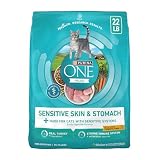
- Real turkey is the first ingredient in our high protein cat food to help support strong muscles, including a healthy heart in adult cats
- Made for cats with sensitive systems, this Purina ONE sensitive stomach cat food features an easily digestible formula with added prebiotic fiber
- Crunchy cat food with calcium supports strong teeth and healthy gums, and four antioxidant sources help support a healthy immune system
- With deliciously crunchy bites, this turkey cat food delivers a great taste and is made with no artificial flavors or preservatives
- Purina sensitive skin and stomach cat food is crafted in Purina-owned, U.S. facilities
How to compare cat foods for a vomiting cat
If a veterinarian has recommended a diet, or the owner is asking which food to discuss, the comparison should rest on factors that the sources support. The table below lists the questions that matter.
| Question to answer | Why it matters |
|---|---|
| Is the cat recovering from a short episode, or does it have a diagnosed or suspected condition? | Recovery from a mild upset calls for different choices than a diagnosed gastrointestinal disease or food allergy. |
| Is the food a bland, easily digested diet, or a specialized diet? | Each type has a different purpose, and the sources describe them for different situations. |
| Is it a prescription diet? | Prescription diets are typically recommended by a veterinarian for a specific purpose and are not interchangeable with general-purpose foods. |
| Has the cat’s veterinarian recommended it? | The veterinarian’s recommendation is the decision point that the sources emphasize. |
If a shopping category is needed, the terms “veterinary gastrointestinal cat food” or “prescription digestive care cat food” fit only a veterinarian-directed purchase. Brand availability and pricing were not verified for this guide.
What the veterinary workup may include
When vomiting persists or is unexplained, the veterinarian may take a history, perform an examination, and order blood, fecal or urine tests. Imaging may be used, and in some cases endoscopy or a biopsy is needed. Treatment depends on the diagnosis, which is why a food choice made before a diagnosis is only a provisional step.
Emergencies and toxin exposure
Vomiting can accompany poisoning or a swallowed foreign object, as well as illness. Cornell’s “Common Cat Hazards” guidance (publication date not stated) advises calling a veterinarian immediately if a toxin may have been ingested, and advises not to induce vomiting unless a veterinarian specifically directs it. Seek urgent veterinary care if the vomit contains blood, the abdomen is painful, the cat is weak or dehydrated, lethargy is marked, or vomiting repeats.
What’s actually slowing this PC down?
Pick the symptom - the matching free tool is one click away.
Vomiting or regurgitation?
Owners often use the two words interchangeably, but veterinary references distinguish them. Vomiting involves forceful expulsion and is typically preceded by signs of nausea or retching. Regurgitated material usually comes up without that forceful effort and is often undigested. The distinction helps an owner describe an episode accurately to the veterinarian. It does not diagnose the cause.
Quick Recap
Sources
- Cornell University College of Veterinary Medicine, Cornell Feline Health Center, “Vomiting” (last updated 2021).
- Merck Veterinary Manual, “Vomiting in Cats — Cat Owners” (last updated September 2024; reviewed by Craig B. Webb, PhD, DVM, DACVIM).
- VCA Animal Hospitals, “Vomiting in Cats” (listed with a September 2026 publication date).
- VCA Animal Hospitals, “Bland Diet Instructions for Dogs and Cats” (circa 2024).
- Cornell University College of Veterinary Medicine, Cornell Feline Health Center, “Common Cat Hazards” (publication date not stated).
Product prices and availability are accurate as of the date/time indicated and are subject to change. Any price and availability information displayed on Amazon at the time of purchase will apply.




