Free tools Windows power users keep installed
One-click scans. No signup required.
There is no single best pet insurance policy for every pet. The right choice depends on your animal’s age, breed, health history and location, your budget, and—most importantly—the contract’s coverage and exclusions. Compare policies using the same coverage assumptions, then weigh what each would actually pay against what you could afford to pay yourself.
How to compare pet insurance policies
Start with the policy wording and state-specific disclosures, not a company ranking or the reimbursement percentage in an advertisement. The National Association of Insurance Commissioners (NAIC) says premiums depend on the animal and the coverage choices, while services covered and excluded vary among policies. Get quotes using the same pet details and comparable deductibles, limits, and coverage categories so the price comparison is meaningful.


Use this checklist to compare the same points in each policy:
- Coverage category: accident-only, accident-and-illness, or a policy with wellness benefits or an add-on.
- Eligibility and waiting periods: age restrictions, any exam or records requirements, the effective date, and when coverage begins for different conditions.
- Exclusions: how the contract treats pre-existing, hereditary, congenital, bilateral, and chronic conditions, plus any other listed exclusions.
- Cost sharing: premium, whether the deductible is annual or per condition, reimbursement or coinsurance rate, and the amount used as the reimbursement base.
- Payout limits: whether caps apply per condition, per year, over the pet’s lifetime, or to particular services.
- Claims process: submission deadline, required invoices and records, payment timing, direct-to-vet availability, and appeal steps.
- Renewal: whether premiums or coverage can change and how the policy treats a condition first treated while the policy was active.
- Location and provider choice: availability in your state, eligible veterinarians, and the disclosures that govern your policy.
The California Department of Insurance recommends asking about pre-existing conditions, waiting periods, hereditary and congenital disorders, deductibles, coinsurance, annual and lifetime limits, claim-related renewal increases, and reimbursement methods that may differ from the billed amount. Its consumer questions about pet insurance are a useful checklist; policy terms and state requirements can differ elsewhere.
The Tool Desk
Outbyte PC Repair FREERepair Windows errors before they cause bigger problemsFix Now →Outbyte Driver Updater FREEScan for outdated or missing drivers - takes under a minuteDriver Scan →#1 Best Overall
Choose the coverage category that matches the risk
Accident-only
Accident-only coverage is designed for eligible injuries rather than illness. Confirm the contract’s definition of an accident and its exclusions; the category name alone does not tell you which specific treatment or incident qualifies.
Accident-and-illness
This category can cover eligible accidents and illnesses, subject to exclusions, waiting periods, deductibles, and limits. Check whether the conditions you are concerned about—including hereditary, congenital, or chronic conditions—are covered and under what terms.
Wellness benefits
Wellness benefits may cover some routine or preventive care, but they are distinct from accident and illness protection. Ask whether routine examinations, prescriptions, spaying or neutering, and any other expenses you expect are included, limited, or sold as separate benefits. The NAIC describes these as common coverage categories, but the benefits and exclusions depend on the policy. Its regulator guide to pet insurance also discusses differences in coverage and policy design.
Read exclusions and waiting periods closely
Pre-existing conditions are commonly excluded, and hereditary or congenital conditions may also be excluded or restricted. Do not assume that a condition will qualify—or that a condition with no current symptoms will be treated as new. Ask the insurer how it defines each relevant term, what medical records it reviews, and how it applies the definition to your pet’s history.
Outdated Drivers Are Slowing You Down
One free scan finds every outdated or missing driver and matches the right update for your exact hardware.Free scan · exact hardware matchWindows Errors? Fix Them Before They Spread
Repair common Windows errors and clear accumulated junk for a smoother, more stable PC - no reinstall needed.Free scan · no reinstallRank #3

- Perfect for Insurance Agents – A must-have for insurance professionals and brokers who enjoy a little humor with their morning coffee.
- Premium Quality Ceramic – Made from high-quality white ceramic, this 11oz mug features a crisp, long-lasting print on both sides, ensuring durability and style.
- Microwave & Dishwasher Safe – Built for everyday use, this mug is microwave and dishwasher safe, making it easy to clean and reheat beverages.
- Funny and Motivational Design – The bold quote adds a humorous touch to any office desk, making it a great conversation starter with clients and coworkers.
- Great Gift Idea – The perfect gift for birthdays, holidays, work anniversaries, promotions, or as an appreciation gift for insurance professionals who love a good laugh!
A waiting period is the time after a policy begins during which specified care may not be covered. The California Department of Insurance explains that care before the applicable waiting period ends is not covered under that policy. Read the contract for the length and scope of each waiting period, rather than relying on a single summary description.
Work out what a claim could actually pay
A reimbursement percentage is not necessarily that percentage of the entire veterinary invoice. The amount paid can be affected by an unmet deductible, excluded services, coinsurance, a benefit or fee schedule, a usual-and-customary limit, and a payout cap. The policy and applicable state disclosures determine the calculation. The American Animal Hospital Association’s explanation of how pet insurance works describes the typical claim flow and notes that deductibles and limits apply; the NAIC distinguishes percentage-of-expense reimbursement from benefit schedules based on a condition and the coverage selected.
Rank #4
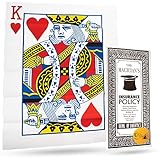
- Reveal leaving audiences astounded
- Amazing Magic Trick That is Easy to Perform
- High grade material for years of use
- Magic Makers made
Check whether the deductible applies annually or per condition, and whether reimbursement is calculated from the invoice or another basis. Then consider both the premium and the share of a covered bill you would need to pay. A lower premium may come with a higher deductible, lower limit, or narrower coverage; a higher reimbursement rate may not help much if the policy’s reimbursement base is limited.
Independent reader supportYour contribution helps us test, update, and keep practical guides available for everyone.Know how claims and renewal work
In a typical reimbursement process, you take your pet to the veterinarian, pay the bill, and submit a claim with an itemized invoice or receipt and any required records. The insurer assesses eligible expenses under the policy and pays the approved amount. Some insurers may pay veterinarians directly, but availability and requirements vary. Before buying, check how long you have to file, which documents are needed, how and when payment is made, and how to appeal a decision.
Best Value

- Life insurance clothes that says: I don't sell life insurance, I educate and protect families.
- Life insurance clothes ideal for any insurance sales agent, medicare broker or salesperson who wants to show off his got life insurance vibe.
- Lightweight, Classic fit, Double-needle sleeve and bottom hem
Ask how renewal works, including whether the premium may change and how a condition treated during the current term will be handled in a later term. The California Department of Insurance advises consumers to ask about claim-related renewal increases and reimbursement formulas; the applicable policy and state disclosures control the details.
Decide whether the trade-off fits your household
Insurance is a way to manage eligible, unexpected veterinary costs, not a promise that every bill will be covered or that you will spend less overall. Compare the likely premium and cost-sharing obligations with your ability to handle a large unexpected bill, while accounting for exclusions and caps that may leave some costs with you. The California Department of Insurance puts the decision plainly: “When deciding whether to purchase coverage, there are several considerations that that should go into your decision besides the cost of the coverage.”
Market size does not settle the decision for an individual owner. The NAIC reports that the American Pet Products Association’s 2025 National Pet Owners Survey found 94 million U.S. households owned a pet; it also reports $152 billion in U.S. pet-industry expenditures in 2024, up 3% from 2023. Separately, the NAIC cites the North American Pet Health Insurance Association’s 2024 State of the Industry Report for 6.25 million insured pets in 2023, a 16.7% increase from 2022; dogs were 78.6% and cats 21.4% of insured pets. These figures describe the market, not an individual policy’s value or whether a particular owner will save money.
Where to check rules and policy disclosures
Insurance terms, availability, and legal requirements vary by state. The NAIC says its Pet Insurance Model Act was adopted at its Summer 2022 National Meeting and that the working group disbanded in 2023 after completing its work. A model act does not establish that every state has adopted the same requirements. Check your state insurance department’s current guidance and the disclosures for the actual policy you are considering.
What’s actually slowing this PC down?
Pick the symptom - the matching free tool is one click away.
Quick Recap
Product prices and availability are accurate as of the date/time indicated and are subject to change. Any price and availability information displayed on Amazon at the time of purchase will apply.




