There is no scientifically defensible single “loudest bird” for every garden. In everyday listening, Blue Jays are the classic raucous alarm callers; Northern Mockingbirds are the relentless sound collages; Carolina and Northern House Wrens are astonishingly loud for their size; and Common Grackles create the biggest group commotion.
There is no scientifically defensible single “loudest bird” for every garden. Backyard loudness depends on more than volume: a bird may dominate because it calls sharply, sings for hours, repeats itself, gathers in a flock, chooses an exposed perch, or sounds especially startling against suburban quiet.
| # | Preview | Product | Price | |
|---|---|---|---|---|
| 1 |

|
Bird Songs: 250 North American Birds in Song | $24.05 | Buy on Amazon |
| 2 |

|
The Backyard Birdsong Guide Eastern and Central North America: A Guide to Listening | $32.49 | Buy on Amazon |
| 3 |

|
The Little Book of Backyard Bird Songs | $18.79 | Buy on Amazon |
| 4 |

|
The Little Book of Woodland Bird Songs | $18.83 | Buy on Amazon |
| 5 |
|
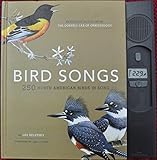
Bird Songs: 250 North American Birds in Song | $58.90 | Buy on Amazon |
As an Amazon Associate I earn from qualifying purchases.
In everyday listening, the strongest candidates are the Blue Jay for sudden, raucous alarms; the Northern Mockingbird for relentless variety; the Carolina Wren and Northern House Wren for being astonishingly loud for their size; and the Common Grackle for turning group activity around a feeder into full-yard commotion. Northern Cardinals and Red-winged Blackbirds can also carry remarkably well in the right habitat.
What makes a garden bird seem loud?
“Loud” can describe several different listening experiences:
#1 Best Overall
- Volume: the physical strength of a call or song.
- Persistence: how long and how often a bird continues singing.
- Harshness: rattles, screams, squeaks, and alarm notes that cut through other sounds.
- Flock noise: many birds calling, chattering, and competing at once.
- Soundscape dominance: the ability to be noticed across a yard, neighborhood, or park.
Bird accounts commonly describe these species as “raucous,” “loud and insistent,” “piercing,” or nearly endless, but there is no standardized backyard study measuring all of them under comparable conditions. The list below is therefore a practical listening guide, not a decibel ranking.
The loudest garden birds, by kind of chaos
| Bird | Why it seems loud | Where you may hear it | Sound or clue |
|---|---|---|---|
| Blue Jay | Raucous alarms, rattles, screams, and occasional hawk mimicry | Wooded suburbs, gardens, parks | Harsh “jay-jay” notes and rattles |
| Northern Mockingbird | Long performances, repeated phrases, and a huge variety of imitations | Lawns, shrubs, utility lines, suburban edges | Several phrases repeated two to six times, then abruptly changed |
| Carolina Wren | Piercing projection from a very small body | Dense shrubs, brush piles, wooded yards | Repeated “teakettle-teakettle” phrases |
| Northern House Wren | Loud, insistent, rapidly repeated song | Shrubs, nest boxes, backyards | Bubbling rush-and-jumble |
| Common Grackle | Guttural calls plus the cumulative noise of a flock | Lawns, feeders, parks, fields, woodland edges | Metallic or rusty-gate squeaks and raucous chatter |
| Northern Cardinal | Clear whistles and sharp metallic chips that carry | Feeders, shrubs, mixed suburban habitat | “Cheer-cheer” or “birdie-birdie” phrases |
| Red-winged Blackbird | Conspicuous calls and group noise near wetlands and fields | Cattails, marshes, drainage ponds, open country | Short “conk-la-ree” song |
Blue Jay: the classic backyard alarm system
If your garden suddenly sounds as though an alarm has gone off in the trees, suspect a Blue Jay. It is one of the loudest and most conspicuous birds of many eastern backyards and woodlots, combining a recognizable “jay-jay” with harsh cries, rattles, screams, and musical notes.
Blue Jays can also imitate hawks convincingly enough to make listeners look up. Their arrival is often noticeable visually as well as acoustically: they may visit feeders, displace smaller birds, and make themselves the center of activity. Alarm calling can intensify when a nest or territory is threatened. That does not mean every Blue Jay is constantly noisy; birds tending a nest can be comparatively quiet and secretive.
Look for: a blue-and-white bird with a crest and black necklace. Listen for a harsh call, rattle, scream, or sudden hawk-like note.
Northern Mockingbird: the nonstop sound collage
The Northern Mockingbird may not be the winner in a controlled volume test, but it is one of the most disruptive birds from a human listener’s perspective. A single bird can make one yard sound like an entire aviary.
Mockingbirds sing almost endlessly, sometimes at night. They string together many copied phrases, commonly repeating each phrase two to six times before switching to another. Their repertoire can include imitations of other birds and a changing collection of environmental sounds. That sudden shift—from one familiar song to another—makes the performance seem as though several unseen birds are competing.
Look for the singer on a tall shrub, pole, utility line, or other exposed perch. Mockingbirds are common in towns, suburbs, parks, open low-elevation habitat, and forest edges. Fruiting shrubs and open lawn are generally more relevant to attracting them than a seed feeder.
Free tools Windows power users keep installed
One-click scans. No signup required.
Listen for: a long series of phrases, each repeated several times, followed by an abrupt change in voice or rhythm. Night singing is another useful clue, although it is not unique to every individual or situation.
Carolina Wren: a tiny bird with a piercing voice
The Carolina Wren is the backyard equivalent of a car alarm hidden in a shrub. Its song is loud and piercing, with remarkable projection for such a small bird. The familiar mnemonic is “teakettle-teakettle,” though real phrases vary and should not be treated as an exact spelling of the song.
Only the male sings the loud primary song. In an eastern U.S. yard, the sound may come from tangled vegetation, a brush pile, dense shrubs, or a sheltered corner rather than from a prominent treetop. Carolina Wrens may visit suet feeders in winter and use nest boxes, hanging planters, flower pots, or other cavity-like, sheltered structures.
Look for: a rusty-brown bird with a conspicuous white eyebrow stripe and cocked tail. If the sound is a clear, ringing phrase repeated from dense cover, Carolina Wren is a strong possibility.
What’s actually slowing this PC down?
Pick the symptom - the matching free tool is one click away.
Northern House Wren: the little bird that refuses to stop
The Northern House Wren proves that volume is not proportional to body size. Its song is a rapid, bubbling rush-and-jumble that can sound surprisingly forceful and insistent. During the breeding season, males may reportedly sing hundreds of songs per hour for hours on end, so persistence is a major part of the bird’s perceived loudness.
House Wrens commonly use nest boxes and other natural or artificial cavities. They forage for insects among shrubs, brush piles, and low branches, where the singer can be difficult to locate. The bird is common across much of the United States and southern Canada, but exact local presence still depends on region and season.
Do not confuse it with a Carolina Wren: the House Wren usually produces a busy bubbling cascade, while the Carolina Wren’s song is more clearly separated into ringing, repeated phrases.
Common Grackle: noisy flock energy
A single Common Grackle is noisy. A flock can turn the whole yard into a conversation. Its individual song is a short, guttural squeak with whistles, often likened to a rusty gate. The larger auditory event is usually collective: grackles gather in trees and on telephone lines, chatter while foraging, and may arrive at feeders in numbers.
PC Slower Than It Used to Be?
A free scan shows the junk files, broken settings and background clutter dragging Windows down - then fixes them in one click.Free scan · Windows 10 & 11Outdated Drivers Are Slowing You Down
One free scan finds every outdated or missing driver and matches the right update for your exact hardware.Free scan · exact hardware matchGrackles are common in suburbs, parks, lawns, agricultural fields, woodland edges, and marshes. They are often more conspicuous around feeding stations than in a quiet natural corner. If you want to observe them without letting them monopolize every feeder, spreading a modest amount of grain or seed on the ground may leave elevated feeders more available to smaller birds. Follow local wildlife guidance, clean feeding areas regularly, and remove spoiled or wet food.
Rank #3
A bird feeder for garden birds can improve observation opportunities, but it cannot guarantee that grackles—or any other species—will appear, and it will not make a bird sing louder.
Look for: a long-tailed, iridescent blackbird, often with several companions. Listen for the flock as much as for one bird.
Northern Cardinal: a whistle that travels
The Northern Cardinal is less of a racket-maker than a high-visibility soloist whose whistle travels. Its song consists of clear, often down-slurred or two-parted whistles that may accelerate before ending in a trill. Common memory phrases include “cheer-cheer-cheer” and “birdie-birdie-birdie,” but the bird’s actual phrases vary.
Recommended Free Tools
Both sexes sing, and males may sing throughout the year, with the strongest activity often occurring in spring and early summer. The sharp metallic “chip” is also surprisingly noticeable. It may accompany territorial disputes, predator alerts, nest activity, or contact between mates.
Cardinals are frequent visitors to feeders and mixed suburban habitat across much of the eastern United States and parts of the Southwest. A whistle coming from thick shrubs may belong to a cardinal even when the familiar red male is nowhere in sight; females sing too.
Red-winged Blackbird: the wetland siren
Near cattails or open fields, the Red-winged Blackbird’s brief song can cut through the morning like a signal. The male’s abrupt “conk-la-ree” is distinctive and is often delivered from a visible perch. Both sexes also give sharp check and alarm calls, while groups can add a layer of chatter.
This is the most habitat-dependent bird on the list. A garden beside a cattail marsh, drainage pond, wet meadow, or agricultural field is much more likely to hear Red-winged Blackbirds than a dry, enclosed suburban yard. During migration and winter, they may join mixed blackbird flocks and visit yards for mixed grains and seeds.
Look for: a male with a red-and-yellow shoulder patch, usually near wet ground or open country. The habitat is often as useful a clue as the sound.
Rank #4
How to identify the loud bird in your garden
Do not identify a bird from volume alone. Combine the sound with its repetition, perch, habitat, behavior, appearance, season, and geographic range.
- Classify the sound. Is it a whistle, rattle, squeak, scream, chatter, alarm note, or bubbling series?
- Count the pattern. Is it one short call, a phrase repeated several times, a rapid cascade, or an apparently endless performance?
- Find the acoustic source. Check a utility line, tall shrub, feeder, brush pile, exposed tree, cattails, or dense cover.
- Watch behavior. Look for flocking, feeder aggression, territorial chasing, a bird defending a nest, or repeated flights between shrubs.
- Confirm the appearance. A crest, blue-and-white plumage, red shoulder patch, iridescent body, rusty back, or white eyebrow can separate similar-sounding candidates.
- Compare recordings. A bird song identification book can be useful beside a window, especially when the bird is hidden or the recording is ambiguous.
Cornell’s free Merlin Bird ID includes Sound ID, photo identification, a bird-identification wizard, and reference recordings. Sound ID works offline in supported regions. Treat an automated result as a starting point, not proof: review the recording, compare alternatives, and verify the bird visually when possible. A backyard bird field guide is a useful companion when you need to confirm plumage, habitat, and range outdoors.
What to keep by the window
For this particular question, a sound reference is more useful than buying equipment simply because it is marketed for birdwatching. Choose a guide that covers North American calls and songs, and use it with a visual field guide or Merlin. Binoculars and a recording microphone can help advanced observers document a difficult bird, but they are optional—not requirements for identifying a Blue Jay, wren, mockingbird, grackle, cardinal, or Red-winged Blackbird.
Can feeders or nest boxes make a garden noisier?
They can change which birds you observe, but they do not guarantee a species or increase its vocal volume.
- Carolina Wrens: may visit suet feeders in winter and use nest boxes or other sheltered cavities.
- Northern House Wrens: readily use nest boxes and natural or artificial cavities.
- Common Grackles: may gather where mixed seed or grain is available, creating flock noise and competition.
- Red-winged Blackbirds: may visit yards for mixed grains and seeds, especially outside the breeding season.
If you feed birds, clean feeders and the ground beneath them routinely, discard spoiled food, and follow local wildlife or public-health guidance. Do not use frightening, trapping, or harmful methods to manage noisy visitors. Changing feeder placement, food type, or access can reduce conflict, but it will not eliminate normal territorial or breeding-season calls.
Why the answer changes with season and location
This guide is aimed primarily at a general U.S. audience. Blue Jays, Northern Cardinals, Northern Mockingbirds, Carolina Wrens, Northern House Wrens, and Common Grackles are plausible suburban or backyard birds in many parts of the country, but no species is guaranteed in every region.
Red-winged Blackbirds depend much more strongly on nearby wetlands, cattails, open fields, and marshy habitat. Dry western suburbs may have a very different loud-bird lineup from an eastern wooded yard or a garden beside a pond. Noise also changes with breeding season, territorial defense, alarm behavior, migration, flocking, and nesting. A bird that is nearly silent while tending a nest may become conspicuous when defending a territory or warning of a predator.
The Tool Desk
Outbyte Driver Updater FREEFix the driver behind crashes, sound loss and screen glitchesFind Drivers →Outbyte PC Repair FREERepair Windows errors before they cause bigger problemsFix Now →One naming detail matters for current U.S. identification: this guide uses Northern House Wren, the species name used in current Cornell accounts, rather than treating every bird formerly grouped under the broader “House Wren” label as identical.
Best Value
- book and audio for 250 north american birds in song
So which bird is loudest?
For a sudden burst of backyard chaos, the Blue Jay is the most convincing everyday answer. For a sound that seems never to end, choose the Northern Mockingbird. For loudness out of proportion to body size, listen for the Carolina Wren or Northern House Wren. For sheer crowd noise, the Common Grackle wins by numbers.
That is a listening judgment, not a laboratory ranking. The bird that seems loudest in your garden is the one best matching the local combination of sound, repetition, habitat, season, and behavior.
Frequently Asked Questions
What is the loudest bird commonly found in a garden?
The Blue Jay is the best everyday candidate for a sudden, raucous backyard sound. Northern Mockingbirds may seem louder because they sing for long periods, while Carolina and Northern House Wrens are remarkably loud for their small size. Common Grackles can be the noisiest when they gather in groups.
Quick wins for a faster PC:
Scan for outdated or missing drivers - takes under a minuteDriver Scan →Repair Windows errors before they cause bigger problemsFix Now →Fix the driver behind crashes, sound loss and screen glitchesFind Drivers →Which bird makes a garden sound like many birds at once?
Listen for a long sequence of phrases, with each phrase repeated several times before the bird changes to another sound. The singer is often perched on a utility line, pole, tall shrub, or other exposed location. Night singing can also point to a mockingbird.
How can I tell a Carolina Wren from a Northern House Wren by sound?
A Carolina Wren produces a clear, ringing phrase often remembered as “teakettle-teakettle.” A Northern House Wren produces a faster bubbling or jumbled cascade. Both can be heard long before they are seen.
Can Merlin Bird ID identify the noisy bird in my yard accurately?
Use the result as a starting point rather than unquestionable proof. Compare the recording with reference sounds, check the bird’s range and habitat, and confirm its appearance when possible. Automated sound identification can make mistakes.
The Bottom Line
In most suburban listening situations, start with the Blue Jay—but do not overlook the Northern Mockingbird’s persistence, the wrens’ remarkable projection, or the Common Grackle’s flock noise. Identify the sound by its pattern and habitat, then confirm it with a recording, field guide, and—when possible—the bird’s appearance.
Do these 3 things before closing this tab:
1Scan for outdated or missing drivers - takes under a minute2Repair Windows errors before they cause bigger problems3Fix the driver behind crashes, sound loss and screen glitchesQuick Recap
Product prices and availability are accurate as of the date/time indicated and are subject to change. Any price and availability information displayed on Amazon at the time of purchase will apply.




