
Some links on this page are affiliate links: if you buy through them we may earn a commission, at no extra cost to you.
Call a veterinarian promptly whenever your cat develops a sudden, unexplained behavior change. Hiding, withdrawing, sleeping more, playing less, acting irritable or unusually clingy, becoming restless, or vocalizing differently can be early signs of pain or illness. Cats commonly conceal discomfort, so a lack of an obvious wound does not make a new behavior harmless.
Go to an emergency veterinary clinic now for breathing difficulty, collapse, severe weakness, a seizure lasting more than five minutes or repeated seizures, inability to urinate, serious eye problems, suspected poisoning or major trauma, or repeated or continuous vomiting or diarrhea. Also seek immediate veterinary attention if your cat has not eaten for more than 24 hours. If a severe sign is worsening or you are unsure how serious it is, call an emergency clinic for instructions rather than waiting.
As an Amazon Associate I earn from qualifying purchases.
The Tool Desk
Outbyte PC Repair FREERepair Windows errors before they cause bigger problemsFix Now →Outbyte Driver Updater FREEFix the driver behind crashes, sound loss and screen glitchesFind Drivers →Choose the right level of care
Use the most serious sign you can see, not the behavior change alone, to decide how quickly to act. A sudden change without an emergency warning sign still deserves a prompt call to your regular veterinarian.
| Situation | Where to call | What to do |
|---|---|---|
| Breathing difficulty, open-mouth breathing or panting, collapse, severe weakness, seizures, inability to urinate, serious eye abnormality, suspected poisoning, significant trauma, or repeated or continuous vomiting or diarrhea | Emergency veterinary clinic | Call immediately and arrange prompt transport. Keep your cat quiet and minimize movement when trauma, a broken limb, or neurologic signs may be involved. |
| New hiding, withdrawal, irritability, clinginess, reduced activity, unusual vocalizing, altered grooming, appetite or thirst changes, different jumping or movement, or changed urine or stool habits without an emergency sign | Regular veterinarian | Call promptly, describe when the change began, and say whether it is worsening or accompanied by other symptoms. |
Breathing problems
Open-mouth breathing, panting, obvious effort, or any new difficulty getting air is an emergency in a cat. Do not wait to see whether the breathing settles after rest. Phone the emergency clinic while preparing the carrier and follow its transport instructions.
Popular on Amazon

- Pet Carrier: 17.5” L x 11” W x 11” H, Recommended max load of 16 lbs cats small dogs. Please do not choose your carrier based on weight--please reference your pet's length and height in selecting a pet carrier size.
- Fits for under-seat dimensions of most airlines. Every airline has a specific set of rules and regulations, please contact with airline before flying with your cats small dogs.
- Mesh windows for ventilation, top and side entry with locking zippers for safety. Carrying handles, adjustable shoulder strap which can also be used as seatbelt, and back strap can fasten the pet carrier to your luggage.
- Pet carrier comes with a removable base insert, which creates a solid surface for your pet to stand on, along with a removable & hand washable cozy fleece pet bed, which offers a cozy sleeping space for your traveling cats small dogs.
- "Toys for pets, of textile materials". Mostly used as a Toy of Fabric Pet Home for pets playing and relaxing.
Collapse, shock, or profound weakness
A cat that collapses, cannot stand normally, becomes extremely weak, or has pale or white gums together with listlessness needs immediate care. Handle the cat gently, keep it quiet, and avoid unnecessary movement on the way to the clinic.
Seizures and sudden neurologic signs
A seizure lasting more than five minutes or repeated seizures in rapid succession requires emergency attention. Sudden stumbling, severe disorientation, or an inability to use a limb is also a reason to call urgently, especially when it follows trauma or a possible toxin exposure.
Unable to urinate
Repeated trips to the litter box, straining, crying, or producing little or no urine can indicate a life-threatening urinary obstruction. Treat this as an emergency rather than constipation or a behavioral problem. Call an emergency veterinarian immediately.
Eye emergencies, poisoning, and trauma
Sudden vision problems, a serious eye injury, or a markedly abnormal eye warrants immediate examination. Contact an emergency clinic after a fall, vehicle injury, bite, or other significant trauma, even if the cat is temporarily quiet. Suspected ingestion or contact with a toxic substance also calls for immediate veterinary guidance; take the product container or a photograph of its label if it is safe to do so.
Persistent vomiting or diarrhea
Repeated or continuous vomiting or diarrhea is an emergency when it is ongoing, severe, or accompanied by weakness or other alarming signs. Cornell Feline Health Center guidance advises veterinary care when diarrhea lasts longer than a day or two and occurs with poor appetite, lethargy, or vomiting. Do not give an over-the-counter diarrhea product while deciding what to do.
When a prompt appointment is the right response
Many cats need a regular veterinary appointment rather than an emergency visit, but the call should not be postponed for weeks. Contact the clinic promptly for a new, unexplained pattern such as:
Also popular on Amazon
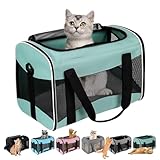
- [PRODUCT DIMENSIONS] Pet travel carrier size : 17x11x11 inches, recommended up to 15 lb pets, it is suitable for large, medium cats and small dogs. Please don't choose your airline cat carrying case based on weight, please refer to your pet's length and height when choosing a pet carrier size.
- [AIRLINE APPROVED] This cat carrier is designed with airline approved, it can fit comfortably under most flight seats, we can take our pets wherever we want. Dog travel carrier offers two attachment loop handles that can be used as a dual harness or as a luggage strap for balanced carry and secure transport.
- [EXCELLENT MATERIAL] Collapsible cat carrier is made of polyester fabric, supported by a steel ring, washable, wear-resistant and durable. The three sides and the top of this pet carrier are nylon mesh, scratch-resistant and not easy to damage, it can not only check your pet in real time, but also ensure enough air circulation.
- [SAFE AND COMFORTABLE] Dog travel bag has metal zippers on the top and side entrances, durable and not easy to deform, it allows your pets to enter and exit easily. The cat carrying case is equipped with an anti-escape safety buckle, which can effectively prevent pets from accidentally falling. It is suitable for car rides and vet rides.
- [PORTABLE AND FOLDABLE] Pet travel carrier comes with a detachable and hand washable wool pet bed, it can provide a comfortable sleeping space for your traveling pet. The cat travel case comes with an adjustable shoulder strap and handle for easy portability. When not in use, you can fold it up for storage.
- Hiding more often, withdrawing from family members, or avoiding normal interaction.
- Playing less, sleeping much more, seeming restless, or becoming unusually irritable or clingy.
- New or increased vocalizing, especially at night.
- Stopping a usual behavior, such as jumping onto furniture or using stairs.
- Changes in grooming, including an unkempt coat or repeated attention to one body area.
- Eating or drinking more or less than usual.
- Different urination or defecation habits, even when urine and stool are still being produced.
Tell the veterinarian whether the change appeared suddenly or progressed over several days. A worsening pattern, several changes occurring together, or any sign of pain should move the call higher on your list.
Why a behavior change can signal illness
VCA Animal Hospitals explains that “Cats have evolved to hide signs of illness and pain.” A cat may therefore look merely quiet or temperamental while dealing with a medical problem. The same VCA guidance recommends erring on the side of caution and arranging an examination as soon as possible when a cat does not seem right to its owner.
Possible medical categories include pain, urinary disease, gastrointestinal disease, metabolic illness, infection, and injury. These conditions can produce overlapping behaviors, so behavior by itself cannot identify the cause. A veterinarian may need to examine your cat and decide whether testing is appropriate.
Read the whole pattern, not one isolated action
Social behavior and energy
Compare your cat with its own normal routine. A sociable cat that suddenly hides, a normally independent cat that becomes clingy, or a playful cat that stops engaging may be communicating discomfort. Reduced interaction and lower activity are potential signs that something is wrong, even when appetite initially appears normal.
Free tools Windows power users keep installed
One-click scans. No signup required.
Food and water
Measure what your cat actually eats and drinks rather than relying on a filled bowl. Record the last time it ate a normal meal. A reduced appetite paired with lethargy, vomiting, diarrhea, or hiding is more concerning than a brief preference change, and any serious accompanying sign should be reported immediately.
Litter-box behavior
Check whether urine and stool are being produced. Frequent trips, straining, vocalizing, very small amounts, or no urine at all require urgent attention. Changes in stool frequency or consistency should be reported with the behavior change, especially if vomiting, poor appetite, or weakness is present.
Also popular on Amazon

- High Quality Design:Sturdy steel cage structure and wooden support board maintain good spatial stability and shape. Breathable mesh windows on four sides,which can ensure good air circulation and views,make pets have a comfortable and safe travel.It can also be easy for you to check on your pets.There is a front pocket to store pet toys,treats,etc.
- Dimension and Weight:Made of durable tear-resistant fabric.Four easy entrances for pets. Dimensions: 17 inch x 11 inch x 11 inch (L*W*H), suitable for pets up to 16 lbs.Please don't choose your carrier based on weight only,consider your pet's length and height when choosing a carrier.
- Airline Approved & Safty:Can be placed under the seats of most airplanes(Four non-slip feet on the bottom to prevent movement), and comfortably on the seat next to you in a car or bus.It has a adjustable shoulder strap.Can also be fastened to the car seat with a safety belt or shoulder strap to keep your pet safe.
- Easy to Clean :You can clean the stains and dirt on the surface with a soft cloth.Soft mat inside the pet carrier is removable and washable.You can take it out and wash it easily to solve all stains.
- Easy to Collapsible & Lightweight:When not in use,fold it into a flat,space saving and easy to store.Only 2.2lbs,it's easier to carry around.It can also used as a toy of pet house,allowing pets to play in a safe space to relax and rest.
Movement, posture, and grooming
Notice reluctance to jump, stiffness, a hunched posture, limping, difficulty settling, or repeatedly licking one area. A sudden decline in grooming can reflect pain or weakness; excessive grooming in one spot can also indicate discomfort. These observations help the veterinarian determine which parts of the examination deserve particular attention.
Vocalizing and nighttime restlessness
New howling, yowling, or nighttime restlessness should not automatically be attributed to aging or a behavioral issue. Medical problems can cause new vocalizing or agitation in older cats as well as younger ones, so arrange a veterinary assessment.
Do not wait beyond the 24-hour appetite threshold
VCA illness-recognition guidance advises immediate veterinary attention when a cat has not eaten for more than 24 hours. This is a trigger for action, not a universal waiting period: a cat that looks seriously ill, is deteriorating, or has another emergency sign should be seen sooner. When you call, state exactly when the cat last ate and whether it is drinking, vomiting, or using the litter box.
What to record before calling
Clear observations make triage more useful and help the veterinarian decide how quickly an examination is needed. Write down:
- The date and approximate time the behavior changed, and whether it was abrupt or gradual.
- The specific behavior: hiding, reduced sociability, irritability, vocalizing, altered sleep, less play, changed jumping, or grooming differences.
- Food and water intake, including when the cat last ate a normal amount.
- Urination and defecation, with any straining, frequent trips, accidents, blood, or little or no urine.
- Vomiting, diarrhea, breathing changes, weakness, stumbling, eye changes, or signs of pain.
- Recent food, medication, household, or environmental changes, plus any possible toxin exposure or injury.
A short video can document an intermittent behavior such as unusual breathing, walking, or vocalizing. It supplements, but does not replace, an examination. VCA recommends monitoring food, water, urination, defecation, vomiting, diarrhea, and other new or abnormal signs and reporting them to the veterinarian.
Independent reader supportYour contribution helps us test, update, and keep practical guides available for everyone.What to do while arranging care
For an emergency trip
Call the emergency clinic so staff can advise you and prepare for arrival. Use a secure carrier, keep the environment quiet, and minimize handling. If trauma, a possible fracture, or neurologic signs are present, support the cat as evenly as possible and avoid forcing it to walk.
Quick wins for a faster PC:
Clear out junk files and repair common Windows errorsFree Scan →Scan for outdated or missing drivers - takes under a minuteDriver Scan →Also popular on Amazon
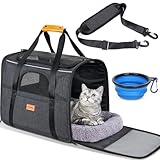
- 【 Spacious & Comfortable Cat Carrier 】The large cat carrier provides ample space for your feline friend to move, turn, and stretch during travel. Measuring 17.3 x 12.2 x 13.4 inches, it is wider and taller than most cat carriers, ensuring your pet feels comfortable and at ease while on the go.
- 【Balanced Mesh Design】Unlike other cat carrier hard, our cat carrier soft strikes the perfect balance with 40% mesh surface area. This ensures your pet can observe the surroundings and breathe easily while feeling safe and secure at the same time. The cat carrier large is suitable for pets in all kinds of situations.
- 【Built-in Dual-Sided Cushion】The detachable pad offers two distinct comforts: a cool side for summer and a super-soft, warm side for winter. You can easily flip it to match the season, providing the perfect temperature for your pet in any weather.
- 【Includes Foldable Bowl】Designed for on-the-go use, our foldable bowl carries 410g of food or 20oz of water. After use, simply collapse it and attach it directly to your pet's collar or leash, perfect for keeping your pet fueled and hydrated anywhere.
- 【Safe & Durable】Safety is our top priority, and the pet carrier for cat is equipped with a secure buckle to prevent your pet from escaping. The cat carrier soft is made of reinforced snow silk fabric and hard mesh material, ensuring durability and preventing any tearing during long-distance travel.
For a prompt regular appointment
Keep monitoring the cat and make the earliest practical appointment. Tell the clinic if any emergency sign appears or if the cat worsens; the recommended care level can change quickly.
Medication safety
Do not give human medication or an over-the-counter product unless a veterinarian specifically instructs you and supplies appropriate directions. Cornell cautions that some nonprescription diarrhea medicines can harm cats, and VCA gives the same warning about over-the-counter medicines generally. A product that is safe for people can be dangerous for a cat.
Questions owners commonly ask
My cat is acting strange all of a sudden—should I call the vet?
Yes. Call promptly for any unexplained change, even if it seems mild. Describe the timing and check appetite, thirst, litter-box use, breathing, movement, grooming, and alertness while you wait for guidance.
Is hiding a sign my cat is sick?
It can be. Hiding is not diagnostic, but a new or pronounced increase in hiding, especially with reduced activity or appetite changes, warrants a veterinary call.
Outdated Drivers Are Slowing You Down
One free scan finds every outdated or missing driver and matches the right update for your exact hardware.Free scan · exact hardware matchWindows Errors? Fix Them Before They Spread
Repair common Windows errors and clear accumulated junk for a smoother, more stable PC - no reinstall needed.Free scan · no reinstallMy cat is straining in the litter box but not peeing—what should I do?
Contact an emergency veterinarian immediately. Repeated straining with little or no urine can represent urinary obstruction and should not be managed at home.
Bottom line
A sudden behavior change is a health signal until a veterinarian establishes otherwise. Arrange prompt advice for unexplained changes, and bypass the regular appointment queue for breathing trouble, collapse, seizures, urinary blockage, serious eye problems, suspected poisoning or trauma, persistent vomiting or diarrhea, or more than 24 hours without eating.





Leave a Reply