
Some links on this page are affiliate links: if you buy through them we may earn a commission, at no extra cost to you.
Call a licensed wildlife or pest-control professional promptly if an animal in your wall has bitten or scratched someone, appears sick or aggressive, may be a bat in living space, has caused heavy contamination or wire damage, is in a dangerous or unreachable void, or may be a mother with young. If you cannot confidently identify the species, entry point, and whether young are present, arrange an inspection before sealing anything. Closing an active opening can trap an animal or separate a mother from her offspring.
Scratching alone does not identify the animal. Timing, odor, droppings, tracks, hair, gnaw marks, nesting material, and exterior openings can narrow the possibilities, but safe removal depends on confirming what is inside and how it got there.
As an Amazon Associate I earn from qualifying purchases.
Do these 3 things before closing this tab:
1Fix the driver behind crashes, sound loss and screen glitches2Repair Windows errors before they cause bigger problems3Scan for outdated or missing drivers - takes under a minuteWhen should I call pest control for an animal in my walls?
The right time depends on risk, not simply how loud the noise is. Use the following triage: call immediately for health, fire, contamination, animal-welfare, or access hazards; arrange an inspection soon for persistent evidence; and monitor briefly only when the situation is clearly low risk.
Call now when there is a bite, disease concern, or dangerous animal
- A person or pet was bitten or scratched, or the animal seems sick, disoriented, unusually tame, or aggressive. Keep everyone away and contact medical, veterinary, or public-health professionals as appropriate.
- A bat is in a room where people or pets sleep or spend time. Do not handle it; close interior doors, keep people and pets out, and obtain species-appropriate professional guidance.
- There are large accumulations of droppings, strong urine or decomposition odors, contaminated insulation, or other signs that cleanup may expose you to pathogens or parasites. The National Pesticide Information Center (NPIC) advises professional help when disease or bite risk is a concern, and Washington Department of Fish and Wildlife (WDFW) identifies heavy droppings and mother-and-young removals as wildlife-damage-control work.
- You hear electrical arcing, smell hot insulation, see damaged cables, or suspect an animal has chewed wiring. Animals can damage wiring and insulation; have an electrician inspect suspected electrical damage.
- The animal is in a chimney, high roof, crawlspace, narrow wall void, or another location where a fall, entrapment, or structural hazard is possible.
- You suspect young are present. High-pitched squealing or chirping, repeated adult activity, or a nest can indicate dependent offspring. Removing an adult or sealing an entrance can leave young trapped inside.
Arrange an inspection soon for persistent signs
Schedule a licensed wildlife-exclusion or animal-control inspection when noises recur, an odor appears, or you find an exterior hole, tracks, hair, nesting material, gnaw marks, or damaged soffits, vents, siding, or chimney components. New York City Animal Care guidance recommends marking the strongest sound area and inspecting adjoining accessible spaces and the exterior rather than cutting into the wall.
Popular on Amazon
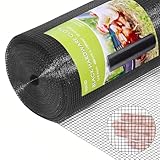
- RUST RESISTANCE: UULID black hardware cloth 1/4 inch 48 x 100 ft adopts Hot dipped galvanized, which prevents rust and corrosion and longer service life
- SUPERIOR DURABILITY:Our black hardware cloth features a protective black pvc coated welded wire fence, enhancing its longevity and performance. providing lasting security for your garden and poultry.
- 1/4" x 1/4" OPENINGS: hardware cloth 1/4 inch garden wire fence rolls opening can be used to build wire walls and roofs for chickens, effectively protecting your chickens from other carious animals! ensuring their safety
- STRONG DURABILITY:Our garden fence wire cloth is rust proof, waterproof, tear resistance, and the grid is flat and even. Even in a variety of wet environment still remains the same, thus this Hot-dip galvanization hradware cloth chicken wire mesh roll is one of the wonderful choice for making fences
- GREAT PACKAGE: We would like to make sure every customer receives a satisfactory hardware cloth 1/4 inch 48 x 100 ft chicken fencing wire fence mesh
Monitor briefly only when the situation is clearly safe
Short monitoring can be reasonable when there is no contamination, bite risk, dangerous access, suspected young, or visible structural damage. Cornell Integrated Pest Management says that if an entry site is uncertain, monitor it for at least two days. Observe from the ground or another safe position, record activity, and be prepared to call if evidence changes.
What could be scratching or moving inside my wall?
Several animals can use wall, roof, chimney, or soffit voids, and sound by itself is not a reliable identification method. Activity timing and physical evidence are more useful than guessing from a single noise.
Recommended Free Tools
| Clue | Possibilities it may suggest | Why it is not conclusive |
|---|---|---|
| Light, rapid scratching, especially at night | Mice, rats, or other small mammals | Sound travels through framing and ducts; different animals can sound alike. |
| Heavier thumps, running, or repeated gnawing | Squirrels, raccoons, or larger rodents | Size and location can distort the apparent volume. |
| Fluttering, squeaks, or chirps near a roof, vent, or chimney | Bats or birds | Young animals and adults produce different sounds, and echoes can mislead. |
| Strong urine, musky, or decomposition odor | Rodents, raccoons, or an animal that has died | Odor can move through insulation and may originate outside the loudest area. |
| Droppings, tracks, hair, nesting fibers, or gnaw marks | Species-specific evidence may be possible | Correct identification still requires an experienced inspection and local legal knowledge. |
Look from the ground for gaps at roof edges, soffits, vents, chimneys, utility penetrations, siding, and foundations. A mouse can fit through a hole the width of a pencil—about 1/4 inch (6 millimeters) in diameter, according to the Centers for Disease Control and Prevention (CDC, 2024)—but a larger opening may be used by several species. Do not enlarge an opening or dismantle building materials just to look inside.
How do I investigate the animal without making the problem worse?
Use observation and documentation, not contact or improvised removal. The goal is to identify the likely species, entry route, activity status, and possibility of young before anyone closes the opening.
Also popular on Amazon

- Premium Heavy-Duty Construction: Crafted from high-quality low-carbon steel wire with hot-dip galvanized coating applied after welding for maximum durability. Our 1/4" 23-gauge hardware cloth (12" x 35ft roll) offers exceptional strength while remaining flexible enough for easy installation. Resists breaking, bending, and warping for long-lasting performance
- Superior Weather & Corrosion Resistance: Features waterproof, rust-proof construction that withstands harsh environments including rain, snow, and saline conditions. The smooth galvanized surface prevents corrosion while maintaining an attractive appearance year after year. Ideal for both indoor and outdoor applications
- Ultimate Garden Protection System: Effectively safeguards vegetables, flower roots, bulbs and rhizomes from burrowing pests; Creates protective barriers for garden beds, fruit trees and orchards; Can be shaped into individual plant baskets or used to line raised garden beds; Doubles as effective rodent protection for your harvest
- Versatile Animal Enclosure Solution: Perfect for creating secure chicken coops and poultry runs, rabbit hutches and pet enclosures, snake and rodent-proof fencing, wildlife rehabilitation cages, gutter guards and eave protection
- Easy-to-Use & Multi-Functional: Simple to cut and customize for any project; Works as soil screens, balcony barriers, and craft materials; Maintains structural integrity without fading or deforming; Attractive enough for decorative applications while being fully functional; Suitable for both professional and DIY use in gardens, farms, and homes
- Record the activity. Note the date, time, duration, location, and type of noise. Mark the strongest sound area without drilling or cutting into the wall.
- Inspect accessible areas. From a safe floor, yard, or ladder position permitted by your local safety rules, look for droppings, hair, tracks, nest material, gnawing, odors, and damaged insulation. Check adjoining attic or utility spaces only if they are clean, stable, and safely reachable.
- Survey the exterior. Examine roof lines, soffits, vents, chimneys, utility lines, siding, and foundation openings. Photograph evidence for the professional. Do not climb a precarious roof or enter a contaminated attic.
- Check for young. Listen for high-pitched squeals or chirps and look for nest material or repeated adult travel. Spring and summer can heighten concern, but young may be present at other times; inspect rather than relying on a calendar assumption.
- Keep people and pets away. Never approach or handle wildlife. NPIC’s advice is: “Never approach a wild animal and keep children and pets away from all wildlife.”
- Call for an inspection when evidence is unclear. A professional can determine whether the void is occupied, what species protections apply, and whether removal, cleanup, repair, or an electrician’s assessment is needed.
Can I seal the hole, or will I trap the animal?
Sealing is safe only after the opening is confirmed inactive and any adults and young are out. Premature closure can trap an animal inside, force it into living space, or separate a mother from dependent young.
If you are uncertain whether an entry site is active, Cornell Integrated Pest Management recommends monitoring it for at least two days. Observe for fresh tracks, disturbed material, sounds, or repeated travel. A paper-plug test is not appropriate when bats or birds might be entering, because it can interfere with protected wildlife and does not resolve the underlying identification question.
Maine wildlife guidance warns that sealing while an animal or young remain inside can cause serious problems. Do not inject expanding foam, fill a void with smoke, cut into walls, or use poison as a first response. New York City Animal Care specifically warns against cutting into walls or injecting foam before inspection.
Which professional should I call?
“Pest control” can mean different services. Choose a provider with the right wildlife, structural, cleanup, and licensing capabilities for the situation.
Also popular on Amazon

- Heavy-Duty Hot-Dipped Galvanization: Our low-carbon steel hardware cloth undergoes professional hot-dipped galvanization for a uniform coating without bubbles. Pre-tested for salt spray, it ensures durable corrosion resistance, lasting through years of outdoor use without needing replacements.
- Robust Welded Structure: Our 36in x 50 ft hardware cloth is welded from low-carbon steel wire into a sturdy mesh structure, followed by a post-weld galvanization process. Each weld point is zinc-coated to prevent detachment, ensuring a bright, rust-proof finish even after prolonged exposure to different weather conditions.
- 1/4-inch Fine Mesh: Featuring narrow 1/4" mesh, even small animals find it difficult to penetrate. Perfect for safeguarding vegetable gardens from small rodents like squirrels, rabbits, raccoons, skunks, foxes, snakes, and more.
- Enhanced Packaging: To prevent damage during transportation, Our hardware cloth is packaged in five layers of reinforced cardboard boxes with fully covered sealing at both ends. Internally, it's wrapped with plastic film and paper, ensuring waterproof and rustproof protection. Minimize the risk of damage and ensure safe delivery!
- Easy to Cut and Use: Simply cut with scissors or wire cutters to create different shapes and sizes for chicken coops, garden beds, rabbit fences, hedges, drainage grid fences, flower beds, DIY projects, and more. Caution: Beware of sharp edges after cutting; always wear gloves when handling.
| Option | Best fit | Questions to verify before hiring |
|---|---|---|
| DIY monitoring | Brief observation when there is no bite risk, contamination, suspected young, dangerous access, or wiring damage. | Can you observe safely from the ground, and do you know when to stop monitoring and call? |
| Licensed wildlife-exclusion or animal-control company | Unknown or protected species, young, contaminated spaces, inaccessible voids, roofs, chimneys, or repeated entry. | Are they licensed locally? Do they identify species, remove animals humanely, clean contamination, repair entry points, and provide follow-up? |
| General pest-control provider | Confirmed common rodents or insects when the company is authorized and equipped for that species and building work. | Will they inspect for young, avoid inappropriate poison use, coordinate exclusion and repairs, and explain legal restrictions? |
| Electrician or building professional | Suspected chewed wiring, damaged insulation, structural openings, or fire hazards. | Can they inspect after wildlife activity is controlled and document repairs required by local code? |
Wildlife agencies distinguish animal-damage-control work from ordinary sealing because species protections, hazards, and removal methods differ. Ask whether the estimate includes inspection, humane removal or exclusion, sanitation, repairs, and a follow-up check; these may be separate services.
What health, fire, and legal risks should I consider?
Health risks
Droppings, urine, parasites, bites, and scratches can expose people and pets to disease. Keep children and animals out of the affected area, avoid sweeping or handling waste, and follow professional or public-health advice for cleanup. Do not touch a sick, dead, or trapped animal.
Fire and structural risks
Chewed electrical wiring can create a fire hazard, while damaged insulation reduces the building envelope’s performance and can become contaminated. If you see wire damage, smell burning, or hear electrical activity, stop investigating the void and arrange an electrician’s inspection.
Animal-welfare risks
An adult may be using the wall as a route to a nest elsewhere, and young may be hidden beyond the loudest area. Exclusion that ignores this can cause prolonged suffering, odors from a carcass, or an animal forced into the living space.
Also popular on Amazon

- RUST RESISTANCE TOP: Heavy-Duty Hot-Dipped Galvanization After Welding, hardware cloth 1/4 inch 48 x 100 ft undergoes professional hot-dipped galvanization After Welding for a uniform coating without bubbles. Pre-tested for salt spray, it ensures durable corrosion resistance, lasting through years of outdoor use without needing replacements
- 1/4 INCH FINE MESH: Hardware mesh featuring narrow 1/4 inch mesh that even small animals find difficult to penetrate. Suitable for safeguarding vegetable gardens from small rodents like rabbits, snakes, and more
- MATERIAL & SIZE: Heavy duty hot dipped galvanized hardware cloth with Heavy-Duty Hot-Dipped Galvanization After Welding, providing a double zinc coating for maximum rust resistance and long life. Measures 48 inch by 100 foot, cuts easily with scissors, and can be molded or folded as needed without any problems
- PROTECTIVE PACKAGING: Hardware cloth is packaged in five layers of reinforced cardboard boxes with fully covered sealing at both ends to prevent damage during transportation and minimize the risk of damage during delivery
- STRONG DURABILITY: Garden fence wire cloth is rust proof, waterproof, tear resistance, and the grid is flat and even. Even in a variety of wet environments it remains the same, making this Hot-dip galvanization After Welding hardware cloth chicken wire mesh roll a suitable choice for making fences
Legal risks
Rules vary by state and locality. Many birds and their nests have protections, and chimney alterations, trapping, relocation, and poison use can be regulated. Check the relevant wildlife agency and building or fire authority before disturbing nests, trapping, poisoning, or modifying a chimney.
Independent reader supportYour contribution helps us test, update, and keep practical guides available for everyone.How should the opening be repaired after removal?
Repair begins only after the professional confirms that the animal and any young are out. Use durable materials matched to the species and building condition rather than a temporary patch.
Windows Errors? Fix Them Before They Spread
Repair common Windows errors and clear accumulated junk for a smoother, more stable PC - no reinstall needed.Free scan · no reinstallCrashes, No Sound, or Screen Glitches?
Random freezes, missing sound and display glitches usually trace back to one bad driver. Find and replace yours safely.Free scan · under a minute- Install properly secured hardware cloth or metal sheeting for small openings where appropriate. Cornell identifies quarter-inch hardware cloth as suitable for smaller vertebrates, while CDC guidance lists hardware cloth or metal sheeting for rodent openings.
- Repair or replace damaged vents, soffits, roof edges, chimney caps, and siding. Protect vents without blocking required airflow.
- Seal utility penetrations and foundation gaps with materials that resist gnawing and weather.
- Remove attractants such as unsecured garbage, spilled birdseed, accessible pet food, fallen fruit, brush piles, and easy routes onto the roof.
- Schedule a follow-up inspection if noises, odors, or fresh evidence return.
As NPIC explains, “Wild animals need food and shelter just like people.” Removing those resources and maintaining the building reduces recurrence more reliably than relying on repellents alone.
What should I tell the professional when I call?
Provide the exact address and location of the noise, when it occurs, how long it has continued, and whether anyone or any pet was bitten or scratched. Mention odors, droppings, visible openings, damaged wiring, suspected young, bat or bird activity, roof or chimney access, and any steps already taken. Photos from a safe distance and a written activity log can help the inspection, but do not delay an urgent call to gather more evidence.
Also popular on Amazon

- STURDY CONSTRUCTION 304 STAINLESS STEEL GMOTLSE 304 stainless steel hardware cloth is made of genuine 304 stainless steel with solid joints and strong tensile strength ensuring the mesh holds its shape under long term use Even when exposed to moisture or outdoor elements this 304 stainless steel wire mesh stays rust resistant and reliable for years
- LIGHTWEIGHT EASY TO CUT PERFECT FOR HOME PROJECTS This 304 stainless hardware cloth comes in a compact roll simply unroll measure and cut to your desired size with household scissors or standard tin snips No special tools or professional skills required The fine 1/4 inch mesh openings are easy to work with making it simple to fit into tight spaces odd angles or custom shapes around the home
- VERSATILE USE FROM EAVES TO FIREPLACES This 304 stainless chicken wire is ideal for a wide range of home applications blocking gaps under eaves to keep birds and pests out covering ventilation openings lining fireplace surrounds to contain sparks creating protective screens for windows and doors and sealing small gaps around pipes or vents This 304 chicken wire stainless mesh is the go to choice for homeowners looking for an easy and affordable solution to seal protect and reinforce
- GARDEN PET USE DRAINAGE AND ENCLOSURES Place this wire mesh at the bottom of flower pots or garden beds to allow proper drainage while preventing soil loss It also works well for small pet enclosures garden containers and plant protection screens A simple and practical solution for everyday home and garden needs
- SAFETY REMINDER Although the edges are carefully cut flat the wire is firm and may have slight sharpness Please wear protective gloves when unpacking cutting or setting up to avoid scratches Always handle with care for a safe and smooth setup Larger sizes are available in our other listings
Ask for the species assessment, the proposed exclusion method, confirmation that young will not be trapped, cleanup and repair details, licensing or permits required in your area, and what follow-up is included. A clear plan should explain how the provider will verify the void is empty before permanently closing the entry.
Frequently Asked Questions
Will an animal leave my wall on its own?
It might, especially if the space is being used only as a travel route, but waiting cannot confirm that the void is empty. An animal may remain because the wall offers shelter, nesting space, or access to food, and an unnoticed carcass can create odor and contamination.
Free tools Windows power users keep installed
One-click scans. No signup required.
Should I use ultrasonic repellents, mothballs, or ammonia?
These products do not replace species identification and exclusion, and fumes can create risks for people and pets. Poison can also leave an animal dying inside an inaccessible wall and may be restricted by local rules; ask a licensed professional for a species-appropriate plan.
Who pays for damage caused by wildlife in a wall?
Responsibility depends on your lease, homeowners policy, local law, and the cause of the opening. Document damage and service reports, then check your policy or ask your landlord before authorizing non-emergency structural work.
Can I move a trapped animal to another location?
Relocation is regulated or discouraged in many jurisdictions and can spread disease or place the animal in unsuitable territory. A licensed wildlife professional or local wildlife agency can explain lawful release and exclusion options for your species and location.





Leave a Reply