Fish lay their eggs in many different places, depending on the species: gravel riverbeds, sand nests, vegetation, mud, rock, reefs, offshore water, or the open water column. Some fish bury or attach eggs, while others release eggs and sperm into the water for external fertilization. The exact habitat helps eggs and larvae survive.
That means “in water” is only part of the answer. The important detail is the underwater habitat within that water: a sheltered gravel nest, a sandy territory, a soft seafloor, a plant-covered area, or open water affected by currents and tides.
Key takeaways
- Fish lay or release eggs in species-specific habitats that may include gravel, sand, vegetation, mud, rock, reefs, estuaries, offshore water, or the open water column.
- Salmon dig gravel nests called redds, bury their eggs in the gravel, and develop there until hatching.
- Not all fish build nests: many species release eggs and sperm into the water, where currents and tides transport eggs and larvae.
- Some marine examples include gray triggerfish spawning in sand nests, scup spawning over weedy or sandy areas, English sole spawning over soft mud, and haddock spawning over rock, gravel, sand, or mud.
- The right spawning site supplies the conditions eggs and larvae need, including suitable oxygen, flow, temperature, shelter, food access, and protection from predators.
Where do fish lay their eggs?
Fish use many different spawning sites rather than one universal type of nest. Depending on the species, a fish may bury eggs in a gravel riverbed, attach or release them near vegetation, place them in sand or mud, deposit them on rock or reef habitat, or release them into offshore water. NOAA Fisheries describes spawning habitat as part of the broader habitat fish need to reproduce, feed, and grow to maturity in its essential fish habitat explanation.
“Lay eggs” is a useful everyday description, but fish reproduce in several ways. Some females deposit eggs on a surface or in a nest. Other fish are broadcast spawners: females release eggs into the water while males release sperm nearby, so fertilization generally takes place externally. The eggs may then sink, remain attached, or drift with currents.
The Tool Desk
Outbyte PC Repair FREERepair Windows errors before they cause bigger problemsFix Now →Outbyte Driver Updater FREEScan for outdated or missing drivers - takes under a minuteDriver Scan →#1 Best Overall

- 【100% Safe Resin Material】 Aquarium decorations and water plants are made of safe resin materials, no special smell, and will not affect the water quality in the water tank. Artificial plastic plants are soft enough to allow fish to shuttle back and forth, providing hiding and rest.
- 【Provide Hiding and Hatching for Fish】The small castle decorations provide a natural environment for the fish tank, including bright colors and doors, which are very suitable for home aquariums. Turn your aquarium into a beautiful landscape. The mini castle will not fade or fade, and adds a natural flavor to your fish tank or aquarium. There are many holes for small fish to swim through, which is a perfect hiding place for fish.
- 【Decorate Your Fish Tank】The mountain view rockery has a hidden cave. It can accommodate your underwater environment, aquarium, fish tank and garden. Cool artificial cave decorations add a natural touch to your fish tank.
- 【Wash decorations before use】Rinse and soak the decaying tree trunk decoration with a small amount of baking soda or water, soak it in cold water for half an hour to clean it and make the appearance more realistic. The fish tank decoration kit can be wiped and rinsed with water, effortlessly, providing a comfortable and interesting environment for fish, making beautiful decorations and adding charm to the home.
- 【Dimensions】Size: The castle is approx. 5.9x3.1x5.3In, the rockery is approx 4.3x4x2.1In, 4 small Plastic plant is 3.9In, medium plastic plant is 7.8In, large plastic plant is 11.8In
Where do freshwater fish lay eggs?
Freshwater fish may lay eggs on or in the bottom of a stream, lake, or river, or among plants and other underwater surfaces. The exact site depends on the species’ eggs, adult behavior, water flow, oxygen needs, and vulnerability to predators.
What is a salmon egg nest called?
A salmon egg nest is called a redd. Female salmon use their tails to make a depression in gravel, release eggs into it, and cover the eggs with additional gravel. NOAA Fisheries explains that “Adult salmon spawn in freshwater, where female salmon lay thousands of eggs that are fertilized by male salmon,” and that “Eggs are buried in gravel nests, called ‘redds,’ and salmon can stay in their eggs for several weeks to months until they hatch.” Read the agency’s salmon life-cycle explanation for the full sequence.
Gravel gives water space to flow around the buried eggs, helping provide oxygen while the eggs develop. The gravel also hides the eggs from some predators and keeps them from being swept away as easily as exposed eggs. A redd is an underwater gravel depression, not a dry-land-style nest.
Rank #2

- Realistic Natural Environment: These fish tank decorations replicate the natural environment, and once placed in the tank, they are virtually indistinguishable from real plants. Your fish will enjoy the environment these plants provide, and they can play and hide in it
- Soft and Safe Design: The leaves are soft and lifelike without scratching the fish. They swing with the water waves in the fish tank, making them look very vivid and beautiful in the water. They can be planted in both freshwater and saltwater. Each plant has its own base for holding it in the gravel
- Low Maintenance Solution: Unlike live plants in fish tanks, plastic artificial plants do not need special lighting and other substrates. They neither die nor become wilted or unattractive. They remain beautiful all the time without any pruning
- Convenient Aquarium Setup:We provide the suitable aquarium products for different sizes of aquariums in order to save you time. Simply buy them according to your needs and place them in your fish tank to create a beautiful underwater world for your pet fish, making fish life more interesting and happier
- Complete Decoration Set: The set contains 1 rockery aquarium decoration, 3 short aquarium plants, 3 medium aquarium plants and 1 tall aquarium plant with a total of 8 different styles. Heights vary from 2 inches to 8 inches. Suitable for 5 gallon or larger fish tanks
Do all fish lay eggs in nests?
No. Some fish construct, defend, or use a specific nest, but many fish release eggs over a bottom habitat or directly into the water column. Broadcast spawning can allow currents and tides to disperse eggs and larvae, while other species keep eggs concentrated in a protected nest or attached to a surface.
Free tools Windows power users keep installed
One-click scans. No signup required.
NOAA Fisheries’ essential-fish-habitat materials explain that many fish spawn offshore and that currents and tides can transport eggs and larvae toward nearshore nursery areas. The agency’s essential fish habitat ecosystem poster illustrates how spawning, nursery, feeding, and growth habitats can be connected.
Where do saltwater fish lay eggs?
Saltwater fish use a wide range of marine habitats, including sandy bottoms, weedy areas, soft mud, rock, gravel, reefs, estuaries, offshore waters, and the open water column. The following examples show why the answer to “where do fish lay their eggs?” must be tied to a particular species.
Rank #3

- High-quality resin material, safely compatible with aquarium environments. Non-toxic to fish and shrimp, does not pollute the water, durable and fade-resistant, and does not alter the pH value, maintaining the aquarium's beauty and health for years
- Package includes: 1x Aquarium Wreck Decoration (5.3 x 4.5 x 2.5 inches), 1x Floating Diver Decoration (2.8 inches), 4x Plastic Water Grass (2.3-4.7 inches),A transparent fishing line (placed with the diver)
- Hand-painted resin sunken ship – each piece is one-of-a-kind! Its smoothly polished hull won’t scratch fish fins, making it ideal for betta fish, guppies, and other small fish. Suitable for both freshwater and saltwater aquariums
- The diver ornament floats with the water flow, helping you monitor the direction of aquarium water movement( Height can be freely adjusted)
- Fun Design: An ancient sunken ship paired with an exploring diver, plus plastic aquatic plant decorations, adds depth and storytelling charm to your aquarium
| Spawning setting | What happens there | Example |
|---|---|---|
| Gravel stream or river bottom | Eggs are placed in a depression, buried among gravel, and incubate there. | Pacific and Atlantic salmon; the nest is called a redd. |
| Sand | A fish may build, use, or defend a nest in the sandy bottom. | Gray triggerfish males establish territories and build sand nests. |
| Weedy or vegetated habitat | Eggs may be released over vegetation or attached near a plant or other surface, depending on the species. | Scup spawn over weedy or sandy areas. |
| Mud or soft bottom | Eggs are released over soft seafloor habitat and may sink or develop near the bottom. | English sole spawn over soft muddy ocean floors. |
| Rock, gravel, reef, or structured bottom | Solid or uneven structure can provide a spawning surface, shelter, or suitable water movement. | Haddock use rock, gravel, sand, or mud bottoms; reefs and rocky shorelines can also be important habitat. |
| Open water or offshore habitat | Eggs and sperm are released into the water, and currents and tides disperse early life stages. | Many marine fish are broadcast spawners, including species that spawn offshore. |
NOAA Fisheries species accounts provide the marine examples in this table: gray triggerfish, scup, English sole, and haddock.
Do fish lay eggs on rocks, plants, or sand?
Yes, fish can lay or release eggs on rocks, near plants, or in sand, but no single surface suits every species. Eggs may be attached to vegetation or another underwater surface, deposited on rock or structured habitat, buried in sand, or released above the bottom so that they drift or settle.
Quick wins for a faster PC:
Scan for outdated or missing drivers - takes under a minuteDriver Scan →Repair Windows errors before they cause bigger problemsFix Now →Gray triggerfish are a clear sand-nest example: males establish territories and build and defend nests in sandy habitat. Scup spawn over weedy or sandy areas. Haddock may spawn over rock, gravel, sand, or mud, with females releasing eggs in batches near the ocean floor. After fertilization, haddock eggs rise and drift with currents.
Rank #4

- The ancient sunken ship has been meticulously hand drawn, with exquisite details and a smooth surface that can protect delicate fish fins from fading or breaking, requiring no maintenance - easy to clean, durable, and suitable for freshwater or saltwater environments
- 8Pcs Fish Tank Decorations Set: The sunken ship measures 5.3 x 2.5 x 4.5 inches, paired with simulated aquatic plants ranging in height from 2.3 to 4.7 inches. The proportions are coordinated and the layout is flexible, making it easy to adapt to various small, medium, and large fish tanks, creating a three-dimensional underwater landscape with a strong sense of hierarchy
- Safe and Durable: Made from high-quality eco-friendly resin, the leaves are soft and won't scratch fish fins. It is suitable for various aquatic organisms such as betta fish, shrimp, and fry, ensuring peace of mind when used.
- Ready to use, easy to clean: no installation tools required. Rinse with clean water before use and place into the fish tank. The bottom is flat and stable, not prone to tilting. The smooth surface is easy to clean, making daily maintenance both time-saving and effortless
- Enriching Fish Habitats: Designed specifically to provide gentle shelter and visual stimulation for fighting fish, lanternfish, peacock fish, and other small fish species
How many eggs do fish lay?
There is no single egg count for fish. The number varies greatly by species, female size, reproductive strategy, and spawning conditions, so a figure from one species should not be generalized to all fish.
- According to NOAA Fisheries’ current English sole species account, females release between 150,000 and 2 million eggs, and the eggs sink to the bottom a few days after spawning.
- According to NOAA Fisheries’ current gray triggerfish species account, a female releases an average of 772,415 eggs while spawning in a sand nest.
- According to NOAA Fisheries’ current haddock species account, females release an average of 850,000 eggs, while larger females can release up to 3 million eggs.
These large counts are part of a reproductive strategy in which many eggs and larvae do not survive to adulthood. Fish species that provide less direct protection for their eggs may compensate by releasing many eggs, while nest-building or egg-guarding species invest more behavior and habitat in protecting a smaller or more concentrated group.
Independent reader supportYour contribution helps us test, update, and keep practical guides available for everyone.Why does the spawning location matter?
The spawning location matters because eggs and newly hatched larvae need conditions that support fertilization, development, survival, and movement into nursery habitat. Depending on the species, suitable habitat may provide the following:
Best Value
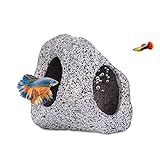
- Quality & Professional:The aquarium cave is made of ceramic with the function of filtering water, and it is environmentally friendly and odorless, imitating the natural stone texture to create a more natural visual effect.
- Visual feast:Aquarium decorative hiding cave provides you with a visual feast. It provides a "house" for your fish. The hollow caves provide shelter, hiding spots as well as spawning and privacy space for your fish.
- Multiple Placement:You can put it in the fish tank alone, or you can buy several fish tank caves of different sizes to put them together. In order to achieve the best aquarium decoration effect.
- Easy to clean: When you clean your fish tank, a simple rinse of the rock cave decorations with water is all you need.
- Make your Aquarium Vivid And Lively: Provide a natural environment feeling with vivid and detailed colors to add lively life to your aquarium.
- Fertilization: Eggs and sperm must meet, whether inside a nest, over the bottom, or in open water.
- Oxygen and water movement: Flow through gravel or circulation around floating eggs can support development.
- Protection: Burial, vegetation, rock, or a guarded nest can reduce exposure to currents and predators.
- Temperature and chemistry: Eggs develop only within conditions the species can tolerate.
- Dispersal: Currents and tides may carry eggs and larvae to feeding or nursery areas.
- Access to later life-cycle habitat: Young fish need food, shelter, and suitable conditions after hatching.
NOAA Fisheries defines essential fish habitat as “those waters and substrate necessary to fish for spawning, breeding, feeding or growth to maturity,” a definition quoted in the agency’s Alaska Essential Fish Habitat fact sheet. In other words, a spawning site is not just a place where eggs happen to be released; it is one part of the habitat a fish needs throughout its life cycle.
When do fish lay their eggs?
Fish spawn at species-specific times rather than on one universal schedule. NOAA Fisheries examples include winter to early spring spawning for English sole, April through August for gray triggerfish, May through August for scup, and seasonally variable spawning for salmon. Water temperature, daylight, food availability, migration, tides, and local conditions can all influence timing.
Because both location and timing vary, identifying the fish is the most reliable way to learn where its eggs are likely to be found. A regional freshwater fish field guide can help identify a local fish and check its range and habitat. The Peterson guide is described in its bibliographic record as covering nearly 1,000 North American freshwater species with identification plates, maps, and distribution information. For readers who need both freshwater and saltwater coverage, the National Audubon Society Field Guide to Fishes: North America includes photographs, illustrations, maps, and a glossary according to its bibliographic record.
What is the simplest answer?
Fish lay their eggs wherever their species’ reproductive strategy and the eggs’ survival needs require. The site may be a salmon’s gravel redd, a gray triggerfish’s sand nest, weedy or muddy marine habitat, a rocky or reef-like bottom, or offshore water where eggs and sperm drift with currents. If you have a particular fish in mind, the species name is needed for a more precise answer.
The Bottom Line
Fish do not all lay eggs in the same place. Some bury eggs in gravel, attach them near vegetation, build nests in sand, deposit them over mud or rock, or release them into open water; the species determines which habitat gives its eggs the best chance of survival.
Quick Recap
Product prices and availability are accurate as of the date/time indicated and are subject to change. Any price and availability information displayed on Amazon at the time of purchase will apply.




