
Quick wins for a faster PC:
Clear out junk files and repair common Windows errorsFree Scan →Fix the driver behind crashes, sound loss and screen glitchesFind Drivers →Some links on this page are affiliate links: if you buy through them we may earn a commission, at no extra cost to you.
Cat cafes need health and vaccination rules because they put people, animals, food, and shared surfaces in unusually close contact. A cat can carry organisms on its fur, paws, mouth, litter, urine or feces; a visitor can then transfer contamination to a hand, table, door handle or food-contact surface. Where food is prepared or served, that pathway is a food-safety issue as well as an animal-welfare issue.
There is no single nationwide “cat-cafe vaccine schedule.” Requirements come from several layers: the local health department and food code, state and local rabies and animal-control law, the facility’s veterinarian, and sometimes an insurer or shelter partner. The result may be a pet-only lounge, a cat area physically separated from a licensed restaurant, or a business that allows customers to bring food but does not sell or serve it.


As an Amazon Associate I earn from qualifying purchases.
The Tool Desk
Outbyte Driver Updater FREEScan for outdated or missing drivers - takes under a minuteDriver Scan →Outbyte PC Repair FREERepair Windows errors before they cause bigger problemsFix Now →What the rules are designed to prevent
The central concern is not that every cat is sick or that every cafe will cause an outbreak. It is that animals create plausible routes for contamination in a place where people may eat, drink and touch common surfaces. The U.S. Food and Drug Administration explains in the Food Code that “animals carry disease-causing organisms and can transmit pathogens to humans through direct and indirect contamination of food and food-contact surfaces.”
In a cat cafe, those routes can include:
- fur, saliva and respiratory secretions on hands or furniture;
- litter, urine or feces tracked on paws or shoes;
- scratches or bites that break the skin;
- vomit or diarrhea from an ill cat;
- shared toys, counters, door handles and other high-touch fixtures.
The FDA Food Code generally excludes live animals from food-establishment premises unless a controlled exception prevents contamination. The code is a model, not an automatically applicable federal statute. States, counties and cities adopt their own versions, so a rule that applies in one city may not apply in another.
Popular on Amazon

- Impressive Quantity and Appropriate Size: the package includes 25 cat health records, offering a generous quantity for pet owners with multiple cats or veterinary practices; The unfolded size measures 7.87 x 10.63 inches/ 20 x 27 cm, and the folded size is 7.87 x 3.54 inches/ 20 x 9 cm, making it ideally suited for easy storage and convenient access of your pet's vital health information
- Distinctive Color and Reliable Material: presented in aesthetically pleasing shades of blue and white, these cat shot record booklets ensure that your pet's health data stands out; Crafted from durable 120 g offset paper, these records offer long lasting quality, ensuring the preservation of critical information for an extended period
- Ideal for Multiple Users and Various Occasions: from individual pet owners to professional veterinarians, these cat vaccine record books cater to a wide range of users; Their practicality makes them equally suited for various occasions, ranging from regular vet appointments to emergency visits
- Meaningful Gift for Pet Lovers: a thoughtful gift for any cat owner, these kitten health records not only indicate care for the pet but also understanding of the owner's responsibility; Gift these records to promote responsible pet ownership and foster better pet health
- Tri Fold Design for Enhanced Convenience: with a practical tri fold design, these animal health records provide an organized structure, making it easy for users to track the health history and vaccination records of their pets
That model matters because the United States has more than one million retail food establishments and over 16 million food-service employees. The FDA Food Code’s 2022 preface cites an estimate of approximately 48 million foodborne illnesses, 128,000 hospitalizations and 3,000 deaths each year in the United States. Those figures are for foodborne illness generally, not cat cafes specifically; no cat-cafe-specific illness rate is established here.
Why a cat cafe may have to be separate from a food cafe
Many jurisdictions treat the animal-contact room and the food operation as different businesses. New York City’s health guidance is an explicit example: dog or cat cafes do not prepare or serve food or drink for human consumption. If a pet business is next to a restaurant or other food establishment, the two locations must have floor-to-ceiling separation, separate street entrances and addresses, no connecting doorway, and separate staff duties. Pet-business employees must not have responsibilities that require them to enter the food establishment.
Do these 3 things before closing this tab:
1Repair Windows errors before they cause bigger problems2Scan for outdated or missing drivers - takes under a minute3Clear out junk files and repair common Windows errorsUnder that model, customers may bring food or drink into the pet business, but the pet business cannot offer, sell or serve it. New York City also prohibits live animals other than service animals in indoor and most outdoor restaurant areas. Operators are advised to contact the local Office of Food Safety before opening a business where customers eat or drink.
Common operating models
| Model | What customers can do | Typical regulatory question |
|---|---|---|
| Pet-only lounge | Visit and interact with cats; no food or drink is prepared or sold in the animal area. | Animal-control licensing, veterinary policies, hand hygiene and cleaning requirements. |
| Adjacent food business | Eat in a separately licensed restaurant or cafe next door. | Whether the separation meets local requirements: walls, entrances, addresses, doors and staff duties. |
| Customer-brought food | Bring personal food or drinks into the pet business where local rules permit. | Whether the operator is still considered to be preparing, selling or serving food, and how spills and waste are controlled. |
| Integrated restaurant and cat room | Food is prepared or served in a business that also houses cats. | Often prohibited or subject to a tightly limited local exception; approval must come from the health department. |
Virginia illustrates the type of safeguards regulators may require when animals are allowed in a limited food-service setting. Its provisions include a separate outdoor entrance, clear signage, dedicated or single-use pet bowls, no animals on chairs or tables, leash or carrier control, and equipment for cleaning vomit and feces. Those are Virginia provisions for dogs, not a universal cat-cafe rule, but they show how a jurisdiction can control animal access and contamination when it creates an exception.
Also popular on Amazon
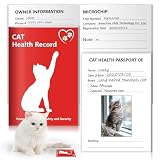
- 1.You’ll Get:When you choose our cat vaccines records tracker, you'll receive one notebook.This 12-page Kitty health journal has 8 dedicated pages for tracking your pup’s health, vet visits, and key details, with 4 blank pages at the end for jotting down extra notes, pet cat-related info, or anything else you want to record.
- 2.Ideal Size for Record Keeping:Each cat vaccine record book measures 5x3.5 inches folded; 5x7 inches unfolded, allowing for easy portability and storage.These handy health records notebook for cats with double sided printing, featuring enough space for all your pets important information,plus, it has dedicated spots for sticking on vaccine stickers and adding cute kitten photos.They offer a stylish and organized approach to pet health documentation, a must have addition to your pet supplies.
- 3.Premium Quality: The cat health record tracker’s cover features 300gsm coated paper with vibrant full-color printing and a protective laminate finish. Inside, 80gsm high-quality offset paper pages are durable and ink-resistant, ensuring no bleeding from pens or markers—so your records stay neat and easy to read.
- 4.Essential for cat owners: This kitten health record book is designed for vet clinics & owners. Track key health info (vaccines, exams, treatments) easily. When you’re away, pet sitters/family can quickly check medical history for seamless care. Kitten record book with photo, vital signs & ID sections, it helps in emergencies—even if your kitten gets lost.
- 5.Effortlessly Track Vaccinations and More:The cat canine health record booklets pages include:owner and cat information,medical history and hospitalizations,vaccination record and sticker,cat service providers,fecal examinations and de-worming,heartworm screening, prevention and treatment etc.This record keeping tool will ensure every important detail is accounted for and make this task easy, organized, and straightforward.Add this essential tool to your pet supplies for a happier, healthier pet.
Georgia’s food-service rules were revised on February 12, 2025 to reflect adoption of the 2022 FDA Food Code. Its health department materials include inspection, permitting and employee-health resources. A Georgia operator therefore needs to check the current state rules and the requirements of the relevant local authority rather than relying on a generic “cat cafe” checklist.
Why handwashing and cleanup procedures are mandatory
Vaccinating cats reduces some disease risks, but it cannot make animal contact equivalent to a food-safe surface. Hand hygiene remains the main barrier between a visitor’s interaction with a cat and the visitor’s mouth, food or phone.
The FDA Food Code requires food employees to wash their hands before food preparation and after activities that can contaminate them. A cafe’s written procedures should apply the same logic to the animal side of the business, even when the pet room does not prepare food.
Visitor-facing controls
- Provide an accessible handwashing station with running water, soap and a way to dry hands.
- Tell visitors to wash before eating or drinking and after touching cats, litter equipment or waste.
- Keep food and drinks out of the animal-contact area unless the local authority expressly allows them.
- Use signs and staff instructions to prevent cats from climbing on tables, counters or food containers.
Written contamination-response procedures
Food establishments must maintain written procedures for vomit and diarrheal events. A cat cafe should also document who isolates a sick cat, who blocks off the affected area, what protective equipment is used, which disinfectant is approved for the surface, how waste is removed and when the area can reopen. Veterinary and local-health officials should set the details, because disinfectant choice, contact time and disposal rules vary by product and jurisdiction.
Also popular on Amazon

- COMPLETE HEALTH RECORDS FOR CATS & SMALL PETS: Comprehensive veterinary record booklets designed to track vaccinations, exams, deworming, and treatments. Perfect for maintaining organized, up-to-date medical histories for cats, kittens, and small animals."
- 25 INDIVIDUAL BOOKLETS PER PACK: Includes 25 separate records—ideal for multi-pet households, shelters, rescues, breeders, or veterinary clinics that manage multiple animals. Each booklet provides structured documentation for easy organization."
- CLEAR, CUSTOMIZABLE FORMAT FOR EASY RECORDING: Each page features clearly labeled sections for vaccines, dates, treatment details, and veterinarian notes. The user-friendly layout allows for quick, legible recordkeeping at home, during exams, or on the go."
- PORTABLE AND CONVENIENT DESIGN: Compact and lightweight, these cat health record booklets fit easily into folders, travel bags, or adoption packets. Keep vital health information accessible during vet appointments, travel, or transfers."
- IDEAL FOR PET OWNERS, BREEDERS & PROFESSIONALS: Perfect for breeders, shelters, veterinarians, and pet owners who want a professional way to document a cat’s medical care. Simplifies communication between caregivers, adopters, and clinics."
Routine operations should cover litter-box placement, litter removal, waste storage, cleaning of toys and furniture, ventilation, laundry, and separation of clean supplies from animal waste. A schedule should identify the task, responsible person, product, dilution or contact-time requirement where applicable, and the sign-off method. These controls address secondary contamination; they do not replace vaccination or veterinary oversight.
What vaccinations cat-cafe cats generally need
Vaccination expectations are risk- and jurisdiction-based. A cafe does not receive a universal legal list simply because it is called a cat cafe. The facility’s veterinarian should set an intake and booster policy after considering the cats’ age, health, housing density, turnover, travel history and contact with other animals.
| Vaccine or disease group | Why it matters in a group environment | What the guidance establishes |
|---|---|---|
| FPV (feline panleukopenia virus) | Highly contagious disease risk in dense, shared housing. | AAHA/AAFP shelter-cat guidance identifies FPV vaccination at intake; WSAVA’s 2024 table starts kitten vaccination no earlier than 6 weeks and repeats it every 3–4 weeks until 16 weeks. |
| FHV-1 (feline herpesvirus-1) | Respiratory disease can spread where cats share air and surfaces. | Listed with FPV and FCV as core vaccination for shelter-style group settings; kitten timing follows the same 3–4-week series through 16 weeks in the WSAVA table. |
| FCV (feline calicivirus) | Another contagious respiratory and oral-disease risk in multi-cat housing. | Included in the AAHA/AAFP core group and the WSAVA kitten series. |
| Rabies | Protects public health and supports legal exposure-control procedures after a bite or suspected exposure. | Revaccination follows state or local law and the licensed product’s duration. New York describes mandatory vaccination, exposure reporting, confinement or testing authority and quarantine rules. |
The WSAVA 2024 vaccination table is a veterinary reference for higher-density environments, not a cat-cafe statute. Cats entering a higher-risk setting may need more frequent boosters before exposure, while a veterinarian may defer vaccination for a cat that is ill or otherwise medically unsuitable. Product labels and local law control the interval.
Rabies is the vaccine most likely to be expressly required by law, but the legal requirement still depends on location. New York’s guidance, for example, describes mandatory rabies vaccination statutes and procedures after contact with a known or suspected rabid animal. A business operating elsewhere must check its own state and municipal rules.
Also popular on Amazon
What proof of vaccination should a cafe keep?
“The cat is vaccinated” is not sufficient documentation when an inspector, animal-control officer, insurer or exposure investigator asks for proof. An official Johnston County FAQ identifies a veterinarian-issued rabies certificate listing the vaccine details and expiration date as the required proof when requested under state law.
For each cat, an operator should maintain a file containing:
- the cat’s identifying information and microchip or shelter identifier, if available;
- the veterinarian’s vaccination certificate, including product information and expiration date;
- the date of the most recent examination and any restrictions;
- booster due dates and the person responsible for follow-up;
- records of illness, isolation, bites, scratches and veterinary clearance before return to the group.
A record book or spreadsheet can organize renewal dates, but it does not replace the official certificate or local licensing documents. Set reminders before a certificate expires and keep copies accessible to staff who handle an inspection or an exposure report.
The CDC’s rule effective August 1, 2024 changed documentation for dogs entering the United States. It did not require imported cats to carry proof of rabies vaccination. That border rule should not be mistaken for a domestic cat-cafe requirement; domestic operations remain subject to local rabies law and veterinary policy.
Also popular on Amazon
How a responsible cafe controls illness and injuries
Before a cat joins the group
- Confirm the cat’s identity, ownership or shelter paperwork and veterinary examination.
- Review vaccination certificates and compare expiration dates with the cafe’s admission policy.
- Screen for respiratory, gastrointestinal, skin and neurologic signs, and establish an isolation plan for any concern.
- Apply the veterinarian’s parasite-control and testing recommendations.
- Introduce the cat gradually, with a way to separate it from visitors and resident cats.
During daily operation
- Monitor cats for lethargy, coughing, sneezing, vomiting, diarrhea, discharge, hair loss or unusual aggression.
- Remove a sick or injured cat from visitor contact and contact the supervising veterinarian.
- Clean litter and waste areas with designated tools and prevent contaminated equipment from entering food areas.
- Disinfect high-touch surfaces and shared items according to the product label and local guidance.
- Record incidents, cleaning tasks, staff training and any change to a cat’s health status.
After a bite or scratch
- Separate the cat and provide immediate first aid according to the facility’s written protocol.
- Record the date, time, animal, circumstances, witnesses and injured person’s contact details as permitted by law.
- Notify the supervising veterinarian and the relevant health or animal-control authority when required.
- Use the cat’s rabies certificate and exposure records to support the official risk assessment.
- Follow required observation, confinement, testing or quarantine instructions; do not release or relocate the cat to avoid those procedures.
These steps do not turn a cafe into a veterinary clinic. They create a documented chain of responsibility so that a health department, veterinarian and visitor can act quickly when something goes wrong.
How visitors can judge whether a cat cafe is taking hygiene seriously
Visitors cannot verify every veterinary record, but they can look for visible controls before entering the cat room.
Outdated Drivers Are Slowing You Down
One free scan finds every outdated or missing driver and matches the right update for your exact hardware.Free scan · exact hardware matchWindows Errors? Fix Them Before They Spread
Repair common Windows errors and clear accumulated junk for a smoother, more stable PC - no reinstall needed.Free scan · no reinstall- There is a clearly accessible sink or handwashing station, with soap and drying supplies.
- Staff explain when to wash hands and where food and drinks are allowed.
- Cats have places to retreat, and staff stop rough handling, chasing or lifting cats that resist.
- Litter boxes and waste are not visibly overflowing, and soiled areas are taken out of service promptly.
- Staff can explain what happens when a cat becomes ill or a visitor is scratched.
- The business clearly identifies whether food is sold, served, brought in by customers or operated by a separate restaurant.
People who are pregnant, immunocompromised, very young, elderly or allergic should ask a clinician about personal risk before visiting. Anyone who is bitten or scratched should wash the wound promptly and seek medical advice, especially when the cat’s rabies status or the local reporting requirement is unclear.
What operators should verify before opening
Because requirements differ by place, an opening checklist should be jurisdiction-specific rather than copied from another cafe.
- Ask the local health department whether the proposed layout is a food establishment, a pet business or two separately regulated premises.
- Confirm whether a separate entrance, address, floor-to-ceiling barrier and no-connecting-door rule applies.
- Check food-service permits, inspection schedules, employee-health requirements and rules for customer-brought food.
- Contact animal control about licensing, rabies certificates, bite reporting, confinement and maximum animal numbers.
- Have a veterinarian write the intake, vaccination, parasite-control, isolation and return-to-group policies.
- Train staff on handwashing, litter and waste handling, cleaning, injury response and documentation.
- Ask an insurer or shelter partner whether it imposes stricter vaccination or incident-record requirements.
The exact combination of rules depends on jurisdiction, disease prevalence, facility design, veterinary judgment and contractual requirements. Confirm current requirements with the local health department, animal-control authority and a veterinarian before opening or changing the service model.





Leave a Reply