Cats wag their tails for different reasons, and a wag does not automatically mean happiness. A swish or lash often signals irritation; a twitch may accompany watching prey or play; and a quiver can mean excitement or urine marking, depending on what the cat is doing. Read the tail alongside posture, ears, face, and surroundings—and give a cat space if it seems upset.
What does a cat’s tail wag mean?
There is no single translation for a moving tail. The movement, the situation, and the cat’s other signals all matter. Veterinary guidance from VCA Animal Hospitals and Cornell University College of Veterinary Medicine describes tail movement as one part of feline body language, not a stand-alone diagnosis of mood.
As an Amazon Associate I earn from qualifying purchases.
VCA’s tail and body-language observations are kitten-focused, so treat them as useful patterns rather than rules that apply identically to every adult cat. Cats differ, and the same movement can have more than one meaning.
Seven reasons cats wag their tails
1. Irritation or a request to stop
A cat that swishes, thumps, or lashes its tail may be irritated. This can happen when petting has gone on long enough or a play session has become unwelcome. Cornell also lists tail lashing among cues that can precede aggression during petting. Stop touching or playing and let the cat choose whether to approach again.
#1 Best Overall
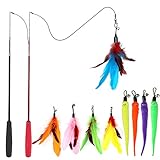
- 1. KEEP CATS VERY ENTERTAINED : Cats are crazy about chaser games! Combine string and feather into a great cat toys for indoor cats, this cat toy is an irresistible lure for cats! Swing the feathers " cat lure " will get your cats excited and stimulate their natural " hunt instinct ", making them run and jump like a wild animal, driving your cats crazy with joy! Even adult cat play like a kitten again!
- 2. CLASSIC PRACTICAL INTERACTIVE CAT TOY : This cat wand toy can really get your cats to do a lot exercise while entertainment, release their energy, feeling happy and relaxed. Also it's fun to watch cats go nuts for this cat feather toy . Spend some quality time with your feline friend, your companionship and interaction are the happiest things in their lives
- 3. CAT TOYS INTERACTIVE FOR INDOOR CATS : Pack includes: 2PCS Cat Wand + 9PCS Feather Worms Replacements + 2PCS Extra Strings with Clasp. This cat stick toy can be used for longer periods of time. The variety attachments can hook on other cat teaser toy and dangling toy. Feathers like bird and the worm cat toy like tail, are the cats favorite teaser. This is great cat toys for bored indoor adult cats and also kitten
- 4. TELESCOPIC CAT FISHING POLE TOY DESIGN : This cat toy wand extends from 15” in to 38.9”. Very lightweight, flexible, durable, portable and easy to store. The fully extend cat feather wand is extra long ( 38.9 in) plus the string (23.6in) which cover a large space for playing. Cat-teasing is no longer a tough job for you. You can even sit on the couch watching TV while teasing cats with this cat toys
- 5. HIGH QUALITY AND SAFETY : The feather cat toy made from Safe, natural feather. The telescopic cat feather wand made of new material with higher elasticity and hardness. Our clasp is easy to open and close for changing feathers
2. Focused attention on potential prey
The tip of a cat’s tail may twitch while it watches something intently, such as a bird outside a window. The movement can also happen during play, so a twitch alone does not prove that the cat is hunting.
3. Play or preparation to pounce
A swishing tail can accompany a cat getting ready to pounce. Look at what is happening: a toy or moving object may be drawing the cat’s attention, while a tense interaction with a person calls for a different response. If the cat’s signals suggest irritation, end the game rather than encouraging more contact.
Rank #2

- Cat charmer cat toy, from cat dancer
- Interactive cat toy designed to charm, not harm
- Polycarbonate wand
- Colorful fabric
4. Excitement during a greeting
Some cats hold a shaking or quivering tail when greeting a familiar person. In that context, the movement may reflect excitement. A quiver is not a universal sign of happiness; consider the cat’s posture and what it does next.
5. Urine marking
A cat that backs toward a vertical surface with its tail quivering may be marking with urine. If this behavior is new, VCA advises contacting the cat’s veterinary care team rather than assuming the cause from the tail movement alone.
Rank #3

- Funny Interactive Cat Toys:2 difference most popular styles cat teaser wand are the best gifts for your lovely cats, Interact with your cats can make your cats feel happy,have a good time with your cats.
- Premium Quality Material:The cat ribbon wand toys for indoor cats are made of soft,colorful satin fabric and high-elastic wand, safe,100% non-toxic, durable Lightweight and easy to store; When not in use, wrap the cloth strip on the pole.
- Beneficial for Cat Healthy: The cat string toys for indoor cats helps your cat keep active and do more exercise.Say goodbye to the lazy and boring time, the cat of all ages can get a lot of fun.
- Nice Gift :the interactive cat wand is the best choice for sharing your love with your cats, you also can give it as a present to your cat lovers'friends.
- No Risk Purchase: Quality is our Culture, if you have any problems for our product quality and using, pls feel free to let us know at any time. We will would like to resend a new replacement one or refund money to you.
6. Fear, threat, or defensive arousal
The tail can contribute to a picture of fear or aggression. Cornell includes a tucked tail among possible fear signs and raised tail fur among aggression cues, alongside facial and body signals. If the cat appears frightened or highly aroused, give it room and avoid cornering or handling it.
7. Discomfort, injury, or a persistent behavior problem
A low or tucked tail can have several possible explanations, including fear, anxiety, or pain. Tail biting may be related to itching or pain, while repeated chasing or biting that causes injury can warrant veterinary and behavior assessment. Tail movement by itself cannot identify a medical problem.
Rank #4

- 【INTERACTIVE CAT TOYS AND DOOR HANGING BOUNCING RABBITS】:Practical cat toy set,cat wand toy is telescopic rod design,extending from 15" to 38.6",shortened for easy storage,fully extended cat rod can cover a lot of space to play,will help your Indoor cats to flip,jump,chase.let the cat exercise more and be energetic,triangle hook can be fixed on the door frame,doorknob,Hang the cat string toys on it,adjust the appropriate height,the cat swings the elastic rope crazy play cat toys
- 【SELECTED COMBINATION SUIT CAT TOYS】:This unique set of Interactive feather wand cat toys is the perfect gift for pet lovers to bring more fun to your cat, it's all handpicked for your kitty!Hanging interactive cats toy can add catnip, the effect is even better
- 【HIGH QUALITY】:Feather are made of natural materials, indoor retractable cat wand toys are made of new materials that,With higher elasticity and hardness. Our clasp is very easy to open and close for easy replacement of the feather replacement head
- 【CONSIDERATIONS】:As this is an interactive cat toy and self-entertainment toy set, we recommend that you always supervise your cat while they are playing to prevent them from chewing the string and handle. Never leave your cat alone to play with this kitten toy, please keep it out of your pet's reach. If you have any questions, please feel free to contact us, we will be happy to serve you
- 【AFTER-SALES SERVICE】:The ZPH team maintains the best quality service,if you have any questions, please contact us for a better solution,we provide 30 days free return
How to read the movement in context
| Tail movement or position | Possible context | What to consider |
|---|---|---|
| Swishing, thumping, or lashing | Petting has become unwelcome, play is over, or the cat is otherwise irritated | Stop the interaction and give the cat space. |
| Tip twitch | Watching potential prey or engaged in play | Check what has the cat’s attention and look at its posture. |
| Quivering | Greeting a familiar person, or backing toward a vertical surface to mark | Use the surrounding behavior to distinguish the possibilities; new marking merits veterinary advice. |
| Tucked or low tail | May accompany fear, anxiety, or pain | Look for other changes or signs of distress; the position alone does not establish a cause. |
| Raised tail fur | Can be one cue of aggression or defensive arousal | Give the cat room and assess the whole body, not the tail alone. |
These are possible interpretations, not a diagnostic chart. Also notice the ears, pupils, fur, facial expression, overall posture, and immediate situation. One cue can be ambiguous; several cues together provide better context.
Do these 3 things before closing this tab:
1Scan for outdated or missing drivers - takes under a minute2Clear out junk files and repair common Windows errors3Fix the driver behind crashes, sound loss and screen glitchesWhat to do when a cat’s tail is moving
- During petting or play: If the tail starts lashing or the cat otherwise seems tense, pause and let it disengage.
- When the cat is watching or playing: Observe what has its attention. Do not assume a twitch means anger or that every swish is an invitation to play.
- When the cat seems afraid or defensive: Give it space. Avoid forcing contact or blocking its way to retreat.
- When the movement is new or concerning: Note when it happens and whether other behavior has changed, then contact a veterinarian if it persists or appears painful.
When to contact a veterinarian
Seek veterinary advice if tail behavior changes suddenly, appears painful, or continues alongside signs such as withdrawal, unusual vocalization, reluctance to be handled, or other marked behavior changes. Contact a veterinarian for persistent tail biting, self-injury, or new urine marking. The VCA guidance on recognizing pain in cats recommends bringing changes that may indicate pain to a veterinarian’s attention. A tail movement alone does not establish that a cat is injured or ill.
Best Value

- The natural feather flying motion at the tip of the wand activate a cat's natural instinct to chase and pounce, encouraging healthy activity.
- Long reach flexible wire(34.5 inch) aids play in a wider area to increase exercise and stimulation to your cat.
- Colorful nuatural feather and small bell on the tip draw your cat's attention easily and arouse its curiosity. Just gently flick the flexible dangler and enjoy the time with your cat.
- This flying feather cat catcher toy is really cute, lightweight, durable and funny. Use a safe, cat-friendly and non-toxic natural feathers to entice your cat into playing.
- A good interactive toy to strengthen the relationships between you and your cat. Please supervise your cat while playing at all times. A nice gift for cat lovers and cats.
For repeated chasing or self-injury, a veterinarian can help assess possible medical causes and whether behavior support is needed. Cornell’s general guidance on aggression notes that “Early intervention is best”; that advice concerns behavior management broadly, not a specific interpretation of tail wagging.
Quick Recap
Product prices and availability are accurate as of the date/time indicated and are subject to change. Any price and availability information displayed on Amazon at the time of purchase will apply.




