The Tool Desk
Outbyte PC Repair FREERepair Windows errors before they cause bigger problemsFix Now →Outbyte Driver Updater FREEScan for outdated or missing drivers - takes under a minuteDriver Scan →Chickadees usually do not ignore a yard permanently because they “dislike” it. More often, the food is unsuitable or stale, access is blocked by squirrels, the feeder is hard to use or poorly placed, the birds have not discovered a recent installation, or seasonal natural food is reducing visits. Work through those checks before buying new equipment.
The right fix depends on the chickadee species in your region and the feeder setup. Black-capped Chickadees readily visit feeders, and Mountain Chickadees are also eager feeder visitors, but food choices and traffic change with species, weather and season.
As an Amazon Associate I earn from qualifying purchases.
First, identify which chickadee you are expecting
“Chickadee” covers several species with overlapping but not identical habits. The strongest guidance in this case concerns Black-capped Chickadees and Mountain Chickadees. Cornell Lab of Ornithology describes Black-capped Chickadees as easy to attract to feeders, while Mountain Chickadees eagerly visit them. That makes a completely empty feeder worth troubleshooting, not a reason to conclude that chickadees avoid your property.
Quick wins for a faster PC:
Fix the driver behind crashes, sound loss and screen glitchesFind Drivers →Repair Windows errors before they cause bigger problemsFix Now →Use a regional field guide, local birding group or reputable identification resource to determine which species is likely in your area. Identification matters because Cornell’s food advice is species-specific: sunflower is a sound starting point for both of these chickadees, while Mountain Chickadees may leave millet in a mixed seed blend. Without your location, species, feeder design and installation date, no single cause can be diagnosed with certainty.
#1 Best Overall

- Chew-Proof Metal Build: The top and base of this bird feeder are made of metal. Advanced metal processing techniques make it more sturdy for outdoor use and resistant to squirrel damage.
- 2 Steps Disassemble Easy Clean Thoroughly: No tools needed! Disassemble in just 30 seconds. Easy to maintain and refill weekly. Say goodbye to the hassle of cleaning and reassembling bird feeders.
- One-Handed Refilling Made Simple: Press the roof button and slide up to lock it in place on the steel cable. No need to remove the entire feeder, making refills quick and easy.
- High Guardrail Seed Tray Design: Prevents seeds from falling while birds feed, reducing waste.
- No Assembly Required – Just Unbox and Use: 360-degree perch design allows multiple birds to feed simultaneously without being limited to fixed feeding holes, providing a more comfortable and free feeding experience for your birds.This is an excellent gift choice, adding vibrant colors to your yard and enriching garden life. It brings more joy to families and children.
What to check before replacing the feeder
Inspect the existing setup in this order. Change one major variable at a time when possible, so you can tell what helped.
- Read the seed label. If black oil sunflower is absent or buried in a mix dominated by millet and other filler seed, offer fresh black oil sunflower separately.
- Inspect the food. Remove seed that is damp, clumped, musty, moldy or visibly spoiled. A clean feeder cannot make spoiled food attractive.
- Watch access for an entire feeding period. Squirrels, larger birds or a crowded perch may be preventing chickadees from landing long enough to feed.
- Check the feeder’s location. Look at height, nearby branches or structures, window distance and whether the feeder is easy to approach and leave.
- Note when it was installed or moved. A new location can take hours or weeks to be discovered.
- Consider the season. Chickadees may spend less time at feeders when natural food is abundant, and their diet changes markedly through the year.
Offer food chickadees are documented to use
Start with fresh black oil sunflower seed
Black oil sunflower seed is the best-supported first trial in the available species guidance. Cornell recommends it for Mountain Chickadees and lists sunflower among foods commonly taken by Black-capped Chickadees. Put it in a clean feeder or a separate compartment so you can see whether it is being selected rather than lost in a blend.
This is a practical test, not a guarantee. Individual birds and local populations can make different choices, and a chickadee may be interested in natural food elsewhere even when it recognizes sunflower.
Do not assume a mixed seed is interchangeable
Mountain Chickadees may disregard millet in seed mixes. If your feeder contains a large proportion of millet, an apparently full feeder may still offer little that these birds want. Separate the sunflower from less-used ingredients instead of continually topping up the same mixture; old filler seed can remain while the preferred seed disappears.
Use suet only as a cool-weather option
Suet is a documented chickadee food and can be useful when temperatures are cool. In heat, suet can soften, spoil or turn rancid. A suet cage is therefore a seasonal supplement, not a year-round solution to an empty seed feeder. Remove it when warm conditions make the fat unstable and keep the cage clean.
Clean and store seed correctly
Remove damp or spoiled seed immediately
Audubon warns that damp seed can mold. Moldy or rancid food is a health risk and can make birds avoid the feeding station. Empty the hopper or tube, discard questionable seed and wipe away residue before adding a new batch. Do not mix fresh seed into a wet or musty layer at the bottom.
Rank #2

- Squirrel Proof Bird Feeder
- Bird Feeder,Gardening Gifts for Women,Fathers.christmas gifts for dad,mom and more bird lovers
- Metal Bird Feeders for Outdoors Hanging
- Squirrel Proof Wild Bird Feeders with Finch Cardinal Chickadee
- Large Capacity Bird Feeders
Set a realistic cleaning schedule
Audubon recommends cleaning feeders at least twice a year and more often during humid summers. Clean sooner whenever droppings, wet clumps, mold or a sour smell appears. Follow the feeder manufacturer’s instructions for dismantling it, scrub all seed-contact surfaces, rinse thoroughly and let every part dry completely before refilling.
PC Slower Than It Used to Be?
A free scan shows the junk files, broken settings and background clutter dragging Windows down - then fixes them in one click.Free scan · Windows 10 & 11Crashes, No Sound, or Screen Glitches?
Random freezes, missing sound and display glitches usually trace back to one bad driver. Find and replace yours safely.Free scan · under a minuteProtect the seed between refills
Keep seed cool and dry in a sealed container. A small refill that is used promptly is preferable to leaving a large quantity exposed to rain, condensation or summer heat. Check the bottom and corners of the storage container as well as the feeder; hidden moisture can spoil an otherwise fresh-looking supply.
Choose a feeder style that fits the yard
No single feeder design is required. Audubon lists tube feeders for chickadees, while Cornell notes that Black-capped Chickadees also use small hanging and window feeders. Compare the current setup rather than replacing it automatically.
| Feeder style | What the guidance supports | When it may make sense | Questions to check |
|---|---|---|---|
| Tube feeder | Audubon lists tube feeders for chickadees. | Consider one when the present feeder is difficult to clean, keeps seed wet or allows persistent squirrel access. A tube model with metal ports is an optional replacement category. | Can you remove and dry every part? Is it stable, visible and reachable without a squirrel using nearby structures? |
| Small hanging feeder | Cornell says Black-capped Chickadees use small hanging feeders. | Useful when you already have a clean, accessible hanging station and birds can approach it safely. | Is the feeder being monopolized, and is the hanging point far enough from launch points for squirrels? |
| Window feeder | Cornell includes window feeders among options used by Black-capped Chickadees. | Suitable where a clear, well-maintained window unit is already practical. | Is it securely attached, kept clean and positioned to reduce collision risk? |
| Suet cage | Suet is a chickadee food; Audubon’s guidance treats it as a cool-weather choice. | Use as a seasonal supplement rather than a permanent replacement for seed. | Will heat make the suet rancid, and can the cage be cleaned easily? |
If the feeder is structurally sound and clean, test a different food or location before purchasing another model. A new feeder cannot compensate for spoiled seed, squirrel exclusion problems or a site birds have not yet found.
Fix placement, height and window risk
Use a practical height
Audubon recommends placing a tube feeder at least 5 feet above ground. This is general feeding guidance, not a guarantee that chickadees will use that exact height. The feeder should be high enough to discourage easy ground access but low enough for you to inspect, clean and refill safely.
Manage nearby structures and squirrel routes
For pole-mounted feeders, Audubon advises baffles and clearance from nearby structures. A squirrel can jump from a branch, roof, railing or trunk even when the feeder itself looks elevated. Observe the approach, not just the feeder pole: identify the launch points and move the station or add a properly fitted baffle where practical.
Rank #3

- FUN-TO-INSTALL: This bird feeder features a traditional oriental architectural style with a retro pagoda design. It offers a feeding spot for sparrows and provides you and your family with a delightful 1-minute assembly experience. Get ready to enjoy a fun and simple installation process
- HOW FEEDING BIRDS: The 8.2 x 8.2 x 9.8 inch feeder can hold up to 5 pounds(2 Pcs) of seeds, typically lasting 1-3 days. Sunflower and Niger seeds are more likely to attract Cardinals, Goldfinches and Chickadees
- GARDEN GIFT IDEA: Bird feeders are a unique gift idea. Create an opportunity for family, children, grandparents and even pets to see nature’s colorful wild birds up close, bring the birds and best wishes to them
- EASY BIRD FEEDING: The transparent panel allows for effortless monitoring of the remaining bird seeds, while the wide opening makes refilling straightforward
- WARM TIPS: To ensure that the bird feeder is secure, follow the user manual steps for installation
Place feeders with windows in mind
Audubon’s rule of thumb is to put a tube feeder either at least 3 feet from a window or more than 30 feet away. The two distances address different collision risks, but neither distance is a guarantee. Keep glass visible with appropriate bird-safe measures, and avoid creating a fast flight path between dense cover and a reflective pane.
Give a new or moved feeder time to be discovered
A feeder that has been installed or moved recently may be perfectly functional while receiving no visits. Audubon says discovery can take anywhere from hours to weeks. Keep the food fresh during that period and watch from a distance rather than moving the feeder repeatedly.
If birds are slow to notice it, scatter a small amount of sunflower seed on top of or near the feeder, as Audubon suggests. Use only enough to create a visual cue, then remove wet or uneaten seed from surfaces and the ground. Once chickadees begin investigating, return to a clean, contained feeding routine.
Recommended Free Tools
Account for seasonal diet and natural food
Spring, summer and fall
Cornell reports that Black-capped Chickadees eat 80–90 percent insects, spiders and other animal food in spring, summer and fall. During those seasons, a bird may be feeding in trees and shrubs rather than visiting a feeder frequently. Low feeder traffic does not prove that the food is being rejected.
Winter
In winter, Cornell reports that Black-capped Chickadees eat about half seeds, berries and other plant matter. Feeder use may become more noticeable, but weather, natural berry crops and local availability still influence visits. Suet can be useful in cool weather; keep it out of heat and replace it when it becomes soft, rancid or contaminated.
What seasonal changes mean for troubleshooting
Do not change several variables at once because traffic naturally fluctuates. Record the date, weather, food offered and approximate visits for a week or two. A feeder that appears “ignored” during a flush of natural insects may become popular later without any equipment change.
Rank #4

- BUILT FOR SMALL SONGBIRDS — AND IT KEEPS THE BIG ONES OUT: Six small ports with 1.4" perches are sized for finches, chickadees, sparrows and nuthatches. Larger birds like blue jays, grackles and cardinals can't get a grip, so they stop raiding the tube and flinging the small seed on the ground to get at the big kernels. If you want cardinals or woodpeckers too, pair this with a platform or hopper feeder — this one is deliberately the small-bird station.
- WIDE LIFT-TOP + SEE-THROUGH TUBE — REFILL IN SECONDS: Lift the metal lid straight up and pour; the opening is wide enough that you are not funnelling seed through a narrow neck. The clear tube shows the level from across the yard, so you refill before it runs empty instead of checking by opening it. Holds 1.5lb of sunflower, safflower or mixed seed — a small tube on purpose: seed gets eaten before it can sit and go stale.
- HOW TO CLEAN IT: The lid lifts off and the tube is clear, so you can see exactly what needs cleaning. The base is fixed — not removable — so here is what works: tip the feeder upside down and tap to empty packed seed, run a bottle brush or pipe cleaner in through the ports, rinse, then stand it upside down until fully dry before refilling. Do this every 2-3 refills and after any spell of wet weather, so damp seed never sits at the bottom.
- METAL LID, BASE AND PORTS: The lid, base, perches and all six port surrounds are metal, so beaks and claws land on metal rather than thin plastic; the seed tube itself is clear polycarbonate, which is what lets you see the level. Note: this is not a squirrel-proof feeder — the ports are open and a determined squirrel can reach seed. If squirrels are a problem in your yard, hang it from a pole with a baffle, which is what owners who have no squirrel trouble do.
- HANG IT WHERE YOU CAN WATCH — POLE, BRANCH OR SHEPHERD'S HOOK (POLE NOT INCLUDED): The metal hanger fits a standard shepherd's hook, deck pole or tree branch. Most owners hang it within sight of a kitchen or living-room window — finches find a new feeder within days, and you get the show from inside. Works all four seasons, with the busiest months being late autumn and winter when wild food runs short. A ready gift for a parent, grandparent or anyone who watches birds.
Use an observation test instead of guessing
A short, controlled observation can separate food, access and discovery problems.
What’s actually slowing this PC down?
Pick the symptom - the matching free tool is one click away.
- Day 1: document the setup. Photograph the feeder, note its height, window distance, nearby branches and the exact seed blend.
- Day 1: clean and reset. Discard questionable seed, clean the feeder and add a modest amount of fresh black oil sunflower seed.
- Days 2–4: watch at different times. Look for chickadees nearby, squirrels reaching the feeder, larger birds blocking perches and seed being removed without visible feeding.
- Days 5–7: change one condition. If squirrels dominate, address the route with a baffle or clearance. If the feeder is new, leave it in place and use a small sunflower-seed trail near it.
- After a week: evaluate the pattern. Visits by other birds show that the station is discoverable, but they do not prove that chickadees will choose the same food. No activity at all points you back to placement, visibility, local species and discovery time.
This test cannot identify a universal cause, but it prevents a common mistake: buying multiple feeders while leaving stale seed or an inaccessible location unchanged.
Independent reader supportYour contribution helps us test, update, and keep practical guides available for everyone.What to do when squirrels take over
Squirrel pressure can make a feeder appear empty to chickadees even when seed is disappearing quickly. Watch whether squirrels are reaching the ports, shaking seed onto the ground or occupying the feeder for long periods. Then check the entire route from ground, pole and nearby structures.
- Fit a baffle appropriate to the pole and feeder design.
- Increase clearance from branches, roofs, railings and trunks that provide launch points.
- Keep the feeder high enough for practical access while retaining the Audubon tube-feeder guideline of at least 5 feet above ground.
- Clean spilled seed so the ground does not become a competing feeding station.
- Do not solve squirrel access by making the feeder difficult for chickadees to reach or impossible for you to maintain.
These measures reduce access opportunities; they do not guarantee that every squirrel will be excluded.
Common mistakes that prolong the problem
Changing feeders before checking food
A new tube, window or hanging feeder cannot make damp seed fresh. Start with cleaning and a fresh sunflower trial.
Assuming every chickadee wants the same mix
Food guidance varies by species, and Mountain Chickadees may leave millet in a blend. Separate the likely preferred seed rather than treating a mixed bag as a universal recipe.
Best Value
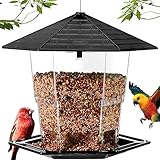
- 【JEALOEUR BIRD FEEDER】Jealoeur retractable bird feeders, can be expanded to store a large amount of food. It has a unique Latch Feature, which makes it easy to open and close the top for filling and cleaning.
- 【SCENES TO BE USED】Press PUSH to open the lid, put the wild bird seeds, sunflower seeds for birds , safflower bird seed etc, into the bird feeder, close the lid, and then hang the bird feeder under the eaves or in the garden.
- 【LARGE CAPACITY】It is made of durable, high quality plastic. Holds up to 2.2 Lb of seeds. Size: 8.7 x 7.6 x 7.8 inches.
- 【HUMANIZED DESIGN】Comes fully assembled and ready to hang. With its Hexagonal roof, the bird feeder features an inclined roof to shade birds from the sun and rain. When the seeds are eaten, more seeds will naturally fill the tray.
- 【EASY TO USE】 For your convenience and the health of garden birds, please use the Jealoeur wild bird feeder that is easy to fill, empty, and clean.
Moving the feeder every few days
Frequent moves reset the discovery process. Audubon’s hours-to-weeks range means patience is part of the test.
Leaving suet out in heat
Warm conditions can make suet rancid. Use it in cool weather and inspect it often.
Ignoring windows and flight paths
A location that attracts birds but increases collision risk is not a successful setup. Use the 3-foot-or-less or more-than-30-foot rule of thumb for tube feeders and add appropriate window-collision precautions.
Do these 3 things before closing this tab:
1Repair Windows errors before they cause bigger problems2Scan for outdated or missing drivers - takes under a minute3Clear out junk files and repair common Windows errorsWhen no visits are actually a problem
Audubon emphasizes that feeders supplement natural food. Most species will not suffer if a feeder is empty for days or weeks. A quiet feeder is therefore not an emergency, provided you are offering safe food, maintaining the equipment and observing birds elsewhere in the yard.
Investigate more urgently if you see wet or moldy seed, a dead or visibly ill bird, repeated window strikes or a feeder that cannot be cleaned. In those circumstances, remove the food source temporarily, clean the equipment and seek advice from a qualified wildlife rehabilitator or local wildlife authority when an injured bird is involved.
A compact decision guide
| What you observe | Most useful next step |
|---|---|
| Seed is damp, clumped or smells musty | Discard it, clean and dry the feeder, then refill with fresh seed. |
| Feeder is full but only millet remains | Offer black oil sunflower separately, especially when Mountain Chickadees are likely. |
| Squirrels occupy the feeder or reach it from a branch | Add a suitable baffle and increase clearance from launch points. |
| Feeder was installed or moved recently | Leave it in place for hours to weeks; use a small amount of sunflower seed near it as a cue. |
| Visits drop during warm months | Account for the Black-capped Chickadee’s insect-heavy seasonal diet and natural food supply. |
| Birds approach a window feeder but collisions occur | Reassess the window distance and add bird-safe glass treatments or move the station. |
| No chickadees appear, but the setup is clean and new | Confirm the likely local species and continue observing before replacing equipment. |
Bottom line for your feeder
Begin with fresh black oil sunflower seed, a clean and dry feeder, and a careful look at squirrel access and placement. Keep the station in a safe, maintainable position, allow a newly moved feeder up to weeks to be found, and treat seasonal changes as normal variation rather than proof of failure. Tube feeders are one useful option, but Black-capped Chickadees also use small hanging and window feeders, so replacing equipment is only warranted when the present feeder is unsafe, inaccessible or impractical to clean.
Quick Recap
Product prices and availability are accurate as of the date/time indicated and are subject to change. Any price and availability information displayed on Amazon at the time of purchase will apply.




