Do these 3 things before closing this tab:
1Clear out junk files and repair common Windows errors2Scan for outdated or missing drivers - takes under a minute3Repair Windows errors before they cause bigger problemsCats suckle mainly because nursing is a deeply wired instinct, and in some adult cats that instinct carries on as a comfort behavior long after kittenhood. Veterinary sources also link adult suckling on fabric to early weaning, stress or anxiety, boredom or too little enrichment, breed predisposition, and compulsive behavior. Several of these can overlap in the same cat. Suckling is usually a behavior to observe and manage, but it becomes a concern when it starts suddenly, turns persistent or destructive, or involves swallowing fabric.
What suckling looks like in an adult cat
Adult suckling usually involves a cat sucking, licking, or chewing on a soft object: a blanket, a wool sweater, a towel, a sleeve, or the cat’s own fur. Many cats knead while they suck, and some drool or appear calm and half-asleep. The behavior is often called wool sucking when fabric is involved. In a nursing kitten, suckling is simply feeding. In an adult, the same motion is non-nutritive, meaning the cat is not getting food from it.
The six causes of suckling in cats
The following explanations come from Cornell Feline Health Center, VCA Animal Hospitals, UC Davis School of Veterinary Medicine, the Merck Veterinary Manual, and PetMD. Treat them as plausible explanations, not a checklist that identifies the cause in your own cat.
1. The normal nursing instinct persists
Kittens learn to suckle from their mother, and the motion is strongly reinforced in the first weeks of life. In some cats, the urge does not fully fade. PetMD describes adult suckling on blankets as a continuation of this instinct, and the behavior is most often seen in cats that are otherwise healthy and eating normally.
What’s actually slowing this PC down?
Pick the symptom - the matching free tool is one click away.
#1 Best Overall

- SQUEEZE BOTTLE - 60ml nursing bottle for newborn kittens and puppies, 2.1 ounce capacity, small animal feeding bottle is easy to squeeze and easy to control the amount of milk.
- SMALL ANIMAL FEEDER SET - 1ml for small nipples, 3ml, 5ml, 10ml for medium and large nipples, 60ml feeding bottles can be freely combined with (small, medium, large) nipples.
- 5 REPLACEABLE NIPPLES - Different sized nipples to meet the needs of small animal at every stage, the soft rubber-tipped nipple prevents scratching the gums of newborn kittens and puppies.
- 5ML BROWN FEEDER - The brown 5ml syringe is made of light-safe material to prevent photosynthesis of medication, use a separate dedicated feeder for better use when your pet is sick.
- NEWBORN KITTENS & PUPPIES GIFT - Suitable for newborn and not yet teething small animals, kittens, puppies, hamsters, chinchillas, squirrels, rabbits, etc. you will be a very gentle owner, take care of it, love it and grow with it.
2. Suckling works as a comfort behavior
Repetitive sucking can be soothing, much as thumb-sucking is for some children. A cat may suckle when settling down to sleep, after a stressful event, or while being petted. Comfort is the most common explanation given in the sources, but it describes what the behavior does for the cat, not why a specific cat started it.
3. Early weaning may predispose a cat to it
Kittens separated from their mothers before they are fully weaned may have a stronger need to suckle, and some carry the habit into adulthood. UC Davis, the Merck Veterinary Manual, and PetMD all list early weaning as a possible predisposing factor. It is an association, not proof. Many cats weaned early never suckle, and many that do suckle were weaned at a normal age.
4. Stress or anxiety can contribute
A cat under chronic stress, such as after a move, a new pet, a change in household routine, or conflict with another cat, may increase repetitive behaviors. Suckling can be one of them. Sources describe stress as a contributor, but a veterinarian or veterinary behaviorist must assess whether anxiety is involved. Suckling alone does not establish it.
Rank #2
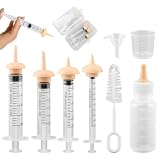
- One-Stop Scientific Feeding: Designed specifically for newborn kittens, puppies, and various small animals, this kit includes a 50ml professional feeding bottle, four precision syringes of different capacities (1ml, 3ml, 5ml, 10ml), four biomimetic nipples, as well as a funnel and measuring cup. From precise feeding immediately after birth to supplemental feeding during the transition period, this single kit meets all your care needs.
- Precise Measurement for Safe Feeding: Recognizing that newborn pets are extremely sensitive to feeding amounts, the kit includes four syringes of different sizes, each featuring clear, durable graduations. This allows you to control feeding with milliliter-level precision based on your pet’s weight and age, effectively preventing choking or digestive strain caused by overfeeding.
- Bio-Mimetic Nipples: Made from ultra-soft, food-grade silicone, these bio-mimetic nipples replicate the natural feel of a mother dog or cat’s mouth. They are bite-resistant and gentle on the mouth. Multiple nipple shapes are available to suit pets of different sizes and developmental stages, increasing the success rate of feeding.
- Easy to Clean, Comes with a Dedicated Storage Case: The included cleaning brush easily reaches the bottom of bottles and syringes, ensuring no milk residue remains. All accessories are neatly stored in a transparent storage jar/container, making it convenient for home storage and keeping your tools organized and ready to use—whether you’re traveling with your pet or on the go.
- Essential Professional Tools for Young Pets: Whether caring for orphaned puppies or kittens, administering medication to sick adult pets, or providing nutritional support for frail premature pets, this multifunctional kit offers the most professional support. The included measuring cup and funnel make the process of mixing formula more precise and spill-free, making it the ideal assistant for pet owners and animal rescuers.
5. Boredom or insufficient enrichment may contribute
Cats need opportunities to hunt, climb, scratch, and explore. A cat with limited play or few outlets for these needs may turn to fabric. VCA’s guidance is direct on this point: the first step is to ensure that the cat has appropriate opportunities and outlets for play, scratching,climbing, chewing, and exploration. (The original text has no space after the comma; the quote is reproduced as published.)
6. Repetitive or compulsive behavior, with a breed predisposition
Some cats develop a repetitive oral behavior that persists regardless of circumstances. The Merck Veterinary Manual and VCA both report that wool sucking occurs more often in certain Oriental-related breeds, including Siamese, Burmese, and Tonkinese, and in related breeds. Breed tendency describes a higher likelihood in a group; it does not diagnose a problem in an individual cat. Because repetitive oral behavior can also have medical causes, the Merck Veterinary Manual advises excluding disease processes before accepting a behavioral explanation.
When suckling needs a veterinary visit
Most adult suckling is a habit to manage rather than an emergency. Book a veterinary examination, and tell the vet about the behavior, if any of the following apply:
Rank #3

- ➤Biomimetic Nursing Design & Scientific Feeding: This kitten & puppy bottle features an anatomical nipple design that mimics natural nursing, combined with an airflow control system for precise milk flow to reduce choking risk. 40ml measurement markings help owners feed scientifically. Suitable for puppies, kittens, squirrels, rabbits, and other small pets aged 0-1 months.
- ➤Anti-Choke Safety System: Exclusive flow restrictor + pressure balance technology automatically regulates milk flow, preventing choking or gas from rapid suckling. Leak-proof when inverted – feed upright without tilting for effortless operation.
- ➤ Safe & Resilient Materials: Food-grade silicone nipple resists tearing for safety and long-lasting use. BPA-free & odorless for the safety of fragile newborns. ✓ Warning: "For toothless newborns only, Teething pets may damage the silicone nipple."
- ➤Ergonomic Upgrades: Ergonomic grip minimizes hand fatigue during prolonged feeding. The bottle features an anti-choke valve at the bottom, which automatically stops after each press to dispense milk. It includes 3 extra replaceable nipples, all pre-pierced for direct use upon replacement.
- ➤Multi-Scenario Use & Easy Cleaning: Detachable nipple and wide-mouth bottle enable quick cleaning/sterilization. ❄️"Recommend hand wash with warm water below 50°C (122°F)." Ideal as a kitten bottle feeding kit for homes, vet clinics, and shelters. Compact and portable for on-the-go or emergency use.
- The behavior started suddenly in a cat that did not previously do it.
- The behavior is persistent, happens for long stretches, or interferes with eating, sleeping, or grooming.
- The cat is destructive, chewing through fabric or objects to get to the material.
- The cat has swallowed any fabric, string, or other material.
- The cat shows vomiting, diarrhea, poor appetite, weight loss, lethargy, or abdominal discomfort.
UC Davis notes that pica has both medical and behavioral contributors and recommends veterinary advice. PetMD notes that a spontaneous change in behavior may reflect pain or stress and recommends a health history and examination. A vet may check for gastrointestinal problems and nutritional issues, since these are among the medical causes linked to abnormal eating and sucking. Do not assume from the behavior alone that a cat has pain, a nutritional deficiency, or a compulsive disorder.
Suckling and swallowing are different risks
Sucking on fabric is a habit. Swallowing fabric is a medical risk. Cornell warns that swallowed fabric can cause life-threatening gastrointestinal obstructions. Cats that chew fabric may also chew other hazardous items, including:
- Electrical cords
- Twist ties
- Pins and needles
- Strings, ribbons, and yarn
Keep these items out of reach, and store clothing and blankets where the cat cannot pull threads from them. If you know or suspect the cat has swallowed material, or the cat is vomiting, straining, or refusing food, contact a veterinarian promptly. The sources reviewed for this article do not give a detailed emergency triage protocol, so do not wait to see whether symptoms develop.
Rank #4
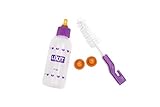
- COMPLETE NURSING KIT: The Lixit nursing kit will provide you with everything you need for nursing baby pets that require bottle feeding
- ACCURATE AMOUNTS: The Lixit bottle comes with measuring marks on the side to ensure you are proving your baby pets with accurate amounts of fluid.
- ALL SMALL PETS: The 2oz Kit is recommended for Small Puppies, Kittens, Guinea Pigs, Ferrets, Rabbits, Raccoons, and Squirrels, other small pets. The 4oz kit has larger nipples and is recommended for Large Puppies, Monkeys, Piglets and other large babies.
- EXTRA NIPPLES: The Lixit kit comes with 3 nipples. The nipples are not pre punched so you can adjust the flow rate as needed.
- EASY TO CLEAN: The Kit comes with a convent brush to easily clean the bottle when you are done.
What to do about a cat that suckles
- Observe the pattern. Note when the behavior happens, how long it lasts, what the cat is doing before and after, and which materials it targets. UC Davis suggests that frequency, duration, and context help identify circumstances associated with abnormal eating behavior.
- Book a veterinary check. Bring your notes. Ask whether medical causes, including gastrointestinal problems, should be ruled out, especially if the behavior is new.
- Remove tempting or dangerous materials. Put away wool, blankets the cat targets, and any cords, strings, or small objects. Consider a cover or a closed drawer for favorite fabrics during the period you are managing the habit.
- Increase play and enrichment. Schedule short play sessions a few times a day, provide climbing spaces and scratching surfaces, and rotate toys so the cat has real activity to choose instead of fabric.
- Redirect and reward. When the cat starts to suckle, offer a suitable alternative and reward the cat for using it. Keep the redirection calm.
- Escalate if needed. If the behavior persists, becomes destructive, or involves ingestion despite these steps, ask your veterinarian about a referral to a veterinary behaviorist.
Do not punish the cat for suckling. Punishment does not address the underlying motivation and can increase stress, which may make the behavior worse.
Independent reader supportYour contribution helps us test, update, and keep practical guides available for everyone.Enrichment options and what to check before using them
Food-dispensing puzzle feeders and cat-safe chew toys are the enrichment options most often recommended by these sources. Cornell recommends treat-dispensing toys as a way to meet foraging needs. UC Davis recommends appropriate toys and enrichment to redirect abnormal eating behaviors. Neither source shows that a particular product stops suckling, so treat any toy as one part of enrichment, not a treatment.
| Option | What sources support | Check before use |
|---|---|---|
| Food-dispensing puzzle feeder | Cornell and UC Davis support food-based enrichment that meets foraging needs | Make sure the cat cannot shred or swallow parts; supervise the first sessions; choose a size suited to the cat |
| Cat-safe rubber chew toy | Cited as an alternative outlet for chewing | Confirm the toy is cat-safe and sized so it cannot be swallowed; supervise use and replace it if pieces break off |
| Interactive play and scheduled activity | VCA identifies play, climbing, scratching, and exploration as the first step | Requires your time; effect varies by cat, and no product is needed |
A cat that chews through or swallows parts of any toy has created a new hazard. Remove a toy if it is damaged.
Best Value

- Angled Bottle Design for Natural Feeding: 45 angled kitten bottles allow nursing pet babies to drink milk while lying down, which is the most natural way for pet babies to feed. The ergonomic design provides comfort during feeding sessions, and holding the kitten feeding bottle for extended periods will not cause fatigue. The kitten nipple can be used in conjunction with a syringe for accurate milk portion control, especially useful when weak kittens need syringe feeding
- Three Silicone Nipple Sizes for All Ages: Three different sizes of pacifiers ensure kitten feeders can be used from birth to weaning. The soft silicone nipple is appealing for kittens and puppies. If the nipple's milk outlet needs adjustment, scissors can be used to widen the opening for better flow
- Ventilation System to Reduce Choking: Bottle features a ventilation system similar to human baby bottles, eliminating the need for manual ventilation during feeding and reducing the probability of choking on milk. Provides a safety protection comparable to infant feeding products
- Complete Feeding Kit Included: The product includes 1 x 60ml bottle, 1 x 5ml syringe, 1 x small nipple, 1 x medium nipple, and 1 x large nipple, providing everything needed for feeding kittens at various stages of development
- Safety Precaution for Teething Pets: When pet babies develop sharp teeth, use the feeding products with caution as nipples can be easily bitten off or swallowed by accident. Monitor your pet during feeding to ensure safe usage
What is not established
The veterinary sources reviewed for this article do not publish a figure for how many cats suckle, or how often any single cause is responsible. Breed tendencies and early weaning are described as associations, not as proven causes. Because the causes overlap, a single explanation rarely fits every cat. The most reliable way to sort out which factors apply to your cat is a combination of observation and a veterinary examination.
Sources cited for this article were Cornell Feline Health Center, “Feline Behavior Problems: Destructive Behavior” (updated March 2018); VCA Animal Hospitals, “Cat Behavior Problems – Chewing and Sucking” (edited July 19, 2019); UC Davis School of Veterinary Medicine, “Abnormal Eating Habits in Cats”; the Merck Veterinary Manual, “Behavior Problems of Cats”; and PetMD, Ken Lambrecht, DVM, “Is Your Cat Suckling Blankets as an Adult?” (updated April 1, 2024). Check each source for later revisions before relying on a specific recommendation.
Quick Recap
Product prices and availability are accurate as of the date/time indicated and are subject to change. Any price and availability information displayed on Amazon at the time of purchase will apply.




