The Tool Desk
Outbyte Driver Updater FREEFix the driver behind crashes, sound loss and screen glitchesFind Drivers →Outbyte PC Repair FREEClear out junk files and repair common Windows errorsFree Scan →Dogs bark because barking is communication. The meaning depends on what happened immediately beforehand, what the dog is targeting, the dog’s body language, and what happens after the bark. It may be an alert, greeting, demand, expression of excitement or frustration, reaction to another dog, or sign of fear, pain, anxiety, or confusion.
The useful goal is usually less unnecessary barking, not complete silence. Identify the cause, manage the trigger, teach a practical alternative, and reward calm behavior.
As an Amazon Associate I earn from qualifying purchases.
Dogs bark because barking is communication. The meaning depends on what happened immediately beforehand, what the dog is looking at or listening to, the dog’s body language, and what happens after the bark. A dog may be warning about a perceived threat, greeting someone, demanding access or attention, reacting to another dog, expressing excitement or frustration, or signaling fear, pain, anxiety, or confusion.
Recommended Free Tools
The practical goal is usually less unnecessary or disruptive barking, not total silence. Barking is a normal canine behavior, and some dogs are naturally more vocal than others. The most effective approach is to identify the cause, prevent the dog from rehearsing the behavior, and teach a useful alternative using reward-based training.
#1 Best Overall

- 【Train Like a Pro】Heouvo dog treat pouch and clicker kit are designed to help you train your dog like professionals. With easy access to your pet's favorite treats and a training clicker to supercharge your training sessions, you'll see better results in no time
- 【Compact Body, Large Capacity】Compared to other bulky treat bags, our treat pouch is very compact (5*4*2inch), but can hold 1.67 cups of dry or wet food. While other silicone pouch has large openings that tend to result in snack spillage, we have designed a smaller mouth with stronger magnetic closure that effectively prevents food from falling out, thereby extending the food's freshness.
- 【Food-Grade Silicone Material】Heouvo training bag is made of safe and harmless food-grade silicone that is free from bisphenol. Unlike fabric waist pouches, ours is designed to store both dry and wet or freezing food. It features 2pcs strong built-in magnet that allows for convenient one-hand operation, enable quick reach of food to promptly reward obedient dogs. The flexible silicone material allows for easy bending and flipping for easy cleaning the inner compartments.
- 【Effective Dog Clicker】You can use the pet training clicker to train all your pets. Not only for dog but also for cat, bird, chicken and horse. You can use it to train your pet the basic obedience, small trick, and correct the bad behavior. Scientific method of training your pet safely and easily.
- 【Unique Waist Belt Design】Unlike other silicone dog training pouches, we have taken extensive time and effort to address the risk of plastic clips breaking or failing off. After careful consideration, we are proud to present our latest product that eliminates the worry of your pouch accidentally detaching during training sessions or walks. The waist belt is adjustable for waist sizes ranging from 25“ to 47”, ensuring a comfortable fit for users. Now, you can confidently focus on your training or outdoor activities without the concern of your pouch slipping off.
How to work out why your dog is barking
Before choosing a solution, observe the pattern. Keep a short log or record a video and note:
- What happened immediately before the bark? Did someone pass the window, a doorbell ring, another dog bark, or you pick up your keys?
- Where does it happen? A dog may bark in the yard, at a window, in the car, on walks, in a crate, or only when left alone.
- What is the target? Look for a person, dog, animal, sound, toy, food, door, or departure routine.
- What does the body language say? A loose, wiggly body suggests a different emotional state from a stiff posture, tucked tail, hard stare, raised hackles, hiding, or frantic movement.
- What does the dog gain afterward? Attention, access to the yard, a thrown toy, food, distance from a frightening trigger, or interaction with another dog can all reinforce barking.
Do not assume that every noisy dog is bored or “just seeking attention.” Those are possible explanations, but barking can also be driven by fear, territorial behavior, frustration, social contagion, pain, sensory changes, or anxiety.
Common reasons dogs bark
1. Territorial or alarm barking
Territorial barking occurs when a dog reacts to something near a place it considers familiar or worth defending. Common locations include the home, yard, car, or a regular walking route. A dog may bark at people near the property, delivery workers, passing dogs, wildlife, or unfamiliar vehicles.
Alarm barking is broader. It can happen anywhere when a dog reacts to a sudden or unfamiliar sight or sound. The dog may be trying to make the perceived threat go away, alert the household, or create distance.
Context and posture matter. A dog that approaches with a loose body and relaxed facial expression may be greeting. A dog that becomes stiff, leans forward, stares, growls, retreats, or repeatedly charges a boundary may be warning, fearful, or highly aroused. Do not rely on barking alone to determine the emotion.
What helps
- Block access to windows or move furniture so the dog cannot spend the day watching passersby.
- Use opaque fencing or a removable privacy window film where visual triggers are the problem. This is a management tool, not a treatment for fear or aggression.
- Supervise yard time instead of leaving the dog outside to patrol and practice barking.
- Move the dog away from the door or boundary before arousal becomes intense.
- Teach a replacement routine, such as going to a mat, looking at you, and staying there for a reward.
Management is not “giving in.” Every episode in which a dog repeatedly rushes the window or fence can strengthen the habit. Reducing those rehearsals makes training easier and safer.
2. Attention-seeking or demand barking
A dog may learn that barking produces a result: eye contact, conversation, petting, food, play, a door opening, or access to the yard. Even scolding can reward the behavior if the dog wants interaction. From the dog’s perspective, an angry response may still mean, “Barking makes my person engage with me.”
Quick wins for a faster PC:
Clear out junk files and repair common Windows errorsFree Scan →Fix the driver behind crashes, sound loss and screen glitchesFind Drivers →Repair Windows errors before they cause bigger problemsFix Now →The solution is not to ignore every need. Dogs need exercise, interaction, food, toilet breaks, rest, and appropriate enrichment. Instead, avoid making barking the reliable way to obtain those things.
What helps
- Prepare the alternative behavior before the dog starts barking—for example, sitting, bringing a toy, touching your hand, or waiting quietly.
- When safe and practical, pause interaction during the bark. Avoid shouting over it.
- Wait for a brief moment of quiet, then calmly reward the alternative behavior.
- Give attention and rewards while the dog is already quiet, so silence—not barking—is regularly reinforced.
Consistency is crucial. If barking works occasionally, the dog may persist longer and bark more intensely because the reward is unpredictable. Everyone in the household should follow the same plan.
Rank #2

- 【No More Stinky Pouches!】Say goodbye to smelly, stained fabric forever! Our revolutionary pouch is crafted entirely from 100% food-grade silicone, creating a waterproof barrier that prevents treat oils and grease from soaking in. No more lingering odors, no more messy residue—just a fresh, clean pouch that wipes clean, rinses under water (The hinge is made of stainless steel, no need to worry about rust issue.), or goes right in the dishwasher.
- 【One-Handed Training】Stop fumbling with treats! Our innovative pull-tab and self-sealing top are engineered for real-world use. Deliver rewards seamlessly with one hand, keeping your focus and your other hand exactly where they need to be—on your pup. This is the ultimate hands-free advantage for flawless training or busy walks.
- 【Pocket-Sized, Packed With Potential】Don't let the compact size fool you! With a 1-cup capacity, this small-but-mighty pouch is perfectly sized for daily drills and walks. It reliably holds everything from dry kibble and moist treats to any high-value reward your dog loves.
- 【Never Forget a Reward Again】Clip it on and go! With an upgraded carabiner and wider 0.5-inch leash clip, it securely fastens to virtually any standard leash (except retractable one) or belt loop. Once attached, you're free to enjoy focused training and walks, with rewards always within reach.
- 【The Last Pouch You'll Ever Need】This superior design meets everyday use durability. We built it to last from rugged, easy-clean silicone and refined the profile to be both compact and capable. Choose from 6 stylish colors to match your gear—this isn't just another accessory, it's the final upgrade your walking essentials deserve.
3. Greeting barking
Many dogs bark when they see visitors, neighbors, delivery workers, or other dogs. Greeting barking often comes with excited, relaxed body language: a wiggling body, loose tail movement, bouncing, or attempts to approach. That does not mean the dog is automatically safe or comfortable with every person. Excitement can still become overwhelming, and greetings should be managed according to the individual dog.
What helps
Teach the dog to go to a designated mat or spot, sit or lie down, and remain there until released. Start when there are no visitors. Reward the dog for moving to the spot, staying briefly, and remaining calm while you walk around. Then add realistic pieces one at a time:
- a knock or doorbell sound played at low intensity;
- someone approaching the door;
- the door opening;
- a familiar visitor entering;
- an unfamiliar guest moving around the room.
Keep the dog below the point at which it erupts. A food-stuffed toy or interactive dog puzzle toy can occupy the dog after visitors are settled, provided the dog enjoys the item and does not guard it. Visitors should avoid crowding, staring at, or reaching toward a dog that is frightened or overexcited.
4. Excitement and frustration
Some barking occurs when a dog wants to reach something but cannot. Typical triggers include a person, another dog, a squirrel, a toy, a car ride, a walk, or outdoor play. The dog may bark at a gate, pull toward the target, jump, whine, spin, or struggle to respond to its name.
This is often a problem of emotional arousal and impulse control rather than deliberate disobedience. Repeatedly allowing the dog to explode at the barrier can make the pattern stronger.
What helps
- Begin at a greater distance from the trigger or use a physical barrier.
- Reward looking at the trigger and then turning back to you.
- Practice waiting, sitting, staying, and calm access to the desired activity.
- End or change the exercise before the dog loses the ability to learn.
- Provide suitable exercise, sniffing, play, rest, and short training sessions.
Mental exercise can help meet a dog’s needs, but “wearing the dog out” is not a complete treatment. An exhausted dog may still bark from fear, frustration, pain, or separation anxiety.
Crashes, No Sound, or Screen Glitches?
Random freezes, missing sound and display glitches usually trace back to one bad driver. Find and replace yours safely.Free scan · under a minuteWindows Errors? Fix Them Before They Spread
Repair common Windows errors and clear accumulated junk for a smoother, more stable PC - no reinstall needed.Free scan · no reinstall5. Socially facilitated barking
Some dogs bark after hearing another dog bark—even when the other dog is far away or the sound comes through a television or recording. The response may be social excitement, an attempt to locate the other dog, territorial alarm, or fear.
Bring the dog indoors, reduce access to the sound, close windows, and use calm background sound when appropriate. Redirect the dog to an easy behavior and reward engagement with you. If the reaction is fearful, escalating, or difficult to interrupt, use gradual behavior work rather than startling or punishing the dog.
6. Compulsive or repetitive barking
Compulsive barking has a fixed, repetitive quality and may be directed at apparently irrelevant stimuli. It can occur alongside pacing, spinning, fence-running, chasing lights or shadows, or other repetitive movements. The dog may be difficult to interrupt, and the pattern may worsen over time.
Rank #3
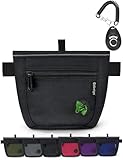
- 【Upgraded Stronger Magnet】 There are two pairs of strong magnets on opening of the bag, auto closing and no food spilling out at all. Open easily by one hand when food needed.
- 【Versatile wearing options】 Gobeigo dog treat bag offers two wearing modes: an adjustable waist belt (25-47 inches) catering to a wide audience, or the option to use the back metal clip independently. Simple and convenient, ensuring a comfortable fit for everyone.
- 【Compact but Large Capacity】 The dog treat bag looks exquisite and compact on waist, but it can hold 2 cups of food, large enough for daily walking with your furry friends.
- 【Effective Dog Clicker Included】You can use the pet training clicker to train all your pets. Not only for dog but also for cat, bird, chicken even horse. You can use it to train your pet the basic obedience, small trick, and correct the bad behavior. Scientific method of training your pet safely and easily.
- 【Convenient Design】There is a zipper pocket in front with poop bag outing, you can get poop bags easily anytime. Also lining material of the fanny pack is water resistant, can be inside out easily for cleaning.
This is not a situation for experimenting with increasingly harsh bark-control devices. Arrange an assessment with a veterinarian and an appropriately qualified behavior professional, especially if the behavior is new, intense, or accompanied by other changes.
A practical, reward-based plan for quieter behavior
Once you have a likely trigger, use the following framework. The exact pace depends on the dog’s history, sensitivity, environment, and safety risk.
Step 1: Identify the trigger and the payoff
Write down the time, location, target, distance, body language, number of barks, and what followed. For example: “At 6 p.m., dog saw a jogger through the front window, stiffened, barked for 20 seconds, and the jogger disappeared.” The jogger’s departure may have reinforced the behavior from the dog’s perspective, even though barking did not literally cause it.
Step 2: Lower the difficulty
Training cannot work well when the dog is already frantic. Close blinds, apply privacy film, move farther from the trigger, use a quieter room, shorten the exposure, supervise the yard, or change the walking route. For sound-sensitive dogs, reduce volume and distance rather than repeatedly exposing them to a full-strength noise.
Step 3: Teach a clear alternative
Choose one behavior that is physically possible in the relevant situation:
Do these 3 things before closing this tab:
1Fix the driver behind crashes, sound loss and screen glitches2Repair Windows errors before they cause bigger problems3Scan for outdated or missing drivers - takes under a minute- At the window: turn toward you and go to a mat.
- At the door: go to a spot and wait.
- When requesting play: bring a toy or sit.
- On seeing another dog: look at the handler and move away.
- When needing to go outside: ring a bell or stand quietly by the door.
Practice the behavior in an easy, quiet setting first. Then introduce a mild version of the trigger while rewarding the dog for performing the alternative.
Step 4: Reinforce quiet promptly
Use a small, high-value reward immediately after the dog performs the desired response. Small dog training treats or soft treats are useful because they can be delivered quickly during short repetitions. Account for treats in the dog’s daily calorie intake, and choose rewards appropriate for the dog’s health and diet.
Food is not a bribe or a cure. It is a way to reinforce a behavior you want the dog to repeat. You can also use access to a walk, toy, sniffing, play, or another meaningful reward when those are safe and practical.
Step 5: Build duration gradually
At first, reward one or two seconds of silence. Then increase the interval in small, unpredictable steps. Do not jump from one second of quiet to several minutes while a visitor stands at the door. If barking returns repeatedly, the exercise is probably too difficult, the reward is not valuable enough, the trigger is too close or intense, or the dog needs a break.
What’s actually slowing this PC down?
Pick the symptom - the matching free tool is one click away.
Rank #4
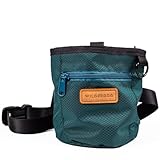
- Two pockets with zipper closures and additional magnetic closure on the big pouch. Adjustable strap fully extended measures up to 52 and 1" wide to fit perfectly through belt loops
- Approximate total capacity: 0.8 L
- Stitched webbing front loop and d-ring make it easy to attach items such as Poop Bag Holder, Crap Carrier, keys, etc.
- Measures 7" x 3" x 6" and weighs 5 oz
- Interior fabric is human food-grade fabric and outer is made of easy-to-clean ripstop
Step 6: Add realistic situations
Only after the dog can perform the alternative in easy conditions should you add door knocks, visitors, passersby, other dogs, departures, or louder sounds. Change one variable at a time. Continue managing the environment so the dog is not repeatedly practicing the old response between training sessions.
What not to do: punishment and bark collars
Yelling, hitting, prolonged muzzle use, shock collars, electronic collars, prong collars, choke collars, citronella collars, ultrasonic devices, and other aversive bark-control methods should not be the default solution.
Aversive methods can increase fear, stress, and defensive behavior. They may suppress the sound without changing the dog’s underlying emotional state. That creates a particular risk when barking is a warning: a dog may stop giving obvious signals while remaining frightened or willing to bite. Punishment can also make the owner, visitors, other dogs, or the triggering environment seem more threatening.
Anti-bark collars are not a universal fix. If one is being considered at all, seek professional guidance first; a collar cannot diagnose why the dog is barking or address separation anxiety, pain, illness, or fear. Reward-based training and thoughtful management are safer starting points.
Products that can support the plan—but cannot replace it
Some equipment can make the training environment easier:
- Training treats: small, soft, high-value rewards help reinforce quiet behavior and alternative responses. They do not cure barking by themselves.
- Interactive or food-stuffable toys: these can provide enrichment, occupy a dog during a visitor routine, and support calm settling. Introduce them when the dog is relaxed, and supervise if there is any risk of chewing or guarding.
- Removable privacy window film: this can block views of passersby and reduce opportunities for territorial barking. It does not treat fear, aggression, or a compulsive disorder.
- White-noise machine for dogs: background sound may mask some outdoor noises. It should not replace veterinary or behavior treatment for significant noise sensitivity, panic, escape attempts, or worsening distress.
No product can guarantee silence or substitute for a veterinary examination and behavior plan when the barking is severe.
Independent reader supportYour contribution helps us test, update, and keep practical guides available for everyone.When barking may indicate pain, illness, or anxiety
A sudden change in barking deserves attention, particularly in an older dog. New or unusual vocalization can be associated with pain or discomfort, hearing or vision changes, organ or hormonal disease, nervous-system disease, urinary problems, mobility problems, or age-related cognitive decline.
Arrange a veterinary examination if barking is accompanied by:
- restlessness, pacing, or difficulty settling;
- reduced appetite or activity;
- limping, stiffness, altered mobility, or sensitivity to touch;
- confusion, staring, getting lost, or disrupted sleep;
- withdrawal, irritability, or a marked personality change;
- panting, drooling, hiding, trembling, or escape attempts; or
- new aggression or a sharp increase in intensity.
Do not treat these signs as stubbornness or try to cover them with a bark-control product. Medical causes need to be considered before behavior training can be expected to succeed.
Best Value

- ONE-HAND TREAT ACCESS — TRAIN SMARTER, REWARD FASTER: The OllyDog Goodie Treat Bag’s powerful magnetic closure opens and snaps shut in one smooth motion — no zippers, no fumbling, no missed moments. Reach in and reward your dog’s good behavior the instant it happens, so every training session is sharper, faster, and more effective. Perfect for obedience work, recall training, agility, and everyday walks.
- ECO-FRIENDLY RECYCLED FABRIC: Made from vegan, non-toxic, water-resistant fabric repurposed from 3 recycled plastic bottles, the Goodie Treat Bag is a sustainable choice built to outlast the competition. Our soft recycled fabric is lightweight, flexible, and gentle against your side — whether you’re at the dog park, on a trail, or in a training class. Good for your dog. Better for the planet.
- 3 VERSATILE CARRY OPTIONS — MORE ADAPTABLE: Train hands-free your way: (1) Wear around your waist with the included adjustable quick-release buckle belt, (2) Clip directly onto any belt loop, or (3) Thread onto your own personal belt. Remove the belt entirely and hook the bag straight onto your leash or backpack for effortless on-the-go access. Three carry modes. One bag that adapts to every scenario.
- COMPACT SIZE, SIMPLE CLEANUP — READY FOR EVERY SESSION: At just 4¼” × 5¼” × 3” with a fully adjustable waist belt, the Goodie Treat Bag holds enough treats for a full training session without bulk, bounce, or added weight. When you’re done, simply hand wash in cold water with a pet-safe detergent and air dry — no dishwasher, no complicated disassembly, no lingering odors. Quick, clean, and back in action.
- BACKED BY OLLYDOG'S LIFETIME WARRANTY — BUY ONCE, TRAIN FOR LIFE: Every OllyDog product is backed by a lifetime warranty — if your Goodie Treat Bag ever develops a defect, contact us and we'll make it right, guaranteed. Available in solid colors and expressive prints; pairs perfectly with the OllyDog Scoop Pick Up Bag (sold separately). Note: chewing/biting not covered.
Separation-related barking
If barking begins soon after you leave and occurs with pacing, destruction, escape attempts, whining, toileting accidents, or frantic behavior, separation anxiety is a possibility. A phone or home camera recording of the dog while alone can help show when the behavior begins and what else occurs.
Discuss the pattern with a veterinarian or qualified behavior professional. Repeatedly leaving a panicked dog alone for long periods, or punishing the noise after returning, can intensify the problem.
Noise-related distress
Fireworks, thunderstorms, construction, alarms, and other noises can cause barking along with hiding, pacing, panting, drooling, trembling, or escape attempts. Noise sensitivity can worsen over time. Early veterinary advice and a gradual behavior plan are preferable to repeated startling, forced exposure, or punishment.
Free tools Windows power users keep installed
One-click scans. No signup required.
Who can help with excessive barking?
A reward-based trainer may be suitable for basic skills and mild, predictable barking. Seek a behavior consultant or veterinary behaviorist when barking is intense, fearful, aggressive, sudden, medically suspicious, difficult to interrupt, or a safety concern.
When contacting a professional, ask:
- What methods and equipment do you use?
- Will you use reward-based training rather than intimidation or pain?
- Have you handled this specific type of barking?
- How will you assess fear, frustration, separation distress, or medical contributors?
- What management and safety steps should the household use immediately?
Credentials and experience matter, but so does the method. A professional should be willing to explain the plan, identify the likely function of the barking, and refer to a veterinarian when medical or medication-related assessment is appropriate.
Bottom line
Dogs bark for different reasons, so the answer is not simply “attention” or “boredom.” Watch the trigger, target, body language, and consequence; prevent unnecessary rehearsal; teach a practical alternative; and reward calm behavior in small steps. If barking is sudden, fearful, aggressive, repetitive, linked to being alone, or accompanied by physical or personality changes, involve a veterinarian or qualified behavior professional. Aim for communication that is manageable and safe—not an unrealistic promise of a completely silent dog.
Frequently Asked Questions
Should a dog be trained never to bark?
No. Barking is normal canine communication, and some dogs are naturally more vocal. The realistic goal is to reduce unnecessary or disruptive barking while addressing the reason it occurs.
How can I tell whether my dog is barking from excitement or fear?
A loose, wiggly body and relaxed movement may accompany an excited greeting, while stiffness, hard staring, retreating, tucked posture, growling, or frantic movement may indicate fear, alarm, or defensive arousal. Context matters, and barking alone cannot identify the emotion.
What does barking when my dog is home alone mean?
Record the dog while you are away, noting when barking begins and whether it occurs with pacing, destruction, escape attempts, whining, or toileting accidents. Share the recording with a veterinarian or qualified behavior professional.
When should I call a veterinarian about barking?
A sudden increase in barking, especially in a senior dog or alongside pain, confusion, mobility changes, appetite changes, restlessness, hiding, irritability, or altered behavior, warrants a veterinary examination.
The Bottom Line
The best answer to “Why does my dog bark?” is found in the pattern around the bark. Identify the trigger and emotional context, manage the environment, teach an alternative response, and reinforce quiet behavior. Sudden, severe, fearful, aggressive, separation-related, or medically suspicious barking calls for professional help rather than punishment or a bark collar.
Quick wins for a faster PC:
Scan for outdated or missing drivers - takes under a minuteDriver Scan →Clear out junk files and repair common Windows errorsFree Scan →Fix the driver behind crashes, sound loss and screen glitchesFind Drivers →Quick Recap
Product prices and availability are accurate as of the date/time indicated and are subject to change. Any price and availability information displayed on Amazon at the time of purchase will apply.




