Do these 3 things before closing this tab:
1Scan for outdated or missing drivers - takes under a minute2Clear out junk files and repair common Windows errors3Fix the driver behind crashes, sound loss and screen glitchesFish may bleed from their gills because of injury or irritation, poor water quality or toxic exposure, parasites, rapid ascent from deep water, or a serious disease. The blood’s appearance alone cannot identify the cause. Check the fish’s circumstances and other symptoms, test the water, and seek fish-health help for severe or persistent bleeding, multiple affected fish, abnormal behavior, or deaths.
What can cause gill bleeding?
Gill bleeding is a symptom, not a diagnosis. Different causes can look similar, and more than one stressor may be involved. The fish’s species, environment, recent handling, water conditions, and other signs help determine what to investigate.
Poor water quality or toxic exposure
Water problems and toxic substances can injure fish and contribute to illness. Missouri Extension includes hemorrhagic gills among possible signs of detergent toxicity—not as proof that detergent is the cause in every case—and recommends checking water quality early when fish are stressed or dying. Fish excrete ammonia across the gill epithelium, and harmful concentrations of unionized ammonia can damage gill tissue, according to the Merck Veterinary Manual.
Consider whether symptoms began after a water change, cleaning, possible chemical exposure, equipment failure, overcrowding, or another sudden environmental change. If several fish become ill around the same time, a shared water or system problem deserves prompt attention.
#1 Best Overall

- Contains one (1) API LIQUID SUPER ICK CURE Freshwater and Saltwater Fish Medication 4-Ounce Bottle
- Treats "ich" white spot disease in fish and secondary bacterial fish infections
- Quickly kills ich parasite, typically within 24 hours of first dose
- Use only in freshwater and saltwater aquariums not with reef aquariums
- Dose every day for five days when symptoms first start occurring
Barotrauma after a rapid ascent
If the fish was caught at depth and brought up quickly, barotrauma is one possible explanation. Pressure changes can injure fish, and the Minnesota Department of Natural Resources lists bleeding gills among possible signs. Other signs can include difficulty maintaining buoyancy, disorientation, bulging eyes, gas bubbles beneath the skin, or the stomach protruding from the mouth. Internal injury may occur even when external signs are absent. Risk depends in part on the species and its swim-bladder physiology, as well as the depth and circumstances of capture.
Parasites or other gill disease
Gill parasites can irritate tissue, but bleeding alone does not identify a parasite. Virginia Tech Extension describes Trichodina parasites feeding on mucus and debris on fish skin and gills. The resulting irritation can be associated with gill-filament changes, including clubbing or fusion, and impaired breathing and excretion. Heavy parasite burdens can cause serious illness; small fish and fry are particularly susceptible.
Rank #2
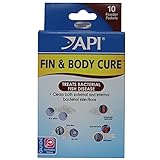
- Contains one (1) API FIN and BODY CURE Freshwater Fish Powder Medication 10-Count Box
- Treats body slime, eye cloud, fin and tail rot, open red sores, gill disease, and hemorrhagic septicemia
- Causes slight discoloration of water that can be fixed by adding activated charcoal
- Use only in freshwater aquariums
- Use daily for four days when symptoms of bacterial diseases appear
Bacterial gill disease and other infections may also affect the gills, especially when environmental conditions are poor or fish are crowded. Michigan DNR describes bacterial gill disease as involving bacteria on the gills and changes to the filaments. A fish-health professional may need an examination or samples to distinguish infection or parasites from environmental injury.
Serious viral disease
Viral hemorrhagic septicemia (VHS) can cause bleeding around the gills, eyes, skin, or fin bases. Other possible signs include lethargy, pale gills, darkening, gasping, abnormal swimming, and rapid deaths. Michigan DNR says confirmation requires laboratory testing. Infectious haematopoietic necrosis (IHN) can also include pinprick-like bleeding. Neither disease can be diagnosed from one visible sign.
Free tools Windows power users keep installed
One-click scans. No signup required.
Rank #3
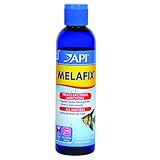
- Contains one (1) API MELAFIX Freshwater Fish Bacterial Infection Remedy 4-Ounce Bottle
- Heals bacterial infections and repairs damaged fins, ulcers and open wounds
- Contains natural, botanical tea tree extract to quickly and rapidly help fish
- Helps treat newly-introduced fish to reduce risk of disease outbreak in freshwater aquariums
- Use daily for a week when treating infections and for 3 days as a preventive when adding new fish
In Great Britain, VHS and IHN are listed diseases, and suspected cases must be reported to the Fish Health Inspectorate under the UK government’s VHS guidance and IHN guidance. This reporting requirement is jurisdiction-specific; elsewhere, follow your local fish-health authority’s instructions if a serious outbreak is suspected.
Quick Recap
Best Value
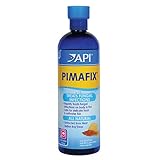
- Contains one (1) API PIMAFIX Antifungal Freshwater and Saltwater Fish Remedy 16-Ounce Bottle
- Rapidly and safely treats fungal infections on body and fins of fish
- Contains all-natural extract from West Indian Bay Trees to help with fungus and cottony growth
- Helps heal internal and external bacterial infections in freshwater, saltwater and reef aquariums
- Use daily for a week when treating infections
Rank #4

- For use in freshwater or marine aquaria.
- Easily absorbed through both skin and gills; ingestion not required.
- Does not adversely affect the filter bed and is easily removed with carbon.
- Safely and effectively treats several fungal, and bacterial fish diseases (dropsy, popeye, fin/tail rot, septicemia).
- When used in a medicated food mix, it is excellent for treating bacterial infections in tanks that contain invertebrates.
Which clues help narrow it down?
| What happened or what you see | What it may point to | What to do next |
|---|---|---|
| A fish was brought rapidly up from deep water, followed by buoyancy trouble, bulging eyes, or stomach protrusion | Barotrauma is relevant to investigate. | Tell a fish-health professional the capture depth and ascent circumstances. |
| Several fish became ill after a water change, chemical use, oxygen problem, or equipment failure | A shared water-quality or toxic-exposure problem is possible. | Check system conditions promptly and review recent changes. |
| Gill or skin irritation persists, or the fish’s condition worsens | Parasites or another gill disease may need to be considered. | Arrange a fish-health examination; microscopy or samples may be needed. |
| Bleeding appears at other body sites, with abnormal behavior or rapid deaths | A serious systemic illness is a concern, but signs overlap. | Seek professional and, when indicated, laboratory assessment; check local reporting rules. |
What should you do if a fish’s gills are bleeding?
- Observe and record the situation. Note whether one fish or several are affected, when symptoms began, appetite, breathing, balance, swimming, gill color, bleeding elsewhere, and any deaths. Record the species and recent handling, water changes, chemical use, new fish, crowding, or filtration changes.
- Test the water promptly. Check ammonia, nitrite, pH, temperature, and dissolved oxygen where possible. Missouri Extension also recommends considering other system measures when investigating stressed or dying fish. A consumer test kit is a screening aid, not a diagnosis; water testing cannot confirm parasites or viral disease. See Missouri Extension’s fish-kill investigation guidance.
- Do not medicate based on blood alone. The possible causes require different responses, and an unsuitable medication or chemical can add stress or harm fish.
- Get expert help when the problem is serious or not resolving. Contact an aquatic veterinarian, fish-health specialist, or diagnostic laboratory if bleeding is severe or persistent, affects multiple fish, accompanies abnormal behavior, or occurs with deaths. Share water results and photos or video if available; ask the professional how to collect any fish or water sample.
- Follow local disease rules. If the fish is in Great Britain and VHS or IHN is suspected, report it promptly to the Fish Health Inspectorate as the government guidance directs.
Product prices and availability are accurate as of the date/time indicated and are subject to change. Any price and availability information displayed on Amazon at the time of purchase will apply.




