Black spots on a fish are a sign, not a diagnosis: possible causes include encysted trematode larvae, noninfectious pigmentation, and environmental injury. Their color alone cannot distinguish these causes, so note the fish’s species, the marks’ shape and progression, other symptoms, and water conditions before deciding what to do.
Key takeaways
- Several conditions can cause black spots; melanosis is increased skin pigment, not an infection.
- Parasitic black-spot disease occurs when larval trematodes encyst in fish tissue and the fish surrounds them with dark melanin.
- Water-quality problems can make fish ill, but black spots alone do not prove ammonia injury.
- Do not choose medication based on spot color alone. Some conditions require microscopic or laboratory examination to confirm.
- Test water, preserve stable conditions, and seek aquatic veterinary or fish-health advice if marks progress or the fish becomes ill.
Why does my fish have black spots?
Black spots can have several unrelated causes, including encysted trematode larvae, melanosis or other pigmentation, and darkening associated with environmental injury. The appearance alone cannot reliably identify the cause. Fish species, whether the marks are flat or raised, how quickly they change, the fish’s setting, water conditions, and other signs all matter.
What is parasitic black-spot disease?
In parasitic black-spot disease, larval trematodes penetrate a fish’s skin and encyst. The fish’s melanin response around the cyst creates a visible dark spot. The Alaska Department of Fish and Game describes these lesions as small, raised nodules, often less than 1 mm, and says confirmation requires finding the parasite in a wet mount or histological section.
The life cycle involves other hosts. Parasitized snails can release larvae that penetrate fish; fish-eating birds or mammals can complete the cycle after eating infected fish. The Alaska Department of Fish and Game describes most skin and fin infestations as relatively nonpathogenic. Indiana DNR says there is no pond method available to eliminate the problem and that it generally does little harm to fish; that pond guidance is not a diagnosis or treatment plan for every aquarium fish.
Crashes, No Sound, or Screen Glitches?
Random freezes, missing sound and display glitches usually trace back to one bad driver. Find and replace yours safely.Free scan · under a minutePC Slower Than It Used to Be?
A free scan shows the junk files, broken settings and background clutter dragging Windows down - then fixes them in one click.Free scan · Windows 10 & 11#1 Best Overall

- Contains one (1) API LIQUID SUPER ICK CURE Freshwater and Saltwater Fish Medication 4-Ounce Bottle
- Treats "ich" white spot disease in fish and secondary bacterial fish infections
- Quickly kills ich parasite, typically within 24 hours of first dose
- Use only in freshwater and saltwater aquariums not with reef aquariums
- Dose every day for five days when symptoms first start occurring
What else can cause black marks?
Melanosis is an increase in skin melanin, not an infection. The Missouri Department of Conservation notes that multiple causes can produce black spots and describes melanosis in mature fish following years of sun exposure. Do not infer that a mark is melanosis—or a parasite—from dark color alone.
| Possible cause | Possible appearance or clues | What to do |
|---|---|---|
| Encysted trematode larvae | Small, sometimes raised dark nodules; outdoor pond or natural-water exposure may be relevant | Do not assume the exact parasite from appearance; confirmation may require microscopy or histology. |
| Melanosis or other pigmentation | Dark spots or larger patches; may be stable | Record the appearance over time and consider species and history; color alone is not diagnostic. |
| Environmental injury or stress | Water problems may accompany illness or darkening, but a black mark does not establish ammonia poisoning | Test the water and review recent husbandry or equipment changes. |
| Ich or white-spot disease | Typically visible white spots, not black ones | Microscopic examination is needed to confirm; do not treat a black mark as ich based on color alone. |
| Velvet | Fine yellowish spots or a velvety film; loss of appetite, lethargy, or rubbing may occur | Seek fish-health advice if the fish is ill; appearance alone may not settle the diagnosis. |
| Bacterial disease or ulcer | May involve bloody spots, ulcers, ragged fins, fluid accumulation, or enlarged eyes | Seek veterinary or fish-health guidance; diagnosis and antibiotic selection require testing. |
Could ammonia cause black spots?
Ammonia can harm fish, but black spots do not prove ammonia injury. Fish excrete ammonia, and biofilter bacteria process it through nitrite toward nitrate. A common test measures total ammonia nitrogen (TAN), which includes less-toxic ammonium and toxic unionized ammonia. The toxic fraction rises as pH and temperature rise. Merck Veterinary Manual identifies overfeeding and malfunction or death of a biological filter as common sources of increased ammonia.
Rank #2
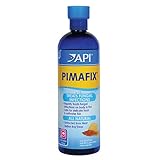
- Contains one (1) API PIMAFIX Antifungal Freshwater and Saltwater Fish Remedy 16-Ounce Bottle
- Rapidly and safely treats fungal infections on body and fins of fish
- Contains all-natural extract from West Indian Bay Trees to help with fungus and cottony growth
- Helps heal internal and external bacterial infections in freshwater, saltwater and reef aquariums
- Use daily for a week when treating infections
Review ammonia, nitrite, pH, and temperature alongside recent changes to feeding, stocking, filtration, or water. A test kit can help identify water-quality concerns, but it cannot diagnose the cause of a black mark.
What should you do first?
- Record what you see. Identify the fish species and photograph the marks. Note whether they are flat or raised, small or patchy, on the body or fins, and whether they are spreading or multiplying. Record appetite, swimming, breathing, rubbing, and whether other fish are affected.
- Test the water. Obtain reliable ammonia/TAN and nitrite readings, and record pH and temperature because they affect ammonia toxicity. Review recent setup changes, filter interruptions, overfeeding, stocking, and water-change history.
- Correct confirmed problems carefully. Maintain aeration and filtration, and use fish-safe, temperature-matched, conditioned water where appropriate. Follow the measured situation rather than applying a one-size-fits-all water-change rule. Source water may contain ammonia or chloramines, and pH shifts can affect ammonia risk; seek knowledgeable help for serious readings.
- Do not medicate based on color alone. Pigmentation, trematode cysts, environmental injury, and other diseases are not interchangeable diagnoses. Some require microscopy or laboratory testing.
- Get help if the fish worsens. Contact an aquatic veterinarian or fish-health specialist if marks progress, become ulcerated, or accompany poor appetite, lethargy, abnormal swimming, breathing difficulty, or other signs of illness.
When should you contact an aquatic veterinarian?
Seek aquatic veterinary or fish-health advice if spots grow or multiply, become ulcerated, or occur with poor appetite, marked lethargy, abnormal swimming, breathing difficulty, or other systemic signs. A professional can assess the fish and determine whether microscopy, histology, or laboratory testing is needed. These observations help narrow possibilities but do not establish a diagnosis remotely.
Rank #3
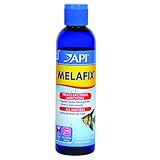
- Contains one (1) API MELAFIX Freshwater Fish Bacterial Infection Remedy 4-Ounce Bottle
- Heals bacterial infections and repairs damaged fins, ulcers and open wounds
- Contains natural, botanical tea tree extract to quickly and rapidly help fish
- Helps treat newly-introduced fish to reduce risk of disease outbreak in freshwater aquariums
- Use daily for a week when treating infections and for 3 days as a preventive when adding new fish
What information helps identify the cause?
- Fish species and whether it came from a captive or wild setting
- Indoor aquarium, outdoor pond, or natural-water setting
- Whether the marks are flat, raised, small, patchy, or on fins or body
- When the marks appeared and whether they are spreading
- Appetite, breathing, swimming, rubbing, and whether other fish are affected
- Ammonia/TAN, nitrite, pH, and temperature readings
- Recent changes to feeding, stocking, filtration, or water changes
This information can help a fish-health professional assess the possibilities, but visual inspection alone may not provide a definitive diagnosis.
Independent reader supportYour contribution helps us test, update, and keep practical guides available for everyone.FAQ
Are black spots on my fish normal?
They can be pigmentation, including melanosis, but dark color alone cannot confirm that a mark is harmless. Watch for changes and consider the fish’s condition and water readings.
Rank #4

- CLEARS ICK: Soothing conditioner that quickly clears ick, or white spot, on freshwater fish.
- FIZZ TABS: Fast-dissolving, pre-measured tablets make caring for your aquarium easy.
- PROTECTS FISH: Contains special ingredients to protect fish against secondary infections.
- FAST AND SAFE: No need to raise water temperature – see product label for complete directions for use.
- USAGE: Treats up to 80 gallons of aquarium water.
Could black spots be from a parasite?
Yes. Larval trematodes can encyst in fish tissue and prompt a melanin response that appears as a dark spot. Confirmation may require microscopy or histology.
Can ammonia cause black spots on fish?
A black spot does not prove ammonia injury. Test ammonia/TAN and nitrite, and record pH and temperature because they affect ammonia toxicity.
Free tools Windows power users keep installed
One-click scans. No signup required.
Best Value
- Contains one (1) API LIQUID SUPER ICK CURE Freshwater and Saltwater Fish Medication 1.7 -Ounce Bottle
- Treats "ich" white spot disease in fish and secondary bacterial fish infections
- Quickly kills ich parasite, typically within 24 hours of first dose
- Use only in freshwater and saltwater aquariums not with reef aquariums
- Dose every day for five days when symptoms first start occurring
Should I medicate a fish with black spots?
Do not medicate based on color alone. Different causes need different responses, and some diagnoses require microscopy or laboratory testing.
When should I seek help?
Contact an aquatic veterinarian or fish-health specialist if marks progress or become ulcerated, or if the fish has poor appetite, lethargy, abnormal swimming, breathing difficulty, or other signs of illness.
Quick Recap
Product prices and availability are accurate as of the date/time indicated and are subject to change. Any price and availability information displayed on Amazon at the time of purchase will apply.




