Recommended Free Tools
White spots on a fish can be caused by freshwater ich, marine white spot disease, or other conditions; appearance alone cannot confirm the cause. First identify whether the aquarium is freshwater or marine, check water conditions, and watch for breathing trouble or worsening illness. A fish veterinarian or diagnostic laboratory can confirm many causes by examining skin or gill material under a microscope.
Small white spots may suggest ich, but similar signs can occur with other parasites and diseases. Rapid breathing, gasping, lethargy, loss of appetite, or worsening signs call for prompt fish-health advice.
Key takeaways
- Freshwater ich is caused by Ichthyophthirius multifiliis; marine white spot disease is caused by the different parasite Cryptocaryon irritans.
- Spots are clues, not a diagnosis. Microscopic examination of appropriately collected skin or gill material may be needed to identify the cause.
- Lymphocystis, velvet, and other external parasites can resemble ich or cause pale spots, nodules, mucus, or a coating.
- Check water quality and seek prompt help for gasping, rapid breathing, marked weakness, or worsening illness.
- Treatment depends on the parasite, life-cycle stage, fish and system; follow current product labels and qualified advice rather than transferring treatment between water types.
What does it mean when a fish has white spots?
White spots may indicate freshwater ich, marine white spot disease, or another condition. Freshwater and marine diseases are caused by different parasites, and other infections or lesions can look similar. The safest first steps are to identify the water type, assess water conditions, and observe the fish. A photo or spot pattern alone cannot confirm the cause.
Use an aquarium water test kit to check ammonia, nitrite, and pH, and assess temperature, salinity where relevant, and oxygen-related conditions. Water problems can stress fish or worsen illness. The University of Florida IFAS freshwater ich guidance discusses diagnosis and treatment in the context of fish and their environment.
The Tool Desk
Outbyte Driver Updater FREEScan for outdated or missing drivers - takes under a minuteDriver Scan →Outbyte PC Repair FREERepair Windows errors before they cause bigger problemsFix Now →#1 Best Overall

- Contains one (1) API LIQUID SUPER ICK CURE Freshwater and Saltwater Fish Medication 4-Ounce Bottle
- Treats "ich" white spot disease in fish and secondary bacterial fish infections
- Quickly kills ich parasite, typically within 24 hours of first dose
- Use only in freshwater and saltwater aquariums not with reef aquariums
- Dose every day for five days when symptoms first start occurring
Is the white spot ich or something else?
Spot appearance and fish behavior can help describe the problem, but they cannot reliably identify it. Several diseases overlap in appearance, and gill involvement may cause breathing signs even when obvious body spots are absent. A fish-health professional may need to examine skin or gill material microscopically.
| Possibility | Water type or organism | Possible signs | Evidence and next step |
|---|---|---|---|
| Freshwater ich | Freshwater; Ichthyophthirius multifiliis | Small white spots may occur on skin or fins; gill involvement can also cause rapid breathing or gasping. Flashing, mucus, lethargy, and reduced appetite may occur. | Spots are not confirmation; a professional microscopic examination of infected tissue may be needed. |
| Marine white spot disease | Saltwater; Cryptocaryon irritans | Spots, nodules or patches, increased mucus, flashing, and respiratory distress may occur; signs may be hard to see. | Seek marine fish-health advice; freshwater treatment guidance does not automatically apply. |
| Lymphocystis and other nodular lesions | Can resemble spots or nodules | Nodules or other visible lesions; appearance overlaps with several diseases. | Professional evaluation may be needed to distinguish it from parasites and other causes. |
| Velvet or other external parasites | Different organisms affect freshwater and marine fish | Fine yellowish spots or a velvety film, excess mucus, flashing, weakness, or rapid breathing may occur, depending on the organism. | Do not diagnose by appearance alone; microscopic examination can identify many parasites. |
What does freshwater ich look like?
Freshwater ich, also called white spot disease, is caused by the parasite Ichthyophthirius multifiliis. Small white spots can appear on the skin or fins, but infection can also affect the gills without conspicuous body spots. Other possible signs include increased mucus, flashing or rubbing, lethargy, reduced appetite, rapid breathing, or gasping at the surface. The University of Florida IFAS freshwater ich guidance and VCA Animal Hospitals’ overview of fish ich describe these signs and diagnostic considerations.
Spots alone do not establish that a fish has ich. UF/IFAS says confirmation requires identifying the parasite in infected tissue with a compound microscope; VCA describes examination of a skin scraping or small biopsy. Sample collection and examination should be handled by someone appropriately trained, such as an aquatic veterinarian or fish-health diagnostic service.
The parasite has life-cycle stages with different vulnerability to treatment. VCA explains that it is susceptible while free-swimming, but protected in a cyst or in the fish’s skin. Repeated treatment and close monitoring may be needed under veterinary instructions; a single dose should not be assumed to resolve an outbreak.
Are white spots on a saltwater fish the same as ich?
No. Marine white spot disease is caused by Cryptocaryon irritans, not the freshwater ich parasite. Possible signs include spots, nodules or patches, increased mucus, flashing, and respiratory distress; infection may be difficult to see, including when gills are affected. The University of Florida IFAS guide to marine white spot disease explains its distinct life cycle and treatment context.
Rank #2

- Contains one (1) API STRESS COAT Aquarium Water Conditioner 16-Ounce Bottle
- Makes tap water safe and protects fish with dual-action formula
- Removes chemicals from tap water that are harmful to fish
- Replaces fish’s protective coat damaged by handling or fish fighting with healing power of Aloe Vera extract
- Use when adding or changing water, when adding new fish and when fish are sick or injured
Do not transfer a freshwater medication or salt recommendation to a marine aquarium. Marine treatment and quarantine need to account for the organism, fish, system, and any sensitive animals. Contact an aquatic veterinarian or fish-health diagnostic service promptly if a fish has breathing difficulty or is getting worse.
Can poor water quality cause white spots?
Poor water quality does not establish that visible spots are ich, but it can stress fish and worsen illness. Review ammonia, nitrite, pH, temperature, salinity where relevant, oxygen-related conditions, and recent aquarium changes. Clear-looking water does not rule out a problem.
If fish are breathing rapidly, gathering at the surface, or declining, check water conditions and seek qualified advice. Correcting environmental problems is important, but it does not replace identifying an infectious disease when one is suspected.
PC Slower Than It Used to Be?
A free scan shows the junk files, broken settings and background clutter dragging Windows down - then fixes them in one click.Free scan · Windows 10 & 11Crashes, No Sound, or Screen Glitches?
Random freezes, missing sound and display glitches usually trace back to one bad driver. Find and replace yours safely.Free scan · under a minuteWhat should you do first when a fish has white spots?
- Identify the system. Record whether it is freshwater, brackish, or marine, and note the affected species.
- Check water conditions. Test ammonia, nitrite, and pH; review temperature, salinity where relevant, oxygenation, and recent changes.
- Observe and record signs. Note breathing, appetite, flashing, mucus, weakness, and whether signs are worsening. Gill disease may be present without obvious body spots.
- Reduce avoidable stress. Maintain species-appropriate conditions and avoid unnecessary handling or abrupt changes.
- Contact a qualified fish-health professional when needed. Gasping, rapid breathing, marked weakness, refusal to eat, or worsening signs merit prompt advice. Uncertain cases may need microscopic examination.
- Do not medicate casually. Confirm the water type and seek guidance on the specific fish, system, product label, and local rules before treatment.
How is freshwater ich treated?
Freshwater ich treatment depends on the fish, system, parasite life-cycle stage, and treatment tolerance. Because the parasite is more vulnerable while free-swimming than while in the fish or a cyst, repeated treatment and close observation may be needed. Follow a qualified veterinary plan and the current product label; do not assume that one schedule or product is right for every aquarium.
UF/IFAS discusses chemical and salinity options with system-specific cautions. It advises vigorous aeration during chemical treatment when gills may be damaged, notes that species tolerance matters for salt, and warns against copper sulfate when alkalinity cannot be measured. These are not universal home-treatment instructions. Consider sensitive fish, plants, invertebrates, filtration, and water chemistry before any treatment.
Rank #3
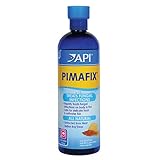
- Contains one (1) API PIMAFIX Antifungal Freshwater and Saltwater Fish Remedy 16-Ounce Bottle
- Rapidly and safely treats fungal infections on body and fins of fish
- Contains all-natural extract from West Indian Bay Trees to help with fungus and cottony growth
- Helps heal internal and external bacterial infections in freshwater, saltwater and reef aquariums
- Use daily for a week when treating infections
Can aquarium salt treat white spots?
Salt may be an option in some freshwater treatment plans, but it is not appropriate for every fish or aquarium and does not confirm the diagnosis. Species tolerance and the system matter. Ask a fish-health professional whether it is suitable and follow current qualified guidance rather than applying a general recipe.
Do not add salt to a marine aquarium as though it were a freshwater ich treatment. Plants and invertebrates may also have different tolerances from fish.
Do you need to treat the whole tank?
Whether to treat a display aquarium, use a hospital tank, or move fish depends on the suspected organism, system, species, and treatment restrictions. Parasite life-cycle stages and exposed materials can matter, so get system-specific advice rather than medicating every tank with the same product.
A separate tank is useful only if it provides stable, appropriate water conditions and treatment can be carried out safely. Shared nets, siphons, plants, and other exposed materials can spread infectious stages between systems. Use dedicated equipment and follow appropriate hygiene guidance.
When are white growths more likely to be fungal?
A pale or gray covering is not enough to diagnose a fungal disease. Fungal clumps and mucus tags are among the conditions that can be confused with other lesions, including lymphocystis and parasites. The University of Florida IFAS lymphocystis guidance discusses this overlap. A professional diagnosis is especially important if the fish is worsening or the appearance is unclear.
Rank #4

- 100% Quality driven Made in the USA
- Dedicated to creating a better environment for your pet
- Safety Guaranteed, Don't settle for Less, Use Kordon
- AQ MEDICATIONS & REMEDIES, FW
- Age Range Description: All Ages
Check for water-quality problems, injury, and other signs, but do not assume that an ich medication is appropriate for a fuzzy or coating-like lesion. An aquatic veterinarian or diagnostic service can help identify the cause.
Free tools Windows power users keep installed
One-click scans. No signup required.
What are cauliflower-like white spots?
Nodules may be associated with lymphocystis, but their appearance is not conclusive. UF/IFAS lists several conditions that can be confused with lymphocystis, including ich, marine white spot disease, grubs, heavy Epistylis infection, fungal clumps, mucus tags, and some skin growths. A fish-health professional may need to rule out these causes.
Avoid repeatedly switching medications based on appearance alone. Seek professional assessment if lesions persist, spread, or interfere with feeding, swimming, or breathing.
Independent reader supportYour contribution helps us test, update, and keep practical guides available for everyone.Are white spots contagious?
Some causes of white spots are infectious and can spread through susceptible fish or contaminated equipment; others are not contagious in the same way. Treat a suspected infectious outbreak cautiously until the cause is clearer. UF/IFAS warns that freshwater ich can spread through shared nets, siphons, plants, and other exposed materials.
Quarantine incoming fish and use dedicated equipment for separate systems. UF/IFAS recommends at least 30 days of quarantine for incoming freshwater fish. Marine quarantine recommendations differ: its marine guidance gives a minimum of 3–6 weeks at 24–27°C, with longer periods sometimes needed. These source-specific intervals are not interchangeable guarantees; seek current advice for the fish and system.
Best Value

- Contains one (1) API TAP WATER CONDITIONER Aquarium Water Conditioner 16-Ounce Bottle
- Neutralizes chlorine, chloramines and other chemicals to make tap water safe for fish
- Prevents tap water chemicals from causing gill destruction, tissue irritation and fish death
- Super strength, high concentration formula
- Use when adding or changing water and when adding new fish to freshwater and saltwater aquariums
When should you see a fish veterinarian?
Contact an aquatic veterinarian or fish-health diagnostic laboratory promptly if a fish is gasping, breathing rapidly, very weak, refusing food, or getting worse. Gill involvement may occur without obvious body spots. Seek help as well when the appearance is ambiguous, several fish are affected, or treatment is being considered for a sensitive mixed-species system.
A trained professional may examine skin or gill material microscopically to distinguish ich from other parasites and lesions. Water test results and clear observations of breathing and swimming can help with the consultation.
How can you prevent white spots in an aquarium?
Quarantine, dedicated equipment, and careful hygiene help reduce the risk of spreading infectious disease. Quarantine guidance depends on whether the system is freshwater or marine and on the organism’s life cycle.
- Quarantine incoming freshwater fish for at least 30 days, as recommended by UF/IFAS; get separate guidance for marine fish.
- Use dedicated nets and siphons for each system, and clean exposed equipment appropriately before reuse.
- Maintain stable, species-appropriate water conditions and test when fish are added or signs of illness appear.
- Observe new fish during quarantine, since illness may not be obvious immediately after transport.
FAQ
Can I diagnose ich from a photo?
No. Spots and other visible signs overlap among diseases. Microscopic examination of appropriately collected skin or gill material may be needed to confirm the cause.
Do these 3 things before closing this tab:
1Scan for outdated or missing drivers - takes under a minute2Clear out junk files and repair common Windows errors3Fix the driver behind crashes, sound loss and screen glitchesCan ich affect a fish’s gills without visible spots?
Yes. Freshwater ich and marine white spot disease can involve the gills, and breathing signs may occur even when obvious body spots are absent. Rapid breathing or gasping merits prompt fish-health advice.
Are freshwater and marine ich the same disease?
No. Freshwater ich is caused by Ichthyophthirius multifiliis; marine white spot disease is caused by Cryptocaryon irritans. Treatment advice should not be transferred between water types.
How long should I quarantine new fish?
UF/IFAS recommends at least 30 days for incoming freshwater fish. Its marine white spot guidance gives a minimum of 3–6 weeks at 24–27°C, sometimes longer. These are distinct source-specific recommendations, not guarantees for every fish or system.
The Bottom Line
White spots can suggest ich, but appearance alone cannot confirm the cause. Identify the water type, check water conditions, watch for breathing problems or worsening signs, and seek qualified help for diagnosis and treatment. Freshwater and marine white spot diseases are different, and their treatment and quarantine guidance are not interchangeable.
What’s actually slowing this PC down?
Pick the symptom - the matching free tool is one click away.
Quick Recap
Product prices and availability are accurate as of the date/time indicated and are subject to change. Any price and availability information displayed on Amazon at the time of purchase will apply.




