
Some links on this page are affiliate links: if you buy through them we may earn a commission, at no extra cost to you.
A dog that suddenly stares, barks, paces, hides, or stays on alert after dark may be reacting to a specific sound or event, anticipating something frightening, or showing a broader anxiety problem. In adult and senior dogs, a new nighttime change can also be the first visible sign of pain, illness, medication effects, declining sight or hearing, neurological disease, urinary or hormonal problems, or canine cognitive dysfunction (CCD). Night makes these issues easier to notice because the house is quieter, visual information is limited, and a dog may struggle more with pain, navigation, or settling. A marked or new change deserves a veterinary appointment rather than an assumption that the dog is simply being difficult or “seeing something.”
Why is my dog suddenly scared or watchful at night?
The most likely explanations fall into three groups: a discrete trigger, learned anticipation after a frightening event, or a medical or age-related change. A storm, fireworks, gunshot, wildlife, a person outside, a new appliance, or an unfamiliar sound can start the episode. After one frightening experience, a dog may become alert before the next expected sound or weather change. Persistent fear without an obvious trigger, especially in an older dog, raises the importance of a physical and neurological evaluation.
As an Amazon Associate I earn from qualifying purchases.
Nighttime does not necessarily create the problem. It can remove daytime distractions and expose it. Reduced light makes it harder for a dog with failing vision to interpret movement; quiet conditions make small outside noises more noticeable; and pain or confusion can make settling in a dark house difficult.
Common fear triggers
- Thunderstorms, wind, rain, fireworks, gunshots, or other loud and unpredictable noises.
- Weather cues such as pressure, wind, or distant thunder that precede a storm.
- Wildlife, people, vehicles, or sounds outside the home.
- Being left alone or separated from a family member.
- A new room, appliance, furniture arrangement, odor, or other unfamiliar environmental change.
Merck Veterinary Manual identifies loud unpredictable noises, storms, fireworks, unfamiliar environments, separation, and associated weather cues as common fear or phobia triggers. It describes generalized anxiety as persistent anticipatory fear, difficulty settling, and hypervigilance.
Popular on Amazon
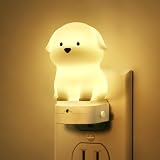
- CUTE KIDS NIGHT LIGHT WITH 3 LIGHTING MODES: 3D Dog night light plug in design, and this color-changing Kids Night lights comes with 3 different levels of lighting control settings: Solid color/3000K warm light/multicolor (cycle for 8 color). LED night lights plug into wall give the room appropriate illumination based on your choice.
- MULTICOLOR NIGHTLIGHT: Our cute night light for kids only has one button to change the color. Night Lights Plug Into Wall with 8 vibrant colors to choose from: red, green, blue, pink, orange, purple, yellow and teal – Perfect for your bedroom, bathroom, hallway and more.
- NIGHTLIGHTS WITH LIGHT SENSORS: The LED night light has a built-in light sensor that turns the night light on at dusk and off at dawn, providing light only when necessary and saving you energy costs
- DURABLE: This baby night light With long lifespan, super cute nightlight, “Puppy“ shape design is simple and very low key. The night light with well-rounded light pool - casting soft light on the wall, the ceiling, and out into the room.
- PERFECT KIDS STUFF: Baby night light for girls or boys nursery offer a gentle and calming glow with its warm and soft lights for children of all ages to drive away darkness and accompany children at bedtime. A great christmas gifts for your children room.
Why one frightening event can change later nights
Dogs can learn that a location, time, weather pattern, or sound predicts danger. A dog frightened by fireworks may begin scanning the yard at dusk; one startled by a noise near a hallway may avoid that hallway after dark. This learned anticipation can continue even when the original trigger is absent. Fear-based responses can escalate quickly when a dog cannot obtain relief, so punishment or forced exposure can make the pattern worse.
Could nighttime fear mean pain or another medical problem?
Yes. New or substantially worse fear in an adult or senior dog should be treated as a possible health change until a veterinarian has assessed it. Pain, arthritis, dental disease, illness, medication effects, reduced vision or hearing, urinary or endocrine disease, brain disease, and other neurological problems can all alter behavior. VCA Animal Hospitals, BSAVA PetSavers, the ASPCA, and Merck Veterinary Manual each advise ruling out medical contributors before labeling a behavior problem as purely emotional.
Pain and mobility problems
Arthritis, an injury, or dental pain may be harder to manage when a dog rises after a long rest. Watch for reluctance to climb stairs, stiffness, limping, repeated repositioning, panting, or difficulty getting up. A dog that cannot reach water or a toilet area comfortably may pace or vocalize rather than settle.
Loss of sight or hearing
Dim light removes visual information, while a dog with hearing loss may startle when a person or object appears without an audible approach. Conversely, partial hearing loss can distort sounds. Signs include bumping into furniture, hesitating at steps, startling when touched, or reacting strongly to unexpected sights and sounds.
Urinary, hormonal, neurological, or medication-related causes
Night waking accompanied by increased drinking, frequent urination, accidents, appetite changes, vomiting, weakness, tremors, staring, or unusual movements needs medical attention. A recent medication, dose, or supplement change is also relevant; never stop a prescribed drug without veterinary direction.
Also popular on Amazon

- [Adorable 3D Puppy Night Light] Discover the charm of our newest creation - the 3D Cute Schnauzer dog night light from LOHAS emits light upward and downward. Transform your space with warmth and cuteness.
- [Automatic Dusk to Dawn] This night light features smart sensors, turning on at dusk and gently powering off at dawn. For optimal performance, avoid placing two night lights too close together.
- [Turn On/off & Memory Function] Long Press and hold for 2 seconds to turn off the lights, press again to turn on the lights. Restarting has a color memory function, and the light sensor will also stop working when the light is turned off.
- [Short Press & 3 Lighting Modes] Short press to enjoy the simplicity of 3 lighting modes: 8 solid colors(Red, Turquoise, Yellow, Blue, Green, Violet, Light Pink, and Teal), soft white, and color cycling. Press the button in soft white mode to dim brightness by 50%. Choose the perfect lighting mode to suit your mood.
- [Resistant and Cozy] Crafted for durability, our baby Night Light provides lasting warmth and gentle illumination for children of all ages. An ideal companion for bedtime, it dispels darkness and fosters a serene and cozy atmosphere.
Is this canine cognitive dysfunction (CCD)?
CCD is more plausible when nighttime fear appears alongside a gradual pattern of disorientation and changed routines. AAHA’s senior-care guideline uses the DISHAA pattern: disorientation, altered social interactions, sleep-wake changes, house-training loss, altered activity, and anxiety. Nighttime restlessness, daytime sleeping, pacing, staring, getting stuck, failing to recognize familiar people, or losing learned routines fit that pattern better than a single isolated scare.
Free tools Windows power users keep installed
One-click scans. No signup required.
AAHA reported that approximately 14–22.5% of dogs older than eight years have age-related cognitive impairment (2022). That estimate concerns cognitive impairment generally, not the prevalence of nighttime fear. No reliable prevalence figure establishes how often sudden nighttime watchfulness occurs.
Features that make CCD more likely
- Changes developing over weeks or months rather than one night.
- Sleeping much of the day and wandering or vocalizing at night.
- Staring, appearing lost in familiar rooms, or becoming stuck behind furniture.
- House-soiling despite previously reliable training.
- Changed recognition of family members or altered social interaction.
- Reduced interest in familiar activities or inability to follow established routines.
CCD is a diagnosis made after other medical explanations are considered. A sudden onset, rapid deterioration, collapse, seizures, severe weakness, inability to stand, breathing difficulty, repeated vomiting, or obvious severe pain is not “normal aging” and warrants prompt or emergency veterinary care.
How can I tell a trigger from anxiety, pain, or confusion?
Look for patterns rather than trying to diagnose from one episode. The timing, setting, associated signs, and response to a safe environmental change provide useful information for your veterinarian.
| Pattern you observe | Possibilities to discuss with a veterinarian | Useful next action |
|---|---|---|
| Starts during storms, wind, fireworks, or a particular outside sound | Noise or weather-related fear; learned anticipation | Record the sound or weather and reduce exposure without forcing the dog closer. |
| Occurs only in one room, near stairs, or in dim areas | Specific environmental trigger, reduced vision, pain, or difficulty navigating | Improve lighting and footing, then note whether the pattern changes. |
| Appears with limping, stiffness, panting, or trouble rising | Pain, arthritis, injury, or another physical disorder | Arrange a veterinary examination; do not give human pain medicine. |
| Includes daytime sleeping, pacing, staring, getting stuck, or house-soiling | Cognitive dysfunction or another neurological or systemic disease | Keep a day-and-night log and request a senior or neurological assessment. |
| Has no identifiable trigger and persists across locations | Generalized anxiety, illness, sensory change, or medication effect | Book an appointment and bring a video of the behavior. |
These patterns guide the history; they do not replace an examination. Merck recommends a detailed history, physical examination, neurological examination, and indicated tests before diagnosing a behavior disorder.
Also popular on Amazon

- Night Lights Plug into Wall--0.5 watts, 50 lumen, 3000k warm white Night Light. 4pcs long-life LED, if lights up to 7hrs each day, only 0.7 Kwh per year
- Dusk to Dawn Sensor Night Light--Built-in sensitive light sensor, the nightlight automatically turns on at dusk and off at dawn. Emitting gentle light
- Personalized Night Lights Plug into Wall--Takes the space of only one plug, allowing you to plug another device into the outlet while using the night light
- Widely Used--This plug in night light perfect for hallway, bathroom, bedroom, kitchen, living room or anywhere you need some extra light
- 4 Pack Nightlight--If you are ready to stop walking in the dark and start easily moving through your home, check out Sujeet night lights are your good choice Night light product dimensions: 2.4 × 2.4 × 1.6 inches (L × W × H)
What should I do during a nighttime episode?
Make the immediate environment safer and calmer while avoiding actions that intensify fear.
- Check for an obvious hazard. Look for a storm, smoke alarm, appliance noise, wildlife, a person outside, or another new stimulus. If a suspected trigger can be removed safely, do so.
- Let the dog choose distance. Move to a familiar, quiet area and allow the dog to approach. Do not drag, corner, restrain, or force a greeting with a person, object, or sound.
- Use calm, ordinary reassurance. Speak softly and keep movements predictable. Punishment, shouting, or dramatic reactions can add to the perceived threat.
- Improve navigation. Turn on gentle lighting, clear clutter, and provide a non-slip route to water and the toilet area.
- Observe without crowding. Note body posture, panting, vocalization, staring, pacing, limping, urination, and how long the episode lasts. A short video can be more informative than memory.
- Escalate for urgent signs. Seek prompt veterinary help for collapse, seizures, severe weakness, inability to stand, breathing trouble, repeated vomiting, or obvious severe pain.
How should I prepare for the veterinary appointment?
Arrange an appointment for any marked new fear, especially in an adult or senior dog. Bring a concise record covering the previous few days or weeks.
- Exact time, location, duration, and frequency of each episode.
- Weather, outside sounds, lighting, visitors, appliances, and other possible triggers.
- Body language: hiding, freezing, barking, panting, pacing, staring, trembling, or attempts to escape.
- Appetite, drinking, urination, defecation, vomiting, mobility, sleep, and daytime behavior.
- Recent injuries, household changes, medication or supplement changes, and known hearing or vision loss.
- What ended the episode: quiet, lighting, moving rooms, toileting, a family member’s presence, or time.
The veterinarian may ask about pain, sight and hearing, medication effects, urinary or endocrine disease, neurological disease, and cognitive changes. Depending on the history and examination, testing may be indicated. A behavior plan or referral to a qualified behavior professional can be added when fear remains after medical issues are addressed.
What home changes can make nights safer?
Environmental support can reduce confusion and prevent falls, but it is not a treatment for an underlying disease.
Do these 3 things before closing this tab:
1Fix the driver behind crashes, sound loss and screen glitches2Repair Windows errors before they cause bigger problems3Scan for outdated or missing drivers - takes under a minuteImprove light and footing
A plug-in LED night light can make routes, thresholds, and resting areas easier to see. Non-slip mats, rugs secured to the floor, and comfortable bedding may help a dog with arthritis, weakness, or reduced vision move with more confidence. Takurua Vets lists night lights, non-slip surfaces, comfortable bedding, and familiar resting places as potentially helpful changes for older pets with nighttime difficulty.
Also popular on Amazon

- Smart Dusk-to-Dawn Sensor: Auto on at dark & auto off at sunrise, no daily manual operation for your convenience
- 0.5W Energy Efficient LED: Super low power consumption saves electricity bills, low heat LED stays cool all night long
- Eye-Soft Ambient Glow: Gentle non-glare lighting prevents stumbles in hallway, stairs, bathroom without ruining sleep
- Decorative & Versatile Gift: Cute patterned plug-in night light serves as room decor, great gifts for teen boys, girls, men & women bedroom, man cave, she shed
- Safe Compact US Plug Design: Slim size won’t cover the second outlet, fireproof plastic ensures safe use around kids and pets, easy plug-and-play setup
Keep the routine predictable
Use consistent meal, exercise, rest, and toileting times. Keep furniture and essential resources in familiar positions, and make the route to the toilet area short and unobstructed. Gentle daytime activity can support a normal sleep-wake rhythm, but avoid strenuous exercise if movement is painful.
Reduce, rather than confront, triggers
Close curtains, move the bed away from windows, use steady background sound, or choose an interior resting area when outside activity is the problem. Do not deliberately expose a frightened dog to a loud stimulus at close range. Any desensitization or counterconditioning plan should be gradual and ideally guided by a veterinarian or qualified behavior professional.
Independent reader supportYour contribution helps us test, update, and keep practical guides available for everyone.Should I give a calming medication or supplement?
Only use medication or supplements after a veterinarian has assessed the dog. The appropriate treatment depends on whether the driver is pain, a sensory deficit, anxiety, cognitive dysfunction, or another disease, and on the dog’s other medications and organ health. Human sleep aids, pain relievers, and leftover prescriptions can be dangerous. A veterinarian may discuss behavior modification, environmental management, or prescription treatment when indicated; the choice should be individualized rather than based on a product label or an online dosage.
When is nighttime watchfulness an emergency?
Seek urgent veterinary care for collapse, a seizure, severe weakness, inability to stand, breathing difficulty, repeated vomiting, sudden loss of coordination, or obvious intense pain. Rapid worsening also changes the priority. A dog that is newly confused, cannot find familiar spaces, or repeatedly injures itself while pacing should be assessed promptly even without a dramatic emergency sign. Do not wait for a routine behavior appointment if the dog’s safety or basic functions are failing.
Can nighttime fear be prevented from returning?
Prevention depends on the cause. Controlling a known noise trigger, maintaining safe footing, treating pain, correcting vision or hearing-related hazards, and keeping routines stable can reduce recurrence. Because a frightening episode can create anticipation, early veterinary advice and a carefully paced behavior plan are preferable to repeated forced exposure. Continue monitoring daytime behavior as well as nights; a broader pattern may reveal a medical or cognitive change sooner.
Also popular on Amazon

- 【GENTLE NIGHTTIME LIGHTING FOR PETS】When your cat or dog walks around the house at night, this motion sensor night light softly illuminates the space when movement is detected in the dark. With three adjustable brightness levels, it provides a gentle glow without the harsh glare of overhead lights. Ideal for pet sleeping areas, hallways and bedrooms, creating a calm and comforting nighttime atmosphere that helps your furry friends feel more at ease.
- 【3 MODES & SMART DUAL SENSOR】This motion sensor night light features ON, OFF and AUTO modes. ON provides dusk-to-dawn lighting, automatically turning on in darkness and off in daylight. AUTO combines motion and light sensors to detect movement within 2–5 m in dark conditions, switching off after 60 seconds of inactivity. OFF completely turns off the light.
- 【3 ADJUSTABLE BRIGHTNESS LEVELS】This plug in night light offers three adjustable brightness levels, allowing you to choose a soft glow, medium illumination or brighter white light for different nighttime needs. Easily adjust the brightness for pet areas, bedrooms, nurseries, hallways, stairs and bathrooms, providing convenient lighting without turning on bright ceiling lights.
- 【ENERGY SAVING & ULTRA-SLIM DESIGN】Equipped with energy-efficient 1W LED lighting, this night light uses intelligent sensing to reduce unnecessary power consumption. Its modern oval runway shape and slim white body complement various home décor styles without blocking the second wall socket. The standard US two-prong plug allows convenient installation without wiring.
- 【DURABLE MATERIAL & CONVENIENT 2-PACK】Made with sturdy plastic housing and built-in circuit protection, these motion sensor night lights are designed for reliable everyday indoor use. Each package includes 2 plug in night lights, providing convenient lighting for multiple spaces, including pet sleeping areas, nurseries, bedrooms, hallways, bathrooms and stairways.
Frequently Asked Questions
Can dogs really see or hear something at night that people cannot?
Yes. Dogs may detect distant sounds, wildlife, odors, or movement outside that people miss. That observation does not prove anything supernatural, however; persistent or new reactions still warrant checking the environment and considering pain, sensory loss, illness, or anxiety.
Why is my dog afraid only after I turn off the lights?
Darkness can reduce visual information and make furniture, steps, and people harder to interpret, particularly for a dog with declining eyesight. Try safer lighting and clear pathways, and tell the veterinarian whether the behavior also occurs in daylight or familiar rooms.
Recommended Free Tools
Can a dog suddenly develop a noise phobia as an adult?
Yes. A frightening storm, firework, gunshot, or other event can produce learned anticipation later in life. Adult-onset fear should still be medically evaluated because pain, hearing or vision changes, and illness can lower a dog’s tolerance for startling events.
What if my dog is calm during the day but confused at night?
A reversed sleep-wake pattern, nighttime pacing, staring, house-soiling, or getting stuck can fit canine cognitive dysfunction, but similar signs occur with pain, urinary disease, medication effects, and neurological illness. Record both daytime and nighttime behavior and arrange a veterinary assessment.





Leave a Reply