Free tools Windows power users keep installed
One-click scans. No signup required.
Coral bleaching is bad for fish when the stress that turns coral white lasts long enough to kill it: as the reef structure later erodes, fish can lose food, shelter, breeding sites and nursery habitat. Bleaching does not mean a coral has died, and effects vary among fish species and locations.
What coral bleaching does to coral
Corals live with symbiotic algae in their tissues. The algae provide much of the coral’s food. When conditions such as temperature, light or nutrients become stressful, corals may expel the algae and turn white. NOAA explains that a bleached coral is stressed but not necessarily dead; if the stress eases, it may recover. Severe or prolonged stress raises the risk of coral mortality. NOAA Ocean Service explains coral bleaching.
Why fish need healthy reefs
A coral reef is more than a food source for fish that eat coral. Its living coral and physical structure support a wider community by providing:
- Shelter: crevices and other structure offer places to hide from predators.
- Food: reef habitats support resources used by fish with different diets.
- Places to reproduce: fish use reef areas for spawning and other parts of reproduction.
- Nursery habitat: young fish can find shelter and resources as they grow.
NOAA estimates that about 25% of ocean fish depend on healthy coral reefs. That figure describes dependence on healthy reefs, not the share of fish that will die after any one bleaching event. NOAA describes coral reef ecosystems and their importance.
#1 Best Overall

- FORMULATED SPECIFICALLY FOR REEF AQUARIUMS: Contains essential ocean reef elements in concentrations greater than those found in natural sea water
- EXTRA CALCIUM: Encourages stony coral and coralline algae growth.
- EXTRA TRACE ELEMENTS: Provides vital nutrients.
- EXTRA VITAMINS: Helps promote growth and survival of corals, anemones and other invertebrates in a captive environment.
- DETOXIFIES METALS: Neutralizes traces of heavy metals found in tap water.
How reef damage can affect fish
If corals die, the structures they built do not remain intact forever. Dead reef structure can erode, reducing the habitat and shelter available to fish and other reef life. Loss of live coral can also change food resources. These changes may affect fish that do not eat coral directly, because they still rely on the broader reef habitat.
The outcome depends on how much living coral and reef structure remain, how long the stress lasts, and which fish species are present. Fish closely associated with living coral or feeding on coral may be especially vulnerable, but a bleaching event does not produce the same response everywhere.
Rank #2

- FORMULATED SPECIFICALLY FOR REEF AQUARIUMS: Contains essential ocean reef elements in concentrations greater than those found in natural sea water
- EXTRA CALCIUM: Encourages stony coral and coralline algae growth.
- EXTRA TRACE ELEMENTS: Provides vital nutrients.
- EXTRA VITAMINS: Helps promote growth and survival of corals, anemones and other invertebrates in a captive environment.
- DETOXIFIES METALS: Neutralizes traces of heavy metals found in tap water.
What happened to fish at Jarvis Island
NOAA Fisheries’ monitoring at Jarvis Island illustrates why fish responses should be described locally rather than generalized. Following unusual warming in 2014–2015 and high coral mortality, surveys found low coral cover in 2017. Some fish species from different feeding groups declined in 2016. By 2017, some observations had moved toward earlier ranges, while others remained depleted.
NOAA proposed reduced food availability and habitat change as possible explanations and said further monitoring was needed. The Jarvis Island results do not establish that all fish respond this way, or that one factor alone caused the observed changes. NOAA Fisheries reports on the Jarvis Island observations.
Rank #3
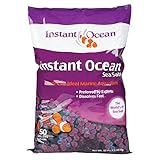
- FORMULATED SPECIFICALLY FOR MARINE AQUARIUMS: Contains every major, minor and trace element delicate marine fish and invertebrates need.
- DISSOLVES FAST: Superior solubility – provides a clear, ready-to-use solution in minutes.
- IDEAL pH: Quickly achieves and maintains ideal pH – free of nitrate and phosphate.
- CONVENIENT: No special additives are needed – will not separate during packaging and shipping.
- INSTANT OCEAN SEA SALT: The industry standard for quality, consistency and value for more than 40 years.
Can reefs and fish recover?
Recovery is possible, but it depends on conditions. If stress decreases, surviving corals may recover; if corals die and reef structures erode, rebuilding habitat takes longer. NOAA says reducing local stressors such as pollution runoff and overharvesting can improve resilience in the short term. Long-term benefits depend on reducing greenhouse-gas emissions. NOAA explains coral reef recovery and resilience.
NOAA NESDIS reported in 2026 that the fourth global coral bleaching event, confirmed on April 15, 2024, likely ended in 2025. The agency assessed reports through the austral summer from December 2025 to February 2026 before concluding that the event likely ended. That assessment concerns the bleaching event; it does not mean reefs around the world have recovered. Read NOAA NESDIS’s 2026 status report.
Quick Recap
Best Value
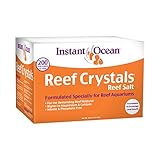
- Contains essential ocean reef elements in concentrations greater than those found in natural sea water
- Recommended specific gravity range – 1.020-1.026 at 77ᵒ F | Note – 1.4 lbs. of Reef Crystals is formulated to create 5 gallons of saltwater at a specific gravity of 1.024
- Our marine salt will typically set the pH of a tank between 8.0 and 8.3 while it produces between 7 and 10 dKH
- Encourages stony coral and coralline algae growth | Product has a chelator in it that removes the metals from solution
- Provides vital nutrients | Neutralizes traces of heavy metals found in tap water | It is not generally recommended to use Reef Crystals in freshwater situations
Rank #4

- Coral pro salt is the ideal salt mix for reef aquariums, encouraging accelerated, healthy growth and enhanced vitality of all corals
- All corals build their skeletons by absorbing the major, minor and trace elements that they need from the surrounding water
- Shown that the ratio between calcium/magnesium/carbonates is paramount for the corals to efficiently takes these elements from the water and grow
- Provides the basis for accelerated healthy growth of all soft, LPS and SPS corals and is particularly recommended for growing out SPS coral frags
- Available in 55-gallon pail
Product prices and availability are accurate as of the date/time indicated and are subject to change. Any price and availability information displayed on Amazon at the time of purchase will apply.




