
Some links on this page are affiliate links: if you buy through them we may earn a commission, at no extra cost to you.
Yellow-looking fur after a bath is usually a stain or residue that becomes more obvious on wet, white hair—not a sign that the bath permanently changed the coat. Common explanations include iron-containing porphyrins from tears or saliva, repeated licking, outdoor grime, shampoo left in the coat, or damp skin that allows yeast or bacteria to multiply. White hair makes tiny amounts of red, orange, brown, or yellow pigment conspicuous.
Where the color appears and what the skin looks and smells like are the best clues. A comfortable dog with clean, non-odorous skin may have a cosmetic stain. Itching, redness, greasy scale, musty odor, ear trouble, sores, eye discharge, pain, or hair loss points toward a problem that needs veterinary advice rather than another whitening product.
As an Amazon Associate I earn from qualifying purchases.
Do these 3 things before closing this tab:
1Scan for outdated or missing drivers - takes under a minute2Repair Windows errors before they cause bigger problems3Fix the driver behind crashes, sound loss and screen glitchesWhat makes a white dog’s coat look yellow after a bath?
The bath often reveals or redistributes material that was already on the hair. Water darkens and clumps white fur, while residue, pigment, and dirt stand out more strongly. The main possibilities are porphyrin staining, saliva from licking, incomplete rinsing, dampness-related microbial overgrowth, and ordinary environmental soil or coat variation.
| Pattern or finding | More likely explanation | What to check |
|---|---|---|
| Under the eyes | Tear overflow and porphyrin staining | Squinting, redness, discharge, eyelid or eyelash irritation |
| Around the mouth or lip folds | Drool, trapped moisture, dental or skin irritation | New drooling, odor, sore skin, difficulty eating |
| Paws and lower legs | Repeated licking, allergy, parasite, pain, wound, or interdigital cyst | Itching, swelling, broken skin, debris between toes |
| One joint or a small body area | Over-grooming a painful or itchy site | Limping, tenderness, swelling, or a persistent wet patch |
| Whole coat immediately after a new product | Residue or irritant contact reaction | Slick feel, foam, redness, or a sudden increase in scratching |
| Yellow-beige color with normal skin and no odor | Dirt, outdoor residue, aging hair, or normal coat variation | Whether the color fades as hair grows or is clipped |
Are porphyrins the reason white fur turns yellow, orange, or brown?
Often, yes. VCA Animal Hospitals describes porphyrins as iron-containing molecules in tears and saliva. The American Kennel Club also notes that these red-brown breakdown products are excreted in tears, saliva, urine, and feces. When moisture repeatedly contacts pale hair, the pigment can appear red, rust, orange, brown, or yellow.
Popular on Amazon

- Made in the USA - Our White Pear Brightening pet shampoo is pH balanced, alcohol free, paraben free, PEG-80 free and is highly recommended for brightening dirty animal coats while remaining pet and human friendly
- Less is More - Wahl has a higher concentration of our coconut derived sodding agent, which means you don’t have to use as much as other dog shampoos. A little bit of shampoo goes a long way and provides a rich lather that’s easy to rinse off
- Brightening Formula – This white pear scented pet shampoo is great for cleaning and whitening dirty and dull fur from short to long coats. The thick lather rinses off clean, brightens whites, and enhances coat color
- Allergy Friendly - Our dog icon, Rocket, was designed in the image of our family dog Cooper – a golden doodle, who has severe allergies. This is the only shampoo we have found safe and effective. He loves the smell too.
- The Brand Used by Professionals - Wahl has been serving professional vets and groomers for over 50 years. clean, condition fur & hair for a smooth, soft coat. We are a company of animal lovers that want the best for your family member
Porphyrin staining is a description of what is on the hair, not a diagnosis by itself. Around the eyes, tear overflow can result from normal anatomy, allergies, eyelid or eyelash irritation, infection, injury, or abnormal drainage. A sudden change, persistent discharge, squinting, or obvious discomfort warrants an eye examination rather than cosmetic cleaning.
Why does the color show up after bathing?
Wet hair lies flatter and looks darker, and bathing can separate clumped strands so previously hidden staining becomes visible. If the coat dries incompletely, continuing moisture can make the color and odor more noticeable. The pigment does not necessarily originate in the shampoo.
PC Slower Than It Used to Be?
A free scan shows the junk files, broken settings and background clutter dragging Windows down - then fixes them in one click.Free scan · Windows 10 & 11Outdated Drivers Are Slowing You Down
One free scan finds every outdated or missing driver and matches the right update for your exact hardware.Free scan · exact hardware matchCan licking or allergies stain the paws and legs?
Repeated licking is one of the most common explanations for yellow, pink, or rust-colored hair on feet and legs. PDSA notes that dogs may lick because of allergies, parasites, pain, wounds, interdigital cysts, stress, or boredom. Saliva repeatedly wets the same hair, depositing porphyrins and keeping the skin damp.
Allergy-associated inflammation can create a cycle: itchy skin prompts licking, licking damages the skin barrier, and the moist area becomes more favorable to yeast or bacteria. Look between the toes, around nails, and on the top and underside of each paw. Compare the stained side with the unstained side and note whether the dog interrupts sleep or walks to lick.
What signs make an allergy or infection more likely?
- Persistent scratching, chewing, or licking rather than occasional grooming
- Redness, thickened or darkened skin, greasy scale, or a musty smell
- Recurring ear infections or head shaking
- Open sores, scabs, swelling, or hair loss
- Staining that returns quickly after cleaning
These signs call for a veterinary assessment. Treating only the color leaves the trigger—such as allergy, parasites, pain, yeast, or bacteria—untreated.
Could shampoo residue be turning the coat yellow?
Yes. Incomplete rinsing can leave a film that makes hair look dull, yellow, or greasy and can irritate the skin. Virginia Tech Veterinary Teaching Hospital says thorough rinsing is critical: run your hands through the coat until you feel no slippery areas and see no foam. A localized cast where shampoo pooled, especially after changing products, supports residue or contact irritation.
Also popular on Amazon
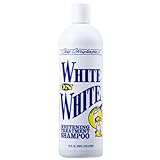
- DOG WHITENING SHAMPOO – Chris Christensen White on White Dog Shampoo gets the yellow out! This product is an optic intensifying treatment within a shampoo, removing all yellow stains, and will also enhance darker colors, leaving a luscious sheen. It brightens and whitens the coat while maintaining the coat’s texture. The result is a stain-free, brilliant, dazzling coat that’s soft to the touch. Available in two sizes; 16 fl. oz for at-home use and a gallon for professional use.
- PERFECT FOR PUPPIES – use from 8-weeks upwards. Chris Christensen’s Whitening Shampoo for dogs is ideal for removing urine stains from potty training, marks from doggy daycare, and dirt from the dog park. Using White on White neutralizes unwanted stains that cleansing does not remove such as grass, saliva, clay, food, and blood.
- SAFE TO USE – White on White Shampoo does not contain bleaching agents, harsh chemicals, or softening agents to irritate you or your pup’s skin, and while a purple shampoo in color it will not stain hands, towels, or tubs. For best results, follow with Chris Christensen After U Bathe to rinse out any shampoo residue, condition the coat, and add moisture. White on White Shampoo lasts up to 4 weeks and will not rub off on hands, clothing, or furniture. A strand test is recommended on porous coats.
- ENHANCE COLORED COATS – not just for white dogs! Chris Christensen White on White Shampoo can be used on mixed coat colors. Blacks, browns, and reds will be enhanced, adding vibrancy and sheen. Perfect for Border Collies, Rough Collies, Beagles, Cavalier King Charles Spaniels, and more, along with any white-only breeds such as Maltese, Bichon Frise, Samoyeds etc.
- BEST IN SHOW RESULTS – made in the USA. White on White is the first ‘true’ coloring correcting shampoo created initially for show dogs by Chris Christensen in 1996. Regarded highly in and out of the show ring, Chris Christensen dog grooming products have a reputation for performance and perfection. Trusted by professional groomers, show exhibitors, and caring dog owners.
Merck Veterinary Manual advises monitoring for irritant or allergic contact dermatitis from topical agents. A reaction may cause redness and itching rather than color alone. Stop a newly introduced product if signs begin, rinse with plain lukewarm water, and ask your veterinarian what cleanser is appropriate if discomfort continues.
Can a damp coat cause yellowing, odor, or yeast overgrowth?
Moisture itself is not a dye, but a coat that stays wet can contribute to skin trouble. Virginia Tech explains that dogs with allergies or other health conditions may develop yeast overgrowth when fur remains damp. Typical clues include itching, redness, greasy scale, a musty odor, and ear infections. Merck identifies topical therapy as important for bacterial and yeast overgrowth and allergic dermatitis.
Drying is especially important in dense coats and in the armpits, groin, under the tail, between toes, and behind the ears. If odor or inflammation is present, do not assume a brightening shampoo will solve it. A veterinarian may need to examine skin cells, ears, or other affected areas and prescribe targeted treatment.
How do I safely remove yellow stains from a white dog’s coat?
Use a gentle grooming sequence that removes dirt and product without adding irritation. The aim is clean, fully dry hair and healthy skin—not bleaching the dog.
What’s actually slowing this PC down?
Pick the symptom - the matching free tool is one click away.
- Inspect before bathing. Photograph the coat in daylight. Map the color: face, feet, belly, tail, one joint, or the whole body. Record licking, scratching, odor, discharge, and when the change began.
- Brush before wetting. ASPCA recommends choosing a brush or comb with help from a groomer or veterinarian for the dog’s hair type. Virginia Tech advises removing loose hair and mats first because they trap water and shampoo.
- Choose a dog-formulated shampoo. Virginia Tech advises pet products rather than human shampoo because canine skin has a different acidity balance. Follow the label’s dilution and contact-time directions.
- Keep cleanser away from eyes and mouth. Use a damp cloth for delicate facial areas unless a veterinarian has recommended a specific eye-area product. Never scrub an irritated eye or force cleanser into lip folds.
- Rinse until the coat is completely free of product. Work your fingers through the armpits, groin, under the tail, behind the ears, and between the toes. Continue until there is no slickness and no foam.
- Dry gently and completely. Press with towels instead of vigorous rubbing. If a dryer is safe for your dog, use cool or low airflow, keep it moving, and stop if the dog becomes distressed. Check skin folds and paw webs for lingering dampness.
- Recheck the skin after drying. If the coat is clean but redness, odor, itching, pain, discharge, or hair loss remains, stop cosmetic treatments and contact a veterinarian.
Is whitening shampoo safe, and will it treat the cause?
A whitening shampoo can improve the appearance of light-colored hair when the issue is dirt or yellowing residue and the skin is healthy. Veterinary Formula’s Snow White Shampoo documentation describes a bleach- and peroxide-free product for dogs and cats that removes dirt, buildup, and yellowing residue while brightening light coats. That is a cosmetic claim, not a treatment for allergies, yeast, bacteria, eye disease, dental disease, or pain.
Read the label, patch-test only as directed, avoid the eyes and broken skin, and rinse exceptionally well. Do not use household bleach, hair bleach, or improvised peroxide mixtures. VCA warns that hydrogen peroxide can severely damage the eyes if splashed. A product marketed for brightness cannot correct tear-duct disease, a painful joint, or compulsive licking.
Also popular on Amazon

- Deep Clean - Dog shampoo gently removes dirt while hydrating and moisturizing pet’s skin
- Brightens Coats - Proven to make all coats whiter and brighter while conditioning with Vitamin E
- Refreshing Scent - Long-lasting, tropical scent of awapuhi and coconut eliminates unwanted odors
- 5X Cleaning Power - Easy lather, longer-lasting suds, and max value in every wash !
- Naturally Derived Formula - Human grade, pH balanced, free from parabens, dye and cruelty-free
When is a medicated shampoo different?
KETOCHLOR combines chlorhexidine and ketoconazole for conditions responsive to those agents. It is a veterinary-directed medicated shampoo path, not a general white-coat brightener. Use medicated products only for the condition and schedule your veterinarian recommends; the wrong product can worsen irritation or delay an accurate diagnosis.
What should I do if the yellowing keeps coming back?
Track the location, bathing products, licking, food or environmental changes, odor, and skin symptoms. Recurrence suggests an ongoing source such as tear overflow, allergy, parasites, pain, dental or lip-fold moisture, or infection rather than a one-time dirty coat.
Recommended Free Tools
- Arrange a veterinary visit promptly for constant licking, significant itch, redness, odor, greasy scale, sores, hair loss, eye discharge, squinting, or pain.
- Seek urgent care for a painful or swollen eye, sudden severe facial swelling, extensive skin lesions, or a dog that is acutely unwell.
- Bring useful information: photos taken before and after bathing, the ingredient list of every shampoo or wipe, the onset date, and a record of where the dog licks.
A veterinarian can distinguish staining from dermatitis, infection, parasites, eye disease, or orthopedic pain and choose treatment accordingly. Do not keep switching whitening products while symptoms persist.
Which grooming tools help prevent staining?
A suitable brush or comb removes loose hair and mats before they trap water, saliva, and shampoo. Coat type determines whether a slicker brush, pin brush, bristle brush, comb, or another tool is appropriate. ASPCA and Virginia Tech both support selecting equipment with guidance from a groomer or veterinary professional, especially for dense, curly, corded, or easily matted coats.
Keep facial hair, paw hair, and skin folds clean and dry without cutting close to the skin yourself when the area is inflamed. Grooming should reduce moisture and tangles; it should not become a cycle of aggressive scrubbing that causes more irritation.
How can I tell a cosmetic stain from a medical problem?
| Feature | More consistent with a cosmetic stain | More concerning for illness |
|---|---|---|
| Dog’s behavior | Comfortable; no persistent licking or scratching | Repeated licking, chewing, scratching, head shaking, or reluctance to be touched |
| Skin | Normal color and texture | Red, thickened, greasy, scaly, broken, swollen, or hairless |
| Smell | No unusual odor | Musty, sour, or otherwise new odor |
| Distribution | Fading stain on exposed hair or several symmetrical areas | One painful site, rapidly expanding area, or recurrent same spot |
| Course | Lightens as hair grows, is clipped, or is gently cleaned | Returns quickly or worsens despite careful rinsing and drying |
What is the practical answer for most owners?
First identify the pattern before trying to whiten the coat. Brush out mats, bathe with a dog shampoo, rinse until no slickness remains, and dry every dense or folded area. If the dog is comfortable and the skin is normal, a bleach- and peroxide-free brightening shampoo may remove superficial residue. If staining is recurrent or accompanied by itch, redness, odor, discharge, sores, pain, or hair loss, investigate the medical cause with a veterinarian instead of treating the color alone.
Quick wins for a faster PC:
Scan for outdated or missing drivers - takes under a minuteDriver Scan →Repair Windows errors before they cause bigger problemsFix Now →Also popular on Amazon

- PROFESSIONALLY FORMULATED FOR BRIGHTER COATS: This whitening dog shampoo is professionally formulated to help remove stains and discoloration while enhancing the brightness of white and light fur. Designed to deliver salon-quality grooming results at home, it deeply cleans without stripping essential moisture
- DEEP CLEAN AND STAIN REMOVAL: Rich lather penetrates deep through dirt, dander and buildup to lift away stubborn discoloration and restore a bright, vibrant coat
- GENTLE, NON-IRRITATING FORMULA: Made with gentle, natural ingredients and free from sulfates, parabens, alcohol, formaldehyde and synthetic dyes, this sensitive skinfriendly shampoo is safe for routine grooming
- CLEAN SHAMPOO FORMULA: Safe, effective, and clean. All the good stuff and none of the bad. No parabens, sulfates, formaldehyde, alcohol, or synthetic dyes
- PROUDLY MADE IN THE USA: Crafted in the USA using quality standards to deliver consistent, brightening results for dogs of all breeds and light coat colors
Frequently Asked Questions
Will yellow fur disappear when my dog sheds?
Often, superficial staining remains on the affected hair and becomes less visible as that hair grows out or is safely trimmed. New staining will continue if tears, saliva, licking, or skin disease keeps wetting the same area.
Can I use human shampoo to clean the yellow areas?
Use a product formulated for dogs instead. Veterinary guidance notes that canine skin has a different acidity balance, and human products may irritate it or leave residue that is difficult to rinse.
Why are only one or two paws yellow?
A localized pattern commonly reflects licking of an itchy, painful, or irritated paw. Check between the toes and around the nails for redness, swelling, wounds, parasites, or a foreign object, and arrange an examination if licking persists.
Is tear staining always harmless?
No. Mild longstanding staining can be cosmetic, but sudden staining with squinting, redness, discharge, or discomfort can indicate an eye or eyelid problem. Those signs need veterinary attention rather than repeated wiping.
How long should I wait after changing shampoo?
Do not wait through worsening irritation. Rinse the coat thoroughly and contact a veterinarian if scratching, redness, odor, sores, or hair loss continues; persistent signs are not a normal adjustment to a brightening product.





Leave a Reply