Recommended Free Tools
Positive reinforcement teaches a dog which actions are worth repeating: when a desired behavior is followed promptly by something that particular dog values, that behavior becomes more likely. The American Veterinary Society of Animal Behavior (AVSAB) recommends reward-based methods for all dog training, including behavior problems, alongside thoughtful management of the dog’s environment.
What positive reinforcement means
In behavioral terms, positive reinforcement means adding a valued consequence after a behavior so the behavior is more likely to happen again. In practice, that could be a small food treat, a game, praise, petting, or attention—but a reward only works as reinforcement if the individual dog values it in that moment.
Reward-based training is deliberate, not permissive. Choose the action you want, make it achievable, and follow it with a clear consequence. AVSAB describes capturing a behavior the dog offers naturally, luring it with a reward, and shaping it through small steps as ways to teach. A clicker or a short verbal marker can identify the behavior as it happens; neither is required.
Why reward-based training is recommended
AVSAB’s 2021 Position Statement on Humane Dog Training says, “Evidence supports the use of reward based methods for all canine training.” The statement considers welfare, effectiveness, and the dog-human relationship, and says there is no evidence that aversive training is necessary.
#1 Best Overall

- New communication tool about you and your puppy.
- Pet Dog Training Clickers for Puppy, Cat, Potty, Bird, Horse, Pet, Trainer Training Tools, Behavior Aids
- Just press to mark desired behavior, then reward for faster learning.
- The spring wrist length : 16cm/6.3inches and can strength to 25cm/9.84inches.
- Package include : Black + Blue,each color 1 pcs.
The position statement summarizes observed stress-related behaviors in dogs trained with aversive methods, including tense or lowered posture, lip licking, tail lowering, panting, yawning, and yelping. These are reported findings, not a stand-alone checklist for diagnosing an individual dog’s emotional state. AVSAB’s recommendation is about methods; it is not a blanket endorsement of any particular trainer or credentialing organization. The society’s position-statement page says its 2021 statement remains its current authoritative expression, and its 2025 clarification says it has not endorsed or opposed trainers from any specific organization.
What one e-collar study can—and cannot—show
AVSAB’s summary of a 2020 University of Lincoln study describes a five-day comparison involving 63 dogs in recall and obedience training. As AVSAB reports it, the researchers found no evidence that e-collar training was necessary for the commonly cited indication studied. That is a finding from one study and training context, not a success rate or a guarantee about every dog and situation.
Rank #2

- ▼Come in 4 pack button clickers with wrist strap in 4 different colors:Black, Green, Orange, Yellow, each color 1 PCS
- ▼Can be used to train the dog basic obedience, small trick, and correct the bad behavior; Scientific method of training your pet safely and easily.
- ▼Stop barking and dog obdeience. Train your dog quiqly just by simply pressing the clicker and command.
- ▼Well constructed and durable, metal clicker will not rust or break.
- ▼Big button for easy clicking and loud sound. Easy to use in any position.
How to reward a behavior so the lesson is clear
- Pick a specific action. Define what you want the dog to do in observable terms—for example, keep four paws on the floor when greeting someone.
- Make success attainable. Start in a setting with manageable distractions and set up the situation so the dog has a realistic chance to offer the action.
- Mark and reward promptly. Give the reward immediately after the behavior. A clicker or a consistent verbal marker can help pinpoint the moment the dog got right.
- Use a reward that suits the dog and setting. Try a small food treat, play, praise, petting, or attention, and notice what the dog actually chooses. Preferences can vary by dog and circumstance.
- Adjust the setup as the dog learns. Gradually practise in other places or around distractions, changing one challenge at a time so the dog can keep succeeding.
AVSAB’s practical guidance on rewarding dogs in training emphasizes immediate rewards and choosing outcomes the dog finds valuable. Its advice for newly adopted dogs also highlights meeting basic needs as part of helping a dog settle and learn.
Use management alongside training
Training is easier and safer when the environment supports the response you are teaching. Management means changing access, distance, timing, or the setup to reduce chances for an unwanted behavior while you reinforce a suitable alternative. It does not teach the alternative by itself, but it can prevent repeated practice of a behavior that is difficult or risky.
What’s actually slowing this PC down?
Pick the symptom - the matching free tool is one click away.
Rank #3
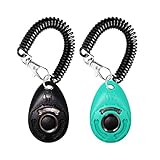
- EASY TO USE - Simple push button with distinct clicking sound.
- Comes with an elastic wrist band so you can leave it on your wrist or clip it to the leash or your pants.
- Not only train the dog but also the cat, bird, chicken, sheep a new behaviors like sit, fetch, roll over, lie down.
- For effective pet training ALWAYS reward with a treat after clicking.
- Can be used to train the dog basic obedience, small trick, and correct the bad behavior; Scientific method of training your pet safely and easily.
Jumping up to greet people
If the goal is four paws on the floor, arrange greetings so jumping is less likely to earn attention. Reinforce the dog when it stays grounded, and ask visitors to respond consistently. If the dog is too excited to succeed, create more distance or pause the greeting and try again when the situation is calmer.
Barking
Look for the situation that prompts the barking and whether the dog can settle or respond to a cue at that level of distraction. Reduce access to the trigger or increase distance when practical, then reward a useful alternative, such as turning toward you or settling. The right setup depends on what is driving the behavior.
Rank #4

- MANUAL AUDIBLE TRAINING CLICKER: Produces one consistent click sound that can be used as a marker cue when paired with rewards. The clicker does NOT provide commands or instructions to the dog and contains no electronic functions.
- ONE CLICK SOUND – FOUR VOLUME LEVELS: The clicker does NOT produce four different sounds. Three built-in baffle holes provide four volume levels. Cover or uncover the baffle holes until the desired click volume is reached.
- COMPACT PLASTIC CLICKER: This is a small handheld clicker constructed from plastic. Review the product images and compact design before purchase to confirm the size and construction meet your expectations.
- 5-INCH VELCRO FINGER STRAP: Includes an approximately 5-inch adjustable Velcro strap designed to position the clicker on the user's finger or hand for access during training. The strap is worn by the user, NOT the pet.
- INDIVIDUAL RESPONSE TO SOUND MAY VARY: Begin with fewer baffle holes open for a lower click level and adjust gradually. Individual dogs and other animals may respond differently to audible cues. Reduce the volume or discontinue use if the animal shows discomfort or fear.
Housetraining
Make appropriate toileting opportunities easier to find and reward elimination in the chosen place promptly. Supervision and a predictable routine can help reduce indoor accidents while the dog learns; punishment after an accident does not show the dog where to go instead.
Independent reader supportYour contribution helps us test, update, and keep practical guides available for everyone.When a behavior problem needs professional help
A generic treat tip is not enough for aggression, severe fear, or anxiety. AVSAB describes behavior plans that address environmental conditions and safety, use behavior modification, and sometimes include medication. The ASPCA’s position statement on training aids and methods advises seeking qualified behavior support when an animal is in severe emotional distress or may injure itself, another animal, or a person.
Best Value

- Stronger Bark Control with 3X Ultrasonic Emitters: Unlike single-emitter devices, our upgraded dog bark deterrent features three synchronized ultrasonic heads—delivering 3X the coverage to quickly stop barking, biting, and jumping behaviors. Ideal for anti barking training, safer than bark collar, more effective than a dog whistle, offers a humane, high-performance dog training solution
- 6-in-1 Safe & Humane Training Modes:Our dog bark deterrent device features dual ultrasonic frequencies (fixed 25kHz and variable 20-30kHz), combining 4 ultrasonic modes plus an audible beep and LED flashlight for versatile training. Whether for daily training or stubborn, persistent barking, this anti bark device adapts to different dogs providing effective bark control without causing pain or distress. Perfect for training at home or to stop neighbors dog bark that disturbs your peace
- 23 FT Extended Range & Night Safety: Bark Control Anytime, Anywhere: Stop barking and bad behavior from up to 23 feet away with our powerful dog bark deterrent device — perfect for your yard, neighbor’s yard, outdoor walks, and off-leash areas. Whether you're relaxing at home or out for a stroll, enjoy safe, long-distance control to correct disruptions quickly. The built-in LED flashlight adds safety for evening walks, and low-light training
- Fast Charge & Long Battery Life – Always Ready for Training:With a Type-C fast charging port, our dog bark deterrent device reaches a full charge in just 2 hours and provides up to 30 days of regular use on a single charge, along with 180 days of standby time. Whether you're correcting anti barking behavior or training your dog in public places, you’ll always be prepared for any situation. Forget the hassle of frequent charging and enjoy reliable, long-term barks no more support
- Ultra-Compact Design for Everyday Convenience:50% smaller than standard dog bark deterrent devices, our anti barking device is ultra-compact and lightweight, fitting effortlessly into your pocket, bag, or hand. Whether you're on daily walks, outdoor adventures, or dealing with unexpected situations in public places, this portable design helps you stop barking and encourage good behavior anywhere, anytime. Say goodbye to constant noise and enjoy a barks no more experience with your dog
Start with your veterinarian, who can assess health factors and help identify appropriate behavior support. For immediate risk, prioritize separation and safe management rather than trying to test a training technique in a dangerous situation.
Quick Recap
Product prices and availability are accurate as of the date/time indicated and are subject to change. Any price and availability information displayed on Amazon at the time of purchase will apply.




