Recommended Free Tools
The Tasmanian devil is endangered chiefly because devil facial tumour disease (DFTD) is a contagious cancer that spreads between devils, often through bites during fighting or mating. It has caused severe population declines; roadkill, competition with cats and foxes, and disturbance or loss around den sites add pressure. The species remains listed as endangered under Tasmanian and Australian law, and conservation work combines monitoring, disease research, an insurance population and carefully managed releases.
Endangered does not mean that no devils remain in the wild. Population estimates are difficult because surveys cover only some locations and remote terrain is hard to assess. The key concern is the severe disease-related decline and the risks that remain for wild populations.


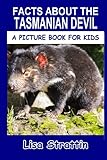

The main threat is a contagious cancer
DFTD is a transmissible cancer: tumour cells from one devil can establish a new tumour in another. The Tasmanian Department of Natural Resources and Environment reports that it spreads through contact, including bites associated with fighting and copulation, and that the cancer’s cells can evade immune rejection.
Tumours often develop around the mouth and face. They can make feeding difficult; affected devils usually die within a few months of visible signs. The Tasmanian government says death results from starvation and the breakdown of body functions caused by the cancer.
Free tools Windows power users keep installed
One-click scans. No signup required.
The disease was first recorded in 1996. The scale of the decline depends on the population and measure being discussed: the Tasmanian threatened-species profile reports a decline of more than 80% since the mid-1990s, while the department’s disease page reports declines of up to 80% in populations where DFTD has persisted for several years. The latter figure is approximate because recent sample sizes are low. Neither figure is a precise current population count.
There are two recognized forms
The Tasmanian government reports two forms of devil facial tumour disease: DFTD1, first recorded in 1996, and DFTD2, first recorded in 2014. Both are described as contagious and fatal. The government’s disease page reports DFTD1 across Tasmania and DFTD2 in the Channel area; this is a report of known distribution on that page, and surveillance findings can change.
The existence of two forms adds to the disease-management challenge. It does not change the fact that DFTD is the principal threat behind the devil’s endangered status.
Why the decline puts the species at risk
Wild Tasmanian devils are native to Tasmania, so the species has a restricted natural range. A disease-driven decline across that range leaves less geographic redundancy than a species with large, separate populations elsewhere.
Low genetic diversity is another potential vulnerability, but it does not mean that all devils are genetically identical. The government reports that DFTD cells can evade immune rejection. Preserving the genetic diversity that remains is part of conservation management.
Endangered status reflects risk and decline, not the claim that the animal has disappeared. The government says population estimates are available for only a few locations, and remote terrain makes surveys difficult. It describes its estimate broadly as 10,000 to 100,000 individuals and separately refers to thousands of mature individuals; these figures should not be treated as a precise current census.
Other pressures compound the disease
DFTD is the main threat, but it is not the only one. Tasmania’s threatened-species profile names roadkill, competition with cats and foxes, and loss or disturbance around traditional den sites as additional pressures. A population already reduced by disease may be more sensitive to these threats.
Devils are nocturnal scavengers with a varied diet. Scavenging helps remove carcasses, and declining devil numbers can leave more carrion available to invasive predators. This ecological role is one reason their conservation matters, alongside the risk to the species itself.
What conservationists are doing
The Save the Tasmanian Devil Program is the Australian and Tasmanian government response to the extinction risk from DFTD. Established in 2003, its stated vision is an enduring and ecologically functional wild population in Tasmania.
- Wild monitoring: The program monitors and manages wild devils and their habitat.
- Disease research: Researchers study DFTD and its effects on devil populations.
- Insurance population: Healthy devils are maintained in a captive population as conservation backup.
- Managed releases: Selected releases can support wild populations and genetic diversity. In a government update, the program reported that 33 genetically diverse devils were released at Wukalina / Mount William in 2017; cited research found increased genetic diversity and decreased relatedness after the release.
The government reports more than 600 healthy devils in the insurance population, a figure published on 1 October 2026. This managed population is not a replacement for a viable wild population. Releases and other interventions need careful assessment and monitoring.
Are Tasmanian devils recovering?
There are reasons for cautious optimism, but the evidence does not show that the species is safe. Devils persist in the wild, and conservation work maintains an insurance population, monitors wild populations and tests ways to support them.
A genuine recovery would require sustained evidence that wild populations can persist and function despite disease and other pressures. DFTD has caused a severe decline, while roadkill, competition with introduced predators and den-site disturbance can add further risks.
What’s actually slowing this PC down?
Pick the symptom - the matching free tool is one click away.
What does “endangered” mean for Tasmanian devils?
The Tasmanian devil is listed as endangered under Tasmania’s Threatened Species Protection Act 1995 and Australia’s Environment Protection and Biodiversity Conservation Act 1999. Tasmania’s species page records the state upgrade in May 2008 and the Commonwealth upgrade in May 2009.
Endangered does not mean that every devil is infected, that none remain in Tasmania, or that there is a precise and certain population count. It reflects the species’ serious risk in light of its major decline and continuing threats.
Independent reader supportYour contribution helps us test, update, and keep practical guides available for everyone.FAQ
Is devil facial tumour disease a virus?
No. DFTD is a contagious cancer. Tumour cells pass from one devil to another, commonly through contact such as biting.
How do Tasmanian devils die from DFTD?
Tumours around the mouth can make feeding difficult. The Tasmanian government says affected devils usually die within a few months of visible signs, from starvation and the breakdown of body functions.
How many Tasmanian devils are left?
The exact number is difficult to establish. The Tasmanian government gives a broad estimate of 10,000 to 100,000 individuals and notes that estimates cover only a few locations, with remote terrain making surveys difficult.
What other threats do Tasmanian devils face?
In addition to DFTD, the Tasmanian threatened-species profile names roadkill, competition with cats and foxes, and loss or disturbance around traditional den sites.
What is being done to protect Tasmanian devils?
The Save the Tasmanian Devil Program monitors wild devils and habitat, researches DFTD, maintains a captive insurance population and carries out selected releases intended to support wild populations and genetic diversity.
The bottom line
The Tasmanian devil is endangered chiefly because DFTD has caused a severe decline across its restricted natural range. Roadkill, competition with introduced predators and den-site disturbance add pressure. Government conservation work includes monitoring, disease research, an insurance population and managed releases, but the species remains at risk.
Quick wins for a faster PC:
Scan for outdated or missing drivers - takes under a minuteDriver Scan →Clear out junk files and repair common Windows errorsFree Scan →Quick Recap
Product prices and availability are accurate as of the date/time indicated and are subject to change. Any price and availability information displayed on Amazon at the time of purchase will apply.




