Quick wins for a faster PC:
Repair Windows errors before they cause bigger problemsFix Now →Scan for outdated or missing drivers - takes under a minuteDriver Scan →A cat that stops using the litter box may be dealing with pain or illness, disliking the box or litter, struggling to reach it, or reacting to stress or conflict at home. More than one cause can be involved, and behavior alone cannot reliably identify the reason. Arrange a veterinary assessment for a new or ongoing change. If your cat is straining and producing little or no urine, seek emergency veterinary care now.
First, check whether your cat may need urgent care
Repeated attempts to urinate that produce little or no urine, especially with increasing distress, can indicate a urethral obstruction. Cornell Feline Health Center describes urethral obstruction as a true medical emergency requiring immediate veterinary attention. Do not wait to try a different litter or box if you see this pattern.

For other new or persistent litter-box changes, contact your veterinarian for an examination. Note whether the problem involves urine, stool, or both; when it started; whether your cat strains; and whether normal amounts are passed. These details can help your veterinarian assess what is happening, but they do not replace an exam.
Medical problems can make elimination painful or difficult
Urinary disease may cause pain or urgency, and a cat can begin avoiding the box after associating it with discomfort. Digestive problems may make passing stool painful or urgent. Kidney disease, thyroid disease, diabetes, and age-related mobility or cognitive changes can also affect elimination or a cat’s ability to reach the box.
What’s actually slowing this PC down?
Pick the symptom - the matching free tool is one click away.
#1 Best Overall

- LITTER BOX ATTRACTANT ENCOURAGES CATS TO USE THE LITTER BOX: Herbal attractant additive encourages cats and kittens to use the litter box by adding a familiar scent, helpful during new-cat introductions, box moves, and retraining.
- WORKS WITH ALL LITTER TYPES CLUMPING CLAY CRYSTAL AND NATURAL: Compatible with clumping and non-clumping clay, crystal, paper, and natural litters, sprinkled and mixed into clean litter for scent distribution in single- and multi-cat homes.
- NO-MESS SHAKE BOTTLE FORMAT FOR CONTROLLED EASY APPLICATION: The 9-ounce bottle is designed for controlled shake-and-pour use, helping reduce mess and over-application when refilling or topping off litter before mixing in lightly.
- HERBAL BLEND SCENT CUES GUIDE CATS BACK TO THE LITTER BOX: Pet-friendly herbal formula uses scent cues to guide cats to the litter box as an additive, not a deodorizer or disinfectant, intended for use with clean litter regularly.
- FOR CATS AND KITTENS LEARNING OR REESTABLISHING BOX HABITS: Suitable for kittens learning litter box habits and adult cats that need a refresher when adding a second box, switching locations, or after stress-related routine changes.
Because these problems can look like a litter preference or behavior issue, do not assume that a cat is being spiteful or misbehaving. A veterinary examination is the appropriate next step for a new or continuing change. See AAHA’s guidance on why cats may stop using the litter box and Cornell’s overview of house-soiling, meaning urinating or defecating outside the box.
The box, litter, or location may not suit your cat
Cleanliness and size
A dirty or cramped box can put a cat off using it. Check that the box is kept clean and gives your cat room to enter, turn around, and eliminate comfortably. Cornell notes that some kittens, senior cats, and cats with mobility problems may need a box with low sides.
Rank #2

- ATTRACTS TO LITTER BOX: World’s Best Cat Litter Boosters Good Habits is a natural and sustainable cat litter additive that encourages cats to use the litter box and helps avoid accidents. Simply sprinkle it on to your usual litter to release a natural scent that safely attracts cats and supports going in the box every time.
- NATURAL AND SUSTAINABLE: World’s Best Cat Litter Boosters Good Habits is made from natural and sustainable whole kernel corn and other plant-based ingredients. It is naturally safe for cats when used as directed.
- PLANT-BASED ATTRACTANT: The attractant in World’s Best Cat Litter Boosters Good Habits is a patented, natural plant-based material that is safe and effective to encourage litter box usage
- EASY TO USE: Evenly sprinkle ½ cup of World’s Best Cat Litter Boosters Good Habits over your cat’s usual litter. Add more World’s Best Cat Litter Boosters Good Habits each week and as needed to encourage your cat to use the box. Scoop daily for best results.
- WORKS WITH MOST LITTER TYPES: Effortlessly compatible with most cat litters, our additive integrates seamlessly into your cat’s routine. Whether you use clumping, non-clumping, crystal, or natural litter, simply sprinkle it on to attract your cat to the litter box. Perfect for all cat households.
Covered or open design
Many cats prefer a simple, uncovered box, though preferences differ. If your cat seems reluctant to enter a covered box, try an open option and observe whether use improves. Treat this as a preference check, not a substitute for veterinary care.
Litter texture and scent
Cornell notes that most cats prefer unscented, finer-textured litter. If you change litter, make the transition gradually and watch your cat’s response rather than switching abruptly.
Rank #3

- PREMIUM QUALITY: A combination of premium texture and granule size made with 100% bentonite clay for maximum clumping creates litter particles that are just the right size.
- HARD CLUMPING: Hard clumping medium grain clay helps prevent moisture from reaching the bottom of the tray and forms hard clumps that won't break down, making it easier to scoop.
- LOW DUST & LOW TRACKING: Ideal for cats and owners who suffer from allergies with a 99% dust-free and hypoallergenic litter formulation that helps keep litter in the box where it belongs.
- SUPERIOR ODOR CONTROL: Formulated for single or multi-cat households with natural ingredients to keep your home smelling clean and fresh between litter box cleanings.
- NATURAL HERBAL ATTRACTANT: Blended with a natural herb attractant, the ideal texture and particle size combine to solve litter box problems by bringing cats back to their litter box.
Access and placement
Choose a quiet, accessible spot where your cat can reach the box and leave without being cornered or challenged by another pet. Consider the route as well as the location: a box that is technically nearby may still be hard to use if another animal blocks the way.
Stress, competition, and preferred places can contribute
Changes in household routine, other animals, or conflict near the box may add stress or make access feel unsafe. In a home with multiple cats, Cornell and the ASPCA recommend providing as many boxes as there are cats plus one, with boxes in multiple locations. This is practical guidance rather than a guarantee; the best arrangement depends on the cats and the home.
Rank #4
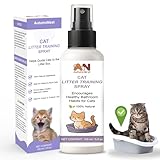
- TARGETED CAT LITTER ATTRACTANT – This litter box attractant spray combines catnip extract, geranium extract and centella asiatica extract in a purified-water base, creating a scent cue that helps attract cats to the intended litter box
- FOR KITTEN LITTER TRAINING AND RETRAINING – Use this litter attractant for kittens, newly adopted cats or adults relearning a routine after a move, a litter-box change or another household transition
- FITS YOUR CURRENT LITTER-BOX SETUP – This cat training spray works with your existing box and litter. Keep the box, litter type and location consistent so your cat can focus on one clear location cue at a time
- SHAKE, SPRAY AND REINFORCE – Use as a cat potty training spray by applying on or near the intended litter-box area 2–3 times daily. Let your cat investigate, then reinforce successful use with calm praise or a treat
- 150ML FOR A CONSISTENT ROUTINE – The 5 fl oz bottle supports repeated training for kittens, adult cats, new adoptions and multi-cat homes. For external use only; do not spray directly on pets. Individual responses can vary
A cat may also develop a preference for a particular surface or place, sometimes after an earlier medical or box-related problem. Cornell suggests placing a box in the preferred location and, once the cat uses it reliably, moving it gradually if needed.
Do not punish your cat for accidents. Cornell warns that punishment can increase anxiety and worsen house-soiling.
PC Slower Than It Used to Be?
A free scan shows the junk files, broken settings and background clutter dragging Windows down - then fixes them in one click.Free scan · Windows 10 & 11Outdated Drivers Are Slowing You Down
One free scan finds every outdated or missing driver and matches the right update for your exact hardware.Free scan · exact hardware matchA practical order for troubleshooting
- Look for an emergency sign. If your cat repeatedly strains to urinate, passes little or no urine, or appears increasingly distressed, seek immediate veterinary attention.
- Arrange an examination for a new or persistent change. Record whether the issue is urine, stool, or both; when it began; and what you have observed about straining and output.
- Check whether the box is comfortable and reachable. Review cleanliness, space to turn around, entry height, quiet placement, and whether another pet can block access.
- Review the setup your cat may be avoiding. Consider whether an open box, low entry, or unscented, finer-textured litter better fits your cat’s apparent preference. Change litter gradually and adjust one factor at a time where practical.
- Make access work in a multi-cat home. Consider multiple box locations and the recommendation of one box per cat plus one; watch for guarding or conflict around the route.
- Respond to a preferred spot without punishment. A box placed where your cat has been eliminating may help; if you later need to move it, do so gradually after reliable use.
Sources and scope
General setup guidance can help identify an aversion or access problem, but it cannot establish why an individual cat is eliminating outside the box. Medical symptoms need veterinary judgment. Guidance cited here comes from Cornell Feline Health Center, AAHA, and the ASPCA.
Quick Recap
- Cornell Feline Health Center: Feline Behavior Problems—House Soiling
- AAHA: Why isn’t my cat using the litter box?
- Cornell Feline Health Center: Feline Lower Urinary Tract Disease
- ASPCA: Litter Box Problems
Product prices and availability are accurate as of the date/time indicated and are subject to change. Any price and availability information displayed on Amazon at the time of purchase will apply.




