Free tools Windows power users keep installed
One-click scans. No signup required.
Short answer: The zombifying fungus does not appear to control carpenter ants by invading their brains. A high-resolution 2017 study found fungal cells throughout the ant’s body—including extensive networks around and inside muscles—but none inside the brains of the ants examined.
The fungus may instead manipulate the ant through peripheral tissues, muscle chemistry, sensory pathways, metabolism, and biological timing. The brain may still be chemically affected and may still participate in the behavior, so “bypasses the brain” is shorthand for does not require fungal brain invasion, not proof that the brain is irrelevant.
As an Amazon Associate I earn from qualifying purchases.
The “death grip” is a reproductive strategy
Infected carpenter ants eventually abandon normal foraging, leave the nest, climb vegetation, and bite into the underside of a leaf or twig. Their mandibles clamp deeply into a vein or other plant tissue. The ant then remains attached after it dies, giving the fungus a stable, elevated platform.
Do these 3 things before closing this tab:
1Fix the driver behind crashes, sound loss and screen glitches2Repair Windows errors before they cause bigger problems3Scan for outdated or missing drivers - takes under a minuteFrom the carcass, the fungus produces a fruiting structure that releases spores onto the ground below. Those spores can encounter other ants as they forage, continuing the fungus’s life cycle. The dramatic behavior is therefore not random cruelty or a general “zombie” state: it is a precisely useful change in the host that improves fungal reproduction.
#1 Best Overall

- Comprehensive Collection: This set includes 100 prepared microscope slides featuring diverse biological specimens including bacterium, fungus, human tissues, plant structures, insect anatomy, and animal cells, providing a complete educational resource for exploring the microscopic world
- Educational Variety: Slides showcase essential biological concepts with samples of mitotic and meiotic cell division stages, allowing students to observe and understand cellular reproduction processes and life cycle stages in detail
- Multi-Level Learning: Designed for a wide range of educational settings from elementary through high school to university laboratory courses, making it suitable for introductory biology students and science enthusiasts at various skill levels
- Ready-to-Use Specimens: Each slide comes pre-prepared with properly mounted and preserved specimens, eliminating preparation time and allowing immediate observation under microscope for hands-on learning experiences
- Complete Reference Guide: Includes catalog reference materials to help identify and understand each specimen, enabling students and educators to maximize learning outcomes and properly document their microscopic observations
Biologists call this an extended phenotype. The fungus’s genes produce an effect outside the fungal body—in this case, behavior and posture expressed through an ant. Earlier field and laboratory observations found that infected ants could shift abruptly from wandering and convulsions to a synchronized final bite. Their dying mandible muscles showed severe atrophy and fungal colonization, demonstrating that the death grip is not simply an ordinary bite followed by accidental death.
What the 2017 three-dimensional study found
The researchers used serial block-face scanning-electron microscopy to examine the infected ants in extremely thin slices—approximately 50 nanometers thick. They assembled thousands of images into three-dimensional reconstructions and used deep-learning image segmentation to distinguish fungal cells from ant tissue.
The resulting maps showed fungal cells in virtually every major region examined: the head, thorax, abdomen, and legs. The fungus was not confined to one gland or one small area of the body. Many of its cells were connected, suggesting that the infection can operate as an organized, interconnected network rather than as isolated cells scattered through the host.
But the brain itself was the striking exception. In the sampled ants, researchers did not observe fungal cells inside the brain. Fungal cells were concentrated immediately outside it, while muscle tissue throughout the body—including tissue controlling the limbs and mandibles—was heavily involved.
That observation changed the leading picture of zombie-ant behavior. Instead of imagining fungal cells invading the brain and taking over its circuits, the researchers proposed that the fungus may manipulate the ant from the body outward. Its networks could interact with muscles and peripheral tissues in a way that changes movement, posture, and ultimately the bite.
The study compared Ophiocordyceps with the generalist fungal pathogen Beauveria bassiana. That comparison was intended to help separate the effects of ordinary fungal disease from features more closely associated with the specialized behavior-manipulating parasite.
Rank #2

- Safety Material: The high transparency plastic microscope slide is cleaned in advance so that it’s non-toxic, no stains, scratches and any bacteria. there is no danger of sharp corners on the fingers because the microscope slides have smooth edges
- Classification Label: The microscope slides with specimens is well prepared, well labeled, it’s easy to classify and collect for permanent storage&moisture-proof
- Clear Observation: Stereo microscopy with top and bottom lights can provide the best microscopic image which is clean , clear, and well-dyed. cell tissue slides will stimulate young children and slides with insect parts will be more interesting for them
- Amazing Quantity: 48pcs prepared microscope slide of plant ins_ect animal tissue for basic biology education, the kid's specimen can provide students or family educator interesting educational scientific tool and provid excellent teaching aids for biology
- Perfect Science Gift: A good collection of microscope slides, gift wrapping, is a great microscope accessory gift for close-up biology course for a young family member who is just beginning to do biological research
Why “bypasses the brain” needs a qualification
“The fungus bypasses the brain” is a useful headline-sized summary, but it can easily become misleading. In this research, bypass means that fungal cells do not need to invade the brain to produce dramatic effects on the ant. It does not mean that the brain is switched off, irrelevant, or proven to be uninvolved in every stage of the behavior.
An ant’s sequence of actions is complicated. It must leave its usual environment, navigate, climb, choose a suitable plant location, position its body, and close its mandibles with enough force to remain attached. The evidence supports substantial fungal involvement in peripheral tissues, especially muscle, but it does not yet show that every decision in that sequence is generated independently of the brain.
Previous work also found chemical changes in the brains of infected ants. Researchers have suggested that preserving the brain may benefit the fungus by keeping the ant alive and functional until the final reproductive behavior. A structurally uninvaded brain can still receive altered chemical signals, change its gene activity, or behave differently because the rest of the body is sending it abnormal inputs.
The jaw muscle can still clamp shut despite damage
A 2019 study in the Journal of Experimental Biology examined a mechanical puzzle: how can an infected ant maintain a powerful bite when its mandibular muscles are badly damaged and colonized?
The researchers found evidence of hypercontraction—an abnormal, excessive contraction of the infected muscles. They also reported that motor neurons and neuromuscular junctions appeared to remain in place. In other words, the fungus did not simply destroy the neural wiring and replace it with a fungal nervous system.
The muscle cells showed damage to the sarcolemma, the membrane surrounding a muscle fiber. Fungal structures penetrated the muscles precisely, and particles resembling extracellular vesicles were associated with fungal cells. Those observations raise several possible mechanisms:
Rank #3
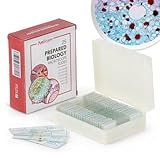
- 25pc prepared slides of plants, insects and animal tissues
- Dimensions: 1" x 3" (25mm x 75mm)
- Sample name is marked on each slide.
- Plastic slide storage box included
- Manufactured under ISO 9001 quality control standard
- fungal molecules may alter the chemistry that controls contraction;
- fungal structures may physically interfere with muscle fibers;
- fungal secretions may disrupt the muscle membrane or calcium handling; or
- more than one of these processes may act together while the ant’s existing motor connections remain present.
The study did not identify one definitive toxin, peptide, or molecular switch responsible for the death grip. It showed that muscle tissue is a major site of interaction and that abnormal contraction is associated with the final bite. It did not prove that fungal cells operate the muscles independently in the same way a nervous system would.
A working model: control distributed through the body
The current evidence fits a distributed model better than a simple brain-invasion model:
- Colonization: fungal cells spread through the ant’s body, including the head, thorax, abdomen, legs, and muscle tissue.
- Network formation: connected fungal cells surround and penetrate tissues, potentially allowing coordinated local activity.
- Chemical and physiological disruption: fungal proteins, metabolites, or vesicle-like particles may alter muscle function, sensory systems, metabolism, and host gene expression.
- Behavioral sequence: the ant’s movement and timing change until it reaches an environmentally useful location.
- Final attachment: abnormal contraction helps the mandibles clamp onto a leaf or twig and remain there after death.
- Spore release: the fungus uses the elevated carcass to disperse spores toward the ground and other ants.
This is why the “puppeteer” analogy is appealing but incomplete. A puppeteer does not merely pull one string; the fungus may be altering several connected systems at once. The brain may still participate, but the parasite’s physical network is distributed through the host’s body rather than concentrated inside the brain.
What newer research is investigating
A 2024 Annual Review of Microbiology synthesis describes manipulation by Ophiocordyceps as a multi-stage process involving secreted parasite proteins, metabolites, changes in host gene expression, and light-linked biological rhythms. This framework is more realistic than the idea of one molecule instantly turning an ant into a puppet.
Biological timing could help explain how the fungus coordinates behavior with environmental conditions. Sensory changes could influence how the ant responds to its surroundings. Metabolic changes could preserve or redirect energy. Host gene-expression changes could alter tissues without requiring fungal cells to enter the brain. These are plausible components of a system, not a completed wiring diagram.
A 2025 bioRxiv preprint reported a candidate cysteine-rich fungal peptide that binds conserved calcium-dependent scramblase channels. In experiments involving Caenorhabditis elegans and carpenter ants, the peptide was associated with reduced nematode motor coordination and dampened ant olfactory behaviors relevant to communication.
Rank #4

- Abundant Observation Types: Well selected microscope prepared slides, including different types: animals, insects, plants and microorganism. Each slide has a name label and attached a list of all glass slide catalogues, helps stimulate children's imagination and creativity, as well as their interest in exploring nature
- High-Quality Clear Glass: 30 pcs prepared microscope slides are made of high-quality optical glass, high-definition, high-transparency, and undergo rigorous testing to ensure that there is no dust and impurities and will not interfere with our observations, it is convenient for you to observe under different types of microscopes
- Multiple Packaging: In order to ensure that the product you get is intact, our box is made of thick plastic, and a protective sponge and compressed cardboard tray are placed in the box, multiple packaging ensures that your slides will not be damaged
- Edging Design: All 4 corners of our slices have been edged without sharp edges, prevent scratching your hands, both children and adults can use it safely
- Customer Service: Our glass slides can stimulate children's curiosity to explore nature and science, the size of each piece is 2.5*7.5cm (1*3 inches), and 1mm thick. If you have any questions about our products, please send us email, we will reply you within 24 hours
That finding is potentially important because it connects a specific fungal effector candidate with a host molecular target and behavior-related effects. But it remains preliminary: the work had not yet been peer reviewed at the time of the evidence review. It also does not show that the peptide alone explains the complete climbing-and-biting sequence. A complex behavior can depend on several fungal factors acting at different times and in different tissues.
The Tool Desk
Outbyte Driver Updater FREEScan for outdated or missing drivers - takes under a minuteDriver Scan →Outbyte PC Repair FREERepair Windows errors before they cause bigger problemsFix Now →Is the ant’s brain “intact”?
Structurally, the answer from the key imaging study is limited but notable: fungal cells were not observed inside the brains of the sampled ants. That is different from proving that the brain is normal in every other respect.
The later finding of elevated ergothioneine—a fungal-derived compound with neuronal cytoprotective properties—in zombie-ant brains is consistent with the possibility that the parasite preserves or modulates neural tissue. It does not establish that the compound causes the behavior, and it cannot reveal whether an infected ant has subjective awareness.
Scientists cannot infer consciousness from the fact that a brain remains physically present or free of visible fungal cells. The responsible conclusion is narrower: the ant’s brain is not visibly colonized in the central study, while the fungus may still affect brain chemistry and the brain may still contribute to behavior.
Independent reader supportYour contribution helps us test, update, and keep practical guides available for everyone.Not every “Cordyceps” fungus is a zombie-ant fungus
“Cordyceps” is often used as a catch-all name, but the ant-manipulating organisms discussed in this research are generally placed in the genus Ophiocordyceps. The relevant studies refer to Ophiocordyceps unilateralis sensu lato—a species complex—or to the updated name Ophiocordyceps kimflemingiae for the studied lineage.
Quick wins for a faster PC:
Fix the driver behind crashes, sound loss and screen glitchesFind Drivers →Clear out junk files and repair common Windows errorsFree Scan →Scan for outdated or missing drivers - takes under a minuteDriver Scan →Sensu lato means “in the broad sense.” It signals that the name covers closely related lineages rather than one universally interchangeable species. Not every fungus called Cordyceps zombifies ants, and not every Ophiocordyceps species necessarily uses the same host, behavior, or biochemical mechanism.
Best Value

- Set of 30 prepared microscope slides, including Bacteria, Fungi, Plants Organs, Mammal Animal Tissue, Cells and Insect Parts, for use in biological education.
- Glass slides for microscope with standard dimensions: 1" x 3" (25mm x 75mm).
- Microscope slides specimens name is marked on each slide. A table is attached to sort all slides by category.
- Great biology slides set with a wide variety of interesting specimens, for beginner to practice microscope, to entertain and educate.
- Microscope slides with specimens for kids adults teens is great for home educational / hobby use, teach your kids the wonders of biological science.
Taxonomic work continues to reveal that the famous phenomenon is more diverse than the popular image suggests. Recent work has identified six additional species in the O. unilateralis complex from western Mexico, along with a new host association involving Cephalotes ants. The system is therefore better understood as a collection of specialized fungus–ant relationships than as one universal fungus acting on one standard ant.
What this means for dogs, cats, and people
For pet owners, the important point is that this is a specialized insect–fungus system, not evidence of a fungus that can turn mammals into zombies. The cited research does not demonstrate infection of dogs, cats, or humans, and it does not support a human “zombie pandemic” scenario.
Seeing an ant behaving abnormally outdoors is not a reason to suspect that a pet has been exposed to a behavior-controlling fungus. It is also not appropriate to generalize from an insect pathogen with a highly specialized life cycle to ordinary household or veterinary fungi. A pet with neurological symptoms, weakness, seizures, or unusual behavior needs veterinary assessment for real, species-appropriate causes—not comparison with a zombie-ant video.
PC Slower Than It Used to Be?
A free scan shows the junk files, broken settings and background clutter dragging Windows down - then fixes them in one click.Free scan · Windows 10 & 11Crashes, No Sound, or Screen Glitches?
Random freezes, missing sound and display glitches usually trace back to one bad driver. Find and replace yours safely.Free scan · under a minuteWhat scientists know—and what remains unresolved
| Question | Best-supported answer |
|---|---|
| Are fungal cells inside the ant brain? | Not in the sampled ants examined in the key 2017 imaging study. |
| Where is the fungus found? | Throughout the body, with extensive interaction around and inside muscle tissue. |
| Can the fungus affect the brain without invading it? | Yes, that remains plausible; chemical and metabolic brain changes have been reported. |
| What holds the ant in the death grip? | Infected mandibular muscles show hypercontraction, but the exact causal fungal signal is unresolved. |
| Are the ant’s motor connections destroyed? | Motor neurons and neuromuscular junctions appeared to be maintained in the 2019 study. |
| Has one molecule been proven to control the whole behavior? | No. A 2025 peptide result is a promising but preliminary piece of evidence, not a complete explanation. |
| Do all Cordyceps fungi control ants? | No. The relevant fungi belong to specialized Ophiocordyceps lineages, and host associations vary. |
The strongest conclusion is also the most precise one: the fungus appears to control the ant from the body outward, not by filling the brain with fungal cells. It forms a body-wide infection network, interacts closely with muscles, and may release multiple signals that influence movement, sensory behavior, metabolism, gene expression, and biological timing. The brain is bypassed in the narrow sense of non-invasion—not proven to be absent from the process.
Frequently Asked Questions
Does the zombie-ant fungus infect the ant’s brain?
In the key 2017 imaging study, researchers did not observe fungal cells inside the brains of the sampled carpenter ants. However, the brain may still be chemically affected and may help coordinate some parts of the behavior. “Bypasses the brain” means the fungus does not require brain invasion—not that the brain has no role.
Can this fungus turn pets or people into zombies?
No. The studies summarized here concern specialized insect pathogens in the genus Ophiocordyceps. They do not demonstrate infection or behavioral manipulation in dogs, cats, or humans.
How does the fungus make the ant bite down so hard?
No one definitive toxin or molecular switch has been identified. Infected jaw muscles show hypercontraction and structural damage, while fungal structures and vesicle-like particles may contribute. A candidate fungal peptide reported in a 2025 preprint is promising but preliminary and does not explain the entire behavior.
What’s actually slowing this PC down?
Pick the symptom - the matching free tool is one click away.
Are all Cordyceps fungi zombie-ant parasites?
“Cordyceps” is often used casually, but the ant-manipulating fungi in these studies are generally classified as Ophiocordyceps. The relevant organisms include lineages within the O. unilateralis species complex, and different species can have different ant hosts.
The Bottom Line
Bottom line: Zombie-ant fungus does not need to invade and replace an ant’s brain. The best evidence points to a distributed strategy involving fungal networks, peripheral tissues, abnormal muscle contraction, chemical signaling, and possibly altered neural and sensory physiology. The final death grip is understood at the level of its anatomy and purpose, but the exact molecular control system is still being worked out.
Quick Recap
Product prices and availability are accurate as of the date/time indicated and are subject to change. Any price and availability information displayed on Amazon at the time of purchase will apply.




