
Quick wins for a faster PC:
Fix the driver behind crashes, sound loss and screen glitchesFind Drivers →Clear out junk files and repair common Windows errorsFree Scan →Scan for outdated or missing drivers - takes under a minuteDriver Scan →A one-year-old dog who seems to be losing vision needs two things at once: a prompt veterinary diagnosis and a carefully predictable environment. Do not assume the cause from his age or from the fact that the change appears gradual. Some eye diseases are painful or affect the rest of the body, while others allow a comfortable dog to adapt well. Keep him on a lead around unfamiliar areas, block immediate hazards, and arrange a veterinary examination to determine what is happening.
You can start helpful training before a diagnosis is complete. Reward-based verbal and tactile cues, a stable home layout, consistent routines, and calm handling make everyday navigation safer. The goal is not to direct every step for him; it is to give him reliable information and enough safe practice to build his own mental map.

As an Amazon Associate I earn from qualifying purchases.
Start with a diagnosis, not an assumption
“Going blind” describes an outcome, not a disease. A young dog may have a retinal disorder, cataracts, glaucoma, inflammation, trauma, a neurological problem, or another condition. The speed of change, whether one or both eyes are involved, and whether the eyes hurt all affect treatment and prognosis.
Free tools Windows power users keep installed
One-click scans. No signup required.
Book the right veterinary follow-up
Ask your veterinarian to document the current vision, examine the eyes and retina, and explain what monitoring is needed. If progressive retinal atrophy (PRA) is suspected, Cornell University College of Veterinary Medicine describes a retinal examination and possible referral to a veterinary ophthalmologist. An electroretinogram (ERG) may be useful when cataracts prevent a clear view of the retina. Genetic tests can support a diagnosis in some lines, but they do not cover every possible variant.
#1 Best Overall
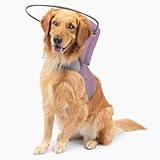
- Proper Fit Guidance: Measure your dog’s chest girth and nose distance before selecting size. Elastic rear strap offers flexible adjustment.
- Navigation Assistance Aid: Designed to help blind dogs detect obstacles earlier during everyday movement.
- Head & Face Protection: Halo structure surrounds the head area to help reduce accidental bumps into walls or furniture.
- Breathable Padded Material: Soft cushioned fabric supports comfort and helps minimize rubbing during movement.
- Secure Vest Construction: Adjustable harness design distributes pressure evenly while keeping the halo securely in place.
Bring a short timeline: when you first noticed bumping into things, difficulty in dim light, dilated pupils, hesitation on stairs, or changes in play. Note whether the change is stable, worsening, or intermittent. A video of an unusual episode can help your veterinarian, but do not delay an examination to collect more footage.
Know when it is an emergency
Animal Trust’s UK veterinary guidance (published July 2026 and reviewed for July 2029) advises immediate attention for sudden loss of vision, a painful, red, swollen, or enlarged eye, an eye injury, sudden cloudiness, or vision loss accompanied by collapse or other neurological signs. Until he is assessed:
- Keep him on a lead outdoors and away from stairs, roads, pools, balconies, and other fall or traffic hazards.
- Do not use human eye drops, leftover medication, or any new supplement unless a veterinarian has prescribed it for this current problem.
- Call the clinic rather than waiting for a routine appointment if he is squinting, rubbing an eye, producing increased discharge, or showing a noticeable change in eye appearance.
A painful eye can require treatment even if the dog is otherwise acting normally. Conversely, a dog with vision loss limited to the eyes may remain comfortable and active. The diagnosis is what separates those situations.
Make the house predictable before vision declines further
Dogs learn routes through repeated smells, sounds, touch, and visual landmarks. A stable layout lets your dog update that map gradually instead of relearning the house after every rearrangement.
Fix the core layout
- Keep sofas, tables, bins, and large plants in consistent positions. If you must move something, walk him through the changed area on a lead and let him investigate.
- Leave food, water, bed, crate, and the route to the toilet area in their usual places. Use bowls that do not slide easily.
- Keep floors clear of bags, shoes, children’s toys, and low objects that can become trip hazards.
- Use secure gates at stairs and other off-limit areas. Block access to pools, open balconies, steep drops, fireplaces, and spaces where he could become trapped.
- Mark sharp corners or narrow passages with furniture placement or barriers rather than expecting him to judge them visually.
A small fenced toilet area can simplify bathroom trips. AAHA also recommends leash walking and supervision outdoors while a blind or partially sighted pet is learning safe routes.
Keep transitions calm
Speak before touching him, especially when he is sleeping or cannot hear you approaching from another room. Say his name, pause, and then make contact at the shoulder rather than reaching suddenly toward the face. Ask children and visitors to follow the same rule. A consistent verbal announcement prevents startle reactions without treating him as fragile.
Train communication cues while he still has useful vision
Cornell recommends establishing verbal commands before vision is gone. AAHA says tactile cues and positive reinforcement remain suitable for blind dogs; a conventional clicker can mark the instant a desired behavior occurs. A spoken marker such as “yes” works if a clicker sound would be startling or impractical.
What’s actually slowing this PC down?
Pick the symptom - the matching free tool is one click away.
The following cue set is an example, not a standardized veterinary protocol. Choose short words that your household can use consistently, and give each word one meaning.
| Cue | Use | How to introduce it |
|---|---|---|
| Come | Recall to you indoors, then in safely enclosed outdoor areas | Say the cue once, move only a short distance, reward immediately when he reaches you, and gradually add distance and mild distractions. |
| Wait or stop | Pause before a doorway, curb, stair, or other change | Ask for a brief pause, reward in place, and release with a separate word such as “okay.” |
| Step | Warn of a single rise or drop | Practice on one familiar, low step with a hand on the harness for safety; say the cue just before the change and reward calm movement. |
| Door or outside | Identify a transition | Say the word at the same doorway each time, allow sniffing, and reward a controlled exit rather than rushing. |
| This way | Signal a change of direction | Say it before turning, apply only light leash guidance, and reward when he follows without pulling. |
A safe teaching sequence
- Choose a quiet, familiar room with non-slip footing.
- Say or signal one cue once. Guide only as much as necessary with your hand, harness, or leash.
- Mark the correct response immediately with a click or a spoken marker, then deliver a small treat or another reward he values.
- Keep sessions short and end while he is still successful. Several brief practices are easier to process than one long lesson.
- Add one difficulty at a time: distance, a new room, a mild distraction, or a different surface. Return to an easier version if he hesitates.
- Teach every household member the same word, tone, release signal, and reward rule.
Do not pull him through ordinary routes or carry him everywhere. Let him sniff and make controlled choices in safe spaces so he develops confidence and a usable mental map. Use barriers and a lead whenever a mistake could cause injury.
Choose equipment for the hazard it solves
No accessory restores sight. Select an aid based on the specific risk, the dog’s comfort, and how much supervision it requires.
Rank #3

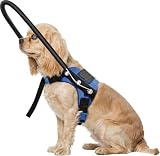
- 【Size Guidelines】Avoid sizing mistakes by measuring your pet's nose length and chest girth. Size XXS is designed for chest girths of (5"-10") XS of (10"-14"). For larger pups, check out M of (20"-24") M with reflective features.
- 【Instant Crash Protection】 Specially engineered for blind and visually impaired dogs, this protective halo acts as an early-warning buffer against walls and daily obstacles, effectively preventing painful head impacts and facial bruising.
- 【No-Slip No-Choke Vest Structure】 Unlike traditional neck collars, our secure dual-buckle vest design wraps comfortably around the torso. It guarantees the protective ring remains steady during active movement while preventing any neck choking.
- 【Premium Comfort】 Crafted from soft, lightweight, and breathable materials to minimize discomfort and ensure hassle-free extended daily wear.
- 【Daily Mobility Support】 Boosts confidence and provides crucial assistance for blind dogs during walking, exploring, and daily activities.
| Aid | Best use | Limits and checks |
|---|---|---|
| Secure pet gate | Blocking stairs, pools, balconies, or rooms with hazards | Anchor it firmly, check that the dog cannot squeeze through, and do not rely on a gate that he can knock over. |
| Well-fitting harness and leash | Guiding walks, unfamiliar routes, and veterinary visits | Check fit under the chest and around the shoulders; avoid leaving a leash attached unsupervised. A tag or harness patch identifying a blind dog can alert other people. |
| Audible toy or bell ball | Helping him locate play objects by sound | Use a toy he can safely carry, supervise chewing, and stop if the sound causes distress. Veterinary Partner describes a ball containing a bell as one option. |
| Clicker and treats | Precisely marking a desired response during training | Optional. Substitute a consistent spoken marker if the click is startling or your hands are occupied. |
| Specialized halo harness | Optional physical warning around the head | Not required for every dog. Introduce any head or body device gradually and remove it if it restricts movement or causes anxiety. |
Plan outdoor movement and daily routines
Use a lead in unfamiliar places even if your dog previously had a reliable recall. Keep fenced areas checked for gaps, cover or block ponds and pools, and avoid letting him approach roads, uneven drop-offs, or off-leash dog groups without close supervision. A consistent walking route can be reassuring; vary it only when you can give him time to sniff and learn the changes.
Keep feeding, exercise, toilet, rest, and training at broadly predictable times. Predictability does not mean a rigid minute-by-minute schedule; it means that important events and locations are understandable. Add enrichment that uses smell and touch, such as scatter-feeding in a clear area, scent games with easy-to-find treats, and gentle food puzzles that do not require visual alignment. Supervise new toys and remove anything he may swallow.
Independent reader supportYour contribution helps us test, update, and keep practical guides available for everyone.Watch for discomfort and changing ability
Once a dog compensates with hearing and smell, owners can miss a gradual decline. Check his eyes daily without forcing them open. Report squinting, rubbing, redness, discharge, swelling, new cloudiness, or a change in pupil appearance. Also tell the veterinarian if he begins hesitating at familiar steps, bumping into objects more often, or becoming unusually withdrawn.
Keep a simple log of observations and medications, including which eye seems affected and whether signs occur in bright or dim light. Bring the log to follow-up visits. Do not start vitamins, herbal products, or “vision” supplements as a way to prevent blindness. Cornell reports no approved treatment for PRA and describes prospective gene therapy as research-only and not widely available; treatment must be matched to the diagnosed condition.
What a PRA discussion does—and does not—tell you
PRA is one possible explanation, not a conclusion based on being one year old. Veterinary Partner describes an early-onset form in which puppies can have decreased vision by 12 weeks and may be blind by one to two years of age. That age range applies to that form, not to every dog with vision loss. Your veterinarian may recommend ophthalmic examination, ERG, genetic testing, or referral depending on the findings.
Ask what the diagnosis means for pain, remaining vision, progression, inherited risk, and monitoring of other organs. If a hereditary condition is confirmed, discuss responsible breeding decisions with the veterinarian; do not make assumptions about relatives without a documented diagnosis.
Prepare yourself without making your dog feel helpless
Anticipating blindness can feel like grieving a future you expected. It is reasonable to be frightened, frustrated, or sad. Practical preparation helps convert that uncertainty into decisions: write down emergency contacts, keep medications and a lead by the door, tell visitors how to approach him, and arrange help for walks if you are overwhelmed.
At the same time, avoid doing every task for him. Carrying him over familiar thresholds, steering him constantly, or warning anxiously at every sound can reduce opportunities to learn. Protect him from genuine hazards, then allow safe, supervised problem-solving. Continue games, training, exercise, and affection in forms he enjoys. Your calm, consistent signals are more useful than trying to eliminate every bump or hesitation.
How well can a dog adapt?
Cornell notes that dogs often acclimate well to vision loss and may otherwise live healthy lives, particularly when PRA progresses gradually. The American College of Veterinary Ophthalmologists similarly says a pet may adapt well when blindness is limited to the eyes and the pet is otherwise healthy. Those statements are conditional: a painful eye, rapid loss, neurological disease, or another illness can change the outlook.
The Tool Desk
Outbyte PC Repair FREEClear out junk files and repair common Windows errorsFree Scan →Outbyte Driver Updater FREEFix the driver behind crashes, sound loss and screen glitchesFind Drivers →Measure progress by function rather than by whether he behaves exactly as he did with full sight. Can he find his bed, eat and drink comfortably, use the toilet area, navigate a familiar route, and engage with you? Share both improvements and setbacks with the veterinary team so the plan can be adjusted.
Quick Recap
Product prices and availability are accurate as of the date/time indicated and are subject to change. Any price and availability information displayed on Amazon at the time of purchase will apply.





Leave a Reply