
Some links on this page are affiliate links: if you buy through them we may earn a commission, at no extra cost to you.
The most effective chemical-free mosquito strategies do not smell like anything and do not kill mosquitoes. They keep mosquitoes from entering rooms, block access to skin, disrupt flight, reduce exposure, or remove the water where mosquitoes breed.
Here, chemical-free means without applied insecticides, synthetic skin repellents, essential oils, or other pesticidal products. That is a practical definition—not a literal scientific one: air, fabric, water, and electricity all involve chemicals or chemical processes.

As an Amazon Associate I earn from qualifying purchases.
The best approach depends on the setting. Use screens and air conditioning indoors, a correctly fitted untreated net for sleep, a screen enclosure or directed fan outdoors, covering clothing for people, and weekly standing-water control around the home. These measures can substantially reduce bites, but none guarantees protection against every species or in every location.
First, understand what these methods can—and cannot—do
Mosquitoes find people using cues such as carbon dioxide, body heat, moisture, and odor. Most non-insecticidal methods do not chemically repel those cues. Instead, they prevent contact or make it harder for a mosquito to locate and land on a person.
That distinction matters. A screen can protect a family without changing the mosquito population outside. A fan may reduce contact with people in its airflow without killing mosquitoes. Removing a breeding container may reduce the number of mosquitoes that emerge later, but it will not instantly drive away adults already in the yard.
Quick wins for a faster PC:
Repair Windows errors before they cause bigger problemsFix Now →Scan for outdated or missing drivers - takes under a minuteDriver Scan →Mosquito behavior also varies by species and location. Aedes mosquitoes can bite during the day, while many Culex and Anopheles mosquitoes are more active from evening through the night. The CDC explains that mosquitoes can bite during both day and night, so timing alone is never a complete protection strategy.
How the options rank
| Method | What it primarily does | Overall role |
|---|---|---|
| Screens and closed doors | Blocks entry | Strongest |
| Untreated mosquito nets and screen enclosures | Creates a physical barrier | Strongest |
| Covering clothing | Reduces exposed skin | Strong |
| Standing-water removal | Reduces future breeding | Strong, but delayed |
| Air conditioning | Helps maintain an enclosed indoor space | Strong to moderate |
| Fans | Disrupts flight and host-seeking | Promising, context-dependent |
| Timing, breezes, and yard maintenance | Reduces exposure | Useful adjuncts |
| Plants, ultrasonic devices, and UV zappers | Often claimed to repel or kill mosquitoes | Do not treat as proven primary protection |
10 chemical-free ways to keep mosquitoes away
1. Screen windows, doors, vents, and other openings
What it does: A properly installed screen is a physical barrier between mosquitoes and people or pets inside the home.
How to use it: Install tight-fitting screens on windows and doors, repair tears promptly, and keep screen doors closed. Check less obvious openings too: vents, eaves, pet doors, garage doors, and gaps around pipes, cables, and other utility penetrations. A self-closing or spring-loaded screen door can help when a household routinely forgets to close one.
For homes with dogs or cats, a pet flap can defeat an otherwise well-sealed building. Keep it closed when practical, or use a well-sealing screened design and inspect its edges for gaps. Do not leave the garage, patio, or exterior door propped open.
Do these 3 things before closing this tab:
1Repair Windows errors before they cause bigger problems2Fix the driver behind crashes, sound loss and screen glitches3Clear out junk files and repair common Windows errorsWhat the evidence shows: A systematic review of randomized housing studies found lower indoor mosquito density after housing improvements, with a pooled odds ratio of 0.35 for vector density. The studies were conducted mainly in malaria- and dengue-endemic areas, so that number should not be presented as the expected reduction in bites at a suburban home. A separate Cochrane review found that non-insecticidal house screening may reduce malaria infection and illness, although the evidence came largely from African settings.
Why it fails: Mosquitoes can enter before a door closes. A small tear, unsealed screen edge, or open pet door may be the real failure point. Screens also do nothing for people sitting on an unscreened patio, and Aedes mosquitoes may already be inside if they entered earlier or emerged from an indoor water container.
Combine it with: Air conditioning, an indoor inspection for water, and a fan in rooms where doors must open frequently. The CDC recommends installing or repairing window and door screens and keeping doors closed.
2. Use air conditioning and keep indoor spaces enclosed
What it does: Air conditioning makes it practical to keep windows and doors closed, reducing mosquito-human contact. It is not a chemical repellent and does not necessarily kill mosquitoes.
Windows Errors? Fix Them Before They Spread
Repair common Windows errors and clear accumulated junk for a smoother, more stable PC - no reinstall needed.Free scan · no reinstallCrashes, No Sound, or Screen Glitches?
Random freezes, missing sound and display glitches usually trace back to one bad driver. Find and replace yours safely.Free scan · under a minuteHow to use it: Run the system with exterior doors and windows closed. Check window units and portable air conditioners for gaps around the installation, because an improperly sealed unit can become an open route indoors. Where air conditioning is unavailable, use screened ventilation instead.
Where it works best: Bedrooms, living rooms during evening activity, and homes in areas where mosquitoes are active at night. It is also useful for pets that sleep indoors, provided they have normal access to water, ventilation, and a comfortable temperature.
What the evidence shows: The CDC and World Health Organization identify air conditioning and screened rooms as ways to reduce mosquito-human contact. Do not rely on an exact indoor temperature as a universal mosquito-repellent threshold; species differ, and the main practical benefit is the enclosed room.
Why it fails: A cracked window, open door, poorly fitted portable-unit hose, or unscreened pet door can undermine the barrier. Air conditioning also cannot protect people or animals once they go outside.
What’s actually slowing this PC down?
Pick the symptom - the matching free tool is one click away.
Also popular on Amazon

- KEEPS THE INSECTS OUT OF YOUR EYES NOSE EARS FACE NECK AND SHOULDERS!!:The black fly head net over hat can keep your face,neck,head,ears and eyes off ,during the hiking,fishing,walking and the other outdoor activities,you can enjoy your outdoor activities all the way when you wear it
- EXTRA FINE SOFT COMFORTABLE LEIGHTWEIGHT BLACK MESH:Firstly,using the soft,non-scratchy,fine,and lightweight knitted mesh,and you can feel very comfortable;Secondly,you can see through easily the black color net and do not glare in the sunlight than the other colors.Thirdly,keep you cool easily through the small and enough holes of the mesh in summer
- EXTRA BIG LARGE AND LONG PRODUCT SIZE:The solid fabric size: 14cm*14cm (top cover);the bottom hem size: 100cm circumference;the mesh body size: 50cm long enough can reach the neck and shoulder protection maximum,even tuck into the collar for the shirt inside
- DESIGNED THE PORTABLE AND PACKABLE POUCH AND ADJUSTABLE DRAWSTRING:You can reach in and pull the net out all the way, eventually everting the pouch, which forms a solid fabric circle at the top in order to be packable and portable for you without use; you can get the best size for the bottom hem for you by means of the adjustable drawstring and ensure the insects not to bite you
- WIDE USE:Special for fishing, hiking, traveling and walking in the warmer seasons,and enjoy your outdoor activities. and suggest that you can get the best effect of protection if you wear it matching the any style hat (wide or broad brim is the best)during the outdoor activities
Combine it with: Screens, closed doors, and a properly fitted net for anyone sleeping in a room that cannot remain fully enclosed.
3. Sleep under an untreated physical mosquito net
What it does: An untreated net keeps mosquitoes physically away from a sleeping person. It does not release repellent and does not kill insects.
How to use it:
- Choose a net large enough to surround the sleeping area and tuck securely beneath the mattress.
- Inspect it for holes before every trip or camping outing.
- Hang it so the sleeper does not press against the mesh.
- Keep the bottom tucked throughout the night and reseal it immediately after entering or leaving.
- Keep it away from candles, cigarettes, heaters, and open flames.
The CDC recommends a compact, white, rectangular net with approximately 156 holes per square inch when screened or air-conditioned rooms are unavailable. An untreated net fits the strict definition used in this article. Permethrin-treated nets can provide additional insecticidal protection, but permethrin is an insecticide and therefore falls outside a no-insecticide plan.
For babies and pets: Use a correctly fitted crib, carrier, stroller, or crate enclosure designed for that purpose. Do not drape loose netting over an unattended baby or animal: gaps, entanglement, overheating, and contact with the skin can create new hazards. For a dog or cat, a screened sleeping area is generally more practical than an improvised bed net.
The Tool Desk
Outbyte Driver Updater FREEScan for outdated or missing drivers - takes under a minuteDriver Scan →Outbyte PC Repair FREERepair Windows errors before they cause bigger problemsFix Now →Why it fails: A mosquito can bite through mesh if a sleeper presses against it. Un tucked edges, holes, open head gaps, and repeated entry and exit are common problems.
Combine it with: A screened or air-conditioned room, covering clothing before bed, and a fan that moves air across the sleeping area.
4. Use mosquito netting around strollers, cribs, tents, and outdoor seating
What it does: This is a physical barrier for people who are awake, resting, or outdoors during the day. It is different from a bed net because it can protect a stroller, infant carrier, crib, tent, kennel, or seating area.
How to use it:
- Use properly fitted netting on strollers, infant carriers, cribs, and play yards.
- For camping, choose a tent with intact insect mesh or a fully enclosed freestanding screen shelter.
- For outdoor meals, use a screen room rather than a decorative canopy with open sides.
- Inspect zippers, floor seams, corners, and attachment points.
- Do not allow the mesh to rest directly against exposed skin, since mosquitoes may bite through it.
The CDC recommends mosquito netting over strollers and baby carriers. Its travel guidance also emphasizes physical barriers when sleeping or traveling.
For pets, use a purpose-built screened porch, tent, kennel, or carrier rather than wrapping a free-roaming animal in loose mesh. Make sure the animal can breathe normally, cannot chew the material or cords, and is not left unattended in heat.
Why it fails: Decorative mosquito curtains often leave large openings. A roof-only canopy is not mosquito-proof, and opening an enclosure repeatedly lets mosquitoes inside. A loose shelter may also allow mosquitoes to enter through floor seams or corners.
Combine it with: A fan, covering clothing for people, and source reduction around the seating or sleeping area.
5. Run a fan across the body or sleeping area
What it does: Moving air can make it harder for mosquitoes to fly, land, and orient toward a person. It may also disperse the carbon dioxide, heat, humidity, and odor plume mosquitoes use during host-seeking.
How to use it: Aim a broad stream of air across exposed ankles, legs, or the upper body rather than pointing a narrow stream past the body. At night, position the fan so air reaches the bed without creating a tipping, electrical, or fire hazard. Outdoors, use a larger fan or multiple fans for a broad seating area.
What the evidence shows: In a controlled experimental-house study in rural Gambia, a ceiling fan reduced entry of Anopheles gambiae mosquitoes by 91% compared with a control house. Air velocity around sleepers beneath the bed net averaged about 0.36 m/s. However, the study involved two experimental houses, four adult sleepers, and one fan model. Its result is not a universal outdoor-patio protection percentage. See the full fan study and its published DOI.
For pets: Secure the fan and cord where an animal cannot knock it over or chew it. Give the animal room to move away from the airflow, and never use a fan as a substitute for veterinary mosquito or parasite prevention.
Why it fails: Weak airflow may not reach the skin. People move out of the air stream, furniture blocks circulation, or outdoor wind overwhelms the fan. A mosquito can still approach during pauses or in sheltered areas.
Recommended Free Tools
Combine it with: Screens, an untreated net, a screen enclosure, and covering clothing. A fan is an adjunct—not a guaranteed replacement for a barrier.
6. Wear loose, covering, tightly woven clothing
What it does: Long clothing reduces the amount of exposed skin available to bite. Loose fabric may also prevent mosquitoes from reaching skin through the garment.
Also popular on Amazon

- FOLDABLE AND PORTABLE MOSQUITO TENT: This pop-up folding bed net is easy to carry and store. Lightweight and takes up very little space. No need for assembly, when you use , it will be easy to open and can be compactly folded up, making it convenient for you to operate.
- HIGH QUALITY MATERIALS AND LARGE SIZE: The mosquito netting is made of sturdy and high toughness glass fiber rods and high-density netting material, with excellent workmanship and durability. bed canopy size is 78.7 inches long, 31.5 inches wide, and 23 inches high. The large-sized mosquito net provides spacious space and is suitable for various bed arrangements.
- BREATHABLE DESIGN: The side and bottom of the mosquito net are composed of small high-density mesh fabric, which allows good airflow to enter and provides excellent breathability. Immerse yourself completely in the air, enjoy fresh air, and create a comfortable night.
- EFFICIENT MOSQUITO FOR PREVENTING MOSQUITOES: Unlike mesh curtains, this mosquito net is equipped with a double-sided zipper that can smoothly open and close along the side and a length of the bed tent. The can effectively prevent mosquito and other very small flying insects or animals from entering, protecting you from mosquito infestation and bringing peace to your sleep.
- WIDELY APPLICABLE: The mosquito netting for patio is very suitable for outdoor athletes, beaches, starry nights,or camping.
What to wear:
- Long sleeves and long pants.
- Loose rather than skin-tight fabric.
- Socks and closed shoes instead of sandals.
- A shirt that covers the waist and lower back.
- Trousers that reach the ankles.
The CDC recommends loose-fitting, long-sleeved shirts and pants. Its Yellow Book adds boots, hats, tucked shirts, tucked pant cuffs, and closed shoes for additional coverage.
Fabric matters: A long-sleeved shirt is not automatically mosquito-proof. Thin, tight, stretchy, or loosely knitted material may allow a mosquito to bite through it, especially when the fabric is pressed against skin. A 2025 laboratory study screened 88 fabrics and found 53 that blocked blood-feeding across three mosquito genera. That demonstrates the importance of fabric structure; it does not mean every commercial shirt blocks bites. The study is summarized at PubMed, alongside earlier research on the relationship between mosquito behavior and textile structure.
Free tools Windows power users keep installed
One-click scans. No signup required.
For pets, do not put a hot, restrictive, or improvised garment on an animal merely to cover skin. A well-ventilated screen enclosure is usually the safer physical barrier. Any pet clothing should be appropriate for the species, weather, movement, and supervision available.
Why it fails: Mosquitoes exploit exposed ankles, wrists, necks, waistlines, and feet. Clothing can also ride up while sitting, cling to damp skin, or leave openings at cuffs.
Combine it with: The next method—protecting the gaps—and a fan or screen enclosure.
7. Protect the gaps: head, neck, hands, ankles, and feet
What it does: It closes the small exposed areas that remain after someone covers the torso and legs. These gaps are often where bites occur.
How to use it:
- Wear socks rather than low-cut footwear.
- Tuck pant cuffs into socks or boots.
- Use closed shoes for yard work, hiking, and camping.
- Wear a loose mosquito head net in high-pressure areas, with the neck opening secured.
- Use a hat or head net that does not touch the face or neck.
- Choose long cuffs or gloves when outdoor work leaves hands exposed.
The CDC Yellow Book recommends hats, boots, tucked clothing, and closed shoes as additional physical coverage. Check ankles, elbows, wrists, neck, and the tops of feet after dressing.
For dogs and cats, the practical equivalent is not a homemade head net or tight clothing. Use a secure screened space or carrier when exposure is unavoidable. Never leave an animal with loose netting around its face, neck, or legs.
Why it fails: A head net may touch skin, the neck opening may be loose, socks may be thin and tight, or pants may ride up when a person sits. Sandals are especially poor protection for ankles and the tops of feet.
Combine it with: A screen enclosure, fan, and activity timing. Gap protection is most valuable when mosquitoes are abundant and full-body coverage is difficult.
Quick wins for a faster PC:
Clear out junk files and repair common Windows errorsFree Scan →Scan for outdated or missing drivers - takes under a minuteDriver Scan →Repair Windows errors before they cause bigger problemsFix Now →8. Match outdoor activity to local mosquito activity
What it does: Avoiding the times and places with the most mosquito activity reduces exposure. It does not repel mosquitoes and cannot substitute for barriers.
General patterns:
- Aedes aegypti and Aedes albopictus often peak around dawn and dusk but can bite during the day.
- Culex quinquefasciatus is typically more active from dusk to dawn, often with a late-evening peak.
- Anopheles mosquitoes generally feed at night or in the evening, although behavior varies by species and region.
For species-specific patterns, consult the CDC Yellow Book and ask the local health department which mosquitoes and diseases are active in your area.
Practical use: Avoid unprotected outdoor time near dawn and dusk where Aedes mosquitoes are common. Use stronger physical protection after sunset where Culex or Anopheles mosquitoes dominate. Choose open, breezy locations rather than shaded, humid vegetation when possible.
Why it fails: Local mosquitoes may not follow textbook patterns, and a person may be bitten while walking through a yard, opening a door, or sitting near vegetation. Being bitten during daylight does not rule out a disease-carrying mosquito.
Recommended Free Tools
Combine it with: Covering clothing, a head net when needed, a fan, and a screened area. Pets should not be left outdoors during a high-activity period simply because it is daytime.
9. Empty, remove, and scrub unnecessary standing-water containers
What it does: Source reduction lowers the number of mosquitoes that develop on the property. It is not an instant adult-mosquito repellent.
Repeat this inspection at least weekly and after heavy rain:
- Walk the entire property, including balconies, garages, sheds, gutters, and areas behind furniture.
- Empty buckets, toys, tires, plant saucers, tarps, trash lids, birdbaths, pet dishes, and unused pools.
- Scrub the inside walls of containers.
- Turn containers upside down or store them under cover.
- Dispose of water where it cannot immediately collect again.
The scrubbing step is essential for Aedes mosquitoes. Their eggs adhere to container walls above the waterline and can survive drying for up to eight months. Simply pouring out water may leave eggs behind to hatch when the container fills again. Under suitable conditions, Aedes can develop from egg to adult in approximately seven to ten days, which is why weekly inspection is a practical minimum. See the CDC explanation of the Aedes life cycle and its home-control checklist.
Also popular on Amazon
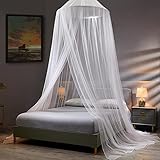
- High Quality: The dome bed canopy is made of 100% polyester, soft and light.Fine mesh(300 holes per inch2) protect you even against tiny mosquitoes,keeping you a peaceful and relaxing night's sleep.
- Easy Installation: Just take seconds to hang the hoop and tether from the ceiling,adjust the mosquito net.No assembly skills needed, for home and travel.It's easy to move from room to room.
- Foldable Design: Height 8.2ft,Circumference of Bottom 41ft,the stainless steel circular ring ensures durable performance,package with storage bag,easy cleaning and storage.
- Beautiful Decoration: The bed canopy make your bedroom or campsite more romantic and elegant, you can use LED light to decorate the canopy bed curtains,enhancing your bedroom and homes décor,create a warm and romantic life atmosphere for you.
- Package Include: You don’t need to worry about mosquito net accessories,the package include:1 mosquito net,1 hanging hook,40 inch hanging tether .Perfect for both indoor or outdoor uses.
Do not overlook: A bottle cap, clogged gutter, plant saucer, folded pool cover, toy, or tarp can hold enough water for mosquitoes. Water indoors—in a vase, saucer, drain, or appliance tray—can also support some species.
Why it fails: The source may be a neighbor’s property, storm drain, abandoned lot, wetland, natural tree hole, or another location outside your control. Removing water also does not immediately remove adults already present.
Combine it with: Screens and barriers for immediate protection, plus the next method for water that cannot be dumped.
10. Manage unavoidable water and nearby resting habitat
What it does: It makes remaining breeding sites inaccessible and reduces the shaded, humid places where some mosquitoes rest near homes and seating areas.
Windows Errors? Fix Them Before They Spread
Repair common Windows errors and clear accumulated junk for a smoother, more stable PC - no reinstall needed.Free scan · no reinstallOutdated Drivers Are Slowing You Down
One free scan finds every outdated or missing driver and matches the right update for your exact hardware.Free scan · exact hardware matchFor water that must remain:
- Cover rain barrels, cisterns, and storage containers tightly.
- For containers that cannot be sealed, use mesh small enough to exclude adult mosquitoes.
- Keep gutters clear and make sure they drain properly.
- Drain tarps, boat covers, toys, and pool covers.
- Maintain swimming pools according to local health guidance; drain unused pools when possible.
- For tree holes, follow appropriate arboricultural or local-health guidance. The CDC specifically warns against filling tree holes with concrete, gravel, or sand or drilling drainage holes.
For nearby habitat: Mow grass, cut weeds, and reduce dense, shaded, humid vegetation immediately beside doors, windows, pet areas, and outdoor seating. Keep clutter, equipment, and firewood from creating cool hiding places near the home. The CDC notes that Culex mosquitoes commonly rest in cool, dark, humid grass, shrubs, and thick vegetation.
Why it fails: Yard maintenance does not create a mosquito-proof property. Adults can fly in from neighboring yards, storm drains, wetlands, and other nearby habitat.
Combine it with: A weekly container inspection, screens, a fan for outdoor seating, and a fully enclosed area for pets or children.
What not to waste money on
Potted mosquito-repellent plants
A pot of citronella, lavender, marigolds, catnip, or another popularly recommended plant beside a patio is not equivalent to applying a tested repellent formulation. Iowa State University Extension states that plants placed around a patio do not affect mosquitoes; some plant oils may have repellent activity after extraction or crushing, but that is a different, chemically active use.
Do these 3 things before closing this tab:
1Clear out junk files and repair common Windows errors2Scan for outdated or missing drivers - takes under a minute3Repair Windows errors before they cause bigger problemsCitronella candles
Citronella oil may show repellent activity in some formulations, but a candle produces a small and variable plume that should not be treated as dependable personal protection. Controlled research has been mixed, including studies of citronella candles and incense. See the field study and controlled-study review. A decorative candle beside a person or pet is not a substitute for a screen, clothing, or a physical enclosure.
Ultrasonic and electronic sound devices
A Cochrane review found no evidence that electronic mosquito repellents prevent bites or malaria. The EPA says sound-wave devices are not EPA-registered repellents and that safety or effectiveness data are unavailable. Do not rely on an ultrasonic plug-in or wearable sound device.
UV bug zappers
UV zappers attract many non-target insects and have not been shown in controlled studies to reduce outdoor mosquito biting. University extension guidance from Colorado State and the University of Kentucky advises against treating them as mosquito-control devices.
Dryer sheets, vitamin B1, bracelets, patches, and DIY traps
These products and ideas are frequently marketed as easy alternatives, but they should not be presented as proven primary protection. A bracelet or patch that makes an unverified claim is not the same as a tested barrier. A homemade water trap can also become a mosquito nursery if it is not specifically designed and maintained to prevent adults from emerging. For a product applied to skin, the CDC says the effectiveness of non-EPA-registered repellents is unknown.
Plant-derived is not the same as chemical-free
Essential oils and plant extracts contain biologically active chemicals. They can irritate skin, trigger allergy, or create toxicity risks when misused, particularly around animals. Do not apply a human product, essential oil, or household substance to a dog, cat, bird, or other pet unless a veterinarian has specifically advised it and the product label allows that use.
Oil of lemon eucalyptus and PMD are a separate case: EPA-registered products containing those ingredients can be effective, but they are chemical repellents and therefore outside this article’s strict definition. The CDC does not recommend OLE or PMD products for children under three. A plant sitting near a person is not equivalent to a tested, concentrated repellent formulation.
Build the right plan for your situation
| Situation | Best no-applied-repellent combination | Main trade-off |
|---|---|---|
| Inside a home with children or pets | Repair screens, close doors, seal pet-door gaps, use air conditioning, and remove indoor water sources. | Requires an intact building envelope and, for air conditioning, electricity. |
| Sleeping without insecticide | Screened or air-conditioned room plus an untreated, tucked net and a fan. | The net must remain sealed and off the sleeper’s skin. |
| Baby or toddler outdoors | Fitted stroller, carrier, crib, or play-yard net inside a shaded, supervised area. | Fit and ventilation must be checked continuously; loose netting is unsafe. |
| Patio or deck | Large fan directed across people, loose covering clothing, and a fully enclosed screen shelter. | Fans cover limited areas and may be noisy; open-sided canopies are not enough. |
| Camping | Fully enclosed tent or screen shelter, closed immediately at every opening, covering clothing, and a head net when needed. | A single unzipped opening can defeat the barrier. |
| High daytime Aedes activity | Daytime screens or enclosures, covering clothing, head and ankle protection, and rigorous water control. | Avoiding nighttime alone will not address daytime bites. |
| High evening or nighttime Culex or Anopheles activity | Screens, air conditioning, continuous sleeping protection, a fan, and evening/night coverage. | Protection needs to continue throughout the exposure period. |
| Yard-wide nuisance | Remove and scrub containers, cover unavoidable water, clear gutters, reduce dense vegetation, and protect people and pets with barriers. | Mosquitoes may be arriving from outside the property. |
| Travel to a disease-risk area | Physical barriers plus destination-specific public-health and medical advice. | Nonchemical measures alone may not provide enough risk reduction. |
Troubleshooting: why a good method may appear not to work
We emptied the water, but mosquitoes came back
With Aedes, eggs may remain attached above the former waterline and hatch when the container fills again. Emptying is not enough: scrub the container walls, then store the container upside down or under cover. Inspect it again within a week and after rain.
We have screens, but someone is still being bitten indoors
Look for a door that opens frequently, a torn or unsealed screen, a pet flap, or a gap around an air-conditioning unit. Aedes mosquitoes may already be indoors. Inspect vases, plant saucers, drains, appliance trays, and other indoor water. Also consider whether the bite happened outdoors and the skin reaction was noticed later—or whether another insect was mistaken for a mosquito.
Clothing covers the body, but bites still appear
Check whether the fabric is thin, stretchy, tightly pressed against skin, or loosely knitted. Look at ankles, wrists, neck, feet, waist, and cuffs. Mosquitoes may enter through openings or bite through fabric that rests directly on the skin.
The fan worked yesterday but not today
Confirm that air is reaching the body rather than passing beside it. Check whether the person moved, furniture blocked the stream, or outdoor wind changed. Species and setting may also differ. The often-cited 91% reduction came from a particular indoor experimental-house study in rural Gambia—not from every fan on every patio.
Also popular on Amazon

- Lightweight and breathable polyester mesh: Designed for portability and airflow, this fine mesh netting keeps insects out while ensuring comfort—ideal for camping, picnics, and backyard lounging
- Effective insect protection (180 holes/sq. in.): Provides a reliable barrier against mosquitoes, gnats, and other small bugs, perfect for outdoor adventures or indoor use
- Reusable and washable design: Easy to clean and maintain, this mosquito net offers long-term value for frequent campers, travelers, or anyone needing consistent bug protection
- Versatile indoor/outdoor use: Great for covering sleeping bags, cots, beds, or hammocks, and can also be used to patch torn window or door screens in a pinch
- Compact and convenient (48" x 72"): Packs easily into backpacks or travel kits without taking up space—ideal for minimalist packing and on-the-go insect defense
There is no standing water in our yard
Inspect gutters, tree holes, tarps, toys, pool covers, storm drains, neighboring properties, wetlands, and areas hidden behind sheds or furniture. Water indoors can also support mosquitoes. If the source is outside your control, prioritize barriers, airflow, and local mosquito-control or health-department advice.
I was bitten during the day, so it cannot be a disease-carrying mosquito
That conclusion is incorrect. Aedes mosquitoes can bite during daylight and after dark. Where mosquito-borne disease is a concern, the CDC advises protection at all times, not only after sunset.
The Tool Desk
Outbyte PC Repair FREEClear out junk files and repair common Windows errorsFree Scan →Outbyte Driver Updater FREEScan for outdated or missing drivers - takes under a minuteDriver Scan →Important health and travel limitation
For ordinary nuisance mosquitoes, the combination of barriers, clothing, airflow, timing, and source reduction may be enough for many households. In a location with malaria, dengue, Zika, chikungunya, West Nile virus, or another mosquito-borne disease risk, do not assume that a fan, plant, net, or long-sleeved shirt alone makes a person or pet safe.
Before travel, check the CDC’s current mosquito-prevention guidance and destination-specific health advice. CDC recommends EPA-registered repellents as an important layer of protection, especially in disease-risk travel areas; EPA explains how skin-applied repellents are regulated at its repellent guidance page. If you are deliberately avoiding applied repellents, discuss the remaining risk with a travel clinician rather than assuming that chemical-free measures are equivalent.
For pets, ask a veterinarian about species-appropriate mosquito and parasite prevention. A product that is safe for a person is not automatically safe for an animal, and a home barrier does not protect a pet during time spent outdoors.
Frequently Asked Questions
Do mosquito-repellent plants actually work?
Not as ordinary patio plants. Iowa State University Extension says that plants placed around a patio do not affect mosquitoes. Some plants contain oils with repellent activity after extraction or crushing, but that is different from placing the intact plant beside a person or pet.
Free tools Windows power users keep installed
One-click scans. No signup required.
Does a fan really keep mosquitoes away?
A fan can reduce mosquito entry, landing, and host-seeking when its airflow reaches the body. One controlled rural-Gambia study reported a 91% reduction in Anopheles gambiae entry in an experimental-house setup, but that result should not be treated as a universal percentage for every mosquito species or outdoor patio.
Can mosquitoes bite through clothes?
Yes. Thin, tight, stretchy, or loosely knitted fabric may allow bites, especially when pressed against the skin. Loose, covering, tightly woven clothing provides better physical protection, but it is not automatically bite-proof.
Does air conditioning stop mosquitoes?
Its main benefit is that it allows windows and doors to remain closed, creating an enclosed room. It is not a guaranteed mosquito killer or universal chemical repellent. Check window-unit gaps, portable-air-conditioner openings, and pet doors.
How often should standing water be removed?
Inspect at least weekly and after heavy rain. Empty the water, scrub container walls, and store containers upside down or under cover. Scrubbing matters because Aedes eggs can adhere above the waterline and survive drying.
Do untreated mosquito nets work?
Yes, when the net is intact, fully enclosed, securely tucked, and kept away from the sleeper’s skin. An untreated net provides a physical barrier. It does not provide the additional insecticidal action of a permethrin-treated net.
Are citronella candles chemical-free?
No. Citronella oil contains active chemicals, and a candle’s small, variable plume is not dependable personal protection. Research on citronella candles has been mixed. Use screens, clothing, a fan, or a physical enclosure instead.
Do mosquitoes bite during the day?
Yes. Aedes mosquitoes commonly bite during the day as well as at night. Other species are often more active from dusk to dawn. Local behavior varies, so timing should be an extra layer rather than your only protection.
What if mosquitoes are coming from a neighbor’s property?
Source reduction on your property may not eliminate mosquitoes arriving from gutters, storm drains, wetlands, tree holes, or neighboring yards. Prioritize screens, closed doors, outdoor enclosures, fans, and covering clothing, and contact local mosquito-control or health authorities if the problem is severe.
What’s actually slowing this PC down?
Pick the symptom - the matching free tool is one click away.
What is the best chemical-free option for babies and pets?
Use a properly fitted stroller, carrier, crib, play-yard, tent, or screened enclosure, depending on the setting. Inspect it for gaps and keep netting from touching skin. Do not leave babies or animals unattended with loose netting, and do not apply human repellents or essential oils to a pet unless a veterinarian and the product label specifically support that use.
The Bottom Line
Start with the barrier that matches the setting: screens and closed doors indoors, air conditioning where available, an untreated tucked net for sleep, and a fully enclosed shelter outdoors. Add covering clothing, a fan aimed across exposed skin, sensible timing, and careful protection of ankles, feet, hands, and neck. Then inspect and scrub standing-water containers every week; cover water that cannot be removed.
These are the most defensible ways to reduce mosquito contact without applied insecticides or repellent chemicals. Plants, ultrasonic gadgets, bug zappers, and candles should not displace the physical barriers that actually protect people and pets.





Leave a Reply