
The Tool Desk
Outbyte Driver Updater FREEFix the driver behind crashes, sound loss and screen glitchesFind Drivers →Outbyte PC Repair FREERepair Windows errors before they cause bigger problemsFix Now →There is no universally “best” exotic pet for a small space. The ten animals below are conditional candidates identified on the WWF Responsible Pet Guide’s generalized low-risk list, but a small body does not make a small enclosure, low-maintenance routine, or simple veterinary case. The right choice is the species whose habitat, diet, enrichment, social life, health precautions, legal status, and lifetime commitment you can provide in your actual home.
What “best for a small space” really means
Measure the complete setup, not the animal. Merck Veterinary Manual identifies housing—including space, substrate, and location—as a central welfare issue for exotic and nontraditional pets. The footprint includes the enclosure, safe exercise area, storage for food and bedding, equipment, and room to clean without contaminating food-preparation surfaces. A compact pet can still need a large, complex, or carefully controlled habitat.
As an Amazon Associate I earn from qualifying purchases.
Merck also lists diet, veterinary care, and social interactions among the husbandry factors most often linked to welfare problems. Some species do poorly when housed alone; territorial hamsters may fight when housed together. Social advice therefore has to follow the species and the individual animal, not a blanket “one is best” rule. Read the species profiles below as screening options, not rankings.
WWF describes its species-level risk assessments as generalized. A low-risk designation is not a guarantee that an animal suits a particular apartment, household, or keeper. Before choosing, confirm lifetime housing, proper food, veterinary access, legal sourcing, and whether the species is permitted where you live.
#1 Best Overall

- SPACIOUS 2-STORY HABITAT: Measures 36 x 24 x 63 inches with two full levels of living space. The 1/2" horizontal wire spacing safely contains rats, chinchillas, ferrets, sugar gliders and degus while allowing natural climbing behavior.
- DURABLE CONSTRUCTION: Sturdy metal wire design with a gray quartz hammertone finish, Critter Nation resists everyday wear. Complete with 2 removable base pans, 3 textured ramps with covers, and 2 full-width resting shelves.
- CUSTOMIZE YOUR HABITAT: Height-adjustable design lets you customize the perfect setup for your pet, with 2 wide expanse shelves and 2 full-width plastic pan floors to maximize play space. Compatible with a wide range of accessories.
- BUILT FOR DAILY LIFE: Full-width double doors provide maximum accessibility, with a swing-up locking ramp that lets you separate pets or section off areas during cleaning and feeding. Bottom level shelf provides storage area for pet accessories.
- BECAUSE LIFE GOES BETTER WITH PETS: A family-owned business based in Indiana, MidWest Homes for Pets brings over 100 years of pet product expertise and a commitment to quality, rigorous safety testing, and excellent US-based customer service.
Ten conditional candidates for a small home
| Candidate | WWF assessment | Small-home question to answer first | Veterinary category |
|---|---|---|---|
| Dwarf hamster | Generalized low-risk list | Can you provide a secure, enriched habitat and respect potentially territorial behavior? | Small-mammal veterinarian |
| Guinea pig | Generalized low-risk list | Can you fit an appropriate social setup rather than treating one animal as the default? | Small-mammal veterinarian |
| Rabbit | Generalized low-risk list | Can you provide exercise, enrichment, and housing beyond a small cage? | Small-mammal veterinarian |
| Budgerigar (budgie) | Generalized low-risk list | Can you accommodate flight, interaction, cleaning, and an avian vet? | Avian veterinarian |
| Cockatiel | Generalized low-risk list | Can the home support a bird’s behavioral and flight needs? | Avian veterinarian |
| Crested gecko | Generalized low-risk list | Can you maintain the species’ enclosure conditions and find an exotic vet? | Reptile/exotic veterinarian |
| Ball python | Generalized low-risk list | Can you run a secure, climate-controlled enclosure and meet local rules? | Reptile/exotic veterinarian |
| African dwarf frog | Generalized low-risk list | Can you maintain a species-appropriate aquatic habitat and monitor its conditions? | Exotic veterinarian |
| Society finch | Generalized low-risk list | Can you provide suitable social and flight opportunities in the available footprint? | Avian veterinarian |
| Yellow canary | Generalized low-risk list | Can you provide safe flight space, enrichment, and species-competent care? | Avian veterinarian |
The table deliberately gives no universal rankings for noise, odor, hours of care, purchase price, annual cost, or lifespan: comparable figures for these ten species are not established in the available evidence.
Dwarf hamster
A dwarf hamster may suit a home that can dedicate a secure, enriched habitat and a quiet, predictable location. Its small size is not permission to use an undersized cage. Plan for daily fresh food and water, appropriate substrate and enrichment, and supervised time outside the habitat where safe. Hamsters can be territorial; housing two together can lead to fighting, so do not assume companionship is automatically beneficial.
Arrange a veterinarian who treats small mammals before acquisition. The CDC recommends a checkup within a week of obtaining a small mammal. Confirm that your lease and local rules allow the species, and ask the source whether the animal was responsibly bred and legally obtained.
Recommended Free Tools
Guinea pig
Guinea pigs are on WWF’s generalized low-risk list, but their social and housing needs still determine whether they fit. Merck warns that species differ in how they respond to solitary housing; do not decide on a single animal or a group without species-appropriate guidance and a plan for introductions and ongoing welfare.
The habitat must leave room for normal movement, resting, hiding, enrichment, food, and water, with a cleaning routine that keeps the enclosure dry and safe. Daily care is a commitment even when the animal stays indoors. Identify a small-mammal veterinarian in advance and schedule the CDC-recommended checkup within one week of acquisition.
Rabbit
A rabbit can be considered only if “small space” means a well-planned living area, not permanent confinement in a small cage. Housing, exercise, substrate, enrichment, and social interaction all affect welfare, and Merck specifically cautions that husbandry—not body size—is where many exotic-pet problems arise.
Rank #2
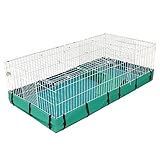
- Spacious Living Area: Measures 47 x 24 x 14 inches; Provides 8 square feet of interactive space; meets veterinarian and breeder recommendations for one to three guinea pigs
- Protective Wire Top & Divider Panel: Fully removable mesh top provides added security from other pets or children; hinged divider panel with lock-in-place ramp separates play and care areas-great for cleaning or managing multiple guinea pigs
- Secure Yet Accessible: 14-inch high sides keep guinea pigs safely contained while offering easy access for pet owners; suitable for indoor or outdoor use
- Quick Assembly: Sets up in minutes with no tools required; designed for first-time guinea pig owners and experienced cavy enthusiasts alike
- Expandable & Modular: Connect multiple habitats for endless configurations; lock-in-place doors double as ramps for easy movement between connected enclosures
Map the rabbit’s enclosure and supervised exercise zone before bringing it home. Protect cables and other household hazards, keep food and habitat equipment away from food-preparation areas, and plan daily cleaning and enrichment. Confirm that a veterinarian experienced with rabbits is accessible, and check property rules and local law before adoption or purchase.
Budgerigar (budgie)
A budgerigar’s enclosure may fit physically in a small home, but the room must still support safe movement, enrichment, interaction, and cleaning. Treat it as a flighted bird rather than a decoration confined to a cage. Decide how you will provide supervised out-of-enclosure time without access to hazards, other pets, open windows, or kitchen fumes.
Birds need species-competent veterinary care, so locate an avian veterinarian first. Ask a breeder or store where the bird came from, whether it was captive bred, and whether any permit applies in your jurisdiction. Social needs are individual and species-specific; do not isolate a bird or add a companion without a welfare plan.
Cockatiel
Cockatiels are another WWF-listed candidate whose suitability depends on the whole setup. Reserve space for a secure enclosure, perches and enrichment, food and water, and safe supervised flight. A small room can work only if you can make that room bird-safe and maintain a consistent cleaning routine.
Before acquisition, verify access to an avian veterinarian and check lease, municipal, and state rules. Ask the source about origin, captive breeding, health history, and permits. The evidence does not establish a cross-species noise or care-hours ranking, so choose only after observing how the individual bird’s behavior fits your household.
Crested gecko
A crested gecko may be considered where a keeper can maintain a species-appropriate terrarium rather than treating a compact enclosure as automatically adequate. Reptiles and amphibians need a safe, warm environment with the appropriate humidity and lighting; CDC advises learning the exact temperature and humidity requirements for the species before purchase.
Rank #3
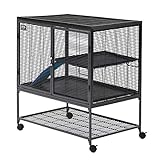
- SPACIOUS HABITAT: Measures 36 x 25 x 38.5 in. with a main level and upper shelf for comfortable living space. The 1/2" horizontal wire spacing safely contains chinchillas, rats, ferrets, sugar gliders & degus while allowing natural climbing behavior.
- DURABLE CONSTRUCTION: Sturdy metal wire design with a gray quartz hammertone finish, Critter Nation resists everyday wear. Complete with removable base pan, textured ramp with cover, and a full-width resting shelf, it's ready for years of use.
- CUSTOMIZE YOUR HABITAT: Height-adjustable design lets you customize the perfect setup for your pet, with a wide expanse shelf and full-width plastic pan floor to maximize play space. Compatible with our Add-On Unit for additional room.
- BUILT FOR DAILY LIFE: Full-width double doors provide maximum accessibility, with a swing-up locking ramp that lets you separate pets or section off areas during cleaning and feeding. Bottom level shelf provides storage area for pet accessories.
- BECAUSE LIFE GOES BETTER WITH PETS: A family-owned business based in Indiana, MidWest Homes for Pets brings over 100 years of pet product expertise and a commitment to quality, rigorous safety testing, and excellent US-based customer service.
Set up and test the enclosure before the gecko arrives, including any required heating, lighting, humidity monitoring, substrate, hides, and enrichment. Have an exotic veterinarian experienced with reptiles available for routine care. Confirm legality and permits, buy from a responsible source, and plan handwashing and habitat-cleaning procedures because healthy reptiles and amphibians can shed Salmonella.
Ball python
A ball python can fit a home only when the enclosure is secure and its environmental requirements can be maintained reliably. “Small pet” does not mean a simple box: temperature, humidity, lighting where required, hides, substrate, feeding, and escape prevention all belong in the plan. The enclosure should be located away from food-preparation areas and inaccessible to children or other pets who could disturb it.
Find a reptile-competent exotic veterinarian before bringing the snake home. Check state, municipal, and property rules for ownership and permits, and ask the source whether the animal was captive bred and legally obtained. Build a rehoming plan before acquisition; releasing a snake into the wild is unsafe and inappropriate.
African dwarf frog
An African dwarf frog is a candidate only for a keeper prepared to run and maintain a species-appropriate aquatic habitat. The available evidence does not establish a universal tank size, stocking number, or maintenance schedule, so obtain species-specific veterinary and husbandry guidance before purchase rather than relying on a generic “small frog” setup.
CDC’s reptile-and-amphibian guidance calls for a safe, warm environment with appropriate humidity and lighting and recommends learning the species’ temperature and humidity requirements. Arrange an exotic veterinarian, confirm local rules, and keep habitat equipment away from food-preparation areas. Wash hands after handling the animal or its equipment; healthy amphibians can shed Salmonella.
Society finch
Society finches appear on WWF’s generalized low-risk list, but their social and flight needs still have to fit the room. Design the enclosure around safe movement, perching, enrichment, food, water, and cleaning access. Do not infer from the bird’s small body that a minimal cage or solitary life is appropriate.
Rank #4

- Spacious Space: This metal small animal cage features a multi-level layout that creates roomy activity areas. The non-slip ramp supports climbing, playing, and daily movement
- Secure Design: Our ferret cage is suitable for ferrets, chinchillas, kittens, and other small pets. Tight 0.55 in wire spacing and the secure door latch help reduce escape risks
- Solid Build: The small animal cage is built with thick square metal tubes for a stable structure. The evenly powder-coated surface resists rust for long-lasting use
- Easy Cleaning: This sugar glider cage has multiple openings, making cleaning easier from different sides. The pull-out bottom tray slides out smoothly and reduces paw scratches
- Easy Mobility: Our chinchilla cage comes with lockable swivel casters for easy movement indoors or outdoors. It lets pets get sunlight and fresh air more conveniently
Consult an avian veterinarian before acquisition and ask the source about captive breeding, origin, and legal requirements. If you keep more than one bird, plan introductions and monitoring; if you keep one, obtain species-specific advice about social welfare instead of assuming that solitary housing is harmless.
What’s actually slowing this PC down?
Pick the symptom - the matching free tool is one click away.
Yellow canary
A yellow canary can be evaluated for a small home when you can provide a secure flight-capable enclosure, enrichment, daily care, and a bird-safe room for supervised activity. The evidence does not support ranking canaries against the other birds for noise, odor, cost, or care time, so those factors should be assessed for the individual bird and your household.
Locate an avian veterinarian, verify legal ownership and property rules, and ask about the bird’s origin and captive-bred status. Keep habitat supplies away from food-preparation areas and maintain hand hygiene after cleaning or handling.
Independent reader supportYour contribution helps us test, update, and keep practical guides available for everyone.How to screen any candidate before you commit
1. Check law, lease rules, and permits
CDC warns that some small mammals may be prohibited in apartments or rental homes and illegal in some states. The American Animal Hospital Association reports that exotic-pet laws vary by state and that permits may be required. Check state, county, city, building, and lease rules in writing before paying a deposit. Ask about limits on species, numbers, enclosure placement, and prohibited reptiles or amphibians.
For turtles specifically, CDC states that US federal law bans the sale of small turtles and advises buying turtles with shells longer than four inches from a trusted pet store. That is a US federal rule, not a worldwide standard, and it does not make every turtle legal under state or local law.
Free tools Windows power users keep installed
One-click scans. No signup required.
2. Secure a species-competent veterinarian
Call clinics before choosing the animal. Ask whether they routinely treat the exact species, accept new patients, provide emergency coverage, and can perform preventive examinations. CDC recommends a small-mammal checkup within a week of acquisition and routine care from an exotic veterinarian experienced with reptiles and amphibians. Birds generally require an avian veterinarian.
Best Value

- Security & Durability: Constructed with sturdy metal materials, this hamster cage ensures a secure structure, preventing your hamster from chewing on the bars and extending the cage’s lifespan. It provides peace of mind by prioritizing your pet’s security.
- Comfort & Spaciousness: Our hamster habitat is thoughtfully designed and available in two size options, this cage offers your hamster ample space to move, play, and rest freely. The top ventilation holes maintain consistent airflow, creating a healthy and comfortable living environment.
- Visual Enjoyment: Featuring high-transparency acrylic panels and a large viewing window, this dwarf hamster cage offers a 360-degree panoramic view, allowing you to observe your hamster’s activities anytime and enhancing the joy of pet ownership.
- Easy to Assemble: The clear, step-by-step assembly instructions make setting up the small animal cage for hamster simple and quick. You’ll be able to complete the setup in no time and start enjoying your pet’s company.
- Easy to Clean: The pet mouse cage features front acrylic panel that is easily removable, and the washable materials make routine cleaning and maintenance a breeze, ensuring a hassle-free experience for pet owners.
Veterinary availability can change the practical answer more than enclosure size. If the nearest suitable clinic is too far away for routine and emergency care, select another species or reconsider ownership.
3. Design the habitat before bringing the animal home
- Measure the enclosure, stand, exercise area, food storage, cleaning route, and equipment—not just the animal’s body.
- Provide species-appropriate substrate, hides, perches, climbing or movement opportunities, and enrichment.
- For reptiles and amphibians, establish the required temperature, humidity, and lighting and learn how you will monitor them.
- Place the habitat away from food-preparation areas and where children or other pets cannot interfere.
- Plan daily food and water, waste removal, observation, and supervised out-of-habitat time where applicable.
CDC describes a secure habitat, fresh food and water each day, and appropriate enrichment as basic small-mammal responsibilities. Merck’s welfare guidance explains why a visually tidy but undersized or poorly located enclosure is still inadequate.
4. Assess household health and supervision
CDC says small mammals can carry germs while appearing healthy. Children younger than five, adults 65 and older, and people with weakened immune systems are more likely to become seriously ill from some infections. CDC advises pregnant women to avoid handling pet rodents when possible. Reptiles and amphibians can shed Salmonella even when healthy.
Do these 3 things before closing this tab:
1Repair Windows errors before they cause bigger problems2Fix the driver behind crashes, sound loss and screen glitches3Clear out junk files and repair common Windows errors- Wash hands after touching an animal, enclosure, bedding, food dishes, or tank equipment.
- Keep habitats and supplies out of kitchens and other food-preparation areas.
- Supervise children around animals and prevent face-to-face contact or rough handling.
- Use a cleaning location and method that does not spread waste to household surfaces.
5. Verify the source and the animal’s future
AAHA recommends asking where the animal came from, whether it was captive bred, and whether a permit applies in your state. Avoid wild-caught animals when a responsible captive-bred source is appropriate, and never keep wild rodents such as squirrels as pets. CDC also says not to release unwanted small mammals, reptiles, or amphibians into the wild.
Before acquisition, identify a responsible rehoming route, rescue, breeder return policy, or veterinary contact. A move, allergy, financial change, or housing change can happen years after purchase; responsible ownership includes a safe plan for the animal’s entire life.
Why some popular “small exotic” choices are not in this ten
WWF’s generalized moderate-risk list includes chinchillas, ferrets, sugar gliders, and axolotls. That designation is a signal to research more deeply, not a recommendation or a declaration that ownership is impossible. Their appearance or adult size cannot substitute for verified housing, diet, behavioral, veterinary, legal, and social requirements.
CDC’s small-mammal overview also covers rats, mice, gerbils, hedgehogs, sugar gliders, and rabbits, while advising against wild rodents as pets. Inclusion in a general overview does not establish that every animal is suitable for a studio or rental home.
PC Slower Than It Used to Be?
A free scan shows the junk files, broken settings and background clutter dragging Windows down - then fixes them in one click.Free scan · Windows 10 & 11Outdated Drivers Are Slowing You Down
One free scan finds every outdated or missing driver and matches the right update for your exact hardware.Free scan · exact hardware matchThe welfare warning behind the checklist
The British Veterinary Association reported in its 2022 Voice of the Veterinary Profession survey that 81% of veterinarians were concerned that the welfare needs of non-traditional companion animals were not being met. The most frequently cited welfare issues were irresponsible ownership (82%), irresponsible breeding or sourcing (11%), and lack of specialist veterinary care (10%). These are survey results from that profession survey, not a measurement of every owner or species.
The practical lesson is to choose based on capability rather than novelty. A candidate belongs in your home only when you can provide its full habitat, correct diet, social and behavioral care, preventive medicine, legal compliance, infection-control routine, and a lifetime rehoming plan.
Quick Recap
A pre-acquisition checklist
- Written confirmation that the species is legal and allowed by your lease or property rules.
- A measured habitat plan that includes enrichment, exercise or flight, cleaning access, and equipment storage.
- Species-specific food, water, substrate, lighting, temperature, humidity, and social requirements documented before purchase.
- A veterinarian who treats that species, with routine and emergency arrangements.
- A household hygiene plan, especially if vulnerable people live in or visit the home.
- Source information covering origin, captive breeding, health history, and permits.
- A budget and schedule for recurring care, without assuming that a small animal is inexpensive or quick to maintain.
- A responsible rehoming plan; never release an unwanted pet into the wild.
Product prices and availability are accurate as of the date/time indicated and are subject to change. Any price and availability information displayed on Amazon at the time of purchase will apply.





Leave a Reply