To reduce conflict between cats, first rule out a medical problem, prevent unsafe encounters, and make sure each cat can reach food, water, litter, rest, and retreat without being forced to pass the other. If tension has become a pattern, separate the cats and rebuild their contact gradually. These ten steps are practical options, not a proven ranking; some cats need ongoing separation or a different living arrangement.
Why cats may be in conflict—even without a fight
Conflict can look like more than swatting or chasing. Staring, stalking, blocking a doorway or route, guarding a resource, hiding, and avoiding shared spaces can all signal tension. Causes may include territorial or fear-based behavior, redirected aggression, or a poor personality match, and more than one may be involved. A frightened cat may freeze, flee, or fight, so aggression is not always an attempt to dominate. VCA’s overview of aggression between household cats explains these patterns.
As an Amazon Associate I earn from qualifying purchases.
A change in the relationship can also have a medical contributor. Pain or illness may affect behavior, so contact a veterinarian when a previously peaceful pair suddenly becomes aggressive, when the behavior is severe, or when either cat shows other unusual health or behavior changes. The ASPCA’s guidance on aggression between household cats also advises seeking veterinary help when needed.
Free tools Windows power users keep installed
One-click scans. No signup required.
10 ways to reduce conflict between cats
1. Start with a veterinary check for sudden or severe changes
Arrange an examination if the conflict began abruptly, is escalating, causes injuries, or coincides with changes such as hiding, appetite shifts, or altered litter-box habits. Tell the veterinarian what happens, when it started, and whether there are predictable triggers. Medical issues should be considered before treating the problem as purely behavioral. A veterinarian can also advise whether medication or a behavior referral is appropriate; do not give a cat medication without veterinary direction.
#1 Best Overall

- Complete Calming Solution: This cat calming diffuser kit includes diffusers and refills (48mL per bottle). Each refill delivers a 30-day supply of continuous support to help ease your cat’s anxiety. Ideal for addressing stress triggered by vet visits, traffic noise, fireworks, thunderstorms, or loneliness, this cat pheromone calming diffuser creates a safe and serene environment for felines of all ages and breeds
- Effective Stress & Behavior Support: Our cat pheromone diffuser works to reduce common signs of feline stress such as excessive scratching, urine spraying, hiding, and restlessness. By mimicking natural feline pheromones, this cat calming diffuser provides gentle, drug-free relief, making it a reliable choice for multi-cat households or cats experiencing tension during home changes or new pet introductions
- Long-Lasting & Wide Coverage: Each refill of the cat calming diffuser releases calming pheromones for up to 30 days, with coverage for areas up to 700 square feet. The diffuser features an automatic operation with a simple press of a button, and proper placement (vents facing up) ensures optimal performance and leak prevention, maximizing the effectiveness of your cat diffuser
- Safe & Non-Toxic Formula: The cat pheromone calming diffuser uses an odorless, non-toxic, and chemical-free formula that is safe for both humans and pets. Unlike harsh treatments, this cat calming diffuser does not cause drowsiness and poses no risk to your cat’s health, making it a trusted choice for daily use in any living space
- Easy to Use & Maintain: Setting up the cat calming diffuser is effortless—simply plug it into a standard outlet, keep the bottle upright, and press the button to activate. The heated diffuser and refill system operates quietly and continuously, requiring minimal maintenance; just replace the refill every 30 days to maintain consistent calming support for your feline friend
2. Watch for subtle signs of tension
Notice whether one cat repeatedly stares at, follows, or blocks the other; whether a cat waits to use a hallway, food bowl, or litter box; and whether either cat hides or stops using parts of the home. Keep a brief record of where and when these behaviors happen. That can reveal a route or resource that needs changing, and helps a veterinarian or behavior professional understand the pattern.
3. Prevent unsafe confrontations
Do not let cats “fight it out.” The ASPCA warns that fighting can worsen the problem. If there is a risk of injury, separate the cats into different areas and avoid reaching between fighting animals. Give each cat a complete safe space with food, water, litter, bedding, a hiding place, a perch, and enrichment. Follow veterinary guidance if either cat is injured.
Rank #2
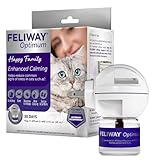
- HELPS REDUCE SIGNS OF STRESS USING A PATENTED PHEROMONE: FELIWAY Optimum is an advanced cat pheromone diffuser that helps reduce signs of stress in cats and helps ease tension between cats.*
- HELPS CATS FEEL CALM IN EVERYDAY SITUATIONS: FELIWAY Optimum is a cat calming diffuser that helps reduce stress‑related behaviors like urine spraying, scratching, hiding, and fearful reactions to change. Cat parents reported noticeable reductions in these behaviors, including a 77% reduction in urine spraying.
- SUPPORTS HARMONY IN MULTI‑CAT HOMES: Helps promote calmer interactions between cats. 72% of cat parents noticed reduced tension between their cats
- SAFE** AND NON-SEDATING: FELIWAY Optimum is not a sedative. It’s safe for use around cats, kittens, people and other pets.
- CONTINUOUS CALMING SUPPORT: This plug‑in cat pheromone diffuser provides 24/7 support when used as directed. To get started, plug into an open outlet with the vents pointed upward, allow at least 4 feet of clearance, and follow the label instructions.
4. Offer separate food and water stations
Set up more than one feeding and watering location, with enough distance or visual separation that one cat cannot trap the other at a bowl. Feed behind a closed door if necessary. Watch whether both cats can approach, eat, and leave comfortably; adding bowls will not help if one cat still guards the route to them.
Do these 3 things before closing this tab:
1Clear out junk files and repair common Windows errors2Fix the driver behind crashes, sound loss and screen glitches3Repair Windows errors before they cause bigger problems5. Put litter boxes in multiple accessible locations
Provide several boxes in separate areas so a cat does not have to pass an intimidating housemate or use a single guarded location. VCA’s guide to managing cats that do not get along recommends one litter box per cat plus one. The practical priority is that each cat can reach a clean box without being cornered; distribute boxes rather than clustering them together. The ASPCA’s litter-box guidance likewise emphasizes accessible options.
Rank #3

- HELPS REDUCE COMMON SIGNS OF TENSION BETWEEN CATS: FELIWAY MultiCat, developed by the #1 vet recommended brand, helps reduce common signs of tension between cats such as: conflict, fighting, chasing, and blocking
- ENHANCED CALM AT HOME FOR MULTICAT HOUSEHOLDS: FELIWAY MultiCat plug-in diffuser uses the science of pheromones to send calming messages that mimic a mother cat’s natural pheromones to help reduce tensions & conflicts. 84% of cat owners saw significant improvement in conflict between cats when using FELIWAY MultiCat
- DRUG FREE & SAFE TO USE: FELIWAY diffusers are drug-free, non-sedating, and while cat pheromone analogs may help your cat, they won't affect humans or other pets
- PROVIDES 4 WEEKS OF CALMING SUPPORT: With just one refill, the diffuser offers up to 30 days of continuous calming benefits, helping your cat feel calmer
- COVERS LARGE LIVING SPACES: Each diffuser covers an area up to 700sqft, ensuring widespread calming support throughout your home for cats of all ages. To get started, simply plug your diffuser into an open outlet with 4+ feet of space to diffuse, with the vents pointed upward
6. Add hiding places, resting spots, and vertical space
Increase the number of comfortable places where cats can retreat or rest without competing. Include elevated resting options and, where practical, hiding spaces with more than one exit so a cat is less likely to be trapped. A multi-perch cat tree can provide one useful vertical option, but it is not a cure; place it where a cat can use it without being ambushed or blocked. VCA’s feline environmental-needs guidelines cover access to safe places and separated resources.
7. Schedule play and provide varied enrichment
Offer regular interactive play, such as a wand toy, and rotate toys to keep enrichment varied. Give each cat opportunities to play without directing its energy at an unwilling housemate. Provide scratching surfaces and other activities in different locations, and let each cat disengage. Enrichment supports a calmer environment but does not replace separation or a gradual reintroduction when those are needed.
Rank #4

- HELPS REDUCE CAT STRESS: FELIWAY Classic is a cat calming diffuser that helps individual cats feel calm and reduce stress behaviors like scratching, urine spraying, and hiding
- CREATES A CALMING HOME ENVIRONMENT: FELIWAY Classic uses calming pheromone messages that cats naturally understand to help them feel comfortable and safe during everyday changes in routine or environment. 9 out of 10 cat parents noticed reduced urine spraying and 8 out of 10 saw reduced scratching
- SAFE* AND NON-SEDATING: FELIWAY Classic is not a sedative. It’s safe for use around cats, kittens, people and other pets.
- CONTINUOUS CALMING SUPPORT FOR SHARED SPACES: Plug‑in cat pheromone diffuser provides 24/7 calming support. To get started, plug into an open outlet with vents pointed upward and allow 4+ ft of clearance, and follow the label instructions.
- #1 VET RECOMMENDED BRAND**: FELIWAY is the #1 vet recommended brand, and is backed by 30 years of feline stress expertise
8. Reintroduce cats through scent and sound first
After separating cats, allow them to settle in their own complete areas. Begin with low-pressure exposure, such as exchanging bedding or letting them investigate each other’s scent without meeting. Then let them hear one another across a closed door. Pair calm exposure with treats or meals placed far enough from the door that both cats remain relaxed. VCA’s treatment guidance for aggression between household cats describes gradual desensitization and counterconditioning; its authors, veterinary behaviorists Debra Horwitz and Gary Landsberg, call this the best way to ease or reintroduce a cat into a household. It is a recommended approach, not a guarantee of success.
9. Use controlled visual contact and brief supervised sessions
When both cats can remain calm with scent and sound, try visual contact through a secure barrier, such as a screen or tall gate that prevents them from reaching each other. Pair the view with food or play at a comfortable distance. If both stay relaxed, progress to short, supervised time in the same space, with escape routes and retreats available. Keep sessions brief and end them before tension builds. If either cat becomes fearful or aggressive, increase distance or return to an earlier stage rather than pressing on. VCA advises slowing the process whenever a cat is uncomfortable.
10. Get behavior support when progress stalls
Ask your veterinarian for guidance if aggression is persistent, severe, or not improving with safer management and gradual reintroduction. A veterinarian can assess medical factors and discuss a referral to a qualified veterinary behaviorist or other appropriately qualified behavior professional. Pheromone products may help reduce stress for some cats, according to VCA and ASPCA guidance, but they are optional adjuncts—not a substitute for environmental changes or behavior work, and not a guaranteed fix.
Independent reader supportYour contribution helps us test, update, and keep practical guides available for everyone.How to judge progress and decide what comes next
Look for practical signs of reduced tension: both cats can move around the home, reach their resources, and rest without one persistently blocking, stalking, or driving the other away. Friendship is not the only acceptable outcome; peaceful coexistence may be enough. If aggression returns, make the setup safer, increase separation, and resume introductions at a stage where both cats can stay calm. There is no established success rate for these approaches, and some pairs need long-term separation or a different home arrangement. The ASPCA and VCA both recognize that not every household pairing can safely share space.
Quick Recap
Product prices and availability are accurate as of the date/time indicated and are subject to change. Any price and availability information displayed on Amazon at the time of purchase will apply.
The Tool Desk
Outbyte Driver Updater FREEFix the driver behind crashes, sound loss and screen glitchesFind Drivers →Outbyte PC Repair FREEClear out junk files and repair common Windows errorsFree Scan →



