
Windows Errors? Fix Them Before They Spread
Repair common Windows errors and clear accumulated junk for a smoother, more stable PC - no reinstall needed.Free scan · no reinstallCrashes, No Sound, or Screen Glitches?
Random freezes, missing sound and display glitches usually trace back to one bad driver. Find and replace yours safely.Free scan · under a minuteSome links on this page are affiliate links: if you buy through them we may earn a commission, at no extra cost to you.
The easiest fish are not maintenance-free fish. They are species that are relatively forgiving when kept in a properly filtered, cycled aquarium with the right temperature, space, diet, and companions.
Before choosing a fish, check its adult size and social needs—not just how small it looks in the store. A group of tiny schooling fish may need more room than one solitary betta, while livebearers can fill a tank with fry within weeks.
As an Amazon Associate I earn from qualifying purchases.
Do these 3 things before closing this tab:
1Repair Windows errors before they cause bigger problems2Scan for outdated or missing drivers - takes under a minute3Clear out junk files and repair common Windows errorsWhat beginner fish actually need
Every aquarium on this list should have a filter, water conditioner, a reliable test kit, and species-appropriate heating or temperature control. The aquarium also needs to be cycled before fish are added. The RSPCA recommends fishless cycling and says the process takes at least two weeks; ammonia and nitrite should rise and then return to zero before stocking.
Once fish are established, test the water regularly and perform a partial water change of about 25% at least once a week. Treat replacement water to remove chlorine or chloramine, and avoid replacing all the water or washing filter media under the tap, since that can remove beneficial bacteria.
Popular on Amazon

- 𝗛𝗼𝗺𝗲 𝗔𝗾𝘂𝗮𝗿𝗶𝘂𝗺 𝗪𝗮𝘁𝗲𝗿 𝗧𝗲𝘀𝘁 𝗞𝗶𝘁 - Ensure the health of your fish with aquarium water testing kit & ammonia test strips for fish tank. This complete freshwater & saltwater tank test kit provides a reliable water tester for ammonia, pH, iron, chlorine, total hardness (GH), carbonate, nitrate, nitrite, total alkalinity, copper, and temperature, allowing you to have a complete understanding of your aquarium water quality. Trusted by fish enthusiasts, it adapts to your needs, making it an essential tool for aquarium care.
- 𝗔𝗰𝗰𝘂𝗿𝗮𝘁𝗲 & 𝗙𝗮𝘀𝘁 𝗧𝗲𝘀𝘁𝗶𝗻𝗴 𝗥𝗲𝘀𝘂𝗹𝘁𝘀 - Our aquarium water test strips deliver reliable results. Each fish tank water testing kit comes with easy-to-read color charts. This fish tank test strips are highly sensitive, detecting low levels of impurities and foreign substances in aquarium water. Our aquarium water quality tester helps prevent any invisible water problems.
- 𝗜𝗻𝘀𝘁𝗮𝗻𝘁 𝗛𝗼𝗺𝗲 𝗧𝗲𝘀𝘁𝗶𝗻𝗴—𝗡𝗼 𝗧𝗿𝗶𝗽𝘀 𝘁𝗼 𝘁𝗵𝗲 𝗦𝘁𝗼𝗿𝗲 - Testing 11 key parameters in your aquarium is easier than ever with just one kit. Just dip the strip in water and use the provided color chart for instant, reliable results. Say goodbye to frequent trips to pet stores because now you have our home water test kit with the ability to monitor your aquarium's water quality in the comfort of your own home.
- 𝗧𝗲𝘀𝘁 𝗦𝗺𝗮𝗿𝘁𝗲𝗿 𝘄𝗶𝘁𝗵 𝗘𝘅𝘁𝗲𝗻𝗱𝗲𝗱 𝗦𝗵𝗲𝗹𝗳 𝗟𝗶𝗳𝗲 𝗦𝘁𝗿𝗶𝗽𝘀 - Our aquarium test kit contains 150 test strips for aquarium fish tank: 50 strips in a bottle and 100 in a separate bags to maintain freshness. Once opened, it's recommended to use the strips within 3 months for maximum accuracy of the fish water testing kit. These water testing strips allow regular water quality checks without using all water test strips at once.
- 𝗩𝗲𝗿𝘀𝗮t𝗶𝗹𝗲 𝗪𝗮𝘁𝗲𝗿 𝗧𝗲𝘀𝘁𝗶𝗻𝗴 𝗞𝗶𝘁 𝗳𝗼𝗿 𝗔𝗹𝗹 𝗔𝗾𝘂𝗮𝘁𝗶𝗰 𝗡𝗲𝗲𝗱𝘀 - Our Aquarium water quality test kit is designed to cater to a wide range of aquariums including saltwater aquariums, freshwater fish tanks, betta fish tank, and fish ponds. Our hard water test kit can be used to test the water quality effectively, which ensures that you can maintain optimal water conditions in different aquarium setups.
A bowl is not an easier aquarium. Small containers experience faster temperature and chemistry changes, offer little room for effective filtration, and usually provide inadequate swimming space. Even a betta—which can breathe atmospheric air—still needs a suitable filtered aquarium.
Quick comparison
| Fish | Minimum or cited setup | Temperature | Keep in mind |
|---|---|---|---|
| Betta | 20 L / 5.3 gal for one male | 20–28°C / 68–82.4°F | Keep males alone |
| Guppy | 45 L / 12 gal for a small group | Tropical, stable | Breeds rapidly |
| Endler livebearer | Group of at least three | Tropical, stable | Small and vulnerable to large tankmates |
| Platy | 45 L / 12 gal for a small group | Tropical, stable | Breeds rapidly |
| Molly | 45 L for smaller varieties; 80 L / 21 gal for sailfins | Tropical, stable | Some varieties become large |
| Swordtail | 80 L / 21 gal | Tropical, stable | Active and prolific |
| Zebra danio | 45 L / 12 gal for a small shoal | 17–27°C / 62.6–80.6°F | Keep six or more; very active |
| White cloud mountain minnow | 45 L / 12 gal for a small shoal | 17–23°C / 62.6–73.4°F | Needs a stable, cool environment |
| Harlequin rasbora | 45 L / 12 gal for a shoal | 22–27°C / 71.6–80.6°F | Keep at least five |
| Black skirt tetra | 45 L / 12 gal for a small shoal | 22–27°C / 71.6–80.6°F | Choose tankmates carefully |
| Corydoras | 80 L / 21 gal for a shoal of smaller species | Species-dependent tropical range | Needs a group and sinking food |
11 easiest fish for new fish parents
1. Betta
Betta splendens is often the simplest choice when you want one fish rather than a community aquarium. Captive-bred bettas are generally undemanding about water chemistry and are usually kept singly, so you do not need to manage a shoal or worry about breeding.
The Tool Desk
Outbyte Driver Updater FREEFix the driver behind crashes, sound loss and screen glitchesFind Drivers →Outbyte PC Repair FREEClear out junk files and repair common Windows errorsFree Scan →Use at least a 20-liter aquarium for one male and provide a heater to keep the water stable within 20–28°C. A gentle filter is important because bettas dislike being pushed around by strong currents. Never keep two males together. A betta should not be placed in an unfiltered decorative bowl, regardless of its ability to breathe air at the surface.
2. Guppy
Guppies are colorful, peaceful, active, and generally easy to keep. A small group needs at least 45 liters. Keep at least three, with approximately two females for every male to reduce persistent attention toward the females.
The main beginner trap is reproduction. A female may produce 20–80 fry after a pregnancy of roughly 24–30 days. If you do not want a rapidly growing population, keep a single-sex group or have a plan for the offspring before buying them.
3. Endler livebearer
Endler livebearers are small relatives of guppies, reaching around 2.5 cm—about 1 inch—and are generally undemanding aquarium fish. Keep at least three and use the same approximate two-females-to-one-male ratio if you keep mixed sexes.
Quick wins for a faster PC:
Fix the driver behind crashes, sound loss and screen glitchesFind Drivers →Repair Windows errors before they cause bigger problemsFix Now →Also popular on Amazon

- Professional Quality Testing Kit: The AAwipes Aquarium test kit (50 strips) is developed by experts for fish enthusiasts. It offers 8-in-1 testing capabilities, made with high-quality fiber paper and non-bleeding colors. The kit measures key parameters like Free Chlorine, Nitrate, Nitrite, Hardness, Sodium Chloride, Total Alkalinity, pH and Ammonia nitrogen. By identifying potential issues, our fish tank testing kit helps prevent hidden water problems and ensures the safety and well-being of your fish.
- Versatile Use for Freshwater and Ponds: This aquarium water test kit is versatile and suitable for both freshwater and saltwater environments. It can be used in various aquariums, fish tanks, ponds, pools, and shrimp tanks, making it easy to monitor water quality and ensure your filter functions properly. Experts recommend testing your aquarium water at least twice a week to maintain optimal water quality.
- Fast and Accurate Results: Get accurate results in minutes with just 3 steps: 1) Dip the test strip into water for 2 seconds for pads 1-7; dip pad 8 (Ammonia nitrogen) separately for 5 seconds. 2) Remove the strip without shaking off excess water. Hold horizontally for 30 seconds for pads 1-7, wait 180 seconds to read Pad 8 (Ammonia nitrogen). 3) Compare the colors to the chart for up to 99% accuracy and take necessary action.
- Extended Shelf Life: The test strips are packaged in a well-sealed bottle to ensure they remain effective over time. This protects the strips from moisture and other environmental factors, ensuring you have reliable testing materials on hand when needed.
- Convenient Use: With this kit, you can test your aquarium water at home without the need to send samples to a lab, saving you both time and money. Enjoy peace of mind knowing your aquarium water is balanced and safe without the stress or extra expense.
Do not mistake their small size for permission to overcrowd a nano tank. Endlers still need a cycled, filtered aquarium and stable water. They breed readily, and their tiny bodies can be eaten by larger tankmates, so choose companions smaller and calmer than the fish you might keep with standard guppies.
4. Platy
Platies are hardy, peaceful, colorful livebearers that suit a properly maintained community aquarium. Allow at least 45 liters for a small group, keep at least three, and aim for roughly two females per male.
Like guppies, platies can produce 20–80 fry. Their adult size is approximately 6–8 cm, so calculate space for mature fish rather than buying based on the size of juveniles at the store. They are a better fit for a medium-sized beginner aquarium than for a tiny desktop container.
5. Molly
Mollies are generally peaceful and undemanding, but the word “molly” covers fish with very different space requirements. Smaller varieties can be kept in a group in at least 45 liters, while sailfin mollies can reach about 15 cm and need at least 80 liters.
Check the variety before buying. Sailfins are larger and more active and may be too boisterous for timid community fish. Mollies also reproduce, so mixed-sex groups can increase the aquarium’s population and waste production quickly.
6. Swordtail
Swordtails are active, generally peaceful, and considered easy to keep when given enough room. Adults reach approximately 8–12 cm, and the minimum cited setup is 80 liters.
Also popular on Amazon
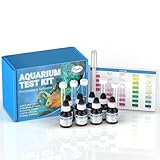
- 5-in-1 Master Test Kit: Monitor all 5 critical water parameters – pH, nitrite, nitrate, ammonia, and phosphate – in one comprehensive aquarium test kit. The rigorous analysis helps you maintain an ideal haven for your aquatic friends
- Freshwater & Saltwater Application: This aquarium water master test kit works perfectly for both freshwater and marine fish tanks. Precise color-matching charts are included – simply compare your water’s hue to the color swatches for instant results
- Enhanced Accuracy: Using professional liquid reagents, the aquarium water test kit delivers high accuracy that far exceeds traditional test strips. Get laboratory-quality results every time, safeguarding a stable and enjoyable fish tank environment
- Regular Testing: Complete with 265 measurements across all parameters – pH (100), nitrite (45), nitrate (50), ammonia (30), phosphate (40). This fish tank water testing kit supports months of consistent monitoring to keep your aquarium perfectly balanced
- Essential Fish Care: Your trusted solution to prevent fish loss from fatal ammonia, nitrite buildup, or pH imbalances! Proper water quality maintenance ensures your aquatic pets stay healthy and your plants thrive in optimal conditions
Keep them in a group with about two females per male. They reproduce readily, and larger males may chase timid tankmates. Their swimming activity and adult size make a long, spacious aquarium more suitable than a small starter tank.
7. Zebra danio
Zebra danios are hardy, energetic fish that tolerate a relatively broad temperature range of 17–27°C. They are shoaling fish, not solitary pets: keep six or more, and provide at least 45 liters for a small shoal of the smaller species.
Recommended Free Tools
Their constant movement is part of their appeal, but it can stress slow or timid fish. Danios may also nip fins or harass long-finned species such as bettas. Build a community around their activity level rather than adding them to a peaceful tank as an afterthought.
8. White cloud mountain minnow
White cloud mountain minnows are peaceful, undemanding shoaling fish that can live without a heater if the room stays consistently within their preferred 17–23°C range. Keep at least five; a larger group usually displays more natural behavior.
Use an aquarium of at least 45 liters for a small shoal. “Unheated” does not mean “unmonitored”: check the temperature during cold spells and heat waves, and avoid placing the tank near drafts or direct sunlight. Do not keep white clouds with large goldfish, which may eat them.
9. Harlequin rasbora
Harlequin rasboras are small, peaceful, and well suited to most standard community aquariums. Keep at least five, with groups of seven or more offering better social security when space permits. A 45-liter aquarium is the cited minimum for a shoal of smaller rasboras, with larger species requiring more room.
What’s actually slowing this PC down?
Pick the symptom - the matching free tool is one click away.
Also popular on Amazon

- Professional Quality Testing Kit: The AAwipes Aquarium test kit (25 strips) is developed by experts for fish enthusiasts. It offers 8-in-1 testing capabilities, made with high-quality fiber paper and non-bleeding colors. The kit measures key parameters like Free Chlorine, Nitrate, Nitrite, Hardness, Sodium Chloride, Total Alkalinity, pH and Ammonia nitrogen
- Versatile Use for Freshwater and Ponds: This aquarium water test kit is versatile and suitable for both freshwater and saltwater environments. It can be used in various aquariums, fish tanks, ponds, pools, and shrimp tanks, making it easy to monitor water quality and ensure your filter functions properly. Experts recommend testing your aquarium water at least twice a week to maintain optimal water quality
- Fast and Accurate Results: Get accurate results in minutes with just 3 steps: 1) Dip the test strip into water for 2 seconds for pads 1-7; dip pad 8 (Ammonia nitrogen) separately for 5 seconds. 2) Remove the strip without shaking off excess water. Hold horizontally for 30 seconds for pads 1-7, wait 180 seconds to read Pad 8 (Ammonia nitrogen). 3) Compare the colors to the chart for up to 99% accuracy and take necessary action
- Extended Shelf Life: The test strips are packaged in a well-sealed bottle to ensure they remain effective over time. This protects the strips from moisture and other environmental factors, ensuring you have reliable testing materials on hand when needed
- Convenient Use: With this kit, you can test your aquarium water at home without the need to send samples to a lab, saving you both time and money. Enjoy peace of mind knowing your aquarium water is balanced and safe without the stress or extra expense. By identifying potential issues, our fish tank testing kit helps prevent hidden water problems and ensures the safety and well-being of your fish
Maintain 22–27°C and choose calm tankmates. “Rasbora” is not a guarantee that every species suits a small aquarium: tiny Boraras rasboras can be eaten by larger fish and need appropriately sized companions.
10. Black skirt tetra
Black skirt tetras are included on established beginner-fish lists and share the generally peaceful, undemanding profile of many tetras. Keep a small shoal in at least 45 liters and maintain a stable temperature around 22–27°C.
Species and individual temperament matter. Larger or more boisterous tetras may nip fins or bother timid fish, so do not combine black skirts with delicate, slow-moving, long-finned species without checking compatibility. Their schooling behavior also means buying one or two is not an appropriate way to save space.
11. Corydoras catfish
Corydoras are peaceful bottom-dwelling community fish and a good option for a larger beginner aquarium. Keep at least five, and allow at least 80 liters for a shoal of smaller species. Different Corydoras species reach different adult sizes, so identify the species before planning the tank.
Use fine sand or smooth, rounded gravel rather than sharp substrate, which can damage their barbels as they forage. Corydoras are not disposable “cleaner fish”: they need sinking foods of their own and should never be expected to survive on leftovers from other fish.
Beginner mistakes that make easy fish difficult
- Adding fish immediately: A filled aquarium is not a cycled aquarium. Wait until ammonia and nitrite are zero.
- Choosing a bowl: Small volume means faster swings in temperature and water chemistry, with little room for effective filtration.
- Overlooking groups: Danios, minnows, rasboras, tetras, and Corydoras need companions. A single schooling fish is not an easier version of the species.
- Ignoring breeding: Guppies, Endlers, platies, mollies, and swordtails can produce fry repeatedly. Plan for the babies or choose a single-sex group.
- Stocking by the inch-per-gallon rule: That shortcut ignores adult size, swimming behavior, territory, filtration, social requirements, and compatibility.
- Buying goldfish for a small tank: Goldfish produce substantial waste. OATA recommends at least 100 liters for one adult, plus 50 liters for each additional adult.
How to choose from the list
- Decide whether you want one fish or a group. A solitary betta has different space and compatibility needs from a shoal of danios or Corydoras.
- Measure the aquarium’s actual capacity. Use the minimum for the adult species, not the juvenile fish currently in the store.
- Match temperature and temperament. White clouds prefer cooler water, while bettas, rasboras, and black skirt tetras need tropical conditions. Active danios are poor companions for placid, long-finned fish.
- Cycle and test before stocking. Set up the filter, condition the water, complete fishless cycling, and confirm zero ammonia and nitrite.
- Add fish gradually. Introducing a full stock at once can overwhelm the biological filter, even in a mature-looking aquarium.
- Keep a maintenance routine. Test water, remove uneaten food, inspect fish daily, and complete regular partial water changes.
For species-specific details, compare the care guidance from the RSPCA and the Ornamental Aquatic Trade Association before purchase.
Also popular on Amazon

- Professional Quality Testing Kit: The AAwipes Aquarium test kit (100 strips) is developed by experts for fish enthusiasts. It offers 8-in-1 testing capabilities, made with high-quality fiber paper and non-bleeding colors. The kit measures key parameters like Free Chlorine, Nitrate, Nitrite, Hardness, Sodium Chloride, Total Alkalinity, pH and Ammonia nitrogen.
- Versatile Use for Freshwater and Ponds: This aquarium water test kit is versatile and suitable for both freshwater and saltwater environments. It can be used in various aquariums, fish tanks, ponds, pools, and shrimp tanks, making it easy to monitor water quality and ensure your filter functions properly. Experts recommend testing your aquarium water at least twice a week to maintain optimal water quality.
- Fast and Accurate Results: Get accurate results in minutes with just 3 steps: 1) Dip the test strip into water for 2 seconds for pads 1-7; dip pad 8 (Ammonia nitrogen) separately for 5 seconds. 2) Remove the strip without shaking off excess water. Hold horizontally for 30 seconds for pads 1-7, wait 180 seconds to read Pad 8 (Ammonia nitrogen). 3) Compare the colors to the chart for up to 99% accuracy and take necessary action.
- Extended Shelf Life: The test strips are packaged in a well-sealed bottle to ensure they remain effective over time. This protects the strips from moisture and other environmental factors, ensuring you have reliable testing materials on hand when needed.
- Convenient Use: With this kit, you can test your aquarium water at home without the need to send samples to a lab, saving you both time and money. Enjoy peace of mind knowing your aquarium water is balanced and safe without the stress or extra expense. By identifying potential issues, our fish tank testing kit helps prevent hidden water problems and ensures the safety and well-being of your fish.
FAQ
What is the easiest fish for a first-time owner?
A single betta is often the most straightforward choice if you can provide at least a 20-liter filtered, heated, cycled aquarium. If you prefer a community tank, consider a properly sized group of guppies, white cloud mountain minnows, rasboras, or another suitable shoaling species.
Can a beginner keep fish in a bowl?
No. Bowls are difficult to filter and keep stable, and they provide limited swimming space and oxygen exchange. A small rectangular aquarium with a filter is safer and usually easier to maintain.
How long should I wait before adding fish to a new aquarium?
Cycle the aquarium first. The RSPCA says fishless cycling takes at least two weeks, but the calendar is less important than the test results: ammonia and nitrite should have risen and returned to zero before fish are added.
Which beginner fish should not be mixed together?
Avoid pairing active zebra danios with timid or long-finned fish, and do not place tiny Endlers or white cloud minnows with fish large enough to eat them. Never keep two male bettas together. Check the adult size, temperature, and temperament of every proposed tankmate.
The Bottom Line
Betta, guppies, Endlers, platies, mollies, swordtails, zebra danios, white cloud mountain minnows, harlequin rasboras, black skirt tetras, and Corydoras can all be beginner-friendly—but only in the right aquarium. The easiest fish to care for is the one matched to a cycled, filtered tank that is large enough for its adult size and social behavior.





Leave a Reply