Free tools Windows power users keep installed
One-click scans. No signup required.
Bull sharks are stocky coastal and estuarine sharks famous for being able to enter freshwater and travel far inland in major rivers. They bear live young, use low-salinity estuaries as nurseries, and eat a varied diet dominated by bony fishes and small sharks. Here are 11 reliable facts, with reported extremes and uncertain attack records clearly distinguished from what is known.
1. Their scientific name is Carcharhinus leucas
The bull shark is Carcharhinus leucas, a member of the requiem-shark family, Carcharhinidae. The scientific name identifies the species consistently even when common names vary by region. Read the Florida Museum’s bull-shark species profile.
| # | Preview | Product | Price | |
|---|---|---|---|---|
| 1 |

|
Hammerhead vs. Bull Shark (Who Would Win?) | $3.99 | Buy on Amazon |
| 2 |
|
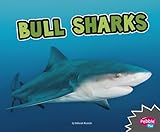
Bull Sharks (All About Sharks) | $9.99 | Buy on Amazon |
| 3 |

|
Bull Shark: The Story of a Dropout turned Doctor | $12.99 | Buy on Amazon |
| 4 |

|
1,000 Facts About Sharks | $9.10 | Buy on Amazon |
| 5 |

|
Bull Sharks (Shark Frenzy) | $21.99 | Buy on Amazon |
2. Their appearance matches their name
Bull sharks have a stout body, blunt rounded snout, small eyes, gray back, pale underside, and a large, triangular first dorsal fin. This combination can help distinguish them, though appearance alone may not be enough for reliable identification in murky water.
3. Maximum-size reports vary
Maximum-size figures depend on the source and individual record. The Florida Fish and Wildlife Conservation Commission gives an approximate maximum of 10–11 feet, while the Florida Museum profile reports a maximum length of about 400 centimeters, roughly 13 feet. These are source-specific upper-end reports, not typical adult lengths.
#1 Best Overall
| Source | Reported approximate maximum |
|---|---|
| Florida Fish and Wildlife Conservation Commission | 10–11 feet |
| Florida Museum of Natural History | About 400 cm (roughly 13 feet) |
4. They can travel far into freshwater
Bull sharks occur in tropical and subtropical coastal waters and can enter estuaries, lagoons, and rivers. The Florida Museum reports inland records about 3,700 kilometers (2,220 miles) up the Amazon in Peru and more than 3,000 kilometers (1,800 miles) up the Mississippi to Illinois. These are reported inland records, not evidence that bull sharks continuously occupy every stretch of those rivers or every freshwater location.
The species’ ability to move between marine and freshwater environments is unusual, but it does not mean bull sharks are simply river residents. The historical belief that Lake Nicaragua held a landlocked population was revised after researchers identified a connection to the ocean through rivers and estuaries.
5. They tolerate a wide range of salinities
Bull sharks can move between seawater and freshwater, including low-salinity estuaries. Their use of these different environments is part of what makes them distinctive among sharks. A freshwater record alone does not establish that an enduring local population lives there.
6. Estuaries and river mouths are important nurseries
Bull sharks use coastal and estuarine habitats, including shallow lagoons, river mouths, and low-salinity estuaries. These are common nursery habitats for young sharks. Their importance makes the condition of coastal wetlands and estuaries relevant to the species’ life cycle.
Rank #2
7. Their diet is varied, but not everything is equally common
Bony fishes and small sharks make up most of the diet described in the Florida Museum profile. Reported prey also include stingrays, turtles, seabirds, dolphins, and terrestrial mammals. These other prey are reports of what bull sharks may eat, not evidence that each is a staple food.
8. They bear live young
Bull sharks give birth to live young, which develop inside the mother and are nourished internally through a yolk-sac placenta. The Florida Museum profile reports one to thirteen pups and about 10–11 months of gestation; the IUCN assessment gives a litter range of 1–15, usually 6–8. These published summaries differ, so the ranges should be understood as source-specific. After birth, pups receive no parental care and must find food and avoid danger themselves.
9. Their attacks on people are real, but identification can be uncertain
Bull sharks have been implicated in serious unprovoked incidents, but individual shark species are not always easy to identify during an encounter. The Florida Museum profile reports that the International Shark Attack File attributes at least 100 unprovoked attacks and 27 fatalities historically to bull sharks. Counts may be affected by underreporting and misidentification, so they should not be treated as a precise measure of risk or as a basis for ranking species by danger.
The 1916 New Jersey attacks have not been conclusively assigned to a single species. Do not treat the famous historical account as definitive proof of bull-shark involvement. NOAA Ocean Service also notes that people are not part of most sharks’ natural diet; an encounter should not be described as deliberate human hunting. Read NOAA Ocean Service’s explanation of whether sharks hunt people.
10. Their global conservation category is Vulnerable
The IUCN Red List assessed bull sharks as Vulnerable in 2020. That assessment says a 30–49% population reduction over three generation lengths (55–80 years) is suspected, associated with habitat-quality decline and exploitation. This is an assessment estimate, not a direct current census; the assessment also cautions that some regional declines are not species-specific and the proportion of bull sharks within regional “whaler shark” groupings is unknown.
Fishing pressure, accidental capture, and degradation of habitat are conservation concerns. Local legal protections can differ, so the global category does not describe the rules in every country or region. Check the IUCN Red List assessment for the bull shark.
11. Their flexible habitat use can complicate conservation
Bull sharks use coastal waters, estuaries, lagoons, and rivers, while young sharks commonly use shallow estuarine nursery habitats. Protecting the species therefore involves more than offshore waters: connected rivers, river mouths, lagoons, and coastal habitats also matter.
Want to learn more?
A bull shark book can be a useful next step for children and general readers who want species-specific facts, photographs, maps, and explanations. For broader identification work, a shark field guide can help compare bull sharks with other coastal species. Check that any product link points to a real, relevant listing before recommending a particular title.
What’s actually slowing this PC down?
Pick the symptom - the matching free tool is one click away.
Rank #4
Frequently Asked Questions
Are bull sharks freshwater sharks?
No. They use coastal and estuarine habitats and can enter freshwater, but a record in a river does not prove that a resident population lives in every freshwater location.
How far inland have bull sharks been recorded?
The Florida Museum reports records about 3,700 kilometers (2,220 miles) up the Amazon in Peru and more than 3,000 kilometers (1,800 miles) up the Mississippi to Illinois. These are reported inland records, not evidence of continuous occupancy.
How big do bull sharks get?
Reported maxima vary by source: the Florida Fish and Wildlife Conservation Commission gives about 10–11 feet, while the Florida Museum reports a maximum length of about 400 centimeters, roughly 13 feet. Neither figure represents a typical adult.
What do bull sharks eat?
Bony fishes and small sharks make up most of the diet in the Florida Museum account. Other reported prey include stingrays, turtles, seabirds, dolphins, and terrestrial mammals.
The Tool Desk
Outbyte Driver Updater FREEScan for outdated or missing drivers - takes under a minuteDriver Scan →Outbyte PC Repair FREEClear out junk files and repair common Windows errorsFree Scan →Best Value
How many pups do bull sharks have?
Published summaries differ. The Florida Museum reports one to thirteen pups, while the IUCN assessment gives a range of 1–15, usually 6–8.
Are bull sharks endangered?
The IUCN Red List classified bull sharks as Vulnerable in its 2020 assessment. It reports a suspected 30–49% population reduction over 55–80 years, while noting uncertainty in the evidence.
The Bottom Line
Bull sharks are adaptable coastal and estuarine predators that can enter freshwater, bear live young, and use shallow estuaries as nurseries. Their reported river records are remarkable, but they do not prove continuous river occupancy; their diet is varied but mainly includes bony fishes and small sharks. The IUCN’s 2020 assessment classified the species as Vulnerable and estimated a suspected population reduction, with important caveats.
Quick Recap
Product prices and availability are accurate as of the date/time indicated and are subject to change. Any price and availability information displayed on Amazon at the time of purchase will apply.
Recommended Free Tools




