
Free tools Windows power users keep installed
One-click scans. No signup required.
Most avoidable saltwater fish deaths begin before a fish enters the tank: an immature biofilter, unmeasured water chemistry, excessive feeding, or a rushed introduction. The safest approach is to establish biological filtration, verify water with tests, match stocking to the system’s capacity, and isolate or acclimate arrivals carefully.
Use the 11 checks below as a pre-stocking and maintenance checklist. Exact targets and schedules vary with species, tank volume, source water, temperature, equipment, and whether the aquarium is a fish-only, reef, or research-style system.
As an Amazon Associate I earn from qualifying purchases.
What must be true before you add a saltwater fish
Fish excrete ammonia, and uneaten food and decaying material add more. In an established biological filter, microbial communities convert ammonia to nitrite and then nitrate. A new aquarium may contain too few of those microbes to process a normal fish load, so ammonia or nitrite can rise to dangerous levels even when the water looks clear.
Start with a fishless cycle whenever possible. Merck Veterinary Manual describes adding an ammonia source, testing regularly, and waiting until ammonia and nitrite are no longer present under the cycling method being used. Introducing fish gradually can still produce high ammonia or nitrite and can be inhumane if the filter is not ready.
#1 Best Overall

- 𝗛𝗼𝗺𝗲 𝗔𝗾𝘂𝗮𝗿𝗶𝘂𝗺 𝗪𝗮𝘁𝗲𝗿 𝗧𝗲𝘀𝘁 𝗞𝗶𝘁 - Ensure the health of your fish with aquarium water testing kit & ammonia test strips for fish tank. This complete freshwater & saltwater tank test kit provides a reliable water tester for ammonia, pH, iron, chlorine, total hardness (GH), carbonate, nitrate, nitrite, total alkalinity, copper, and temperature, allowing you to have a complete understanding of your aquarium water quality. Trusted by fish enthusiasts, it adapts to your needs, making it an essential tool for aquarium care.
- 𝗔𝗰𝗰𝘂𝗿𝗮𝘁𝗲 & 𝗙𝗮𝘀𝘁 𝗧𝗲𝘀𝘁𝗶𝗻𝗴 𝗥𝗲𝘀𝘂𝗹𝘁𝘀 - Our aquarium water test strips deliver reliable results. Each fish tank water testing kit comes with easy-to-read color charts. This fish tank test strips are highly sensitive, detecting low levels of impurities and foreign substances in aquarium water. Our aquarium water quality tester helps prevent any invisible water problems.
- 𝗜𝗻𝘀𝘁𝗮𝗻𝘁 𝗛𝗼𝗺𝗲 𝗧𝗲𝘀𝘁𝗶𝗻𝗴—𝗡𝗼 𝗧𝗿𝗶𝗽𝘀 𝘁𝗼 𝘁𝗵𝗲 𝗦𝘁𝗼𝗿𝗲 - Testing 11 key parameters in your aquarium is easier than ever with just one kit. Just dip the strip in water and use the provided color chart for instant, reliable results. Say goodbye to frequent trips to pet stores because now you have our home water test kit with the ability to monitor your aquarium's water quality in the comfort of your own home.
- 𝗧𝗲𝘀𝘁 𝗦𝗺𝗮𝗿𝘁𝗲𝗿 𝘄𝗶𝘁𝗵 𝗘𝘅𝘁𝗲𝗻𝗱𝗲𝗱 𝗦𝗵𝗲𝗹𝗳 𝗟𝗶𝗳𝗲 𝗦𝘁𝗿𝗶𝗽𝘀 - Our aquarium test kit contains 150 test strips for aquarium fish tank: 50 strips in a bottle and 100 in a separate bags to maintain freshness. Once opened, it's recommended to use the strips within 3 months for maximum accuracy of the fish water testing kit. These water testing strips allow regular water quality checks without using all water test strips at once.
- 𝗩𝗲𝗿𝘀𝗮t𝗶𝗹𝗲 𝗪𝗮𝘁𝗲𝗿 𝗧𝗲𝘀𝘁𝗶𝗻𝗴 𝗞𝗶𝘁 𝗳𝗼𝗿 𝗔𝗹𝗹 𝗔𝗾𝘂𝗮𝘁𝗶𝗰 𝗡𝗲𝗲𝗱𝘀 - Our Aquarium water quality test kit is designed to cater to a wide range of aquariums including saltwater aquariums, freshwater fish tanks, betta fish tank, and fish ponds. Our hard water test kit can be used to test the water quality effectively, which ensures that you can maintain optimal water conditions in different aquarium setups.
| Timing information | What it actually means |
|---|---|
| Three to four weeks | UF/IFAS estimate for cycling its specific marine-aquarium project setup; not a guarantee for every home tank. |
| Three to eight weeks at 25–27 °C (77–81 °F) | UF/IFAS range for establishing nitrifying bacteria in specified warm recirculating-aquaculture systems; cooler water can take longer. |
| Up to eight weeks | Merck’s general statement for establishment of a biofilter in a tropical fish tank; it is not a marine-specific promise. |
Because these figures come from different systems, a calendar cannot certify your aquarium. Test the water and confirm that the filter can process its intended load before stocking.
The 11 mistakes to avoid
1. Adding fish before the biofilter is ready
A fishless cycle lets bacteria develop without exposing fish to the initial ammonia and nitrite spike. Add an appropriate ammonia source, test ammonia, nitrite, and nitrate on a schedule, and follow the instructions for the cycling method and test kit. The practical finish line is test evidence: ammonia and nitrite should be absent under the method you used, not merely a tank that has run for a certain number of days.
When you eventually stock, add a modest first load and observe the readings before adding more. A filter that handles one small fish may not immediately handle several fish, heavy feeding, or a large-bodied species.
Quick wins for a faster PC:
Scan for outdated or missing drivers - takes under a minuteDriver Scan →Repair Windows errors before they cause bigger problemsFix Now →Fix the driver behind crashes, sound loss and screen glitchesFind Drivers →2. Treating a calendar as proof that cycling is complete
Three weeks, six weeks, or eight weeks can all be reasonable estimates in particular conditions, yet none is a universal schedule. Temperature, oxygenation, surface area, bacterial seeding, pH, salinity, and the amount of ammonia supplied affect the process. Cooler systems may take longer than the warm recirculating systems described by UF/IFAS.
Use elapsed time only as a reminder to test. If ammonia or nitrite is detectable, do not add livestock simply because the tank has reached a target date. Record results so you can see whether each test shows a stable trend rather than relying on one apparently good sample.
Rank #2

- [DIGITAL AQUARIUM WATER TEST KIT – APP-ENABLED 10-IN-1 FRESHWATER & SALTWATER FISH TANK TEST KIT]: Test aquarium water with this all-in-one digital aquarium water test kit, fish tank test kit, and freshwater aquarium test kit. Measure ammonia, nitrate, nitrite, pH, GH, KH, chlorine, and more for freshwater aquariums, saltwater aquariums, reef tanks, shrimp tanks, and fish tanks. Scan each aquarium test strip with the DROPLYTIX app for fast digital results without comparing colors to printed charts.
- [FOR ALL AQUARIUM TYPES – FRESHWATER, SALTWATER, REEF, BETTA, SHRIMP, TURTLE & AXOLOTL]: This fish tank water testing kit works with freshwater fish tanks, saltwater aquariums, reef aquariums, planted aquariums, shrimp tanks, betta tanks, turtle aquariums, axolotl tanks, nano aquariums, and aquarium starter kits. Compatible with 5-gallon, 10-gallon, 20-gallon, and 30-gallon fish tanks. Ideal for aquarium maintenance kits, aquarium cleaning routines, and routine water testing.
- [FAST RESULTS – DIGITAL AQUARIUM TEST STRIPS WITH NO COLOR GUESSING]: Replace traditional ammonia test kits, pH drops, and manual color charts with digital aquarium test strips and fish tank test strips. Simply dip, scan, and receive detailed results for ammonia, nitrite, nitrate test strips, pH balance, GH, KH, chlorine, and aquarium water quality. Ideal for fish tank water quality testing, planted aquariums, aquarium cycling, and accurate aquarium water test results.
- [COMPLETE AQUARIUM WATER TESTING FOR HEALTHIER FISH & STABLE WATER]: Monitor the most important aquarium water parameters to help maintain balanced conditions for tropical fish, freshwater fish, saltwater fish, shrimp, snails, corals, and reef aquariums. This master aquarium test kit provides detailed monitoring of pH, ammonia, nitrate, nitrite, hardness, GH, KH, and chlorine for beginner and advanced aquarium hobbyists using digital aquarium testers and water quality test kits.
- [COMPLETE AQUARIUM TEST STRIP KIT – DIGITAL WATER TESTING AT HOME]: Everything needed to monitor aquarium water quality in one app-powered aquarium water test kit. Use as a betta fish test kit, freshwater test kit, freshwater aquarium test kit, reef aquarium water tester, fish tank test kit, or fish tank water testing kit. Ideal for aquarium cycling, water changes, routine aquarium maintenance, GH/KH test kits, saltwater master test kits, nitrate/nitrite test kits, aquarium test strips, and digital aquarium testers.
3. Testing only when a fish looks sick
Fish can be in trouble before they show obvious signs. Ammonia and nitrite are urgent indicators during cycling and after changes in stocking or feeding. Depending on the system, also monitor salinity, pH, nitrate, and temperature. Keep a written or digital log with the date, result, and any maintenance performed.
Testing frequency should follow the aquarium’s maturity and risk. UF/IFAS’s beginner project guide suggests checking its listed parameters at least every four weeks, while Oregon State’s quarantine husbandry procedures call for daily documentation for at least the first week after arrivals in its managed research context. The longer interval is not a blanket schedule for a new home aquarium; test more often when a tank is cycling, newly stocked, recently treated, or showing abnormal behavior.
The Tool Desk
Outbyte Driver Updater FREEScan for outdated or missing drivers - takes under a minuteDriver Scan →Outbyte PC Repair FREERepair Windows errors before they cause bigger problemsFix Now →4. Overfeeding
Food that is not eaten becomes part of the nitrogen load as it decomposes. UF/IFAS links overfeeding in established systems with toxic ammonia or nitrite when the biofilter cannot keep up. Feed an amount appropriate for the species and remove visible excess rather than following an arbitrary universal portion rule.
Watch what reaches the fish and what falls into the rock or substrate. If food remains after the feeding response has ended, reduce the next offering and improve removal. Reassess feeding after adding fish because the total load, not just the number of mouths, determines how much waste the system must process.
5. Stocking too many fish, too quickly
Biofilters have finite capacity. Fish load and feeding rate are major drivers of ammonia and nitrite, and crowding can also increase aggression, oxygen demand, and disease pressure. Select fish by adult size, behavior, compatibility, diet, and environmental requirements, then compare that load with the actual volume, filtration, flow, and aeration of your aquarium.
Rank #3
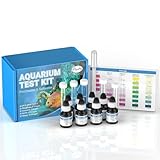
- 5-in-1 Master Test Kit: Monitor all 5 critical water parameters – pH, nitrite, nitrate, ammonia, and phosphate – in one comprehensive aquarium test kit. The rigorous analysis helps you maintain an ideal haven for your aquatic friends
- Freshwater & Saltwater Application: This aquarium water master test kit works perfectly for both freshwater and marine fish tanks. Precise color-matching charts are included – simply compare your water’s hue to the color swatches for instant results
- Enhanced Accuracy: Using professional liquid reagents, the aquarium water test kit delivers high accuracy that far exceeds traditional test strips. Get laboratory-quality results every time, safeguarding a stable and enjoyable fish tank environment
- Regular Testing: Complete with 265 measurements across all parameters – pH (100), nitrite (45), nitrate (50), ammonia (30), phosphate (40). This fish tank water testing kit supports months of consistent monitoring to keep your aquarium perfectly balanced
- Essential Fish Care: Your trusted solution to prevent fish loss from fatal ammonia, nitrite buildup, or pH imbalances! Proper water quality maintenance ensures your aquatic pets stay healthy and your plants thrive in optimal conditions
The general “one inch of fish per gallon” rule is not a marine stocking formula and does not account for body mass, activity, territorial behavior, or saltwater oxygen demand. CDC guidance likewise emphasizes researching tank size, compatibility, food, and environmental needs before choosing fish. Add livestock in stages, allowing test results and fish behavior to demonstrate that the system is coping.
What’s actually slowing this PC down?
Pick the symptom - the matching free tool is one click away.
6. Letting salinity creep upward during top-offs
Evaporation removes water but leaves dissolved salt behind. If you replace that lost volume with saltwater, salt accumulates and salinity rises. UF/IFAS advises replacing evaporated water with fresh reverse-osmosis water in its marine project guidance.
Measure salinity with a suitable instrument instead of judging it by water level or taste. Top-off water replaces evaporation; a prepared saltwater change replaces water that you intentionally remove. The correct salinity range depends on the species and system design, so follow a species-appropriate target and keep it stable.
7. Using an unsuitable water source or salt
Untreated tap water can contain chemicals or minerals that complicate marine water chemistry, while collected natural water can carry contaminants or organisms. Source-water composition varies by location, so do not assume that water is safe because it is clear. UF/IFAS recommends reverse-osmosis saltwater for its project, while Merck recognizes both natural seawater and an artificial sea-salt product for adjusting marine salinity.
The important choice is a reliable source that you can prepare consistently and verify after mixing. Use a marine formulation appropriate to the system, mix it according to its instructions, allow it to reach the intended temperature, and measure the finished water before use. No single source is universally required for every species or aquarium.
Rank #4
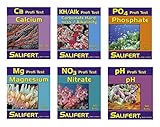
- Six Salifert Professional Test Kits
- Includes Calcium, Nitrate, Phosphate, pH, Alkalinity & Magnesium
- Includes all the Core parameters of any Saltwater Aquarium/Marine Reef Tank
8. Making abrupt or guess-based changes
Rapid shifts in salinity, temperature, pH, or other chemistry can stress fish. Before a water change or correction, test both the aquarium and replacement water, then match temperature and salinity as closely as the system’s protocol requires. Make adjustments deliberately and document what changed.
Do not respond to an abnormal reading by adding several unmeasured products at once; you may obscure the cause or create a second problem. Ammonia toxicity is influenced by pH and temperature, so a suspected spike deserves careful testing and qualified advice rather than a simplistic one-size-fits-all water-change claim. Seek an aquatic veterinarian or experienced professional when fish are ill or results remain abnormal.
9. Skipping acclimation or pouring transport water into the display
Transport water and aquarium water rarely match perfectly, and the bag may contain waste or germs. CDC general guidance describes floating a sealed bag to bring the fish toward the aquarium’s temperature and limiting the amount of bag water transferred into the home aquarium.
Use the seller’s or veterinarian’s instructions when a species, long shipment, or unusual temperature difference requires a different protocol. Keep the transfer controlled, avoid dumping the shipping water into the display, and move the fish with as little handling and exposure as practical.
Recommended Free Tools
10. Putting new or sick fish straight into the display
A second aquarium gives new arrivals a place for observation and gives sick fish a way to be isolated without exposing established livestock. CDC recommends a separate aquarium for new fish before introduction or for isolating illness. Oregon State’s quarantine procedures also use dedicated, labeled tools to reduce cross-contamination between systems.
Best Value

- 5-in-1 Master Test Kit: Monitor all 5 critical water parameters – pH, nitrite, nitrate, ammonia, and phosphate – in one comprehensive aquarium test kit. The rigorous analysis helps you maintain an ideal haven for your aquatic friends
- Freshwater & Saltwater Application: This aquarium water master test kit works perfectly for both freshwater and marine fish tanks. Precise color-matching charts are included – simply compare your water’s hue to the color swatches for instant results
- Enhanced Accuracy: Using professional liquid reagents, the aquarium water test kit delivers high accuracy that far exceeds traditional test strips. Get laboratory-quality results every time, safeguarding a stable and enjoyable fish tank environment
- Regular Testing: Complete with 365 measurements across all parameters – pH (200), nitrite (45), nitrate (50), ammonia (30), phosphate (40). This fish tank water testing kit supports months of consistent monitoring to keep your aquarium perfectly balanced
- Essential Fish Care: Your trusted solution to prevent fish loss from fatal ammonia, nitrite buildup, or pH imbalances! Proper water quality maintenance ensures your aquatic pets stay healthy and your plants thrive in optimal conditions
Quarantine duration, observation criteria, and any medication depend on the species, origin, symptoms, and disease risk; there is no single duration or drug schedule that fits every marine fish. Keep nets, siphons, buckets, and other tools assigned to the quarantine system, and never return untreated water to the display.
11. Ignoring equipment and ongoing stability
A stable aquarium depends on functioning filtration, pumps, circulation, heating, and suitable aeration. CDC lists filters and pumps among basic setup considerations. UF/IFAS notes that inadequate flow or aeration can contribute to dissolved-oxygen problems in recirculating systems, while biofilter capacity is tied to the load placed on it.
Build an equipment check into routine care: confirm that pumps are running, intakes are clear, water is moving through biological media, heaters and thermometers agree, and alarms or backup plans work. Inspect equipment after power interruptions, cleaning, or unusual noise. System-specific flow and oxygen requirements vary, so follow the needs of the species and the design rather than assuming one pump setting is adequate.
Practical choices that reduce risk
Fishless cycling versus adding fish to start a cycle
| Approach | Benefit | Main risk or limitation |
|---|---|---|
| Fishless cycling | Builds biological capacity without exposing fish to the initial ammonia and nitrite rise; supported as the safer default by Merck. | Requires an ammonia source, repeated testing, and patience; completion is demonstrated by results, not a fixed number of days. |
| Starting with fish | Can introduce a living ammonia source immediately. | If the filter is immature or the load is too large, ammonia or nitrite can rise and harm fish; stocking must be extremely conservative and closely monitored. |
Natural seawater versus artificial marine salt
| Option | What to verify |
|---|---|
| Natural seawater | Collection or supplier reliability, contamination risk, salinity, temperature, and suitability for the species and system. |
| Artificial marine salt product | Correct mixing, source-water quality, temperature, salinity, and consistency between batches. |
Merck recognizes both options for marine salinity adjustment. The dependable choice is the one you can obtain, prepare, and measure consistently for your aquarium.
Home testing versus a store test service
UF/IFAS’s project guidance mentions using a home test kit or having a store test the water. A store test can be useful when you lack equipment or want a second reading, but it does not replace a schedule you can follow after stocking, feeding changes, or emergencies. Whichever route you use, record ammonia, nitrite, and the other parameters relevant to your system and act on abnormal results before adding more fish.
Dedicated quarantine versus direct introduction
A separate quarantine aquarium requires extra space, water preparation, filtration, and dedicated tools, but it limits the chance that a new arrival exposes the display. Direct introduction is simpler and cheaper in equipment, yet it removes that observation and isolation step. For valuable, vulnerable, or disease-exposed fish, the separation option provides a more controlled risk boundary.
A maintenance routine that catches problems early
- Before stocking: Complete a fishless cycle, test ammonia and nitrite, and confirm that temperature and salinity are stable for the intended species.
- When selecting fish: Check adult size, compatibility, diet, habitat, and tank-volume requirements; plan the final load rather than buying fish one at a time without a capacity estimate.
- At every feeding: Observe the feeding response, remove excess food, and adjust the next portion to the fish and system rather than a generic rule.
- Between water changes: Replace evaporation with fresh water, not saltwater, and measure salinity regularly.
- For each arrival: Acclimate temperature carefully, keep transport water out of the display, and use a separate quarantine system when appropriate.
- After any change: Retest when stocking, feeding, equipment, or water chemistry changes; investigate ammonia or nitrite immediately.
- Every inspection: Check pumps, filtration, flow, aeration, heater operation, intakes, and backup arrangements, especially after an outage.
When a reading or fish suddenly looks wrong
- Ammonia or nitrite detected: Stop adding livestock and feeding heavily, verify the result with a properly used test, inspect filtration and flow, and seek qualified help for a response appropriate to the species and chemistry.
- Salinity higher than expected: Check whether saltwater was used for evaporation top-off, measure the replacement water, and correct the system gradually according to species-appropriate guidance.
- New fish is lethargic or breathing rapidly: Check temperature, salinity, ammonia, nitrite, and oxygenation; move the fish to an appropriate isolation system if disease or exposure is possible.
- Equipment stops: Restore circulation and aeration safely, check for blocked intakes or power issues, and retest water after the system has stabilized.
Healthy-looking water is not proof of safe water. The combination of a mature biofilter, measured chemistry, restrained stocking and feeding, controlled acclimation, quarantine, and functioning equipment is what prevents the common failures that kill saltwater fish.
Do these 3 things before closing this tab:
1Scan for outdated or missing drivers - takes under a minute2Repair Windows errors before they cause bigger problems3Fix the driver behind crashes, sound loss and screen glitchesQuick Recap
Product prices and availability are accurate as of the date/time indicated and are subject to change. Any price and availability information displayed on Amazon at the time of purchase will apply.





Leave a Reply