
Free tools Windows power users keep installed
One-click scans. No signup required.
No dog breed is proven to “absolutely hate” water. Breed anatomy can make swimming tiring, cold or unsafe, but individual experience matters more than a label: even some retrievers dislike swimming. A 2017 PetMD veterinary article identified nine breeds that may be less enthusiastic or less naturally capable in water. Three more breeds are included here only as contextual examples mentioned in that discussion, not as part of a scientific ranking of 12.
Use this list to plan a cautious introduction, not to test whether your dog can swim by putting it in deep water. A dog that is anxious, struggling to breathe, shivering or trying to escape should be removed immediately.
As an Amazon Associate I earn from qualifying purchases.
What “hate water” can—and cannot—mean
The phrase is useful shorthand, but it combines several different situations. A dog may dislike the sensation of a wet coat, fear an unpredictable drop-off, become chilled quickly, or be physically unsuited to sustained paddling. Those are different from a permanent breed-wide aversion.
Recommended Free Tools
PetMD’s article, published September 1, 2017, is an editorial explanation from veterinary rehabilitation professionals, not a controlled study measuring breed preferences. It names nine examples and gives possible reasons involving breathing, body shape, coat insulation, ears and prior experience. The article also mentions Boston Terriers, Pomeranians and Yorkies in related health discussions; they are included below as possible tendencies, not validated entries in a ranked list.
#1 Best Overall

- Dog Life Jacket: Maximum-buoyancy vest for large dogs (28–32" girth) of all swimming skill levels; supports without restricting movement; ideal for pool, lake, beach, or boat
- Secure, Easy Fit: Instant security with adjustable straps and quick-release buckles for easy on/off; see size chart and fitting video for guidance
- Durable & Lightweight: Ripstop material with thick foam padding and reinforced stitching for long-lasting comfort and strength
- Head Support & Rescue Handle: Front float helps support the head and neck; strong top safety handle for lifting and assisting your dog in an emergency
- High Visibility: Bright color with reflective accents for easily spotting your dog in low light and in all types of water, from pools to lakes
Breed is therefore a starting point for risk assessment. Your dog’s age, fitness, airway, joints, coat, previous exposure and the type of water all matter. A calm, healthy dog from a less water-oriented breed may enjoy a shallow stream, while an individual from a swimming breed may refuse every lake.
The 12 breeds and the factor that may make water difficult
| Breed | Primary factor to consider | Evidence status |
|---|---|---|
| Pug | Short muzzle and breathing effort | PetMD example |
| French Bulldog | Short muzzle and keeping the face clear of water | PetMD example |
| Dachshund | Long body, short legs and sudden depth changes | PetMD example |
| Greyhound | Swimming is not generally a strong point | PetMD example |
| Chinese Crested | Little insulation and cold sensitivity | PetMD example |
| Shih Tzu | Wet ears, long coat and individual tolerance | PetMD example |
| Basset Hound | Difficulty maintaining a horizontal position | PetMD example |
| Maltese | Breathing demands, especially with possible tracheal weakness | PetMD example |
| Doberman | Deep chest and body position in the water | PetMD example |
| Boston Terrier | Brachycephalic breathing considerations | Contextual mention, not a ranked entry |
| Pomeranian | Possible tracheal problems in some dogs | Contextual mention, not a ranked entry |
| Yorkshire Terrier | Possible tracheal problems in some dogs | Contextual mention, not a ranked entry |
Pug
A Pug’s short muzzle can make breathing harder during exertion. Swimming requires continuous effort and leaves little opportunity to pause, so a Pug that pants heavily or struggles on land may become distressed quickly in water. Keep any exposure shallow and brief, and obtain veterinary advice before swimming if your dog has noisy breathing, exercise intolerance or a diagnosed airway problem.
French Bulldog
French Bulldogs are another short-snouted breed for which breathing and head position deserve priority. The rehabilitation specialist quoted by PetMD cautioned that the dog’s face should be supported above the water. Never assume a French Bulldog can keep its nose and mouth clear while paddling; a flotation aid does not replace your hand, close supervision or a veterinarian’s assessment.
What’s actually slowing this PC down?
Pick the symptom - the matching free tool is one click away.
Dachshund
A Dachshund has a long body and short legs, a combination that can make efficient paddling and staying level more difficult. A steep pool wall or a sudden drop from shallow to deep water can also be frightening because the dog may lose contact with the bottom without warning. Start where all four feet remain supported and provide an obvious, low-effort exit.
Greyhound
Some Greyhounds swim comfortably, but PetMD describes swimming as generally not their strong point. The same discussion notes that other sighthounds, including Afghan Hounds, Whippets and Salukis, may also be less enthusiastic. A Greyhound’s willingness on one occasion is not proof of endurance; keep sessions short and watch for fatigue rather than waiting for the dog to fail.
Chinese Crested
Chinese Cresteds may have little or no insulating hair, so water can feel cold quickly. Chilling can occur even when the air seems warm, particularly after the dog exits and remains wet. Use warm, shallow exposure, end the session at the first sign of shivering, and dry the dog thoroughly. Hairless and coated varieties can differ, so assess the individual rather than assuming identical tolerance.
Rank #2

- Dog Life Jacket: Maximum-buoyancy vest for medium dogs (21–27" girth) of all swimming skill levels; supports without restricting movement; ideal for pool, lake, beach, or boat
- Secure, Easy Fit: Instant security with adjustable straps and quick-release buckles for easy on/off; see size chart and fitting video for guidance
- Durable & Lightweight: Ripstop material with thick foam padding and reinforced stitching for long-lasting comfort and strength
- Head Support & Rescue Handle: Front float helps support the head and neck; strong top safety handle for lifting and assisting your dog in an emergency
- High Visibility: Bright color with reflective accents for easily spotting your dog in low light and in all types of water, from pools to lakes
Shih Tzu
Some Shih Tzus dislike wet ears or the weight and drag of a long coat. Moisture around the ears can also be irritating after swimming. PetMD notes that other Shih Tzus participate in water therapy, illustrating why the breed name cannot predict a single response. Keep hair managed so it does not obstruct vision, and stop if your dog repeatedly shakes, paws at its ears or tries to climb out.
Basset Hound
A Basset Hound’s proportions may make it harder to maintain a horizontal swimming position. The dog can tire while trying to keep its head up, especially in deeper water. A shallow area with a non-slip surface is safer for initial exposure than a lake or pool. If the dog cannot keep its nose comfortably above the surface, end the attempt rather than trying to “teach” a stronger stroke.
Maltese
The PetMD discussion raises possible weakened tracheas in older Maltese and notes that swimming places extra demands on breathing. Age, cough, airway noise and reduced stamina are reasons to seek veterinary clearance before any water activity. A Maltese that is healthy on a walk may still find continuous paddling exhausting, so use very short sessions and frequent rests on land.
Doberman
The rehabilitation specialist quoted by PetMD identified deep-chested dogs such as Dobermans as potentially less able to maintain a horizontal position. The dog may expend energy simply keeping its front end up. Do not use a deep pool as a first lesson. If a veterinarian approves swimming, choose calm, shallow water and an easy exit, with an adult close enough to provide physical support.
Boston Terrier
Boston Terriers appear in PetMD’s broader discussion of brachycephalic dogs rather than its nine-breed list. Their short muzzle means the same breathing question applies: can this individual exercise without respiratory distress, and can it keep its airway clear while paddling? Treat the breed as a reason for caution, not as proof that your dog dislikes water.
Do these 3 things before closing this tab:
1Repair Windows errors before they cause bigger problems2Scan for outdated or missing drivers - takes under a minute3Clear out junk files and repair common Windows errorsPomeranian
Pomeranians are mentioned in connection with possible tracheal problems. A dog with a cough, gagging, a “goose-honk” sound or a history of airway disease should be examined before strenuous swimming. Because this is a health-based concern rather than a documented water preference, a healthy Pomeranian may enjoy carefully managed play while another may avoid it.
Rank #3

- Unrestricted Movement: Designed with a ‘sports’ concept, the VIVAGLORY patented dog life vest opens up more around the neck and front chest. It doesn’t restrict your dog’s movement and avoids contact near the armpits and belly, preventing rubbing against your pup’s skin. Ideal for most breeds, especially those with broader or deeper chests, this dog swimming vest offers unmatched comfort during swimming and boating adventures
- Superior Buoyancy: This dog lifejacket features evenly distributed buoyancy with ultra-buoyant foam covering under the neck, top, and sides. Supporting your dog's entire body, this dog floating vest helps them doggy paddle confidently and easily in any water setting—perfect for both experienced swimmers and beginners, whether in pools, lakes, or at the beach
- Boosted Safety: Equipped with a sturdy handle and D-ring, this puppy life jacket allows for easy restraint and quick rescue if your puppy falls overboard or swims too far. Reflective strips and bright colors increase visibility, ensuring your doggy life jacket is easy to spot even in low-light conditions. The soft mesh belly band dries quickly for comfort, while adjustable straps with weight-bearing buckles guarantee a secure fit
- Built to Last: Made from ripstop Oxford material that passed the CA65 test, this dog lifevest is durable enough for swimming, boating, floating, and paddle boarding. Reinforced stitching and a comfortable lining ensure long-lasting performance. Whether it's your first trip or a frequent outing, this dog flotation vest is designed to handle repeated water adventures. NOTE: Always supervise your dog during water activities, even when wearing the dog lifejacket
- Universal Fit: The secure hook-and-loop fastening and adjustable buckled straps at the neck and belly of the dog swim vest provide a custom fit for your puppy. Putting the dog water vest on takes seconds. For best fit, measure the widest part of your dog’s ribcage and check the VIVAGLORY sizing chart
Yorkshire Terrier
Yorkies are likewise mentioned in relation to possible tracheal weakness. Their small size can also make cold exposure and fatigue develop quickly. Keep water shallow, warm and controlled, and do not interpret frantic paddling as enjoyment; it may be an effort to reach safety.
How to tell whether your individual dog is comfortable
Watch the whole body, not just whether the dog moves its legs. Relaxed dogs generally choose to approach, keep a loose posture and can turn toward you or an exit. Concern signs include a tucked tail, stiff posture, wide eyes, repeated attempts to climb out, frantic splashing, freezing, excessive panting, coughing or vocalizing. Shivering after leaving the water indicates that the session has gone on too long or the dog is too cold.
Previous experience changes behavior. A dog that slipped into a pool, was sprayed unexpectedly or was forced into water may associate the setting with danger. Conversely, gentle exposure at a comfortable depth can build confidence. Do not punish avoidance; it removes the warning signal without solving the fear.
Introduce water safely: a step-by-step plan
- Check health first. Ask your veterinarian for guidance if the dog is short-nosed, elderly, overweight, coughing, exercise-intolerant, recovering from illness or has heart, airway, joint or neurologic disease.
- Choose controlled water. Begin with a quiet, warm, shallow area with a textured surface and a visible exit. Avoid currents, waves, cold water and slippery edges for the first sessions.
- Let the dog investigate on land. Reward calm behavior near the water. Do not drag, chase or throw the dog in; Dr. Tari Kern of Pawsitive Steps Rehabilitation & Therapy for Pets told PetMD, “If you throw them in, they’re going to hate water.”
- Allow voluntary contact. Let the dog touch the water with one paw, then step back. Progress only when the dog remains loose and willing. A hose, bath or paddling pool is not automatically easier; the dog still controls the pace.
- Support before depth increases. If the dog chooses to move farther in, keep one hand ready under the chest or torso and keep the head and airway clear. Never test swimming ability by releasing a struggling dog.
- Keep the first session very short. End while the dog is still calm, then dry and warm it. Several easy exposures are safer than one long attempt.
- Increase difficulty one variable at a time. Only after the dog is relaxed in shallow water should you consider a little more depth, distance or movement. Stop immediately if stress appears.
Dr. Christina Fuoco of WAG: Whole Animal Gym summarized the principle for PetMD: “Defer to the pet.” A dog that consistently declines is giving you useful information; there is no welfare benefit in making it swim.
Independent reader supportYour contribution helps us test, update, and keep practical guides available for everyone.Life jackets, supervision and the environment
A canine life jacket can provide flotation support during supervised exposure, particularly for dogs with unusual proportions or limited endurance. PetMD does not claim that a jacket makes every dog safe or turns a reluctant dog into a swimmer. Choose a properly fitted device that does not restrict breathing or movement, keep your hand or leash control available, and remain within reach. No specific brand, model or universal fit standard is established here.
Supervise every dog, including experienced swimmers. Pools need a reliable exit such as steps or a ramp; many dogs can swim but cannot find a way out. In natural water, account for currents, undertows, drop-offs, submerged branches, boat traffic and water quality. Rinse coats after contaminated or salty water, dry the ears and coat, and prevent the dog from drinking large amounts of pool or natural water.
Rank #4
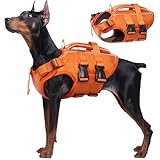
- 【Dog lifejacket Size】XS, S, M, L, XL, XXL fits most breeds furry friend,our size of dog life vest for swimming has been strictly measured. Chest girth is the key measurement, choose the smaller size if between two. Ideal for small dog life jacket, large dog life jacket, medium dog life jacket, and pet life jacket needs
- 【High Flotation Dog Swim Vest】This dog vest for swimming consist of ripstop Oxford & Polyester cloth, and high-density pearl cotton foam, which offers the dog swim vest great flotation support. Dog swimsuit gives dog additional safety and endurance in the water. Perfect as dog life vest for swimming, dog pool float, or dog swim vest for safe water fun
- 【Safe & Protective Dog life Vest】Dog swimming vest has a sturdy handle for quick rescue, which helps keep your pet safer in the water. The biggest role of the life safe vest is assist the dog to swim, reduce the amount of movement of the hind legs, helps reduce strain on the hind legs. Suitable for dog life vests for boating, dog life jackets for large breeds, and small dog life vest for swimming
- 【Adjustable Dog Swimming Vest】The dog life jackets belly and neck are designed with sturdy adjustable nylon straps and double-row quick-release buckles with hook & loop panels to provide double security for your dog. These designs make the dog water vest is easy to put on and take off. Works for dog swim vest, dog water vest, dog life vest with handle, and dog life jacket small or large
- 【Reflective Dog Safety Vest】 Kuoser dog flotation vest with bright colors and reflective strips can help you better notice your dog's position. Ideal for dog beach essentials, dog pool floats for small dogs, dog pool float for large dogs, and other outdoor water activities. Make swimming, boating, and pool time safer and more enjoyable for your furry friend
When swimming should be avoided or stopped
- Breathing is noisy, labored or repeatedly interrupted by coughing.
- The dog cannot keep its nose and mouth comfortably above the surface.
- It becomes frantic, freezes, tries to escape or stops responding to cues.
- Shivering, weakness, pale or bluish gums, collapse or unusual fatigue appears.
- The water is cold, fast-moving, polluted or too deep for a controlled exit.
- A veterinarian has restricted strenuous exercise or the dog has an unresolved medical condition.
Remove the dog calmly, warm and dry it, and seek urgent veterinary help for breathing difficulty, collapse, persistent coughing, weakness or abnormal gum color.
Why respiratory health deserves individual veterinary advice
Short-muzzled breeds are not automatically unsafe, but airway anatomy can make exertion less forgiving. As context, a Royal Kennel Club summary of VetCompass research published in 2022 reported brachycephalic obstructive airway syndrome in 4% of Bulldogs (112 of 2,662 records); Bulldogs in those UK veterinary-practice records from 2016 were 20 times more likely to have the condition than other dogs. That statistic concerns Bulldog health, not swimming preference, and it cannot predict an individual dog’s ability. It does show why a health assessment is more useful than a breed stereotype.
Breeds associated with swimming are not guaranteed swimmers
Breed descriptions can provide a useful contrast. The American Kennel Club describes swimming as a favorite activity of Labrador Retrievers, and the Royal Kennel Club describes the Irish Water Spaniel as an enduring gundog used particularly in wildfowling. Those descriptions reflect historical selection and common tendencies, not a promise that every Labrador or Irish Water Spaniel will enter water willingly or safely. Temperament, socialization, health and the individual dog still decide the outcome.
Practical answers to common situations
My dog paddles but immediately turns back. Is that failure?
No. Turning back is a clear preference or a sign that the depth, temperature or effort is too much. Reward the return, keep future exposure shallower and provide an easy exit. Confidence is not measured by distance swum.
My dog likes water but tires quickly. What should I change?
Shorten sessions, add longer land rests and reduce depth or current. Persistent fatigue, coughing or unusual breathing warrants a veterinary examination rather than more conditioning.
Can I make a water-averse dog swim for exercise?
Do not force it. Choose land-based exercise your dog enjoys, such as walking, scent games or rehabilitation prescribed by a professional. Water therapy is appropriate only when a qualified veterinary team recommends and supervises it.
The practical takeaway
These 12 names describe possible obstacles, not a hierarchy of dogs that hate water. Pugs, French Bulldogs and Boston Terriers may face airway and head-position challenges; Dachshunds, Basset Hounds and Dobermans may struggle with body position; Chinese Cresteds may chill; Shih Tzus may dislike wet ears or coat weight; Maltese, Pomeranians and Yorkies may need respiratory caution; and Greyhounds may simply be less naturally inclined. Start shallow, proceed only with voluntary participation, supervise continuously and let the individual dog’s comfort—not the breed label or the headline—decide whether swimming belongs in its life.
Quick Recap
Product prices and availability are accurate as of the date/time indicated and are subject to change. Any price and availability information displayed on Amazon at the time of purchase will apply.





Leave a Reply