Free tools Windows power users keep installed
One-click scans. No signup required.
Scottish Folds are known for ears that bend forward, but the fold is not just a cosmetic trait: it is linked to an inherited cartilage disorder that can cause skeletal changes, stiffness, and pain. Here are 12 facts about the breed’s history, appearance, recognition, and care—with the welfare context made clear.
12 Scottish Fold cat facts
-
The breed traces back to a cat named Susie
In 1961, shepherd William Ross found Susie, a white, copper-eyed cat with folded ears, on a farm in Scotland’s Tayside region. The Cat Fanciers’ Association (CFA) and The International Cat Association (TICA) both name Susie in their accounts of the breed’s beginnings. CFA’s history and breed standard and TICA’s breed profile provide their respective accounts.
As an Amazon Associate I earn from qualifying purchases.
-
Susie’s daughter became a foundation cat
CFA says Susie’s daughter Snooks became the foundation queen for the breed. Its history describes development using domestic cats and British Shorthairs. TICA describes British and American Shorthair outcrosses in breeders’ programs. These are registry-specific histories, not one universal account of every breeding program.
What’s actually slowing this PC down?
Pick the symptom - the matching free tool is one click away.
Special offer. See more information about Outbyte and uninstall instructions. Please review EULA and Privacy policy. -
Not every Scottish Fold has folded ears
Kittens are born with straight ears. TICA says the folds become apparent at about three weeks; some cats’ ears remain straight. CFA’s standard includes both folded-ear and straight-ear divisions. Straight ears alone do not establish an individual cat’s health or ancestry.
-
The folded ears point forward and down
In CFA’s breed standard, folded ears point forward and downward and are set to show the rounded shape of the head. Straight-ear cats have medium-to-small rounded ears. The degree of folding can vary.
-
The head and eyes give the breed its rounded look
CFA describes a rounded head, firm chin, rounded whisker pads, prominent cheeks, and large, round eyes. The body is medium-sized and rounded, with a flexible, tapering tail.
Rank #2
-
Scottish Folds can be shorthaired or longhaired
CFA’s standard allows both coat lengths. It also allows genetically possible colors and patterns, so there is no single coat color that defines the breed.
Special offer. See more information about Outbyte and uninstall instructions. Please review EULA and Privacy policy. -
The ear fold is linked to a cartilage disorder
The folded-ear trait is inherited and associated with osteochondrodysplasia, a disorder of cartilage and bone development. A UK government welfare opinion describes the trait as autosomal dominant and links it to generalized defective cartilage formation. The government opinion on cats with folded ears says the condition can range from mild to severe and may involve skeletal deformity, stiffness, and painful degenerative osteoarthritis.
-
Health effects vary, but the concern is not limited to cats with two copies of the trait
The government opinion says all individuals in the breed suffer from osteochondrodysplasia, though the effects and severity vary. The Governing Council of the Cat Fancy (GCCF) says the gene that produces folded ears also causes skeletal abnormalities and stiffness in the limbs and tail, including in cats with one copy of the fold gene. The concern is therefore not simply a matter of breeding two folded-ear cats together.
-
Welfare organizations advise against acquiring the breed
GCCF says it has no intention of recognizing Scottish Folds and advises the public not to acquire them. Cats Protection likewise says the condition cannot be bred out and does not recommend getting a Scottish Fold. These are the organizations’ welfare positions, not a claim that every cat displays the same signs. See GCCF’s Scottish Fold guidance and Cats Protection’s breed guidance.
-
Recognition differs by registry
CFA publishes a Scottish Fold breed standard, including a straight-ear division, while GCCF does not recognize the breed. Recognition by a registry is not the same as a health endorsement or a statement about legal status everywhere.
The Tool Desk
Outbyte PC Repair FREEClear out junk files and repair common Windows errorsFree Scan →Outbyte Driver Updater FREEScan for outdated or missing drivers - takes under a minuteDriver Scan →Special offer. See more information about Outbyte and uninstall instructions. Please review EULA and Privacy policy. -
UK breeding and registration statements are jurisdiction-specific
Cats Protection says Scottish Folds are not recognized for GCCF pedigree registration in the rest of the UK. It also says commercial breeding in Scotland is licensed and likely breaches licensed-breeder conditions, while breeding is not banned in the rest of the UK. These are Cats Protection’s descriptions of the UK context; do not generalize them to other countries or treat them as legal advice. Check current local rules for a specific location.
-
A calm appearance does not rule out pain
CFA describes Scottish Folds as affectionate and laid back, but temperament is individual. Cats Protection cautions that seeming unusually calm or reluctant to move can reflect pain in some cats. Behavior alone cannot diagnose a disorder; a veterinarian should assess a cat showing a change in movement or activity.


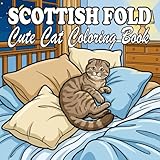

Caring for a Scottish Fold already in your home
If a Scottish Fold is already part of your household, Cats Protection recommends regular veterinary checks and monitoring for signs of pain. Check the ears for debris or irritation, brush the coat, and discuss diet or supplements with a veterinarian rather than starting a treatment without advice.
For access around the home, ramps, cat walks, and cat trees can help a cat reach elevated places. These adaptations may make movement easier, but they do not cure or treat osteochondrodysplasia. Ask your veterinarian how to adjust the home to your individual cat’s mobility and comfort.
Quick Recap
Product prices and availability are accurate as of the date/time indicated and are subject to change. Any price and availability information displayed on Amazon at the time of purchase will apply.




