Recommended Free Tools
The Arctic is home to far more than polar bears. Its wildlife survives across treeless tundra, rocky coasts, shifting sea ice, and cold ocean water. Some animals grow thick insulation, some change color with the seasons, and others migrate to follow food and favorable breeding conditions.
The Arctic is home to far more than polar bears. Its wildlife survives across a patchwork of treeless tundra, rocky coasts, shifting sea ice, and cold ocean water. Some animals grow thick insulation, some change color with the seasons, and others migrate thousands of miles to find food or raise their young.



As an Amazon Associate I earn from qualifying purchases.
Here are 13 remarkable Arctic animals and the special adaptations that help them live in one of Earth’s most challenging environments. “Arctic animal” is a geographic description, not a strict scientific group, so several of these species also live in subarctic or temperate regions.
The Tool Desk
Outbyte Driver Updater FREEFix the driver behind crashes, sound loss and screen glitchesFind Drivers →Outbyte PC Repair FREEClear out junk files and repair common Windows errorsFree Scan →Land survivors of the Arctic tundra
1. Polar bear
Ursus maritimus
Polar bears are the Arctic’s best-known animals, but they are not simply large bears that live on snowy land. They are closely connected to sea ice, where they hunt marine prey, especially seals. Sea ice gives them a platform from which to reach seals and travel across the Arctic marine environment.
#1 Best Overall
A polar bear’s coat looks white, helping it blend into snow and ice, but the individual hairs are not simply white-colored strands. Beneath the coat, its skin is black, which can help absorb solar heat. Thick body fat and dense fur provide insulation, while the fur also helps repel water. Large paws with some webbing make polar bears capable swimmers and help spread their weight over snow and ice.
When marine food is difficult to find, polar bears may eat a wider variety of foods on land. However, their dependence on fat-rich marine prey makes changes in sea ice especially important to their lives.
2. Arctic fox
Vulpes lagopus
The Arctic fox is a small tundra predator and scavenger with a remarkably well-insulated body. Its compact shape, thick fur, and furry feet help reduce heat loss in cold, open habitats. Instead of relying on a single food, it may hunt small animals, search for eggs or other available foods, and scavenge leftovers.
Do these 3 things before closing this tab:
1Clear out junk files and repair common Windows errors2Scan for outdated or missing drivers - takes under a minute3Repair Windows errors before they cause bigger problemsOne of its most familiar adaptations is seasonal camouflage. Many Arctic foxes have a white winter coat that blends with snow. In warmer months, the coat may become darker, brownish, or grayish, helping the fox disappear among tundra plants and exposed ground. The exact appearance can vary by region and individual.
3. Caribou or reindeer
Rangifer tarandus
Caribou and reindeer are names commonly used for the same species. “Caribou” is widely used for wild populations in North America, while “reindeer” is commonly used in parts of Europe and Asia and often refers to domesticated or semidomesticated animals.
These deer are famous for migration. Large herds travel between seasonal feeding and calving areas, following changing supplies of lichen, moss, grass, and other low-growing plants. Their hollow hairs help trap insulating air, and their broad feet help them move over snow, wet ground, and soft tundra.
Migration is not only a spectacular journey; it is a survival strategy. Moving between seasonal ranges can help caribou reach better forage and avoid some difficult conditions. Caribou also have deep cultural and subsistence importance for Indigenous communities throughout the Arctic.
Population changes must be described carefully because different herds can have very different histories. For example, the National Park Service reported that Alaska’s Western Arctic Herd had declined to approximately 121,000 animals in 2025. That is an estimate for one specific herd, not for all caribou or reindeer worldwide.
4. Muskox
Ovibos moschatus
Muskoxen look as though they are wearing enormous shaggy coats—and, in a way, they are. Long outer hairs hang down over a dense, soft undercoat called qiviut. This insulating undercoat is one of the warmest natural fibers, helping muskoxen withstand cold winds on the tundra.
Despite their bulky appearance and cattle-like shape, muskoxen are not cattle. They are more closely related to sheep and goats. They graze on low-growing Arctic vegetation and may form defensive groups when threatened. Adults can face outward while younger animals remain nearer the center of the group.
Muskoxen live across Arctic regions. In Alaska, some populations descend from animals relocated from Greenland during reintroduction efforts in the 1930s.
Quick wins for a faster PC:
Fix the driver behind crashes, sound loss and screen glitchesFind Drivers →Clear out junk files and repair common Windows errorsFree Scan →5. Arctic hare
Lepus arcticus
The Arctic hare is a tundra herbivore built for life in open, cold country. Its compact body helps conserve heat, while powerful hind legs allow it to move quickly across uneven ground and snow. It eats low-growing plants, including vegetation that can be difficult to find in a sparse Arctic landscape.
Camouflage is another important part of its survival. Arctic hares can change appearance with the seasons, often becoming much paler in snowy conditions. However, not every population looks completely white all year. Coloration varies according to geography, season, and local conditions.
Unlike the large predators that often appear in photographs of the Arctic, the Arctic hare shows how a relatively small plant-eater can survive through insulation, camouflage, and speed.
Specialists of sea ice and Arctic waters
6. Narwhal
Monodon monoceros
The narwhal is an Arctic toothed whale best known for the long spiral tusk carried by most adult males. That tusk is not a horn: it is an elongated tooth. Rare females can also grow one. Scientists have linked the tusk to sensory abilities and social interactions, but it is best not to describe it as having one single, universally proven purpose.
What’s actually slowing this PC down?
Pick the symptom - the matching free tool is one click away.
Narwhals spend much of their lives in Arctic Ocean waters and move through areas shaped by seasonal sea ice. They are powerful divers. NOAA reports that narwhals can dive to about 3,937 feet and remain underwater for up to 25 minutes.
The species is protected under the U.S. Marine Mammal Protection Act and listed in Appendix II of CITES. Those designations concern conservation and international trade rules; they should not be confused with a single worldwide population status.
7. Beluga
Delphinapterus leucas
Belugas are pale toothed whales of Arctic and subarctic waters. They may visit coastal areas, estuaries, and waters near seasonal sea ice. Their light color makes them easy to recognize, and their lack of a dorsal fin helps distinguish them from many other whales.
Belugas are highly social and known for their varied vocal sounds. Their flexible necks allow them to turn their heads more readily than most whales, which can be useful in shallow coastal environments. Many beluga groups make seasonal movements as ice, water conditions, and food availability change.
Free tools Windows power users keep installed
One-click scans. No signup required.
Belugas are often discussed by population or stock rather than as one identical worldwide group. Their conservation status and trends can differ substantially from one region to another, so a specific claim should always identify the stock being discussed.
8. Walrus
Odobenus rosmarus
Walruses are large, social marine mammals with two obvious features: long tusks and sensitive whiskers. They use their whiskers to help locate food on the seafloor, where they search for clams and other bottom-dwelling animals.
Walruses haul out in crowded groups on sea ice or coastal sites. Their tusks can be involved in social interactions, display, and helping an animal haul itself out of the water. It is more accurate to describe the tusks as serving several possible roles than to assign them one definite function.
Because walruses depend on particular resting and feeding areas, conditions along the coast and changes in sea ice can affect how and where groups gather.
Crashes, No Sound, or Screen Glitches?
Random freezes, missing sound and display glitches usually trace back to one bad driver. Find and replace yours safely.Free scan · under a minutePC Slower Than It Used to Be?
A free scan shows the junk files, broken settings and background clutter dragging Windows down - then fixes them in one click.Free scan · Windows 10 & 119. Ringed seal
Pusa hispida
Ringed seals are among the smaller ice-associated seals and are important prey for larger Arctic predators, including polar bears. Their name comes from the pale ring patterns on their darker coat.
A ringed seal can maintain breathing holes in sea ice and use snow to create a protected lair for its pup. Snow cover can help hide the young seal and provide insulation. This makes the species a powerful example of how an Arctic animal uses both ice and snow—not just as scenery, but as essential habitat.
Successful breeding depends on suitable conditions, including stable ice and enough snow in the right places. Those needs can vary among populations, so broad statements about population trends require region-specific evidence.
10. Bowhead whale
Balaena mysticetus
The bowhead whale is a huge baleen whale adapted to northern waters. Instead of teeth, it has baleen plates that strain tiny food organisms from seawater. It uses seasonal movements to reach productive feeding areas as conditions change in Arctic waters.
Rank #4
Bowheads are closely associated with sea-ice environments and are capable of living in waters where ice affects travel, feeding, and migration. Their story shows that migration is not limited to birds or land animals: even one of the largest animals on Earth follows seasonal opportunities in the Arctic food web.
Birds of the Arctic
11. Snowy owl
Bubo scandiacus
Snowy owls breed in the far north and hunt during Arctic summers, when the sun can remain above the horizon for much of the day. This makes them a useful reminder that Arctic animals do not all wait for darkness to become active.
The owl’s dense feathers provide insulation, including around its legs and feet. Its pale plumage helps it blend into snowy surroundings, although individual coloring varies, especially between males and females and as birds age.
Lemmings can make up much of a snowy owl’s diet when they are abundant. In years when prey conditions change, the number of owls that breed successfully and the places where some owls travel in winter may change as well. This relationship is important, but it is not a simple one-year rule that applies identically to every snowy owl population.
12. Arctic tern
Sterna paradisaea
The Arctic tern is a lightweight seabird with one of the most remarkable seasonal lifestyles in the animal kingdom. It breeds in northern regions during the Arctic summer, when food and long daylight can support chicks. As conditions change, it travels south to spend the opposite season in the Southern Hemisphere.
This annual movement lets the tern take advantage of productive seasons in both polar regions. It also illustrates why migration is such an important Arctic adaptation: rather than endure the harshest conditions in one place all year, the bird follows favorable feeding and breeding conditions.
Exact migration distances vary according to the route and the individual bird, so rounded “pole-to-pole” figures should be treated cautiously unless they come from a current ornithological source.
13. Willow ptarmigan
Lagopus lagopus
Willow ptarmigan are ground-dwelling birds of Arctic and subarctic habitats. They spend much of their time close to low vegetation, where they feed and seek shelter rather than soaring above the tundra.
Their seasonal plumage helps them camouflage themselves. In snowy weather they can look pale, while their warmer-season feathers better match tundra plants and exposed ground. Their feathered feet also help insulate them and support movement across cold terrain.
Willow ptarmigan make a fitting final example because Arctic wildlife is not only made up of giant whales and famous predators. Small birds living close to the ground can be just as finely adapted to their environment.
Independent reader supportYour contribution helps us test, update, and keep practical guides available for everyone.How Arctic animals survive
These 13 species use several recurring strategies:
- Insulation: Polar bears, muskoxen, Arctic foxes, hares, and birds use fur, feathers, body fat, or specialized undercoats to slow heat loss.
- Camouflage: Arctic foxes, Arctic hares, snowy owls, and willow ptarmigan can change or vary their appearance as snow and vegetation change.
- Sea-ice living: Polar bears, narwhals, walruses, ringed seals, and bowhead whales use sea ice directly or depend on marine food webs shaped by it.
- Specialized feet and paws: Polar bears swim with large, partly webbed paws; hares use powerful hind legs; and ptarmigan have insulated, feathered feet.
- Deep diving: Narwhals can make long, deep dives to reach food beneath Arctic waters.
- Migration: Caribou, bowhead whales, belugas, snowy owls, and Arctic terns move seasonally to follow food, breeding opportunities, or better conditions.
- Seasonal timing: Arctic animals often take advantage of short periods when plants grow, prey multiply, or daylight lasts nearly around the clock.
Why the Arctic matters to these animals
The Arctic is changing, but the effects are not identical for every species or every population. Sea-ice loss can alter the platforms and travel routes used by polar bears and walruses. Changing ice and snow conditions can affect ringed seal breeding habitat. Warmer or less predictable seasons can influence plants, insects, lemmings, fish, and the migratory timing of many animals.
Other pressures can include disturbance, hunting, pollution, and changes in prey availability. Conservation statements should therefore be specific: a species may be protected in one country, while a particular herd, stock, or local population faces a different situation elsewhere.
Arctic animals are not surviving because the region is empty or frozen all the time. They survive because their bodies, behavior, and seasonal movements are closely matched to a demanding but productive environment.
Keep exploring
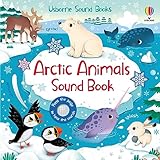
For younger readers, an Arctic animals book for kids can turn these adaptations into a hands-on way to compare fur, feathers, migration, camouflage, and sea-ice habitats. Look for an illustrated reference that explains where each animal lives and distinguishes Arctic species from animals found only in Antarctica.
Frequently Asked Questions
Do all Arctic animals live exclusively north of the Arctic Circle?
No. “Arctic animal” is a geographic and ecological description. Some animals on this list also live in subarctic or temperate regions, while others are strongly associated with Arctic sea ice or tundra.
Are caribou and reindeer the same animal?
Caribou and reindeer are the same species, Rangifer tarandus. “Caribou” is commonly used for wild animals in North America, while “reindeer” is often used in Europe and Asia and may refer to domesticated or semidomesticated animals.
Free tools Windows power users keep installed
One-click scans. No signup required.
Is a narwhal tusk really a tooth?
A narwhal’s tusk is an elongated tooth, not a horn. Most adult males grow one, and rare females do too. The tusk may have sensory and social roles, but it should not be assigned one single proven purpose.
The Bottom Line
From a polar bear’s sea-ice hunting platform to an Arctic tern’s seasonal journey, Arctic animals survive by matching their bodies and behavior to changing snow, ice, daylight, and food. The Arctic is a collection of connected habitats—and each species has its own way of using them.
Quick Recap
Product prices and availability are accurate as of the date/time indicated and are subject to change. Any price and availability information displayed on Amazon at the time of purchase will apply.




