
Do these 3 things before closing this tab:
1Scan for outdated or missing drivers - takes under a minute2Repair Windows errors before they cause bigger problems3Fix the driver behind crashes, sound loss and screen glitchesSome links on this page are affiliate links: if you buy through them we may earn a commission, at no extra cost to you.
Below roughly 200 meters (656 feet), sunlight fades, temperatures drop, and pressure rises sharply. This deep-sea environment has produced animals that hunt with living lamps, sense prey without functioning eyes, and survive on food drifting down from above. Some are barely the size of a hand; others carry tentacles longer than a bus.
These 15 creatures come from the twilight zone, midnight zone, abyssal plain, and deep seafloor. They are fascinating wildlife—not suitable pets—and several remain poorly understood because humans have seen them only a handful of times.
As an Amazon Associate I earn from qualifying purchases.
Quick wins for a faster PC:
Clear out junk files and repair common Windows errorsFree Scan →Fix the driver behind crashes, sound loss and screen glitchesFind Drivers →Repair Windows errors before they cause bigger problemsFix Now →1. Barreleye fish
Macropinna microstoma looks as if it has a transparent helmet for a head. The clear, fluid-filled dome protects its eyes, which normally point upward to spot silhouettes of prey above. When the fish feeds, its tubular eyes can rotate forward.
Barreleyes usually live at 600–800 meters (2,000–2,600 feet) and grow to about 15 centimeters (6 inches). Their greenish eyes are not visible through the transparent head in quite the way many illustrations suggest, but the unusual arrangement is real.
Popular on Amazon

- Realistic Natural Environment: These fish tank decorations replicate the natural environment, and once placed in the tank, they are virtually indistinguishable from real plants. Your fish will enjoy the environment these plants provide, and they can play and hide in it
- Soft and Safe Design: The leaves are soft and lifelike without scratching the fish. They swing with the water waves in the fish tank, making them look very vivid and beautiful in the water. They can be planted in both freshwater and saltwater. Each plant has its own base for holding it in the gravel
- Low Maintenance Solution: Unlike live plants in fish tanks, plastic artificial plants do not need special lighting and other substrates. They neither die nor become wilted or unattractive. They remain beautiful all the time without any pruning
- Convenient Aquarium Setup:We provide the suitable aquarium products for different sizes of aquariums in order to save you time. Simply buy them according to your needs and place them in your fish tank to create a beautiful underwater world for your pet fish, making fish life more interesting and happier
- Complete Decoration Set: The set contains 1 rockery aquarium decoration, 3 short aquarium plants, 3 medium aquarium plants and 1 tall aquarium plant with a total of 8 different styles. Heights vary from 2 inches to 8 inches. Suitable for 5 gallon or larger fish tanks
2. Vampire squid
The vampire squid’s scientific name, Vampyroteuthis infernalis, means “vampire squid from Hell,” but the animal is neither a blood-drinking predator nor technically a true squid. It is the only surviving member of an ancient cephalopod lineage.
Instead of chasing large prey, it collects marine snow: sinking scraps of dead plankton, mucus, waste, and other organic material. Two long, sticky filaments help gather this material. It lives mainly between 600 and 900 meters (2,000–3,000 feet), where oxygen levels can be low.
Recommended Free Tools
3. Deep-sea anglerfish
Anglerfish turn darkness into a hunting advantage. A modified dorsal-fin ray extends above the head like a fishing rod, ending in a glowing lure produced with the help of bioluminescent bacteria. Curious prey approach the light and end up inside the anglerfish’s enormous mouth.
In some deep-sea anglerfish species, the male permanently attaches to the much larger female and receives nutrients through the connection. That extreme mating strategy is not shared by every anglerfish species.
4. Giant phantom jelly
The giant phantom jelly, Stygiomedusa gigantea, is one of the deep ocean’s largest gelatinous animals. Its bell can exceed 1 meter (3.3 feet) across, while four ribbon-like mouth arms may extend more than 10 meters (33 feet).
It has been recorded from near the surface down to approximately 6,700 meters (22,000 feet). Scientists still know little about its behavior. Plankton and small fish are considered possible food, but its diet has not been firmly established.
5. Harp sponge
Most sponges filter tiny particles from the water. The harp sponge, Chondrocladia lyra, breaks that rule: it is a carnivore. Its upright, harp-shaped branches carry hook-like structures that trap small crustaceans drifting or moving across the muddy seafloor.
Discovered off northern California in 2012, it lives at roughly 3,300–3,500 meters (10,800–11,500 feet). Its branching body increases the area exposed to passing prey while keeping the animal anchored.
Also popular on Amazon
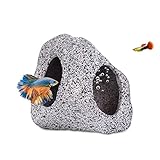
- Quality & Professional:The aquarium cave is made of ceramic with the function of filtering water, and it is environmentally friendly and odorless, imitating the natural stone texture to create a more natural visual effect.
- Visual feast:Aquarium decorative hiding cave provides you with a visual feast. It provides a "house" for your fish. The hollow caves provide shelter, hiding spots as well as spawning and privacy space for your fish.
- Multiple Placement:You can put it in the fish tank alone, or you can buy several fish tank caves of different sizes to put them together. In order to achieve the best aquarium decoration effect.
- Easy to clean: When you clean your fish tank, a simple rinse of the rock cave decorations with water is all you need.
- Make your Aquarium Vivid And Lively: Provide a natural environment feeling with vivid and detailed colors to add lively life to your aquarium.
6. Predatory tunicate
Tunicates are generally filter feeders, but Megalodicopia species have evolved a very different approach. Attached to rocks on the deep seafloor, each animal has a large oral siphon that opens and closes like a pair of fleshy lips.
Rather than filtering microscopic food, the tunicate can engulf comparatively large prey, including crustaceans. It occurs from about 200 to 3,900 meters (660–12,800 feet), spanning the lower twilight zone to much greater depths.
7. Sea pig
Sea pigs are deep-sea sea cucumbers with a distinctly animal-like appearance. Long, stilt-like tube feet lift their bodies above the mud as they move slowly across abyssal plains.
They feed on fresh organic material—or detritus—that sinks from productive waters above. Sea pigs may also gather around whale carcasses, where a temporary concentration of nutrients attracts many scavengers. They are found from approximately 1,000 to 6,000 meters (3,300–19,500 feet).
8. Bomber worm
The bomber worm, in the genus Swima, carries eight sacs filled with bioluminescent fluid behind its head. When threatened, it releases glowing blobs that may distract or confuse a predator while the worm escapes.
The sacs can regenerate after being used, making the defense more useful than a single disposable flash. Researchers still do not know exactly what bomber worms eat. They live just above the seafloor at around 2,700–3,600 meters (8,900–11,800 feet).
9. Dragonfish
Dragonfish combine an intimidating mouth, needle-like teeth, and stealth. Many species have extremely dark skin that absorbs light, helping them disappear in the water column. Some also carry a glowing chin barbel that may draw prey close enough to attack.
Also popular on Amazon

- The ancient sunken ship has been meticulously hand drawn, with exquisite details and a smooth surface that can protect delicate fish fins from fading or breaking, requiring no maintenance - easy to clean, durable, and suitable for freshwater or saltwater environments
- 8Pcs Fish Tank Decorations Set: The sunken ship measures 5.3 x 2.5 x 4.5 inches, paired with simulated aquatic plants ranging in height from 2.3 to 4.7 inches. The proportions are coordinated and the layout is flexible, making it easy to adapt to various small, medium, and large fish tanks, creating a three-dimensional underwater landscape with a strong sense of hierarchy
- Safe and Durable: Made from high-quality eco-friendly resin, the leaves are soft and won't scratch fish fins. It is suitable for various aquatic organisms such as betta fish, shrimp, and fry, ensuring peace of mind when used.
- Ready to use, easy to clean: no installation tools required. Rinse with clean water before use and place into the fish tank. The bottom is flat and stable, not prone to tilting. The smooth surface is easy to clean, making daily maintenance both time-saving and effortless
- Enriching Fish Habitats: Designed specifically to provide gentle shelter and visual stimulation for fighting fish, lanternfish, peacock fish, and other small fish species
Dragonfish ambush fish and crustaceans, often swallowing prey with jaws that look far too large for their narrow bodies. The family occurs worldwide, from relatively shallow water to roughly 4,500 meters (14,800 feet).
10. Fangtooth
The common fangtooth, Anoplogaster cornuta, looks like a miniature monster because its teeth are huge compared with its body. Despite its dramatic appearance, it reaches only around 18 centimeters (7 inches).
Its eyesight is thought to be poor, so the lateral-line system along its sides is especially important. This sensory system detects small movements and pressure changes in the surrounding water, helping the fangtooth locate prey and notice danger in darkness.
11. Flapjack octopus
The flapjack octopus is a small, rounded octopus that can look more like a floating pancake than a typical cephalopod. It lives on or near the seafloor from about 130 to 2,350 meters (430–7,710 feet).
When it needs to escape, it can flap its fins, pulse its webbed arms, use jet propulsion through its funnel, or combine all three methods. The Monterey Bay form may represent a species that has not yet been formally described, showing how much deep-sea biodiversity remains unresolved.
12. Ghost shark
Ghost sharks, also called ratfish or chimaeras, are ancient relatives of sharks and rays. Their skeletons are made of cartilage rather than bone, but their body plan differs noticeably from that of familiar sharks.
Broad fins let them hover above the seafloor, while an oily liver helps with buoyancy and reduces the energy needed to remain suspended. Some ghost shark species live from shallow water to approximately 3,000 meters (9,800 feet).
Also popular on Amazon
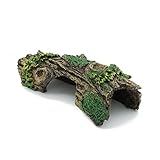
- The natural and detailed bark pattern resin hollow tree trunk ornament is great for nano beta fish and guppies.
- Made of durable resin material and natural brown colors are vivid and not washed out.
- Makes the tank look realistic and add much fun for the fish.
- There are 3 holes on the trunk fish decor, your lovely pet betta or other smaller fish would be super happy to go in and out the trunk cave to sleep, rest, hide, play, breed
- Measures 5.7" x 2.5" x 2.1" (L*W*H). Great for aquarium decorations, model making, terrarium, miniature garden and marine aquariums.
13. Seven-arm octopus
The seven-arm octopus, Haliphron atlanticus, actually has eight arms. In males, one specialized arm used to transfer sperm is often tucked inside a sac, creating the misleading appearance of seven arms.
Females can reach about 4 meters (13.1 feet) and weigh as much as 75 kilograms (165 pounds). This large octopus feeds on gelatinous animals such as jellies and salps. Its flexible body and broad arms are well suited to catching soft prey in the deep ocean.
14. Whalefish
Whalefish have poorly developed eyes that cannot produce normal images. Instead, sensory pores spread across the head and body detect vibrations from nearby predators and prey.
Their vivid red coloration is useful camouflage at depth. Red wavelengths are absorbed near the surface, so red animals can appear black in the blue darkness of the deep sea. The whalefish lives at approximately 1,500–3,500 meters (4,900–11,500 feet).
What’s actually slowing this PC down?
Pick the symptom - the matching free tool is one click away.
15. Whiptail gulper eel
The whiptail gulper eel, Saccopharynx lavenbergi, has an oversized mouth that allows it to swallow scarce prey that may approach the eel’s own size. Its narrow body and long tail give it a strange, almost unfinished appearance.
The tail ends in a glowing tip. Scientists suspect this light may act as a lure, but that function remains an inference rather than a confirmed fact. The species is exceptionally elusive: MBARI has observed it only seven times during thousands of deep-water dives.
Independent reader supportYour contribution helps us test, update, and keep practical guides available for everyone.How deep-sea animals survive
| Challenge | Common solution | Examples |
|---|---|---|
| Almost no sunlight | Bioluminescent lures, flashes, or camouflage | Anglerfish, bomber worm, dragonfish |
| Scarce food | Scavenging, filtering sinking material, or swallowing large prey | Sea pig, vampire squid, gulper eel |
| High pressure | Soft bodies and physiology adapted to depth | Jellies, octopuses, tunicates |
| Finding prey in darkness | Vibration sensing, sensitive eyes, or chemical detection | Barreleye, fangtooth, whalefish |
The deep sea is not one uniform habitat. The twilight zone begins around 200 meters, but conditions become progressively darker and more pressured through the midnight and abyssal zones. That is why a 200-meter tunicate and a 6,700-meter jelly can both be described as deep-sea animals while living very different lives.
Also popular on Amazon
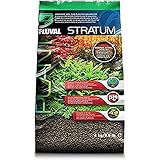
- PROMOTES ROBUST PLANT GROWTH: Fluval Plant and Shrimp Stratum encourages strong root development by allowing plant roots to easily penetrate and spread throughout the substrate, helping aquatic plants absorb key nutrients for healthy growth
- SUPPORTS BENEFICIAL BACTERIA: The light, porous structure provides an ideal surface for beneficial nitrifying bacteria to colonize, helping support biological filtration and a healthy freshwater aquarium environment
- HELPS MAINTAIN IDEAL WATER CONDITIONS: Designed to support a neutral to slightly acidic pH range, making it ideal for planted aquariums with live aquatic plants, tropical fish, shrimp, and other freshwater species
- IDEAL FOR SHRIMP HABITATS: Creates a natural refuge for newborn shrimp, providing shelter and protection until they are large enough to safely explore the aquarium
- MADE FOR FRESHWATER PLANTED AQUARIUMS: Will not discolor water and helps manage organic discoloration commonly associated with natural driftwood; Includes one 8.8 lb bag of Fluval Plant and Shrimp Stratum aquarium substrate
Sources
Animal details and depth ranges are based primarily on the Monterey Bay Aquarium Research Institute’s animal profiles for the barreleye fish, vampire squid, anglerfish, and the other species listed above. NOAA’s deep-ocean overview and explanation of light in the ocean provide the depth and camouflage context.
Windows Errors? Fix Them Before They Spread
Repair common Windows errors and clear accumulated junk for a smoother, more stable PC - no reinstall needed.Free scan · no reinstallOutdated Drivers Are Slowing You Down
One free scan finds every outdated or missing driver and matches the right update for your exact hardware.Free scan · exact hardware matchFAQ
What is considered a deep-sea creature?
The deep sea is commonly defined as water below about 200 meters (656 feet), where sunlight is greatly reduced. It includes parts of the twilight zone, midnight zone, abyssal zone, and deep seafloor.
What is the strangest deep-sea animal on this list?
That depends on what seems strange: the barreleye fish has a transparent head, the harp sponge eats crustaceans, and the whalefish uses sensory pores instead of useful image-forming eyes. The vampire squid is also unusual because it is not a true squid and mainly eats marine snow.
Do all deep-sea animals glow?
No. Bioluminescence is common, but many deep-sea animals rely on camouflage, smell, vibration detection, or patience instead. Sea pigs, ghost sharks, and harp sponges do not need a glowing lure to find food.
Can any of these deep-sea creatures be kept as pets?
No. These animals require specialized pressure, temperature, food, and water conditions that ordinary aquariums cannot provide. Several are also rarely encountered or poorly understood, making collection inappropriate.
Free tools Windows power users keep installed
One-click scans. No signup required.
The Bottom Line
Deep-sea animals are bizarre because the environment rewards solutions that rarely appear on land: living lights, transparent heads, sensory pores, enormous mouths, and bodies built to conserve energy. Their unusual features are not random curiosities—they are adaptations to darkness, pressure, and a serious shortage of food.





Leave a Reply