Stingrays are cartilaginous fishes with flattened bodies and broad pectoral fins that help many of them glide near the seafloor. The openings behind their eyes, called spiracles, help them breathe, while a barbed tail spine serves as defense and can injure people. Here are 15 facts about stingrays, with species-specific details clearly identified.
A terminology note: “Stingray” is a common name used for a broad group of rays. Habitat, size, diet, reproductive details, and whether a barb carries venom can differ among species, so a fact about one stingray should not automatically be applied to all rays.

1. Stingrays are cartilaginous fish
Stingrays are fish whose skeletons are made mainly of cartilage rather than bone. The National Park Service identifies stingrays as cartilaginous fish, a group that also includes sharks.
2. Their broad fins create a flattened, wing-like shape
A stingray’s broad disc is formed by its pectoral fins. These flattened bodies help many rays glide near the seafloor, though some related rays swim more actively in the water column. Smithsonian Ocean describes both bottom-associated and open-water examples among rays.
What’s actually slowing this PC down?
Pick the symptom - the matching free tool is one click away.
#1 Best Overall
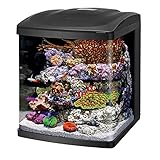
- EVERYTHING YOU NEED - Feature a compact and customizable filtration chamber that is already built-in to the back of the aquarium – easy to setup and maintain.
- GREAT FEATURES – Includes quiet submersible pump, dual intakes and adjustable return nozzle. Compatible with all existing BioCube accessories. Fish, corals, substrate and décor are sold separately.
- SLEEK and MODERN – Biocubes feature a rounded edge design and is the perfect innovative all-inclusive aquarium for all needs..
- VIBRANT LED LIGHTING - Low-profile hood contains vibrant LED lighting that is capable of sustaining and growing healthy, vibrant corals and live plants.
- MAXIMIZE BEAUTY - 24-hour timer which makes it easy to control the three independent light channels for maximum beauty: bright white, sparkling blue and color enhancing LEDs.
3. Their eyes and mouths face different directions
In the Smithsonian National Zoo’s freshwater stingray profile, the eyes are on the upper surface, while the mouth and gill slits are underneath. This arrangement suits a life spent close to the bottom: the ray can keep its underside against the substrate while its eyes remain above.
4. The holes behind their eyes are called spiracles
Spiracles are respiratory openings behind a stingray’s eyes. Smithsonian’s freshwater stingray profile describes them as helping the ray breathe. They are breathing openings, not eyes or venom-delivery structures.
5. Spiracles and the tail spine have very different jobs
A stingray’s spiracles are involved in respiration; its tail spine is a defensive structure. Knowing the difference helps explain how a ray can rest near the bottom while still having a way to defend itself if threatened.
6. The tail spine is barbed
Smithsonian’s freshwater stingray profile describes backward-facing barbs on the spine. Those barbs can tear tissue as the spine is withdrawn, which helps explain why a puncture can be serious. Rays generally use the spine defensively, not to hunt people.
The Tool Desk
Outbyte PC Repair FREEClear out junk files and repair common Windows errorsFree Scan →Outbyte Driver Updater FREEFix the driver behind crashes, sound loss and screen glitchesFind Drivers →Rank #2

- 🐠 EVERYTHING YOU NEED - Feature a compact and customizable filtration chamber that is already built-in to the back of the aquarium – easy to setup and maintain
- 🐠 GREAT FEATURES – Includes quiet submersible pump, dual intakes and adjustable return nozzle. Compatible with all existing BioCube accessories. Fish, corals, substrate and décor are sold separately.
- 🐠 SLEEK & MODERN – Biocubes feature a rounded edge design and is the perfect innovative all-inclusive aquarium for all needs!
- 🐠 VIBRANT LED LIGHTING - Low-profile hood contains vibrant LED lighting that is capable of sustaining and growing healthy, vibrant corals and live plants.
- 🐠 MAXIMIZE BEAUTY - 24-hour timer which makes it easy to control the three independent light channels for maximum beauty: bright white, sparkling blue and color enhancing LEDs.
7. Some stingray spines carry venom
Some rays have venomous tail spines. In the Smithsonian National Zoo’s freshwater stingray profile, grooves beneath the spine contain protein-based venom. That is a species-profile detail, not a basis for claiming that every ray has the same venom or barb characteristics.
8. A stingray can replace its spine
Smithsonian’s freshwater stingray profile says the animal continually sheds and replaces its spines; an individual may sometimes have two while replacement is underway. Do not handle a dead or motionless ray: a spine can still injure, and a replacement spine may be present.
9. Freshwater stingrays live in rivers
Although many people associate rays with the sea, freshwater stingrays live in the Amazon River system. Smithsonian notes that most cartilaginous fishes live in salt water, making freshwater stingrays a notable exception. Do not assume a particular species lives in both fresh and salt water.
10. Rays can live near the seafloor or in open water
Not every ray has the same lifestyle. Smithsonian Ocean contrasts the bottom-associated southern stingray with the more actively swimming spotted eagle ray, a close relative. This is a reminder that descriptions of a typical bottom-dwelling stingray do not fit every ray.
Free tools Windows power users keep installed
One-click scans. No signup required.
11. Some stingrays eat hard-shelled prey
Smithsonian’s freshwater stingray profile says these rays use powerful jaws to crush clam and mussel shells. The profiled animals also eat crustaceans and other invertebrates, and occasionally small fish.
12. Stingray diets vary by species
The National Park Service lists bivalves, shrimp, small fish, marine worms, and crabs among foods eaten by stingrays. This is a broad factsheet list, not a universal menu: diet depends on the species and its habitat.
13. Freshwater stingray pups develop inside the mother
In Smithsonian’s freshwater stingray profile, fertilization is internal and young develop inside the mother. The profile describes nourishment from egg yolk as well as additional nourishment from the uterus. Reproductive details vary among rays, so this example should not be treated as a rule for every species.
14. One freshwater stingray profile reports two to six pups
Smithsonian’s National Zoo reports a gestation of about three months and two to six pups per litter for the freshwater stingrays in its profile. These figures belong to that profile; they are not universal values for all stingrays.
Rank #4

- Premium Low Iron Ultra-Clear Glass: Enjoy crystal-clear views with high-transparency, low-iron glass that reduces greenish tint and enhances the beauty of your saltwater aquarium.
- Compact 8-Gallon Capacity: Perfectly sized for small marine tanks, reef setups, or desktop displays, offering enough space for a variety of saltwater fish and corals. Display: 5.5 gal. Rear Sump: 2.5 gal.
- 45° Angled Joint Design: The innovative angled joints provide a sleek, modern look while ensuring durable construction with reinforced corners for long-lasting use.
- Ideal for Saltwater Aquariums: Designed specifically for marine environments, this tank is great for saltwater fish, live rock, and delicate coral systems.
- Easy to Maintain: Simplified setup and cleaning with a user-friendly design, ideal for both beginner and experienced aquarists looking to showcase their marine life.
15. A stingray’s barb is a reason to give it space
The Florida Fish and Wildlife Conservation Commission describes the southern stingray as non-aggressive and recommends shuffling your feet in shallow water to reduce the chance of stepping on one. A defensive barb can still cause a serious injury. MedlinePlus advises seeking medical help promptly after a sting.
Stingray and skate: a quick distinction
| Feature | Stingrays and rays | Skates |
|---|---|---|
| Tail | Rays tend to have more whip-like tails; ray barbs are a distinguishing feature. | Skates tend to have shorter, thicker tails. |
| Reproduction | Reproductive details vary among ray species; the Smithsonian freshwater stingray profile describes live birth. | Many skates lay egg cases, sometimes called “mermaid’s purses.” |
Smithsonian Ocean notes these general distinctions, but identification and reproductive details are best checked for the particular species.
How to stay safe around stingrays
- Observe rays from a respectful distance. Do not touch, chase, feed, lift, or corner them.
- When wading over shallow sandy bottom, shuffle your feet to alert a ray before you put your weight down. The Florida Fish and Wildlife Conservation Commission recommends this precaution for southern stingrays.
- Keep children and dogs from approaching or grabbing rays, and follow local beach warnings and wildlife guidance.
- If you are stung, seek medical help promptly. MedlinePlus warns that stingray injuries can be serious; this article is not a substitute for medical advice.
Why these facts matter
Stingrays are adapted to varied aquatic habitats, and the openings behind their eyes, flattened bodies, and defensive spines each serve different purposes. Their barb is a reason to give them space, not evidence that they seek out people.
Conservation status also varies by species. BBC Earth reports that at least 40 stingray species are threatened and that a 2021 global assessment found 32% of nearly 1,200 sharks and rays at risk of extinction. The 32% figure covers sharks and rays together, not stingrays alone.
Crashes, No Sound, or Screen Glitches?
Random freezes, missing sound and display glitches usually trace back to one bad driver. Find and replace yours safely.Free scan · under a minuteWindows Errors? Fix Them Before They Spread
Repair common Windows errors and clear accumulated junk for a smoother, more stable PC - no reinstall needed.Free scan · no reinstallBest Value
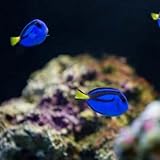
- Vibrant Blue Coloration – Iconic bright blue body with bold black pattern and yellow tail, one of the most recognizable marine fish
- Active Swimmer Presence – Fast-moving open-water swimmer that adds constant motion and visual impact to saltwater aquariums
- Tank Size: 20 gallons or larger Temperature: 75–82°F (24–28°C) Salinity: 1.020–1.025 SG pH: 8.1–8.4 Diet: Omnivore (algae + meaty foods) Temperament: Semi-aggressive Tank Requirement: Large swimming space recommended Notes: Sensitive to stress and parasites (proper acclimation recommended)
FAQ
What are the holes behind a stingray’s eyes?
They are called spiracles. Smithsonian’s freshwater stingray profile describes them as respiratory openings that help the ray breathe.
Do stingrays breathe through spiracles?
Yes. Spiracles behind the eyes are breathing openings, as described in Smithsonian’s freshwater stingray profile.
Are stingray barbs venomous?
Some rays have venomous spines. Smithsonian describes venom-bearing grooves beneath the spine in its freshwater stingray profile, but barb and venom characteristics should not be generalized to every ray species.
Do stingrays lay eggs or give birth?
It depends on the species. Smithsonian’s freshwater stingray profile describes internal development and live birth; many skates lay egg cases. Check the species when precise reproductive information matters.
Quick wins for a faster PC:
Repair Windows errors before they cause bigger problemsFix Now →Scan for outdated or missing drivers - takes under a minuteDriver Scan →What do stingrays eat?
Diet varies. The National Park Service lists bivalves, shrimp, small fish, marine worms, and crabs among stingray foods; Smithsonian’s freshwater profile describes crustaceans, other invertebrates, and occasional small fish.
Are stingrays dangerous to humans?
A stingray can injure someone with its defensive spine, and MedlinePlus advises prompt medical help after a sting. The Florida Fish and Wildlife Conservation Commission describes southern stingrays as non-aggressive; give rays space and shuffle your feet when wading in shallow water.
Quick Recap
Product prices and availability are accurate as of the date/time indicated and are subject to change. Any price and availability information displayed on Amazon at the time of purchase will apply.




