Quick wins for a faster PC:
Repair Windows errors before they cause bigger problemsFix Now →Fix the driver behind crashes, sound loss and screen glitchesFind Drivers →Clear out junk files and repair common Windows errorsFree Scan →Goats can suit a small farm when the owner has a clear purpose and can provide suitable forage, secure fencing, health care, and daily attention. They may provide meat, milk, or fiber, and their browsing can help manage some vegetation. These are potential benefits, not a promise of profit or low maintenance.
Before buying goats, assess the land and feed supply, plan for facilities and veterinary support, and decide whether the animals are for household use, sale, or land management. Goats are social herd animals, so plan to keep companions rather than a lone goat.
What goats can contribute to a small farm
| Goal | Potential benefit | Key consideration |
|---|---|---|
| Meat | A possible food or farm-sale product | Assess feed, facilities, local demand, and applicable sales and processing rules. |
| Milk | Milk for household use or, where permitted, value-added foods such as cheese and yogurt | Dairy requires regular, often daily, milking and clean handling facilities. |
| Fiber | A specialized farm product | Consider the relevant animals, labor, and whether a local buyer or processor is available. |
| Browse and vegetation management | Goats may eat leaves, shoots, branches, bark, grasses, and forbs, making them useful for some land-management goals. | Results depend on plant species, site conditions, and the grazing plan; goats do not control every kind of vegetation. |
Meat, milk, and fiber offer different options
Goat production can be chosen to match household goals, available land and labor, and local opportunities. Meat, milk, and fiber are distinct pathways, not interchangeable outputs. There is no universal profit ranking: costs, management, scale, and demand vary by farm.
Dairy goats may provide milk for household use or for products such as cheese and yogurt. Dairy also brings a recurring labor commitment: milking is a regular chore, often daily, and requires clean handling and balanced nutrition. Choose dairy only if the schedule and facilities are manageable.
#1 Best Overall
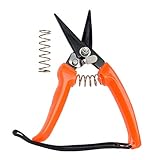
- Multi-Purpose hoof trimmers do the daily trimming jobs for goats, sheep, lamb, alpaca nail hooves etc
- Also, it is sharp enough used by gardener, farmer and florist, for the most gardening applications such as floral pruning, small shrub trimming, fruit harvesting etc
- User-friendly curved handle with stop-falling wrist strap, and upgrade switch lock, switch safer and easier to operate
- Rustproof carbon steel blade, half serrated blade, prevent slippage during cutting
- Stronger spring loaded, do the cut job more effectively, 8-inch long, perfect size for most job and come with a spare spring
Before pursuing commercial sales of any goat product, investigate local demand, processing options, food-safety rules, zoning, and permits. Requirements depend on location, and the research does not establish rules for every jurisdiction.
Browsing can make use of some vegetation
Goats browse leaves, shoots, branches, and bark as well as grasses and forbs. On suitable land, this can make use of vegetation that other livestock may use less readily and can support management of selected brush or unwanted plants.
Rank #2

- The cutting stroke is ultra-smooth
- Japanese steel blades hold their edge
- Rounded blade tips can be safely used for cleaning and probing hooves
- Handles are strong and comfortable for left- or right-handed users
- Also commonly used for pruning flowers and shrubs
Browsing is not a guarantee of brush removal. Outcomes depend on plant species, grazing plan, and site conditions. Assess the vegetation and the land-management objective before bringing goats in, and protect plants you want to keep. Do not treat grazing as a substitute for other land or fire-safety practices.
Small acreage still needs a feed and land plan
Goats may fit some small-acreage and diversified farms, but a small farm does not have unlimited carrying capacity. Available forage depends on factors such as climate, soil, vegetation, and management. Assess what the land can provide throughout the year and plan for supplemental feed when it cannot meet the herd’s needs.
Rank #3

- Versatile Hoof Care Tool: Designed for goats, sheep, alpacas, lambs, mini pigs and donkeys to support easier, more controlled routine hoof trimming; works as livestock hoof trimmers, pig hoof trimmers and goat feet trimmers
- Heat-Treated High Carbon Steel: Sharp, durable blades help deliver clean cuts, strong edge retention and dependable regular trimming performance; a practical goat hoof trimmer kit, goat hoof clippers, hoof clippers for goats and hoof shears
- Spring-Loaded for Less Hand Strain: Smooth spring action reopens the shears automatically to help reduce fatigue during longer trimming sessions; useful pruning shears and gardening shears for a gardener, farmer or florist
- Comfortable Non-Slip Grip: Ergonomic handles provide a secure hold for better control and more confident trimming during repeated use; also works as plant pruning shears for gardening applications, floral pruning and small shrub trimming
- Protective Sheath Included: Blade cover supports more secure handling, helps protect the cutting edge and allows safer storage between uses; also serves as floral shears, floral snips and garden scissors for fruit harvesting, flowers and soft plant stems
Do not apply a stocking-rate figure from one region as a universal rule. For example, UC ANR’s acreage guidance is specific to unirrigated California conditions; it is not a general recommendation for other locations.
What to plan before buying goats
- Choose a purpose. Decide whether your goal is meat, milk, fiber, household food production, or vegetation management.
- Assess land and feed. Evaluate available forage and browse across seasons, and plan for appropriate supplemental feed if needed.
- Plan secure fencing and facilities. Good fencing is important for containment. Choose a system suited to your animals, site, local rules, and predator pressure; no single design is best for every farm.
- Plan for a herd. Goats are social animals. Penn State advises keeping at least two, so account for the needs and costs of companions.
- Arrange health support. Develop a herd-health plan and establish a relationship with a local veterinarian. Extension professionals can also help with management planning.
- Check markets and rules. If you plan to sell products, investigate customer demand, processing, food-safety requirements, zoning, and permits in your area.
- Match the plan to your labor. Consider daily care and, for dairy, the regular milking schedule before choosing an enterprise.
Are goats a good fit for your farm?
Goats may be a good fit when the farm has suitable forage or browse, can provide secure fencing and appropriate facilities, and has the time and support to care for a herd. They can contribute meat, milk, fiber, or managed browsing, but none of these uses guarantees income or replaces a sound land and feed plan.
Rank #4
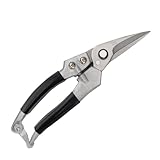
- ✅ Goat & Sheep Hoof Trimming Made Easy – Specially designed for trimming hooves on goats, sheep, and other small livestock. The straight, sharp silver blades allow for precise cuts to maintain healthy hooves with minimal effort.
- ✅ Built for Safety & Control – Features a reliable safety lock that keeps the blades closed when not in use. The anti-slip handle design ensures maximum control during delicate tasks like trimming animal hooves.
- ✅ Durable Zinc Alloy Silver Construction – Made from high-strength zinc alloy with a sleek silver finish, this tool is built to resist wear and corrosion, making it ideal for long-term farm or garden use.
- ✅ Heavy-Duty Spring for Smooth Operation – Equipped with a strong rebound spring to reduce hand fatigue and improve cutting efficiency, whether you're pruning branches or maintaining livestock.
- ✅ Multi-Purpose Farm & Garden Tool – More than just a hoof trimmer, this tool also works great for fruit picking, small pipe or wire cutting, bonsai shaping, and general pruning. A must-have for farmers, homesteaders, and gardeners.
Before buying, ask: What will the goats be used for? Can the farm meet their feed, fencing, health, and social needs? If products will be sold, is there local demand and a legal route to market?
Independent reader supportYour contribution helps us test, update, and keep practical guides available for everyone.FAQ
What are goats good for on a small farm?
Goats may be raised for meat, milk, or fiber, and they can browse some vegetation. The best use depends on the farm’s goals, land, labor, facilities, and local opportunities.
Recommended Free Tools
Best Value

- 【Farrier Hoof Kit】 -Including a hoof nipper, a hoof rasp, a hoof knife, a hoof trimming shears,Horseshoe brush, a pair of gloves, a storage bag .They are all made of high-quality material, Ensure durable and sharp.
- 【High Quality Hoof Rasp】Double Sided Hoof Rasp.fine tooth side and coarse tooth side dual use for different purpose of trimming hoof.Made from premium carbon steel material,High Strength and durable for long time usage.
- 【8 inch Hoof Nippers】The sturdy hoof nippers can easily cut into the hardest and thickest hoof.The handle is ergonomically designed, comfortable, labor-saving and easy to use.
- 【Supplied in a bag】We provide a high-quality tool bag that can organize your hoof tools well and is easy to carry with a carrier handle.
- 【Notice】They are great for pig or goat hooves mini horses.Only suitable for small animals, not suitable for large animals.
Can goats live entirely on brush?
Do not assume brush alone will meet a herd’s needs. Assess the available forage and browse across seasons, and plan for supplemental feed when the land cannot provide enough.
Will goats clear all brush and weeds?
No. Goats may help manage selected vegetation, but results depend on plant species, grazing plans, and site conditions. Assess the land and the specific management goal first.
Can I keep just one goat?
Goats are social herd animals. Penn State advises keeping at least two, so plan for companions as well as the facilities, feed, and care the herd will need.
Do dairy goats need daily milking?
Milking is a recurring chore and is often required daily. Dairy also calls for clean facilities and balanced nutrition, so consider whether you can sustain the schedule before choosing dairy goats.
Quick Recap
Sources
- UF/IFAS Extension, “Livestock Launchpad: A Beginner’s Guide to Raising Goats”
- UF/IFAS, “Foundational Small Ruminant Management and Husbandry”
- University of California Agriculture and Natural Resources, “Meat goats | Small Acreage Landowners”
- Penn State Extension, “Raising Goats: Production and Management”
- UF/IFAS, “What’s Involved in Caring for Dairy Goats”
- Ohio State University Small Farm Team, “Getting Started with Goat Production on a Small Farm”
Product prices and availability are accurate as of the date/time indicated and are subject to change. Any price and availability information displayed on Amazon at the time of purchase will apply.




