
Quick wins for a faster PC:
Scan for outdated or missing drivers - takes under a minuteDriver Scan →Clear out junk files and repair common Windows errorsFree Scan →Fix the driver behind crashes, sound loss and screen glitchesFind Drivers →Some links on this page are affiliate links: if you buy through them we may earn a commission, at no extra cost to you.
Siberian Huskies, Alaskan Klee Kais, Australian Shepherds, and several merle-patterned breeds are among the dogs that can have blue eyes. But “blue-eyed dog” does not mean every individual in a breed will have blue eyes. The color may be solid blue, one blue eye, partly blue, marbled, or a “wall eye”—and the likelihood ranges from common to exceptionally rare.
This list includes all 23 breeds that can show one or more of those appearances, while separating reliably common examples from pattern-dependent and unusual ones.
As an Amazon Associate I earn from qualifying purchases.
What counts as a blue eye in a dog?
For this article, blue eyes includes several appearances:
- Fully blue irises: the entire visible iris appears blue.
- Heterochromia: one eye is blue and the other is brown, amber, or another color.
- Partly blue or marbled eyes: blue pigment-free sections mix with brown or another eye color.
- Wall eyes: a term used in some breed standards for a noticeably pale, blue, or partly blue eye.
A camera flash or bright light can make a normal eye look pale or reflective, and a cloudy or bluish-looking eye in an adult dog can be a medical problem rather than inherited eye color. The iris should look clear and normally formed—not hazy, painful, red, or suddenly different.
Popular on Amazon

- UPGRADED HEAVY DUTY ALLOY: Features a solid black metal D-ring, not plastic! This durable nylon dog collar handles pulls, providing a secure leash attachment for energetic small, medium, or large dogs
- SPOT YOUR PUP INSTANTLY: Highly reflective threads keep your furry friend visible during night walking. Easily locate them in a dark backyard with a flashlight, ensuring safety and your peace of mind
- NO MORE NECK CHAFING: Lined with soft, breathable neoprene padded material. It acts as a cushion to protect sensitive skin and prevent hair loss, making it a highly comfortable collar for all-day daily wear
- SECURE QUICK RELEASE CLASP: The sturdy snap buckle ensures a safe, locked fit that won't easily come undone during outdoor play. It allows for effortless taking on and off, saving you time and hassle
- VIBRANT COLORS ADJUSTABLE: Available in cute, pretty shades to match your pet's vibe. Fully adjustable for growing puppies. Please measure your dog's neck carefully before ordering to choose the perfect fit
Blue eyes do not contain blue pigment. They look blue because the iris has less pigment, allowing light to scatter in a way that produces a blue appearance. Several different genetic routes can reduce pigment in the eye, so blue eyes are not exclusive to one breed or one coat pattern.
The 23 dog breeds that can have blue eyes
The labels below describe likelihood, not a promise. Common means the trait is a familiar possibility in the breed. Pattern-dependent means it is most closely associated with a particular coat pattern or color. Rare means a blue-eyed example can occur, but it is not typical of the breed as a whole.
Do these 3 things before closing this tab:
1Scan for outdated or missing drivers - takes under a minute2Repair Windows errors before they cause bigger problems3Fix the driver behind crashes, sound loss and screen glitchesCommon blue-eyed breeds
-
Siberian Husky — common
The Siberian Husky is the classic blue-eyed dog. Blue eyes are expressly accepted in the American Kennel Club’s breed description, along with brown eyes, one blue and one brown eye, and partially colored eyes. A Husky can therefore have two blue eyes, a single blue eye, or a striking marbled pattern.
The breed also has a distinctive genetic explanation for much of this variation: a duplication near the ALX4 gene on canine chromosome 18. That variant is associated with eye-color variation in Siberian Huskies, although genetics are not a guarantee that every Husky will have blue eyes.
-
Alaskan Klee Kai — common to fairly common
The Alaskan Klee Kai is a smaller spitz-type breed closely related to the Siberian Husky. It can inherit the same blue-eye-associated variant found near the ALX4 region, making blue, mismatched, or partly blue eyes a familiar possibility.
Eye color is still variable. A Klee Kai does not need blue eyes to be a correct example of the breed, and appearance alone cannot distinguish a Klee Kai from a Husky mix or another northern breed.
Windows Errors? Fix Them Before They Spread
Repair common Windows errors and clear accumulated junk for a smoother, more stable PC - no reinstall needed.Free scan · no reinstallCrashes, No Sound, or Screen Glitches?
Random freezes, missing sound and display glitches usually trace back to one bad driver. Find and replace yours safely.Free scan · under a minuteSpecial offer. See more information about Outbyte and uninstall instructions. Please review EULA and Privacy policy. -
Australian Shepherd — common, especially in merle dogs
Australian Shepherds are well known for blue merle and red merle coats, and merle Aussies often have pale blue, partly blue, or mismatched eyes. Some dogs have one blue eye and one brown eye; others have marbled irises with several colors in the same eye.
Merle is an important route to the appearance, but it is not the only possible genetic route. Nor does a merle coat guarantee blue eyes. The Australian Shepherd’s familiar blue-eyed look should be treated as a possibility associated particularly with merle pigmentation, not as a breed requirement.
-
Miniature American Shepherd — common to pattern-dependent
Miniature American Shepherds can show blue, partly blue, or mismatched eyes, especially when they carry a merle pattern. Their smaller size does not change the basic genetics behind the eye appearance.
Solid-colored Miniature American Shepherds are not automatically blue-eyed, and a blue-eyed dog is not automatically a Miniature American Shepherd. Coat, structure, pedigree, and other identifying features matter as well.
The Tool Desk
Outbyte PC Repair FREEClear out junk files and repair common Windows errorsFree Scan →Outbyte Driver Updater FREEScan for outdated or missing drivers - takes under a minuteDriver Scan →Special offer. See more information about Outbyte and uninstall instructions. Please review EULA and Privacy policy.
Pattern-dependent or characteristic examples
-
Catahoula Leopard Dog — characteristic but variable
The Catahoula Leopard Dog is famous for its leopard-patterned coat and unusual eyes. A dog may have blue eyes, one blue eye, or an eye with a “glass,” “cracked,” or multi-colored appearance. These descriptions refer to the visual effect of varied pigmentation in the iris.
There is no single required eye color. The United Kennel Club standard allows eyes of any color or combination, so brown, amber, greenish, blue, and mixed eyes can all occur. A Catahoula’s blue eye is memorable, but it is not present in every Catahoula.
-
American Leopard Hound — pattern-dependent
In leopard-spotted American Leopard Hounds, one or both blue or “wall” eyes are permitted by the United Kennel Club standard. Yellow and brown eyes are also normal possibilities.
The important distinction is that the eye color works with the breed’s leopard-spotted pigmentation; it is not a requirement for every American Leopard Hound. Registry terminology and accepted colors can vary, so the relevant breed standard should be checked when evaluating a particular dog.
Special offer. See more information about Outbyte and uninstall instructions. Please review EULA and Privacy policy. -
Cardigan Welsh Corgi — limited to blue merle
Blue eyes in Cardigan Welsh Corgis are associated with the blue merle pattern. The cited United Kennel Club standard permits blue eyes, partly blue eyes, and one dark eye with one blue eye in blue merles.
That makes the Cardigan a poor candidate for the assumption that all dogs of the breed can routinely have blue eyes. The coat pattern is the key qualifier.
-
Border Collie — usually merle-associated and uncommon
Blue or partly blue eyes can occur in merle Border Collies, but they are not the usual expectation for the breed. A blue-eyed Border Collie may have a merle coat, and its iris may be entirely blue or partly marbled.
Eye color should not be used to identify a Border Collie, predict its temperament, or judge whether it is a better working or companion dog. The breed’s abilities and personality are not determined by blue eyes.
Recommended Free Tools
Special offer. See more information about Outbyte and uninstall instructions. Please review EULA and Privacy policy.Also popular on Amazon
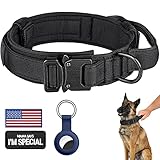 DAGANXI Tactical Dog Collar,with Handle and Airtag Case,Black L | For large dogs training and walking,Durable heavy duty metal buckle,Comfortable lining,Adjustable,with 2 patches
- 【Premium Material】Tactical dog collars is made of 1000D high-quality nylon fabric,very durable,wear-resisting. Soft and comfortable padded inner won’t hurt dog’s fur and can protect dog’s neck well.
- 【Double Security】Buckle training dog collar adopt integrated collar,magic sticker and quick release metal clasp dual design.Adjustable dog collar easy to put on and take off,the metal clasp can be released quickly in case of emergency.
- 【Control Handle】Military Training Nylon Dog Collar has special control handle,can efficiently control your dog when training, patrol,hiking, jogging, hunting, camping, working, running, jumping, traveling, camping.fits lots of medium and large dogs like German Shepherd, Border Collie, Rottweiler, Great Dane, Doberman, Golden Retriever, Husky, Labrador, Alaskan Malamute,etc.
- 【Airtags case and Patches】DAGANXI tactical dog collar comes with 1*Airtag protective case and 2*patches. Airtags Case Cover can protects your Airtags from scratches and damage, when Airtags used to track your dog, this enables your dog to find its way home. tactical dog collar comes with two patches, On the back of collar, you can also put a name tag, ID badge, or any Velcro accessory to make your dog unique.
- 【Warm prompt】Please follow the size chart to measure your dog's neck carefully before you place the order to ensure the collar is fit well to your dog.There should be left 2 fingers gap between the collar and the dogs neck.
-
Collie, Rough or Smooth — merle-associated and uncommon
Both Rough and Smooth Collies can occur in merle color families. Merle-related reduction of pigment can produce blue or partly blue eyes, including mismatched eyes, but the trait remains uncommon compared with the breed’s more familiar eye colors.
“Collie” is treated as one breed entry here, with Rough and Smooth referring to coat varieties. A blue eye alone does not establish either variety—or even prove that a dog is a Collie.
-
Shetland Sheepdog — merle-associated and uncommon
Blue merle is a recognized color family in Shetland Sheepdogs. Merle pigmentation can be accompanied by a blue, partly blue, or mismatched eye, although most Shelties are not blue-eyed.
As with other merle-bearing breeds, the coat pattern and the dog’s genetic background provide more useful context than eye color alone.
Special offer. See more information about Outbyte and uninstall instructions. Please review EULA and Privacy policy. -
Dachshund — dapple-dependent
A dapple Dachshund may have one or both blue eyes, or partly blue eyes with a marbled appearance. Dapple is the Dachshund’s familiar term for a merle-related coat pattern.
Because the pattern involves merle genetics, responsible breeding requires particular care. Two dapple-patterned Dachshunds should not be paired casually; breeders should use appropriate genetic screening and expert guidance to avoid producing puppies with an increased risk of hearing and eye defects.
-
Great Dane — harlequin or merle-associated
Blue or partly blue eyes can occur in merle-patterned Great Danes and in color combinations connected with the genetics behind harlequin coats. However, harlequin is a coat-pattern name—it does not mean that the dog has blue eyes.
A Great Dane’s eye color should therefore be considered alongside its actual coat pattern and genetic background. It is not a general characteristic of every Great Dane.
Special offer. See more information about Outbyte and uninstall instructions. Please review EULA and Privacy policy. -
Pyrenean Shepherd — rare and merle-associated
Pyrenean Shepherds are among the breeds documented in merle-testing resources. A merle individual can therefore show a blue or partly blue eye, but this is unusual in the breed overall.
Blue eyes should be described as a possible merle-linked feature—not as a defining Pyrenean Shepherd trait or a feature that a breeder should pursue by itself.
-
Mudi — rare and merle-associated
The Mudi is another breed in which merle occurs. Merle-related pigment dilution can produce a blue, partly blue, or mismatched eye in an individual dog.
Because the trait is rare rather than typical, a blue-eyed dog that resembles a Mudi should not be identified by appearance alone. Pedigree information, breed history, and, where useful, DNA testing provide better evidence.
Free tools Windows power users keep installed
One-click scans. No signup required.
Special offer. See more information about Outbyte and uninstall instructions. Please review EULA and Privacy policy. -
Chihuahua — rare and pattern-dependent
Merle occurs in some Chihuahua populations, and pigment dilution may be accompanied by blue or partly blue eyes. The appearance is unusual for the breed as a whole.
Merle Chihuahuas are also controversial in some breed-standard and registry contexts. They should not be presented as universally accepted show specimens, and a blue-eyed merle Chihuahua is not automatically evidence of a particular pedigree.
-
Pomeranian — rare and merle-associated
Merle Pomeranians can have blue or partly blue eyes, including mismatched eyes. The combination is eye-catching but not typical of Pomeranians generally.
When evaluating a very small blue-eyed dog advertised as a Pomeranian, remember that size and eye color are not enough to establish breed identity. Merle status and ancestry should be documented rather than inferred from photographs.
Recommended: Crashes or Glitches? A Free Driver Scan Usually Finds the Culprit →Recommended: Fix Windows Errors and Clear Junk Files in Minutes - Free Scan →Recommended: Update Every Outdated Driver on Your PC in One Scan - Free →Special offer. See more information about Outbyte and uninstall instructions. Please review EULA and Privacy policy. -
Koolie — working-dog and merle-associated
Koolies are working dogs included in merle-testing resources, and merle-related pigment dilution can produce blue or partly blue eyes. Their eye color can vary widely rather than following a single breed-wide rule.
Registry recognition and terminology vary by country. Not every blue-eyed herding dog is a Koolie, so confirm the dog’s working background, records, and registration information before assigning that breed name.
Also popular on Amazon
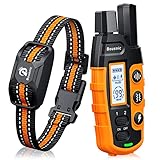 Bousnic Dog Shock Collar - 3300Ft Dog Training Collar with Remote for 5-120lbs Small Medium Large Dogs Rechargeable Waterproof e Collar with Beep (1-8), Vibration(1-16), Safe Shock(1-99) (Orange)
- Humane and Safe, Eliminate Bad Behavior Effectively: Bousnic Dog shock collar features 3 humane training modes with adjustable beep(1-8 levels), vibration(1-16 levels), safe shock(1-99 levels). It helps your unruly and hard-headed dogs learn to be a better part of your household.
- Extended 3300FT Range: Bousnic Dog Training Collar covers up to 3300Ft allowing your pet to roam farther. With dual-channel, It is perfect to train 2 dogs simultaneously outdoor at distances up to 3/4 mile.
- Fits for All Sizes of Dogs 5-120lbs: Bousnic training collar for dogs is ideal to control dogs as small as 5 pounds and as big as 120 pounds. Instant response security on/off switch button allows you to carry it without any fear of accidental touch.
- IP67 Waterproof Receiver: Bousnic electric dog collar can be used in any weather and any condition thanks to the IP67 waterproof design of the receiver (You’ll have to keep the remote control away from water).
- Incredible Battery Life: Bousnic e collar for dogs training has a decent battery life. The receiver’s battery can last for up to 15 days in working modes while the remote for over 1 month. the long battery runtime is a true lifesaver on those camping or tailgating weekends.
-
Beauceron — rare and merle-associated
Beaucerons appear in resources identifying breeds for which merle testing may be relevant. A merle-linked blue or partly blue eye is possible, but it is an unusual occurrence.
Blue eyes are not a normal expectation or a preferred feature to select for in the breed. A responsible assessment should focus on the dog’s full genetic and health background.
What’s actually slowing this PC down?
Pick the symptom - the matching free tool is one click away.
Special offer. See more information about Outbyte and uninstall instructions. Please review EULA and Privacy policy. -
Bergamasco Shepherd — rare and merle-associated
The Bergamasco Shepherd is also included among breeds for which merle testing can be relevant. A pigment-dilution pattern may produce a blue-eyed example, but blue eyes are rare in the breed overall.
The breed’s distinctive coat and appearance can make photographs misleading, so documented ancestry and a qualified evaluation are more reliable than eye color alone.
-
American Hairless Terrier — color-dependent
The United Kennel Club standard permits blue or amber eyes in blue-colored American Hairless Terriers. This makes blue eyes a documented possibility, but not a general expectation for every dog in the breed.
Here, the dog’s color is the important qualifier. A blue eye does not mean that every American Hairless Terrier—or every hairless dog—is genetically or visually the same.
Recommended: Update Every Outdated Driver on Your PC in One Scan - Free →Recommended: PC Feels Slow? A Free Scan Shows What's Dragging Windows Down →Recommended: Crashes or Glitches? A Free Driver Scan Usually Finds the Culprit →Special offer. See more information about Outbyte and uninstall instructions. Please review EULA and Privacy policy.
Rare blue-eyed possibilities
-
Dalmatian — rare
Blue eyes can be found in Dalmatians, but they are unusual rather than a characteristic eye color for the breed. The Dalmatian’s spotted coat is connected to piebald-related pigmentation, and pigment patterns in dogs can also be associated with congenital deafness risk.
A blue-eyed Dalmatian should therefore be approached with responsible health screening—not treated as a novelty to breed for. Eye color alone does not diagnose deafness, and not every blue-eyed dog has hearing impairment.
-
Australian Cattle Dog — rare or a partial-eye possibility
Roan is an important pigmentation pattern in Australian Cattle Dogs, and roan-related genetics are among the routes associated with blue or partly blue eyes. The breed is not generally defined by solid blue eyes, however.
A pale section in an iris may be more plausible than two fully blue eyes, but individual variation is substantial. The Australian Cattle Dog’s coat, working characteristics, and documented background remain more informative than eye color.
What’s actually slowing this PC down?
Pick the symptom - the matching free tool is one click away.
Special offer. See more information about Outbyte and uninstall instructions. Please review EULA and Privacy policy. -
McNab — rare and registry-dependent
McNabs appear in broad merle-testing resources, so a merle-related blue or partly blue eye is possible. The trait is rare, and breed standards and registration practices are less uniform than they are for many widely standardized breeds.
If a blue-eyed dog is described as a McNab, confirm the breed history through records or DNA where appropriate. A herding-dog appearance by itself cannot establish McNab ancestry.
Why do some dogs have blue eyes?
Blue eyes in dogs are usually the visible result of reduced pigment in the iris. The exact cause depends on the dog’s genes and sometimes on its coat pattern.
The Siberian Husky-associated route
In Siberian Huskies, researchers have identified a duplication near the ALX4 gene on canine chromosome 18 that explains much of the breed’s blue-eye variation. The same blue-eye-associated variant has also been identified in Alaskan Klee Kాలుi and some Australian Shepherds.
This is one reason a blue-eyed Husky does not need a merle coat. Its eye color can arise through a breed-associated genetic route separate from merle.
Merle
Merle is an incompletely dominant coat pattern that creates irregular patches of diluted pigment alongside areas of full pigment. Reduced pigment can also affect the eyes, producing solid blue, partly blue, marbled, or mismatched eyes.
Merle is relevant in breeds including Australian Shepherds, Miniature American Shepherds, Beaucerons, Bergamasco Shepherds, Border Collies, Cardigan Welsh Corgis, Catahoula Leopard Dogs, Chihuahuas, Collies, Dachshunds, Great Danes, Koolies, Mudis, Pomeranians, Pyrenean Shepherds, and Shetland Sheepdogs. The list is not a claim that every merle dog in every breed will have blue eyes.
White spotting, piebald, and roan-related pigmentation
Piebald or extensive white spotting and roan-related pigmentation can also be associated with blue or partly blue eyes in some dogs. These pathways are not interchangeable: a Dalmatian’s spotting, an Australian Cattle Dog’s roan, and a Dachshund’s dapple pattern involve different breed contexts.
Quick wins for a faster PC:
Clear out junk files and repair common Windows errorsFree Scan →Fix the driver behind crashes, sound loss and screen glitchesFind Drivers →Repair Windows errors before they cause bigger problemsFix Now →Also popular on Amazon
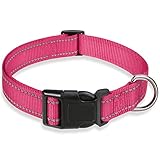
- 【SOFT MATERIALS】Nylon fabric with high density webbing to add durability; Our collar is as smooth and soft as grosgrain,no irritation to pet skin.
- 【SAFETY REFLECTIVE】Highly reflective threads keep high visibility at night for safety. It will ensurethat your dog will be seen at night and in low light situations.
- 【CONVENIENT & DURABLE】Quick release premium ABS made buckles, easy to put it on/off. The plastic buckle is curved for your dog’s comfort. The metal D ring is chrome coated to add durability.
- 【CLASSIC COLLAR】This nylon dog collar is a classic yet stylish collar that comes in 12 colors and 6 sizes so you can find just the right one for your dog. A separate loop on the collar makes it easy to add dog tags and leashs onto the collar.
- 【ADJUSTABLE LENGTH】Non-slip adjustable loop can easily adjust the size, Please take measurement of your dog's neck circumference before order placed. XXS - 3/8"x(8-12"); XS - 5/8"x(8-12"); S - 5/8"x(10-14"); M - 3/4"x(12-18") ; L - 1.0"x(14-22"); XL - 1.0"x(16-26"). Ideal personalized dog collars for small medium large boys & girls.
That is why the same visible eye color can have a different explanation in different breeds. It is also why eye color should not be used as a shortcut for diagnosing a dog’s genes.
Important: blue eyes, merle genetics, and health
Do not breed two merle-patterned dogs together. Double-merle puppies have an increased risk of auditory and ophthalmologic defects because excessive pigment loss can affect the inner ear and the eye. DNA testing can be especially useful when a dog’s merle status is uncertain or a pattern is cryptic.
A blue eye is not automatically unhealthy. Many blue-eyed dogs see normally, and eye color does not prove that a dog is deaf, blind, aggressive, healthier, or less healthy. The concern is the underlying pigment pattern and the breeding decisions around it—not the visual color by itself.
Responsible breeders working with merle-bearing breeds should discuss a merle genetic test with an appropriate veterinary genetics laboratory or testing provider. They should also follow the health and breeding requirements relevant to their breed and registry rather than selecting only for a dramatic appearance.
For an individual dog, arrange a veterinary eye exam for dogs if an eye becomes cloudy, painful, red, swollen, or suddenly bluish; if the dog squints or rubs it; or if vision seems impaired. A veterinarian may recommend additional eye testing. If hearing is a concern—particularly in a dog from a pigment pattern associated with congenital deafness—a BAER hearing test is the appropriate type of specialist screening to discuss.
Can blue eyes identify a dog’s breed?
No. Blue eyes can narrow the possibilities, but they cannot establish breed. A Siberian Husky, Australian Shepherd, Catahoula Leopard Dog, merle Border Collie, mixed-breed dog, and several less common breeds can all show blue or partly blue eyes.
Breed identification should consider the dog’s structure, coat, behavior, history, and documented ancestry. A dog DNA test kit may help owners investigate breed ancestry and selected appearance or health traits; some services also report an ALX4-related eye-color trait. Such testing is not a substitute for a veterinary diagnosis, a pedigree, or a professional assessment of an eye problem.
If you are comparing breeds rather than investigating one dog, an illustrated dog breed reference book can be useful for checking differences in size, exercise needs, grooming, temperament, and accepted coat patterns. Blue eyes are visually striking, but they should be only one small part of choosing a compatible dog.
Do blue-eyed puppies keep blue eyes?
Not always. Puppy eye color can change as pigment develops, so a puppy that appears blue-eyed may show a different shade later. Some dogs retain blue eyes, while others develop brown, amber, or mixed coloration.
Photographs also exaggerate pale eyes through lighting, flash, and reflection. Judge the eye in ordinary light and look for a clear iris rather than a cloudy surface. If a color change is sudden or accompanied by pain, redness, discharge, squinting, or vision changes, treat it as a veterinary concern—not as a normal color transition.
What blue eyes do—and do not—tell you
- They can be inherited: blue eyes may reflect a breed-associated variant, merle, dapple, white spotting, roan, or another pigment-related genetic combination.
- They are not a temperament test: blue eyes do not predict aggression, trainability, friendliness, or working ability.
- They are not proof of a breed: several breeds and mixed-breed dogs can share the same appearance.
- They are not automatically a health problem: inherited eye color is different from a newly cloudy or painful eye.
- They should not be bred for alone: responsible breeding prioritizes health, temperament, structure, and genetic compatibility.
Breed standards can differ by registry and country, especially for uncommon merle populations and breeds such as the Koolie and McNab. The breed-specific descriptions above reflect the standards and genetics resources cited in the research for this guide, not a universal rule for every registry.
Research basis: breed standards and genetics guidance from the American Kennel Club, United Kennel Club, the UC Davis Veterinary Genetics Laboratory, and the Orthopedic Foundation for Animals, together with documented information on the Husky-associated ALX4 eye-color variant.
The Tool Desk
Outbyte Driver Updater FREEScan for outdated or missing drivers - takes under a minuteDriver Scan →Outbyte PC Repair FREEClear out junk files and repair common Windows errorsFree Scan →Frequently Asked Questions
Are blue eyes in dogs a sign of poor health?
Not by themselves. Many dogs with inherited blue, partly blue, or mismatched eyes are healthy. However, merle and some other pigment patterns can be associated with congenital hearing or eye defects, especially in double-merle dogs. A newly cloudy, painful, red, or suddenly bluish eye needs prompt veterinary attention.
What dog breed most commonly has blue eyes?
The Siberian Husky is one of the best-known and most consistently common blue-eyed breeds. Alaskan Klee K सिis, Australian Shepherds, and Miniature American Shepherds can also commonly show blue or mismatched eyes, particularly when associated with their relevant genetic or merle patterns.
Can you tell a dog’s breed from its blue eyes?
No. Blue eyes occur in multiple recognized breeds and mixed-breed dogs. Eye color can provide a clue, but it cannot establish breed ancestry. Structure, history, pedigree records, and—when useful—a reputable DNA test provide stronger evidence.
Is it safe to breed two merle dogs?
No. Breeding two merle-patterned dogs can produce double-merle puppies with an increased risk of hearing and eye defects. Responsible breeders should avoid that pairing and use appropriate genetic testing when merle status is uncertain.
Windows Errors? Fix Them Before They Spread
Repair common Windows errors and clear accumulated junk for a smoother, more stable PC - no reinstall needed.Free scan · no reinstallCrashes, No Sound, or Screen Glitches?
Random freezes, missing sound and display glitches usually trace back to one bad driver. Find and replace yours safely.Free scan · under a minuteDo blue-eyed puppies always keep blue eyes?
No. Some puppies’ eye color changes as pigment develops. A puppy may retain blue eyes, develop brown or amber eyes, or keep a partly blue or mixed appearance. Sudden cloudiness or a painful color change is a medical concern rather than ordinary maturation.
The Bottom Line
The most dependable blue-eyed breeds on this list are Siberian Huskies, Alaskan Klee K要i, Australian Shepherds, and Miniature American Shepherds. In many of the other 19 breeds, blue eyes depend on merle, dapple, leopard, roan, white-spotting, or another specific genetic background. Admire the color, but evaluate the whole dog—and never choose a breeding pair or a pet based on eye color alone.





Leave a Reply