
What’s actually slowing this PC down?
Pick the symptom - the matching free tool is one click away.
The safest peaceful community tank is built by matching adult size, temperament, social needs, water conditions, feeding behavior and swimming zone—not by picking fish from a “peaceful” label alone. The 35 entries below are candidates drawn from the fish and groups identified by Aquarium Industries and AquaKeepers. They are not a universal mix-and-match roster: several entries are source categories whose exact species must be checked before purchase.
Use the list as a screening tool. Measure the aquarium’s water, compare each fish’s adult size and group requirement, and reject any combination in which a larger fish could swallow a smaller one, schooling fish would be crowded, or water preferences conflict.
As an Amazon Associate I earn from qualifying purchases.
What makes a fish suitable for a peaceful community?
A community fish is one that can coexist with varied species when its own requirements are met. Aquarium Industries’ 2014 guide describes the goal as bringing together fish compatible in temperament, water parameters and feeding requirements. Seachem’s compatibility guidance adds tank size, social behavior, aggression and predator–prey size.
Do these 3 things before closing this tab:
1Scan for outdated or missing drivers - takes under a minute2Clear out junk files and repair common Windows errors3Fix the driver behind crashes, sound loss and screen glitches“Peaceful” therefore describes only one axis. A normally calm fish can still be a poor choice if it grows large, needs a group your aquarium cannot hold, competes aggressively at feeding time, or requires chemistry far from the established tank. Fish may eat any tankmate that fits in their mouths, so compare adult body and mouth size rather than judging by the size of juveniles in a shop.
#1 Best Overall

- 6 Pack - Assorted Tetras
- Arrival Policy - For any order issues, contact me within 24 hours of delivery. A clear photo is required to resolve problems.
- Surprise Assortment – Receive a healthy tetra selected from our current assortment. Species vary based on availability.
- Wide Variety – May include Glowlight, Black Phantom, Serpae, Buenos Aires, Cardinal, Emperor, Black Skirt, Colombian, Lemon, Red Eye, and other tetra species.
- Great for Community Aquariums – These tetras are peaceful, they are an excellent addition to most freshwater community aquariums.
- Adult size and predation: Rule out combinations in which one fish could swallow or seriously injure another.
- Temperament: Match territorial or fin-nipping behavior to the existing community; do not assume every member of a broad group behaves alike.
- Schooling and social needs: A filter does not compensate for an undersized group or a crowded aquarium.
- Water: Compare measured temperature and chemistry with the preferred range for every species.
- Feeding: Confirm that slow bottom feeders can get food and that active fish will not monopolize it.
- Swimming zone: Combining surface, mid-water and bottom users can reduce competition for space, food and territory.
- Capacity: Consider the tank’s dimensions and crowding stress, not filtration alone.
The 35 candidates, with the necessary cautions
The original source material does not establish a verified, current list of exactly 35 species. To preserve that limitation, the table includes named fish plus category-level entries explicitly identified by the sources. “Other” or “unspecified” means the exact species must be identified and researched; it is not a recommendation to add an unknown fish.
| # | Candidate | How to interpret it |
|---|---|---|
| 1 | Neon tetra | Small schooling tetra; use the care range below and keep a proper group. |
| 2 | Cardinal tetra | Schooling tetra; verify its adult size and water fit for your aquarium. |
| 3 | Rummy-nose tetra | Schooling tetra named by Aquarium Industries; check current species-specific guidance. |
| 4 | Other tetra species named by the guide | Category entry only; identify the exact species before purchase. |
| 5 | Harlequin rasbora | Schooling rasbora with the AquaKeepers range shown below. |
| 6 | Other rasbora species named by the guide | Do not treat all rasboras as interchangeable; verify size, group and water needs. |
| 7 | Guppy | Livebearer; check adult size, sex ratio and the water chemistry of your tank. |
| 8 | Molly | Livebearer; confirm the particular molly variety’s adult size and chemistry preference. |
| 9 | Platy | Livebearer; match its social needs and water to the established aquarium. |
| 10 | Swordtail | Livebearer that can become relatively large; compare adult size before mixing. |
| 11 | Other livebearer species | Source category only; identify the species and reproductive expectations. |
| 12 | Selected South American cichlid | “Selected” is essential: individual cichlids require separate research for size and territory. |
| 13 | Another selected cichlid species | Not a blanket endorsement of cichlids; confirm temperament and adult size. |
| 14 | Cherry barb | Barb named as a candidate; keep the species’ social and water requirements in view. |
| 15 | Other barb species | Species-level checking is mandatory because not all barbs are peaceful. |
| 16 | Tiger barb | Listed in the dated guide but specifically illustrates the warning that not all barbs are peaceful; do not assume community compatibility. |
| 17 | Zebra danio | Active schooling danio; provide sufficient swimming room. |
| 18 | Leopard danio | Danio candidate; verify group size and activity level before adding slower fish. |
| 19 | Pearl danio | Danio candidate; check its adult size, temperature and social requirements. |
| 20 | Other danio species | Category entry; identify the exact species and its activity level. |
| 21 | Loach | Broad category named by Aquarium Industries; species, adult size and group needs vary. |
| 22 | Another loach species | Do not add an unidentified loach; confirm eventual size and social behavior. |
| 23 | Bronze corydoras | Bottom-dwelling schooling catfish; AquaKeepers specifies a group of six or more and soft sand. |
| 24 | Albino corydoras | Care example from AquaKeepers; treat the albino form as a corydoras with the same group and substrate considerations. |
| 25 | Other corydoras species | Identify the species before purchase; group and substrate needs are not automatically identical. |
| 26 | Sucker-mouth catfish | Broad category from the guide; confirm adult size, diet and whether the aquarium can supply food. |
| 27 | Another sucker-mouth catfish species | Species-level verification is required; “sucker-mouth” does not define one care profile. |
| 28 | Honey gourami | Small gourami example from AquaKeepers; compare its calm-water and social requirements. |
| 29 | Other gourami species | Gourami temperament and adult size vary; do not generalize from honey gouramis. |
| 30 | Rainbowfish | Group named by Aquarium Industries; check the exact species because size and activity differ. |
| 31 | Other rainbowfish species | Category entry; ensure the tank offers adequate swimming length. |
| 32 | Tetra species not individually named in the guide | Research the scientific name, adult size and school requirement before treating it as a candidate. |
| 33 | Rasbora species not individually named in the guide | Use only after confirming species-specific compatibility. |
| 34 | Barb species requiring individual checks | Especially important because the guide warns that the group is not uniformly peaceful. |
| 35 | Gourami species requiring individual checks | Confirm territory, temperament, adult size and water range for the exact species. |
Published care ranges for four useful examples
AquaKeepers gives the following husbandry ranges. Its publication date was not confirmed, so treat these as source-specific starting points, not guarantees. Test the aquarium and confirm current species guidance before stocking.
Rank #2

- Bright Cardinal Tetra Live Fish: Add vibrant blue and red color to your freshwater aquarium with Cardinal Tetras, a classic tropical schooling fish loved for planted and community tanks
- Peaceful Community Aquarium Fish: Cardinal Tetras are calm, active swimmers that pair well with other small peaceful species in properly maintained freshwater aquariums
- Compatible with Community Tanks: Suitable for peaceful freshwater setups with other small, non-aggressive fish such as rasboras, small tetras, corydoras, and other gentle tank mates
- Enhances Planted Aquariums: Cardinal Tetras stand out beautifully against green plants, driftwood, and dark substrate, making them a favorite for aquascaped tanks
- Arrival Care: Fish are carefully selected and packed for safe delivery. Acclimate slowly upon arrival and place into a stable, cycled freshwater aquarium
| Fish | Temperature | pH | Social or substrate note |
|---|---|---|---|
| Neon or cardinal tetra | 72–78°F | 6.0–7.2 | Groups of 6–8 minimum, according to AquaKeepers. |
| Harlequin rasbora | 73–80°F | 6.0–7.5 | Groups of 6–8, according to AquaKeepers. |
| Bronze or albino corydoras | 72–79°F | 6.5–7.5 | Group of 6 or more; soft sand substrate, according to AquaKeepers. |
| Honey gourami | 74–82°F | 6.0–7.5 | AquaKeepers supplies the range but no universal group number. |
How to choose tankmates step by step
- Measure the existing aquarium. Record temperature and water chemistry with a freshwater aquarium water test kit. Seachem advises comparing the tank’s results with the parameters preferred by prospective fish. Test the established tank rather than relying on tap-water assumptions.
- Write down adult sizes. Use the eventual adult size, not the juvenile size at the store. Eliminate any fish whose mouth could accommodate another inhabitant.
- Check social requirements. Note the minimum group specified for each schooling or shoaling fish. A tank that can hold six neon tetras may not have room for six larger, more active fish.
- Compare temperament and activity. Remove fin-nippers, territorial fish or hyperactive species when they would stress slower tankmates. The tiger-barb entry is a reminder that a broad category cannot substitute for a species check.
- Match water ranges. Choose fish whose temperature and chemistry ranges overlap the aquarium’s measured, stable conditions. Do not force a compromise by repeatedly altering water for incompatible species.
- Plan feeding access. Include the feeding method and speed of each fish. Bottom dwellers need food to reach the substrate; surface feeders should not consume every portion before slower fish eat.
- Map swimming zones. Combining compatible surface, mid-water and bottom users can reduce competition. This is a space-management tool, not permission to exceed the tank’s capacity.
- Add gradually and observe. Watch breathing, hiding, torn fins, chasing and weight loss after each addition. Remove or separate a fish if persistent harassment or predation appears.
Common mistakes and practical fixes
Choosing by a “peaceful” label alone
Symptom: Fish are calm in the shop but chase, hide or fail to feed at home. Fix: Recheck adult size, social group, territory and feeding competition; temperament can change in a confined aquarium.
Quick wins for a faster PC:
Repair Windows errors before they cause bigger problemsFix Now →Fix the driver behind crashes, sound loss and screen glitchesFind Drivers →Clear out junk files and repair common Windows errorsFree Scan →Mixing broad categories without identifying species
Symptom: A barb, loach, cichlid, gourami or rainbowfish outgrows the plan or becomes territorial. Fix: Obtain the scientific name and research that exact fish. The dated Aquarium Industries guide is a candidate source, not a current guarantee for every member of a category.
Rank #3

- Pack of 5 Rummy Nose Tetras – Add a beautiful group of Rummy Nose Tetras to your freshwater aquarium, known for their bright red noses, silver bodies, and striped black-and-white tails.
- Peaceful Schooling Fish – Rummy Nose Tetras are active, calm community fish that look best when kept in groups, creating a lively schooling display in your tank.
- Great for Community Aquariums – Ideal for peaceful freshwater setups with other small, non-aggressive fish such as rasboras, small tetras, corydoras, and other gentle tank mates.
- Perfect for Planted Tanks – Their red, silver, and striped coloration stands out beautifully against live plants, driftwood, rocks, and dark aquarium backgrounds.
- Carefully Packed for Live Delivery – Each order is selected and packed with care for live fish shipping. Slowly acclimate upon arrival before adding to a fully cycled freshwater aquarium.
Ignoring schooling numbers
Symptom: Schooling fish remain skittish, hide or show chronic stress despite good filtration. Fix: Meet the species’ group requirement first and assess whether the aquarium has enough open swimming space.
Relying on filtration to solve crowding
Symptom: Water tests look acceptable but fish fight, fail to thrive or occupy no usable space. Fix: Reduce stocking or choose smaller, less active species; filtration cannot remove territorial and social stress.
Rank #4
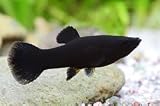
- Includes 5-Pack Molly Black Live Fish featuring solid black coloration
- Active livebearer species adds continuous swimming movement
- Dark color contrast enhances freshwater community aquarium displays
- Adaptable freshwater fish suitable for stable, properly maintained tanks
- Recommended for medium to large aquariums with peaceful, compatible species
Buying a bottom feeder as a cleanup solution
Symptom: A sucker-mouth catfish or corydoras becomes thin while other fish remain well fed. Fix: Provide an appropriate diet and substrate, and confirm that the exact species’ adult size and food needs fit the aquarium.
Building a sensible community plan
Start with the aquarium you have, not a shopping list. Select one compatible schooling group, then assess whether a bottom-dwelling group and a calm mid- or upper-water fish can share the measured temperature and chemistry. Leave capacity for adult growth and normal behavior. A plan that uses fewer species but satisfies each fish’s social needs is safer than a crowded display containing many “peaceful” names.
Best Value
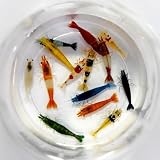
- 🦐 1. Vibrant Candy Skittle Color Mix Receive 10 adult mixed-color Neocaridina shrimp plus 1 extra free. Every pack includes a beautiful assortment of vibrant colors such as Fire Red, Blue Dream, Orange, Yellow, Green Jade, Chocolate, Carbon Rili, Orange Rili and more. Every shipment is unique.
- 🌿 2. Perfect Cleanup Crew for Freshwater Aquariums These active freshwater shrimp naturally graze on algae, biofilm, leftover food and organic waste, helping maintain a cleaner and healthier aquarium while adding constant movement and brilliant color.
- 💪 3. Hardy Beginner-Friendly Shrimp Adult Neocaridina shrimp are among the easiest freshwater shrimp to keep. They adapt well to a wide range of water parameters, making them ideal for beginners, planted tanks, nano aquariums and community tanks.
- 📦 4. Professionally Packed with Live Arrival Guarantee Every order is carefully packed using insulated packaging, breather bags and temperature protection when required to maximize survival during transit. If a verified DOA occurs, our support team will quickly help with a replacement or solution.
Recheck every source claim against current species-specific care before publication or purchase. Aquarium Industries’ detailed list dates from 2014, and its common or scientific names and recommendations may need updating. AquaKeepers supplies useful example ranges but has no confirmed publication date in the available material. Those limitations are reasons to verify, not reasons to treat all 35 entries as compatible in one tank.
Bottom line
Peaceful community fish work when the entire compatibility equation works: adult size, temperament, social group, water, diet, swimming zone and tank capacity. Use the 35 entries as a research shortlist, identify every category-level fish precisely, test the aquarium, and add only combinations whose requirements genuinely overlap.
Quick Recap
Product prices and availability are accurate as of the date/time indicated and are subject to change. Any price and availability information displayed on Amazon at the time of purchase will apply.
Free tools Windows power users keep installed
One-click scans. No signup required.





Leave a Reply