PC Slower Than It Used to Be?
A free scan shows the junk files, broken settings and background clutter dragging Windows down - then fixes them in one click.Free scan · Windows 10 & 11Crashes, No Sound, or Screen Glitches?
Random freezes, missing sound and display glitches usually trace back to one bad driver. Find and replace yours safely.Free scan · under a minuteThe 40 breeds below show why Spitz is a type, not a single personality. They range from powerful Arctic freight dogs and endurance sled dogs to Finnish hunters, Nordic herders, Japanese hunting breeds, European companions, and broader primitive or northern types. The right choice depends on the dog’s original work, not just its pointed ears and curled tail.
What does spitz mean?
Spitz is a useful type description, not one universally standardized kennel-club category. The Fédération Cynologique Internationale (FCI) provides the clearest formal framework through Group 5, titled Spitz and primitive types. In broader educational and enthusiast usage, however, spitz can include dogs from several registries and regions that share traits such as erect ears, a wedge-shaped head, a tail carried over the back, and a dense coat.
As an Amazon Associate I earn from qualifying purchases.
That broad use is why this list includes Arctic sled dogs, Nordic hunters, herders, watchdogs, Asian hunting breeds, European companions, and a few primitive or northern breeds commonly compared with spitz dogs. The label does not tell you whether a dog is easy to train, suitable for apartment living, friendly with every dog, or comfortable in hot weather. Those answers depend on the individual breed and dog.
The Tool Desk
Outbyte Driver Updater FREEFix the driver behind crashes, sound loss and screen glitchesFind Drivers →Outbyte PC Repair FREEClear out junk files and repair common Windows errorsFree Scan →Spitz breeds at a glance
| What the dog was developed to do | Examples from this list | Ownership issue to investigate |
|---|---|---|
| Freight sledding and endurance work | Alaskan Malamute, Canadian Eskimo Dog, Greenland Dog, Siberian Husky, Yakutian Laika | Daily outlets, escape-proof containment, stamina, and climate management |
| Hunting | Finnish Spitz, Karelian Bear Dog, the Laikas, Akita, Shiba Inu, Shikoku, Kishu Ken | Prey drive, recall limitations, independence, and introductions to other animals |
| Herding and farm work | Icelandic Sheepdog, Norwegian Buhund, Finnish Lapphund, Lapponian Herder, Swedish Vallhund | Exercise, alert barking, trainability, and herding behavior |
| Watchdog and companion work | German Spitz, Keeshond, Pomeranian, Volpino Italiano, Japanese Spitz, Eurasier | Vocality, coat maintenance, socialization, and small-dog management where relevant |
| Primitive or territorial work | Chow Chow, Korean Jindo Dog, Canaan Dog, Basenji | Independent decision-making, careful socialization, and management of territory or recall |
40 must-know Spitz breeds
Nordic sled, Arctic, and northern working breeds
1. Alaskan Malamute
Classification: FCI Group 5; Arctic freight sled dog. The Alaskan Malamute was built to move heavy loads over distance, so strength and endurance matter more than simply having a husky-like appearance. It typically needs substantial daily activity, purposeful training, and secure containment. Early socialization is important because a powerful, independent dog is difficult to manage after unwanted habits become established. Expect heavy shedding and a coat-care routine that expands during seasonal coat blow.
#1 Best Overall

- One of the best dog brushes on the market, It has a double row of stainless steel pins/teeth to reduce pulling the coat without damaging it or hurting your pet. It is a very gentle experience for your dog, cat, rabbit, or any other furry friend that needs brushing.
- Our undercoat Rake dramatically reduces shedding by up to 90% after just 1 short session. This is compared to only 30% with the average Brush or comb. Perfect for matted, heavy shedding undercoats and fur.
- Our professional grooming brushes can be used on both dogs, cats, rabbits, or equestrian horses that have short, Medium or long hair. This professional, high quality brush is priced well, so you can buy one to keep in the house and one for the car.
- Recommended and used by veterinarians, groomers, and pet professionals. The perfect brush for removing unwanted shedding hair. Scientifically designed to promote healthy skin and a shiny top coat. Protects you and your pet from skin allergies, and minimizes irritation from build up, which reduces allergic airborne elements.
- The innovative design allows air to your pet's skin and stimulates the hair follicles, allowing the release of healthy oils. The contouring handle is strong and durable, made of a non-slip, non-toxic silicone. The stainless pins take the unnecessary ’hurt’ out of grooming your pet.
2. Canadian Eskimo Dog
Classification: FCI Group 5; rare Canadian Arctic sled breed. This is a working sled dog rather than an easygoing decorative companion. Its rarity can make availability, breeder access, and knowledgeable training support significant practical questions. Prospective owners should verify that they can meet the breed’s exercise and management needs and should be especially cautious about buying from a source that cannot explain working temperament, socialization, and health history.
3. Greenland Dog
Classification: FCI Group 5; traditional Greenlandic sled dog. The Greenland Dog belongs in the high-drive working category. A home that expects a low-maintenance pet may be a poor match, even if it has ample outdoor space. Plan for structured physical outlets, secure management, and training that works with an independent dog rather than relying on repetitive obedience drills alone.
4. Samoyed
Classification: FCI Group 5; Arctic working and herding breed. The Samoyed combines a profuse white coat with a generally sociable, people-oriented presentation. That friendliness does not remove its need for activity and engagement. Grooming is a major ownership responsibility: dense furnishings and seasonal shedding demand regular brushing, and a neglected coat can become uncomfortable. It is often a more socially accessible choice than a highly reserved hunting breed, but it is not a sedentary one.
5. Siberian Husky
Classification: FCI Group 5; endurance sled dog. Siberian Huskies are known for stamina, athleticism, escape behavior, and vocal communication. A fenced yard is not automatically secure enough; gates, digging, climbing, and door routines deserve deliberate planning. Prey drive may complicate life with small animals, and recall should be trained without assuming it will become perfectly reliable in every environment. Daily exercise should be paired with enrichment and safe opportunities to run.
6. Yakutian Laika
Classification: FCI Group 5; northern Russian working breed associated with sledding and hunting. The Yakutian Laika is a versatile northern worker, not simply a smaller alternative to a sled dog. Its activity needs and working associations should shape the decision. Availability may be limited depending on country, so prospective owners should investigate breeder quality, transport, legal requirements, and access to trainers familiar with northern working breeds.
Nordic hunting breeds and Laikas
7. Finnish Spitz
Classification: FCI Group 5; Finnish hunting spitz. The Finnish Spitz is alert, active, and notably vocal. Its characteristic communication can become nuisance barking without early teaching, appropriate exercise, and management of triggers. Regular brushing is usually manageable compared with the densest sled-dog coats, but seasonal shedding still requires attention. Scent-based games and short, rewarding training sessions suit its hunting background better than monotonous repetition.
8. Karelian Bear Dog
Classification: FCI Group 5; Finnish and Russian hunting breed. The Karelian Bear Dog is an independent, intense hunting dog for experienced handlers. Prey drive and the ability to make decisions at a distance are central considerations, particularly around other dogs and livestock. Socialization should be thoughtful rather than rushed, and secure outdoor management is essential. Its striking appearance should never be the main reason a first-time owner chooses it.
Recommended Free Tools
9. Norwegian Elkhound
Classification: FCI Group 5; Norwegian hunting spitz. This sturdy, energetic breed has the stamina for active homes and can also be an attentive watchdog. It needs exercise beyond a brief walk and may use its voice when excited, bored, or responding to activity around the home. The dense coat sheds, so owners should plan regular brushing and more intensive care during seasonal coat changes.
10. Norwegian Lundehund
Classification: FCI Group 5; rare Norwegian island hunting breed. The Norwegian Lundehund has a distinctive specialized history and is not simply a miniature general-purpose spitz. Rarity means that prospective owners should learn about breed-specific health guidance, breeder practices, and the availability of veterinary and training support before committing. It still needs activity and enrichment, but its unusual background makes informed sourcing especially important.
11. Norrbottenspets
Classification: FCI Group 5; Swedish and Finnish hunting spitz. The Norrbottenspets is an alert, active hunting dog that benefits from daily exercise and opportunities to use its senses. It may be a good fit for people who enjoy training and outdoor activities, but less so for a household seeking a quiet ornament. Recall, prey-drive management, and secure containment should be part of the plan from the beginning.
12. East Siberian Laika
Classification: FCI Group 5; Russian hunting and working breed. The East Siberian Laika is a demanding northern dog with working drive and independence. Its needs are best assessed in terms of purpose and routine, not just yard size. Scent work, tracking-style games, structured outdoor activity, and clear boundaries can provide better outlets than unplanned free running. Experienced ownership is an advantage.
Do these 3 things before closing this tab:
1Fix the driver behind crashes, sound loss and screen glitches2Repair Windows errors before they cause bigger problems3Scan for outdated or missing drivers - takes under a minuteRank #2

- DUAL-SIDED DESIGN: Our Undercoat Rake Dog brush is perfect for deshedding your pet's coat. Designed with a dual-sided design, start with a 9-teeth side to tackle stubborn mats and tangles, and finish with a 17-teeth side to thin out and deshed after.
- HEALTHY COAT AND REDUCED SHEDDING: Our deshedding brush for dogs is designed with sharpened but finely rounded teeth that allow you to easily and safely remove mats, tangles, knots, and loose hair without irritation or scratching.
- EFFECTIVE DESHEDDING TOOL: This dematting and deshedding brush gently removes loose hair and eliminates tangles, knots, dander, and trapped dirt. The perfect cat grooming tool solution for pets with thick fur or dense double coats.
- COMFORTABLE TO USE: Keep your pet clean and healthy with our dog and cat brush for grooming. Designed with a lightweight, comfortable handle and a non-slip rubber base to keep the brush from moving around as you brush your pet.
- PERFECT GIFT FOR PET LOVERS: Our dog comb brush is a must-have grooming products for dogs and cats. A great gift undercoat rake dog for pet lovers who want to keep their fur buddies clean, healthy, and well-groomed!
13. Russo-European Laika
Classification: FCI Group 5; Russian hunting spitz. The Russo-European Laika was developed for active hunting work and may be independent, alert, and highly motivated by its environment. Training should be reinforcement-based and practical, with management for prey drive and escape opportunities. A prospective owner should be comfortable building cooperation rather than expecting automatic obedience from a dog bred to work with considerable initiative.
14. West Siberian Laika
Classification: FCI Group 5; Siberian hunting spitz. The West Siberian Laika is another working Laika whose exercise and mental needs can exceed those of a typical companion dog. Its hunting drive affects off-leash decisions, small-animal households, and recall expectations. Secure fencing, purposeful activity, and early socialization are more important than choosing it solely for its attractive northern coat.
Nordic herding, watchdog, and farm breeds
15. Icelandic Sheepdog
Classification: FCI Group 5; Icelandic herding breed. The Icelandic Sheepdog is sociable, energetic, and alert. Herding heritage often comes with a tendency to notice and announce movement, so barking should be addressed through training and thoughtful control of visual and environmental triggers. It needs daily activity and interaction, not just access to a yard. A friendly temperament still benefits from puppy socialization and calm introductions.
16. Norwegian Buhund
Classification: FCI Group 5; Norwegian farm and herding spitz. The Norwegian Buhund is intelligent, trainable, and active. It can be a rewarding partner for trick training, dog sports, and outdoor routines, but its energy and alertness may be frustrating in an understimulating home. Short sessions with clear rewards tend to work better than drilling the same exercise long after the dog has lost interest.
Quick wins for a faster PC:
Repair Windows errors before they cause bigger problemsFix Now →Scan for outdated or missing drivers - takes under a minuteDriver Scan →17. Swedish Lapphund
Classification: FCI Group 5; Swedish reindeer-herding spitz. The Swedish Lapphund is a family-oriented northern herder with a coat that needs consistent care. It generally benefits from social contact, exercise, and activities that involve cooperation with its people. Expect seasonal shedding and do not assume that a friendly family orientation means the breed can thrive without training, enrichment, or boundaries.
18. Swedish Vallhund
Classification: FCI Group 5; Swedish cattle-herding breed commonly described as spitz-type. Compact but purposeful, the Swedish Vallhund combines intelligence with herding instincts. Its small stature can mislead owners into underestimating its need for activity and training. Chasing, heel-nipping, alert barking, or attempts to control household movement should be redirected early through reward-based training and appropriate outlets.
19. Finnish Lapphund
Classification: FCI Group 5; Finnish reindeer-herding breed. The Finnish Lapphund is often appreciated for its friendly temperament and trainability, but it remains an active, double-coated working dog. Daily walks should be supplemented with mental challenges and cooperative training. Seasonal shedding can be substantial, so owners should be prepared for regular brushing rather than treating grooming as an occasional cosmetic task.
20. Lapponian Herder
Classification: FCI Group 5; Finnish reindeer-herding breed. The Lapponian Herder should not be confused with the Finnish Lapphund. It is a distinct working breed with herding drive and a practical, active heritage. It may suit an owner who wants to train and work with a dog, but its needs can be underestimated if it is chosen only because it resembles a softer-coated companion spitz.
Free tools Windows power users keep installed
One-click scans. No signup required.
European spitz
21. German Spitz
Classification: FCI Group 5; a breed framework with multiple size varieties. German Spitz is not just one uniform size. The FCI framework includes varieties traditionally associated with Wolfspitz or Keeshond, Giant Spitz, Mittelspitz, Kleinspitz, and Zwergspitz or Pomeranian. The varieties differ substantially in size and practical management, so buyers should clarify which variety and registry terminology they are discussing. The profuse double coat needs routine brushing, with daily attention often appropriate during heavy coat blow and less frequent maintenance at other times.
22. Keeshond
Classification: FCI German Spitz, Wolfspitz variety; commonly treated as a separate breed in U.S. contexts. The Keeshond is historically and formally connected to the German Spitz framework even though many American readers encounter it as its own breed. That naming difference matters when comparing standards, breeders, and health guidance. Its abundant coat requires regular maintenance, and its alert companion-dog nature makes socialization, household manners, and barking management worthwhile from puppyhood.
23. Pomeranian
Classification: FCI German Spitz, Zwergspitz variety; commonly presented as a distinct AKC breed. The Pomeranian is a small companion spitz with a substantial coat and a confident personality. Small size does not eliminate exercise, training, or socialization needs, and small-dog management includes preventing falls, rough handling, door escapes, and interactions with much larger dogs. Coat care is an ongoing responsibility, particularly around the feathering and areas that mat easily.
Rank #3

- Safari Undercoat Rake: This deshedding rake deeply penetrates undercoats with precision tapered pins to prevent matting; it's the perfect addition to your grooming tools for dogs
- Dematting Comb for Dogs: Our dog undercoat brush maintains a healthy, beautiful coat by removing mats and tangles; this dog detangler brush is gentle but effective
- Grooming Comb for Dogs: The precision tapered pins penetrate deeply into the coat to remove mats and tangles, making it an effective dog undercoat rake
- Heavy-Duty Dog Shedding Comb: The double row of pins on this dog dematting comb provide maximum performance and are perfect for dogs with thick, dense undercoats
- Coastal Pet Cares: We design and deliver quality products that people trust for the pets they love
24. Volpino Italiano
Classification: FCI Group 5; Italian companion and watchdog spitz. The Volpino Italiano is a relatively rare small spitz valued historically as a companion and watchdog. Its alertness can produce barking when people or activity approach the home, while its coat needs regular brushing. Prospective owners should investigate availability and breeder quality carefully rather than assuming that a rare breed will be easy simply because it is small.
25. Schipperke
Classification: broader spitz-type entry; not treated here as an FCI Group 5 breed. The Schipperke is a small Belgian companion and working dog commonly included in wider spitz discussions. Its compact body can conceal a lively, watchful, independent character. Owners should provide training, games, and appropriate activity instead of expecting a low-effort lapdog. Its classification illustrates why the everyday word spitz is broader than a single formal group.
Asian spitz and related breeds
26. Akita
Classification: FCI Group 5; large Japanese hunting and guardian breed. The Akita is powerful, independent, and not a universal match for a busy dog park or a multi-dog household. Same-sex dog considerations, careful socialization, and controlled introductions deserve serious attention. Training should build cooperation and reliable management without assuming that the breed will respond like a highly biddable herder. Its size and strength make prevention more important than correcting problems after they appear.
27. American Akita
Classification: FCI Group 5; related to, but distinguished from, the Japanese Akita in many regional contexts. The American Akita should be researched separately from the Japanese Akita when comparing standards, adult size, appearance, and breeder guidance. It is a large, strong, independent dog that requires socialization, responsible containment, and an owner prepared for careful dog-to-dog management. Ask a breeder and registry to identify which type and standards apply in your country.
28. Chow Chow
Classification: FCI Group 5; ancient Chinese breed. The Chow Chow has a dense coat and a reserved temperament. It needs thoughtful socialization and calm, respectful handling rather than forced interaction with strangers. Heat management is particularly important: a thick coat does not make a dog safe in hot weather, and exercise should be adjusted for humidity, sun, acclimatization, age, health, and individual response.
29. Eurasier
Classification: FCI Group 5; German-developed Asian-European companion breed. The Eurasier was developed as a companion and is often described in terms of moderate activity, family attachment, and some reserve with unfamiliar people. It still needs daily exercise, training, and enrichment, but it may be a better fit for a household seeking a companion-oriented spitz than a high-drive sled or hunting breed. Early socialization should support confidence without overwhelming a cautious dog.
30. Hokkaido
Classification: FCI Group 5; Japanese hunting spitz. The Hokkaido is a rare hunting breed with athletic ability and prey drive. It is better suited to an experienced owner who understands independent dogs and can provide secure management. Availability, breeder support, and access to appropriate training may be limiting factors outside its established regions.
31. Kai Ken
Classification: FCI Group 5; Japanese hunting breed. The Kai Ken is athletic, loyal, and independent. Its hunting background means that a close bond with its family does not necessarily translate into unrestricted off-leash reliability. Give it structured exercise, scent and problem-solving activities, and gradual socialization. Its needs are best met by an owner who enjoys active training rather than by someone choosing on appearance alone.
32. Kishu Ken
Classification: FCI Group 5; Japanese hunting breed. The Kishu Ken is often characterized by quiet intensity rather than constant noisy behavior. Prey drive, independence, and careful socialization remain important considerations. A calm exterior should not be mistaken for low energy or automatic obedience; the breed benefits from consistent boundaries, purposeful activity, and a handler who can manage a hunting dog in real-world settings.
33. Korean Jindo Dog
Classification: FCI Group 5; Korean hunting and companion breed. The Korean Jindo Dog is known for independence and loyalty, qualities that can produce a close family bond while making training and recall management more nuanced. Secure containment is prudent, and introductions to unfamiliar dogs or people should be handled thoughtfully. Owners should reward cooperation and avoid assuming that affection alone guarantees compliance in distracting environments.
34. Shiba Inu
Classification: FCI Group 5; Japanese hunting breed and popular companion. The Shiba Inu is confident, independent, and often more challenging to manage than its moderate size suggests. Escape behavior and unreliable recall in stimulating situations are common planning concerns, so doors, fencing, harnesses, and identification deserve attention. Training should be reward-based, concise, and realistic. A Shiba can be an engaging companion, but it is not automatically a beginner-friendly small dog.
Rank #4

- One of the best dog brushes on the market, It has a double row of stainless steel pins/teeth to reduce pulling the coat without damaging it or hurting your pet. It is a very gentle experience for your dog, cat, rabbit, or any other furry friend that needs brushing.
- Our undercoat Rake dramatically reduces shedding by up to 90% after just 1 short session. This is compared to only 30% with the average Brush or comb. Perfect for matted, heavy shedding undercoats and fur.
- Our professional grooming brushes can be used on both dogs, cats, rabbits, or equestrian horses that have short, Medium or long hair. This professional, high quality brush is priced well, so you can buy one to keep in the house and one for the car.
- Recommended and used by veterinarians, groomers, and pet professionals. The perfect brush for removing unwanted shedding hair. Scientifically designed to promote healthy skin and a shiny top coat. Protects you and your pet from skin allergies, and minimizes irritation from build up, which reduces allergic airborne elements.
- The innovative design allows air to your pet's skin and stimulates the hair follicles, allowing the release of healthy oils. The contouring handle is strong and durable, made of a non-slip, non-toxic silicone. The stainless pins take the unnecessary ’hurt’ out of grooming your pet.
35. Shikoku
Classification: FCI Group 5; Japanese hunting spitz. The Shikoku is an active hunting breed that is generally less beginner-oriented than its size and attractive coat might suggest. It needs physical outlets, mental work, socialization, and careful prey-drive management. Owners should be comfortable with an independent dog and should not rely on a dog park or occasional long hike to meet its needs.
36. Japanese Spitz
Classification: FCI Group 5; small-to-medium companion spitz. The Japanese Spitz is a sociable companion breed with an alert nature and a conspicuous white coat. Regular brushing keeps the coat manageable, especially during shedding periods, and training helps prevent alert behavior from becoming excessive barking. Its companion orientation may make it more accessible than a specialized hunting breed, but it still needs daily interaction, exercise, and basic manners.
37. Thai Bangkaew Dog
Classification: FCI Group 5; Thai spitz-type breed. The Thai Bangkaew Dog can have strong guarding tendencies and therefore needs deliberate socialization, clear household rules, and careful introductions. Prospective owners should assess their ability to manage an alert dog around visitors, neighboring animals, and changing environments. It should not be selected solely as a property alarm; a guardian breed still needs humane training, exercise, and family interaction.
Broader primitive and spitz-type entries
38. Basenji
Classification: broader primitive-type comparison entry rather than an FCI Group 5 spitz in this guide. The Basenji is an African primitive hunting dog often included in broad spitz comparisons because of its erect ears, curled tail, and independent character. It is not interchangeable with a Nordic sled dog. Its hunting background, self-directed nature, and recall limitations require realistic management, enrichment, and patient training.
39. Canaan Dog
Classification: broader primitive-type entry with spitz-like features. The Canaan Dog has a Middle Eastern primitive heritage and may be territorial, alert, and independent. Socialization should be broad but controlled, with particular attention to visitors, other dogs, and changes around the home. Secure management and training that rewards calm observation are more useful than expecting a naturally welcoming dog in every situation.
40. Alaskan Klee Kai
Classification: modern northern companion breed commonly described as spitz-type. The Alaskan Klee Kai is a modern companion breed with a northern appearance. It should not be conflated with the Siberian Husky: similar coloring or facial markings do not mean identical size, history, temperament, or exercise requirements. It still needs activity, training, socialization, and careful escape prevention, while its smaller size makes household and small-dog safety especially relevant.
What’s actually slowing this PC down?
Pick the symptom - the matching free tool is one click away.
What owning a spitz dog usually involves
Coat care: double coats are a routine, not a decoration
Many spitz breeds have dense double coats. A soft undercoat provides insulation, while a coarser outer coat protects the skin and helps shed moisture. Coat density varies widely, so a Pomeranian, Samoyed, Siberian Husky, Schipperke, and Basenji should not be placed on one identical grooming schedule.
- Choose a brush or undercoat tool according to the dog’s coat length, density, furnishings, and tolerance.
- Check behind the ears, under the collar, in the armpits, around the trousers or feathering, and through the tail.
- Increase brushing when the dog is blowing its seasonal undercoat.
- Use a professional groomer when you cannot safely remove mats or the dog becomes distressed.
- Ask a veterinarian or qualified groomer about painful matting, parasites, inflamed skin, or sudden coat changes.
For a dense-coated dog, an undercoat rake for double-coated dogs can be a useful grooming-kit option, but it is not right for every coat. Choose an appropriate size and pin design, use light pressure, and stop if the dog shows discomfort. A long-pin slicker brush can help separate and lift coat, while a metal grooming comb is useful for checking whether brushing reached through feathered or dense areas. No tool replaces professional or veterinary help for severe mats or skin disease.
Do not routinely shave a healthy double-coated dog to keep it cool. Removing the insulating layers can expose skin to sun and may contribute to abnormal regrowth. Coat length is only one part of heat safety, and shaving is not a general heatstroke-prevention strategy.
Exercise and enrichment
There is no honest single exercise quota for all 40 breeds. A large freight sled dog, a hunting Laika, a compact herder, and a small companion spitz have different stamina and management needs. The reliable general rule is daily physical activity plus mental enrichment, adjusted for age, health, weather, and the individual dog.
Useful outlets include structured walks, scent games, trick training, food puzzles, cooperative grooming practice, secure-area running, breed-appropriate pulling, tracking-style activities, and performance work. Independent breeds often learn better through short, rewarding sessions than through repetitive drilling. A yard is helpful, but it is not a substitute for interaction or a secure plan for exercise.
Best Value
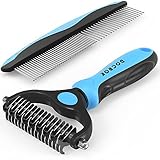
- 【Easy Dematting and Deshedding Tools】: Our Grooming brush and comb combo help effortlessly dematting and reduces shedding. A must have dog brush for shedding, pet supplies, cat supplies, dog supplies metal comb for dogs shedding.
- 【Safe Design】: Soft and protective edge brush and comb creating a comfortable feeling while detangling matted hair and deshedding without hurting your pet. Perfect metal comb for dogs, dematting comb for cats, undercoat rake for dogs double coat.
- 【2-in-1 Rake】: Our undercoat rake is perfect for medium and long-haired dogs and cats and other double coat pets. Wide side for easy dematting, dense side for deshedding. Well made deshedding tool, grooming brush and deshedder brush for dogs.
- 【2-in-1 Comb】: Wide sided for comb knot, smoothing and modeling your pet's hair, dense side for removal of loosen hair, you can use it on the legs, head or tail of your pets where the brush can’t. Perfect metal comb for dogs, dematting comb for cats deshedding tool for dogs.
- 【Sturdy and Comfortable Design】: Premium Stainless steel metal teeth and compact design make our product sturdy and durable. High-quality & lightweight TPR handle make your grooming effortlessly. High-quality undercoat rake for dogs double coat, metal comb for dogs, dematting comb for cats, dog comb for matted hair.
Training, barking, prey drive, and socialization
Calling spitz dogs stubborn oversimplifies the recurring pattern. Many are intelligent, alert, independent, and historically expected to make decisions without waiting for constant human direction. Training should therefore emphasize early socialization, reinforcement-based methods, realistic recall alternatives, and prevention.
- Social companion types: build calm greetings, alone-time skills, and household manners even when the dog is naturally friendly.
- Reserved or protective types: introduce visitors, dogs, and new environments gradually; do not force contact.
- Hunting types: assume that prey drive can affect recall and interactions with small animals. Use secure equipment and controlled environments.
- Sled and working types: provide larger physical and mental outlets before expecting calm behavior indoors.
- Vocal types: reward quiet behavior, reduce unnecessary triggers, and teach an alternative response rather than punishing every alert.
Good socialization is not making a dog greet everyone. It is teaching the dog to remain safe and composed around the people, animals, surfaces, sounds, handling, and situations it is likely to encounter.
Heat and climate safety
A cold-climate origin does not make a dog immune to heat. Thick coats can make it harder to shed excess heat, and heatstroke is a medical emergency. Provide shade and water, exercise during cooler periods, acclimatize gradually, and monitor the dog rather than relying on a simplistic temperature cutoff. Humidity, direct sun, exertion, age, body condition, health, and coat condition all change the risk.
Do these 3 things before closing this tab:
1Scan for outdated or missing drivers - takes under a minute2Clear out junk files and repair common Windows errors3Fix the driver behind crashes, sound loss and screen glitchesNever leave a dog in a poorly ventilated vehicle, even for a short errand. Stop activity and seek immediate veterinary help if a dog shows heavy or abnormal panting, weakness, disorientation, vomiting, unusually colored gums, collapse, or seizures. Do not wait for the dog to recover on its own after serious signs appear.
Health questions and responsible buying
Health risks and recommended screening are breed-specific. There is no single health panel that applies to every spitz breed. Before choosing a breed, review the current guidance from its parent club or recognized breed organization and ask breeders for verifiable test results. A veterinarian can help interpret risks for the individual dog, but no screening program guarantees a disease-free puppy.
For example, German Spitz health-testing guidance can include patella, hip, elbow, ophthalmologist, and multiplex DNA evaluations. That example should not be copied automatically onto a Samoyed, Shiba Inu, Akita, or any other breed. Ask which tests are recommended for the exact breed, variety, and parents being considered.
Health screening of breeding stock is also different from a consumer genetic ancestry test. Screening looks for selected risks relevant to breeding decisions; an ancestry result is not a veterinary examination and does not replace documented parent testing. For rare breeds, also investigate whether the breeder can explain population health, temperament, socialization, and realistic lifetime support.
What’s actually slowing this PC down?
Pick the symptom - the matching free tool is one click away.
How to choose among these 40 breeds
- Start with the work history. Decide whether you want a sled dog, hunting dog, herder, watchdog, companion, or primitive-type dog. The original job is often a better predictor of management challenges than coat color or size.
- Measure your routine, not your aspirations. Count the time available on ordinary weekdays for exercise, training, grooming, and companionship. Occasional adventures do not compensate for a chronically under-stimulating routine.
- Decide what you can manage safely. Consider fencing, door security, prey drive, visitor traffic, other pets, dog-to-dog compatibility, barking tolerance, and access to climate-controlled rest.
- Plan the coat budget. Account for brushes, grooming time, professional appointments when necessary, shedding, and the ability to handle paws, ears, collar areas, and mats.
- Research local availability. Canadian Eskimo Dogs, Greenland Dogs, Yakutian Laikas, Lundehunds, Norrbottenspets, Hokkaido, Kai Ken, Kishu Ken, Shikoku, Volpino Italiano, and other less common breeds may have limited breeder and trainer access in some regions.
- Meet adults of the breed. A responsible breeder, breed club, foster home, or experienced owner can explain the parts of daily life that photographs cannot show.
- Verify health and temperament information. Ask for current, documented testing and a clear explanation of how puppies or adult dogs are socialized. Avoid anyone who promises that a breed is universally easy, hypoallergenic, perfectly obedient, or safe in all climates.
Frequently Asked Questions
Are all Spitz breeds Arctic dogs?
No. Spitz is a broad type description rather than one universally standardized kennel-club category. The FCI has a formal Group 5 called Spitz and primitive types, but broader educational usage also includes some breeds classified elsewhere or described as primitive or northern spitz-types.
Do all Spitz dogs need the same grooming routine?
Not necessarily. Many have dense double coats, but grooming needs vary by breed and coat. Brush according to coat density, increase care during seasonal shedding, and do not routinely shave a healthy double-coated dog to manage summer heat.
Which Spitz breed is best for a first-time owner?
Some can be suitable for experienced first-time owners, but the label alone does not identify an easy dog. Independent hunting breeds, powerful Akitas, high-drive sled dogs, and vocal herders may require more specialized handling than companion-oriented varieties.
Can thick-coated Spitz dogs live safely in hot climates?
A thick coat does not prevent heatstroke. Use shade, water, cooler exercise times, gradual acclimatization, and close monitoring. Never leave a dog in a poorly ventilated vehicle, and contact a veterinarian immediately for weakness, disorientation, vomiting, collapse, seizures, or other serious heat-related signs.
The Bottom Line
The best spitz breed is determined less by its foxlike face or dramatic coat than by whether its original purpose fits your daily life. Compare work history, exercise, independence, vocality, prey drive, grooming, climate management, and local support before choosing. A careful match—and verified breed-specific health information—matters more than finding the most attractive dog on the list.
Quick Recap
Product prices and availability are accurate as of the date/time indicated and are subject to change. Any price and availability information displayed on Amazon at the time of purchase will apply.




