The Tool Desk
Outbyte Driver Updater FREEFix the driver behind crashes, sound loss and screen glitchesFind Drivers →Outbyte PC Repair FREERepair Windows errors before they cause bigger problemsFix Now →These five winter bird-feeder projects are a pinecone feeder, citrus-shell feeder, carton feeder, cranberry-and-popcorn strand, and suet wreath. Use suitable food, keep feeders apart, inspect temporary materials often, and remove anything spoiled or unsafe; homemade feeders supplement natural food and habitat rather than replace them.
Before you begin: Temporary edible feeders can deteriorate quickly, especially in wet weather. Remove them when they become wet, moldy, contaminated, stale, or structurally unsafe. Keep food clean and dry, and do not leave spoiled food outdoors.
Choose food that suits the feeder
Black-oil sunflower seed is a practical choice for many seed-feeding birds. Mixed seed, safflower, and peanuts can suit some feeder designs and bird groups. Suet is a high-energy option associated with woodpeckers, chickadees, nuthatches, and other birds. Match the food to the design rather than assuming every feeder attracts the same birds.
- For open feeders: use suitable seed, such as black-oil sunflower seed or a quality mix.
- For the pinecone and wreath: use a suitable suet mixture. Keep suet for cool weather; National Audubon Society warns that it can turn rancid in hot weather.
- For edible decorations: use plain popcorn and fresh cranberries, not popcorn coated in salt, butter, sugar, or seasoning.
These are supplemental foods, not a complete diet. Avoid wet, spoiled, or moldy food.
What’s actually slowing this PC down?
Pick the symptom - the matching free tool is one click away.
#1 Best Overall

- BUILD, PAINT & DISCOVER – Create a one-of-a-kind bird feeder with this hands-on kit! Kids & adults will have a blast working together to build and decorate their feeder, then set it up for real birds to enjoy. A great Easter basket stuffer or gift!
- A FUN DIY PROJECT WITH REAL-WORLD REWARDS – Follow easy-to-understand instructions to assemble the feeder, then customize it with six vibrant paint colors. The only tool needed is a Phillips screwdriver (not included).
- WATCH BIRDS UP CLOSE – Once complete, the feeder becomes a window into the world of birds! Kids can watch different species visit and enjoy their handmade feeder, sparking curiosity and excitement for nature.
- LEARN AS YOU OBSERVE – The included bird-watching journal lets kids track their sightings, while the full-color educational poster is packed with fascinating facts to help identify birds and understand their behaviors.
- EVERYTHING NEEDED FOR HOURS OF FUN – This complete kit includes pre-cut wooden panels, paint, a brush, a bird-watching journal, and an educational poster. It’s the perfect blend of creativity, science, and outdoor adventure!
1. Pinecone feeder
Best for: a simple, temporary feeder with seed-coated crevices.
You’ll need
- A large pinecone
- String or yarn
- Peanut butter or a suitable suet mixture
- Birdseed
How to make it
- Brush loose dirt and debris from the pinecone.
- Secure a hanging loop around the narrow end of the cone.
- Coat the cone with peanut butter or fill its crevices with homemade suet.
- Roll it in birdseed, pressing seed into the coating.
- Hang it from a stable support and inspect it regularly.
Audubon describes peanut butter and birdseed as a simple pinecone recipe and also suggests filling the crevices with homemade suet. Squirrels may find it appealing. Remove it if the coating becomes wet, dirty, or moldy.
2. Citrus-shell feeder
Best for: an easy, biodegradable open bowl.
You’ll need
- An emptied orange or grapefruit half
- Birdseed
- Three pieces of string or yarn
How to make it
- Scoop out the fruit, leaving the rind intact.
- Make three evenly spaced holes near the rim, far enough from the edge to reduce tearing.
- Thread and knot one string through each hole.
- Gather and tie the strings above the shell so it hangs level.
- Fill with seed and hang it apart from other feeders.
Audubon advises keeping homemade feeders sufficiently separated to reduce disease transmission. Inspect this perishable shell frequently and remove it as soon as it softens, deteriorates, or becomes unsafe.
3. Recycled milk- or juice-carton feeder
Best for: a short-term seed feeder with some shelter from precipitation.
You’ll need
- A clean, completely dry paper milk or juice carton
- Sturdy string or cord
- Birdseed
How to make it
- Rinse the carton and let it dry completely. Do not use one with odor, residue, or a damp interior.
- Cut a window into each of two opposite sides, leaving enough material to support the seed.
- Pierce the top and thread a secure hanging cord through it.
- Add seed to the bottom and hang the carton in a sheltered place.
Audubon cautions against cutting windows on all four sides because the carton may not hold its seed. Its instructions also advise against markers, tape, or glue. Take the carton down before it becomes soggy, torn, contaminated, or unstable; it is not a durable or reusable feeder.
4. Cranberry-and-popcorn strand
Best for: a temporary edible decoration for a tree or sturdy branch.
You’ll need
- Plain cooked popcorn
- Fresh cranberries
- A needle and thread
How to make it
- Thread popcorn and cranberries onto the string in a flexible strand.
- Tie both ends securely.
- Drape the strand over an evergreen or sturdy branch.
Audubon’s project uses popcorn and cranberries threaded with a needle and thread. Treat the strand as a short-term supplemental snack, not a complete food source. Remove it if it becomes wet, stale, spoiled, or otherwise unsafe.
Rank #2

- High quality: bird feeder pole up to 94 inch height, from heavy-duty metal material, The strong material makes the bird feeder station more stable
- Multifunction: Bird feeding pole comes with tube feeder for birds and melon seed feeder with tube, mesh tray, 4-large top hooks, suet feeder, 2-middle hooks, water bath bowl, and 5-prong anchor, to provide sufficient resting and feeding places for birds
- Better design: Insert pole is used for installation. Perfect technological design makes the pole more durable. A coating on the outer layer prevents the pole from rusting easily, making the bird feeder station better quality
- Easy installation and simple cleaning: Only need to put on the ring and tighten the screw, it will not loosen. Only a simple cleaning is required to clean the bird feeders
- Ideal gift: A great gift for family and nature lovers. Feed and watch wild birds from the comfort of your home with a backyard feeding station!
5. DIY suet wreath
Best for: making a larger molded suet feeder for cool weather.
You’ll need
- Rendered suet
- Peanut butter
- Birdseed
- Optional dried fruit
- A bundt pan or similar mold and a hanging loop
How to make it
- Melt the rendered suet and combine it with peanut butter and birdseed; add dried fruit if desired.
- Pour the mixture into the mold and let it cool until firm.
- Remove the wreath from the mold and attach a secure hanging loop.
- Hang it outside in cool weather and inspect it regularly.
This project follows National Audubon Society’s DIY wreath concept. Do not put suet out in hot weather, when it can turn rancid. Remove the wreath if it softens, spoils, or becomes unsafe.
Which feeder should you choose?
| Project | Food | Effort and reuse | What to watch for |
|---|---|---|---|
| Pinecone | Seed with peanut butter or suet | Simple; temporary | Squirrels, dirt, moisture, and mold |
| Citrus shell | Birdseed | Easy; temporary and perishable | Softening rind and wet seed |
| Carton | Birdseed | More construction; short-term | Soggy paperboard and torn openings |
| Popcorn strand | Plain popcorn and cranberries | Requires basic sewing; temporary | Stale, wet, or spoiled food |
| Suet wreath | Rendered suet, peanut butter, and seed | Requires a mold and cooling; temporary | Warm weather and spoilage |
Where to place a feeder
Choose a spot that birds can approach and leave safely, with suitable cover nearby but not dense vegetation where predators can hide. Keep feeders apart to reduce crowding and make inspection easier. Avoid locations where cats can ambush birds, and choose a spot you can reach for cleanup.
Window collisions are another risk. National Audubon Society recommends placing feeders within about 3 feet of a window or more than 30 feet away; this is a risk-reduction recommendation, not a guarantee. An intermediate distance may allow birds to build speed before hitting reflective glass.
Independent reader supportYour contribution helps us test, update, and keep practical guides available for everyone.Cleaning and disease precautions
Clean seed feeders regularly. Project FeederWatch, as reported by National Audubon Society, recommends cleaning about every two weeks as a starting point. Scrub visible debris, follow suitable cleaning guidance for the feeder material, rinse as needed, and let the feeder dry completely before refilling. Do not treat one chemical-cleaning recipe as universal; follow the feeder’s material directions and current local wildlife guidance.
Clear wet, moldy, or spoiled seed and hulls from beneath feeders, and avoid dumping uneaten seed on the ground. Accumulated wet waste can contribute to disease and attract rodents, according to National Audubon Society. Temporary feeders should be discarded when the food or structure deteriorates.
If birds appear sick or you find dead birds, pause feeding and remove remaining food. In the United States, Audubon advises contacting local wildlife authorities for instructions. In the United Kingdom, the RSPB advises stopping feeding, thoroughly cleaning feeders, and storing them away. Do not handle sick or dead wild birds with bare hands. If you keep domestic poultry, prevent contact between wild birds and poultry, and keep poultry feed and water protected.
Rank #3
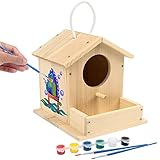
- BUILDING & PAINTING KIT: Our birdhouse kit includes 10 wood pieces with pre-drilled holes, 1 perch post, 1 hanging rope, 28 screws, 6 colors of paint, 2 brushes, 1 easy-to-follow instruction guide; Phillips screwdriver needed for assembly (not included)
- NATURAL MATERIALS: Our unassembled diy bird houses are made of solid pine wood; safe and non-toxic; eco-friendly and durable; Water-based, water resistant paint for easy cleanup; ideal for building a bird bungalow
- EDUCATIONAL & FUN: Our kids building kit is the perfect family project; Kids can build their very own DIY birdhouse with the included paints and brush; Wood craft kits for kids help develop patience, concentration, and problem-solving skills; paints will promote creativity and imagination
- BIRD FRIENDLY DESIGN: Feeding trough at the front of the birdhouse for easy feeding; The diameter of the entrance is 2.55'' with a convenient perch peg at the entrance
- FUN GIFT FOR KIDS: Children will enjoy building and personalizing this bird house kit; Then have fun picking a spot to hang the home and wait for a bird family to move in; An great gift for a Birthday, Easter, Christmas, Thanksgiving
Feeders supplement habitat
Birds have multiple food sources, and feeders do not replace normal foraging, native plants, or natural cover. A bird-friendly yard can combine suitable feeders with native plants, shelter, and clean water where appropriate.
FAQ
What can I put in a homemade bird feeder?
Use food suited to the feeder: black-oil sunflower seed or a suitable seed mix for open feeders, and an appropriate suet mixture for the pinecone or wreath. Use plain popcorn and cranberries for the edible strand. Do not offer wet, spoiled, or moldy food.
Outdated Drivers Are Slowing You Down
One free scan finds every outdated or missing driver and matches the right update for your exact hardware.Free scan · exact hardware matchWindows Errors? Fix Them Before They Spread
Repair common Windows errors and clear accumulated junk for a smoother, more stable PC - no reinstall needed.Free scan · no reinstallHow often should I clean a bird feeder?
About every two weeks is a starting point for seed-feeder cleaning, according to Project FeederWatch as reported by National Audubon Society. Clean sooner if you see debris or spoiled food, and let the feeder dry completely before refilling.
How far from a window should I hang a feeder?
National Audubon Society recommends placing a feeder within about 3 feet of a window or more than 30 feet away to reduce collision risk. This does not guarantee that collisions will not happen.
What should I do if birds around my feeder look sick?
Pause feeding, remove remaining food, and follow local wildlife guidance. In the United States, Audubon advises contacting local wildlife authorities; the RSPB’s guidance for the United Kingdom is to clean feeders thoroughly and store them away.
The Bottom Line
The pinecone is a simple place to start, while the carton gives seed some shelter from precipitation. Citrus shells, popcorn strands, and suet wreaths are temporary projects that need regular inspection. Keep food clean and dry, clean reusable seed feeders regularly, and pair supplemental feeding with safe placement and good habitat.
Quick Recap
Product prices and availability are accurate as of the date/time indicated and are subject to change. Any price and availability information displayed on Amazon at the time of purchase will apply.




