
Some links on this page are affiliate links: if you buy through them we may earn a commission, at no extra cost to you.
Teaching a dog to sit is easiest when the movement is made clear, rewarded immediately, and practiced before distractions become difficult. You do not need to push your dog’s hindquarters down or repeat “sit” until it happens. Use a treat to guide the movement, mark the instant your dog’s rear touches the floor, then gradually replace the lure with a hand signal and verbal cue.
Before you start
Choose a quiet, nonslip area and prepare several small treats that your dog can eat quickly. Keep a clicker nearby if you use one; otherwise, a brief marker such as “Yes!” works well. You will also need a release word, such as “Okay”, to tell your dog when the sit is finished.
As an Amazon Associate I earn from qualifying purchases.
Use treats small enough that they do not interrupt the lesson. Your dog should be interested in the reward but relaxed enough to think. If the floor is slippery, put down a rug or mat—especially for older dogs, large dogs, and dogs that have trouble getting traction.
1. Lure your dog into a sit
Start with your dog standing in front of you. Hold a treat close to their nose, then move it slowly upward and slightly back over their head. As your dog follows the treat with their nose, their rear will usually lower naturally.
Popular on Amazon

- New communication tool about you and your puppy.
- Pet Dog Training Clickers for Puppy, Cat, Potty, Bird, Horse, Pet, Trainer Training Tools, Behavior Aids
- Just press to mark desired behavior, then reward for faster learning.
- The spring wrist length : 16cm/6.3inches and can strength to 25cm/9.84inches.
- Package include : Black + Blue,each color 1 pcs.
Keep the treat close to the nose. If you lift it too high or move it too far backward, your dog may jump or walk toward you instead of sitting. Move slowly enough that your dog can follow the treat without losing balance.
2. Mark and reward the instant they sit
The moment your dog’s rear reaches the floor, mark the behavior with a click or “Yes!” Then deliver the treat while your dog is still sitting.
Quick wins for a faster PC:
Scan for outdated or missing drivers - takes under a minuteDriver Scan →Repair Windows errors before they cause bigger problemsFix Now →Fix the driver behind crashes, sound loss and screen glitchesFind Drivers →Timing matters. If you wait until your dog stands up, you may reward standing rather than sitting. Avoid moving the treat forward in a way that pulls your dog back to their feet before they receive it.
After the reward, say your release word and reset. You can walk away briefly, invite your dog to stand, or toss a treat a short distance away. Once your dog returns, repeat the lure-and-reward sequence.
Also popular on Amazon

- ▼Come in 4 pack button clickers with wrist strap in 4 different colors:Black, Green, Orange, Yellow, each color 1 PCS
- ▼Can be used to train the dog basic obedience, small trick, and correct the bad behavior; Scientific method of training your pet safely and easily.
- ▼Stop barking and dog obdeience. Train your dog quiqly just by simply pressing the clicker and command.
- ▼Well constructed and durable, metal clicker will not rust or break.
- ▼Big button for easy clicking and loud sound. Easy to use in any position.
3. Practice in short, successful sessions
Do several repetitions while your dog is interested and comfortable, then stop. Short sessions are more productive than drilling the behavior after your dog becomes distracted or frustrated. You can practice again later in the day.
Reward the complete sit at first. Once your dog understands the movement, gradually practice in a few different calm locations. Increase only one difficulty at a time—for example, move from a quiet room to a hallway, rather than adding distance, noise, and other dogs all at once.
Never force your dog’s hindquarters down. A dog that will not sit may be confused, unable to get traction, worried about the surroundings, or experiencing pain. If sitting has recently become difficult, or your dog shows stiffness, reluctance to move, a “lazy sit” with the back legs stretched out, or other signs of discomfort, ask a veterinarian for advice.
4. Fade the food lure
Once your dog reliably follows the treat into a sit, make the same hand motion with an empty hand. When your dog sits, mark the behavior and reward from your other hand.
Also popular on Amazon
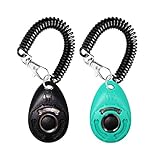
- EASY TO USE - Simple push button with distinct clicking sound.
- Comes with an elastic wrist band so you can leave it on your wrist or clip it to the leash or your pants.
- Not only train the dog but also the cat, bird, chicken, sheep a new behaviors like sit, fetch, roll over, lie down.
- For effective pet training ALWAYS reward with a treat after clicking.
- Can be used to train the dog basic obedience, small trick, and correct the bad behavior; Scientific method of training your pet safely and easily.
This teaches your dog that the hand movement—not the visible treat—is the signal. Gradually make the gesture smaller, but do not eliminate it suddenly. A large lure can be reduced over several practice sessions until it becomes a clear, consistent hand signal.
Fading the lure does not mean stopping rewards. Continue to reinforce correct responses. When the sit is reliable, you can vary the reward: sometimes use food, sometimes a toy, praise, attention, or access to something your dog wants. The reward must matter to your individual dog in that situation; praise alone is not automatically reinforcing for every dog.
Free tools Windows power users keep installed
One-click scans. No signup required.
5. Add the word “sit”
When your dog responds consistently to the empty-hand signal, say “Sit” once, immediately before giving the hand signal. Mark and reward the response.
With repetition, your dog will begin to respond to the word before you make the gesture. At that point, test the verbal cue by saying it once and waiting briefly. If your dog does not respond, use the hand signal rather than repeating the word several times.
Also popular on Amazon

- ONE MANUAL AUDIBLE CLICK SOUND: Produces one audible click when manually pressed. This clicker does NOT provide multiple selectable sounds, electronic volume controls, batteries, remote functions, or Electronic Stimulation.
- REVIEW PHYSICAL SIZE BEFORE ORDERING: Customer size preferences may vary. Review the current product images and listed dimensions before purchase rather than relying on general descriptions such as small or compact.
- AUDIBLE CUE ONLY – RESPONSE MAY VARY: The clicker provides a manual sound cue and does not automatically give instructions to the animal. Individual dogs and other animals may respond differently. Introduce the sound gradually and discontinue use if fear or discomfort occurs.
- 5-INCH USER-WORN VELCRO STRAP: Includes an approximately 5-inch adjustable Velcro strap designed to position the clicker on the user's finger or hand. Review the strap configuration before purchase. The strap is NOT intended to be worn by the pet.
- TEAL CLICKER ACCESSORY ONLY: Includes one Teal manual finger clicker and training instructions. Remote transmitter, receiver collar, batteries, and other training-system components are NOT included.
Avoid saying “Sit, sit, sit.” Repeated cues can teach a dog that the first word is optional. Give one cue, help with the signal if needed, and reward the correct response.
Common problems and fixes
| Problem | What to change |
|---|---|
| Your dog jumps or walks forward | Keep the treat close to the nose and move it more slowly, upward and slightly back. Do not hold it high or far away. |
| Your dog only sits when food is visible | Use an empty hand for the signal and reward from the other hand. Gradually reduce the size of the gesture. |
| Your dog loses interest | Try a more valuable reward, shorten the session, or reduce distractions. A dry biscuit that works indoors may not compete with other dogs or outdoor activity. |
| Your dog stands up immediately | Mark and deliver the treat while the rear is still on the floor. Use the release word after the reward. |
| Your dog cannot sit from standing | Capture spontaneous sits, improve traction with a nonslip surface, or teach the movement in smaller increments from a down position. Do not push the dog down. |
| Your dog has hearing loss | Use a consistent hand signal. A visual cue can replace or support the verbal cue. |
How often should you reward the sit?
Reward generously while your dog is learning. Once they respond reliably, begin varying the rewards rather than stopping them all at once. You might reward every response for a while, then use food for some sits and play, praise, or access to a favorite activity for others.
The Tool Desk
Outbyte Driver Updater FREEScan for outdated or missing drivers - takes under a minuteDriver Scan →Outbyte PC Repair FREEClear out junk files and repair common Windows errorsFree Scan →Keep rewarding especially good responses: a quick sit, a sit around distractions, or a sit held until the release word. If reliability drops, return to more frequent rewards and easier surroundings before building difficulty again.
What not to do
- Do not push your dog’s rear down. This can be intimidating and does not explain which behavior earns the reward.
- Do not repeat the cue continuously. Give “Sit” once, then use the hand signal or reset.
- Do not reward late. Deliver the treat while your dog is still in position.
- Do not remove all reinforcement when the lure disappears. Fade the visible food, not the reason your dog continues choosing the behavior.
- Do not use leash corrections, prong collars, shock collars, or dominance-based handling for this exercise. Reward-based training gives the dog clear information without adding fear or discomfort.
FAQ
How long does it take to teach a dog to sit?
Many dogs can begin following the treat into a sit during the first few repetitions, but reliable responses take repeated short sessions. Progress depends on the dog’s age, motivation, physical comfort, and the level of distraction.
Also popular on Amazon

- Stronger Bark Control with 3X Ultrasonic Emitters: Unlike single-emitter devices, our upgraded dog bark deterrent features three synchronized ultrasonic heads—delivering 3X the coverage to quickly stop barking, biting, and jumping behaviors. Ideal for anti barking training, safer than bark collar, more effective than a dog whistle, offers a humane, high-performance dog training solution
- 6-in-1 Safe & Humane Training Modes:Our dog bark deterrent device features dual ultrasonic frequencies (fixed 25kHz and variable 20-30kHz), combining 4 ultrasonic modes plus an audible beep and LED flashlight for versatile training. Whether for daily training or stubborn, persistent barking, this anti bark device adapts to different dogs providing effective bark control without causing pain or distress. Perfect for training at home or to stop neighbors dog bark that disturbs your peace
- 23 FT Extended Range & Night Safety: Bark Control Anytime, Anywhere: Stop barking and bad behavior from up to 23 feet away with our powerful dog bark deterrent device — perfect for your yard, neighbor’s yard, outdoor walks, and off-leash areas. Whether you're relaxing at home or out for a stroll, enjoy safe, long-distance control to correct disruptions quickly. The built-in LED flashlight adds safety for evening walks, and low-light training
- Fast Charge & Long Battery Life – Always Ready for Training:With a Type-C fast charging port, our dog bark deterrent device reaches a full charge in just 2 hours and provides up to 30 days of regular use on a single charge, along with 180 days of standby time. Whether you're correcting anti barking behavior or training your dog in public places, you’ll always be prepared for any situation. Forget the hassle of frequent charging and enjoy reliable, long-term support
- Ultra-Compact Design for Everyday Convenience:50% smaller than standard dog bark deterrent devices, our anti barking device is ultra-compact and lightweight, fitting effortlessly into your pocket, bag, or hand. Whether you're on daily walks, outdoor adventures, or dealing with unexpected situations in public places, this portable design helps you stop barking and encourage good behavior anywhere, anytime. Say goodbye to constant noise and enjoy a happy experience with your dog
Why does my dog sit only when I show a treat?
The food lure has not yet been faded. Make the same gesture with an empty hand, then reward from the other hand. Once the empty-hand signal is reliable, add “Sit” immediately before the gesture.
Should I push my dog’s bottom down to make them sit?
No. Use a treat to guide the movement and reward the instant your dog sits. Forcing the position can be confusing or intimidating, and a refusal to sit may indicate poor traction, fear, confusion, or discomfort.
What’s actually slowing this PC down?
Pick the symptom - the matching free tool is one click away.
What if my dog suddenly cannot sit?
Check whether the floor is slippery and watch for stiffness, reluctance to move, an unusual sitting posture, or signs of pain. A sudden change or persistent difficulty warrants a veterinary check rather than more pressure during training.
The Bottom Line
Teach the movement with a slow treat lure, mark the instant your dog sits, and reward before they stand. Practice briefly, replace the visible treat with an empty-hand signal, and add “Sit” only after the hand signal is reliable. Keep a release word, reward useful responses, and investigate any sudden difficulty or apparent pain instead of forcing the position.





Leave a Reply