Reindeer often spend winter pawing through snow for lichen, but they do not all eat the same fixed menu. Here are five representative winter forage groups—and why “reindeer moss” is actually a lichen.
In winter, reindeer commonly rely on terrestrial lichens, especially species in the genus Cladonia. They also eat exposed dwarf shrubs such as black crowberry, bilberry, and lingonberry, along with willow, sedges, grasses, and rushes. However, this is a representative list—not a fixed five-item menu for every reindeer herd.
As an Amazon Associate I earn from qualifying purchases.
There is also an important terminology correction: “reindeer moss” is not actually a moss. It is a lichen—a partnership between a fungus and a photosynthetic organism. Lichens are often discussed alongside plants, but they are not ordinary vascular plants such as grasses, shrubs, or trees.
Crashes, No Sound, or Screen Glitches?
Random freezes, missing sound and display glitches usually trace back to one bad driver. Find and replace yours safely.Free scan · under a minuteWindows Errors? Fix Them Before They Spread
Repair common Windows errors and clear accumulated junk for a smoother, more stable PC - no reinstall needed.Free scan · no reinstallWhat do reindeer eat in winter?
Winter reduces the amount of accessible green vegetation across the Arctic and sub-Arctic. Reindeer and their North American relatives, caribou, therefore depend heavily on forage that remains available beneath or above the snow. In many lichen-rich ranges, low-growing terrestrial lichens make up much of the late-winter diet.
#1 Best Overall

- Plant Pots / Flower Pots - Invest in a beautiful garden to harvest the seeds of love, with the set of pots for indoor or outdoor plants
- Multiple Sizes – This nursery plant pots indoor comprises multi-size pots – Extra Large (7” W x 5.9” H), Large (6.6” W x 5.4” H), Medium (6” W x 5” H), Small (5.3” W x 4.4” H), and Extra Small 4.8”W x 4” H. Also comprises of matching saucers.
- Impeccable Febrication - Make the pots ideal for both original and fake plants comprises of reinforced PP plastic. The hassle-free decorative flower pots contain drainage plugs, to preserve the life of your exquisite plants.
- Space Saving - Take time to smell the roses and revel in the art of planting with the indoor planter. The minimalist design is convenient and optimizes storage space, while enhancing the aesthetics of your home/office décor.
- Ideal For Decor or Christmas Gifts For Women –The pots for indoor plants is a great gift idea for all gardening enthusiasts for occasions like Earth Day, World Environment Day, National Forest Week, New Year, Housewarming, birthdays and Christmas.
Reindeer may paw through snow with their hooves to uncover lichen mats. They also search for wind-scoured ridges, exposed slopes, open woodland, and other places where snow is shallow or has been blown away. When lichens are buried under deep snow, sealed beneath an ice crust, or scarce in the habitat, reindeer broaden their diet to include shrubs and wintergreen grasses and sedges.
Five winter plants and plant-like foods reindeer eat
1. Reindeer lichens: Cladonia species
Reindeer lichens are the most important winter forage in many lichen-rich habitats. Common examples include Cladonia arbuscula, Cladonia rangiferina, and Cladonia stellaris. They form pale, branching mats on the ground and are particularly characteristic of open northern forests, tundra, and heathlands.
Despite the familiar name “reindeer moss,” these organisms are lichens, not true mosses. Reindeer often dig through snow to reach them, and their abundance can strongly influence how much time animals spend feeding in a particular area.
Lichens have several qualities that make them valuable in winter. They can remain available in cold, nutrient-poor environments, and their structure makes them relatively easy for reindeer to locate and consume when snow conditions allow access. Lichen tissue is also highly digestible and can provide substantial energy.
That does not make lichen a nutritionally complete food by itself. Compared with many vascular plants, lichens are relatively low in protein. Reindeer benefit from adding shrubs and graminoids when those foods are accessible.
If you want to distinguish “reindeer moss” from actual mosses and learn the differences among Cladonia species, a lichen field guide or beginner naturalist guide can be useful. Identification is best treated as a nature-study activity rather than a reason to collect or feed wild forage to animals.
2. Black crowberry: Empetrum nigrum
Black crowberry is an evergreen dwarf shrub that can supplement the winter diet. It grows close to the ground and may remain reachable on exposed ridges, rocky heaths, and other sites where wind prevents deep snow from accumulating.
Rank #2
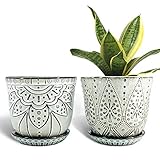
- 【With Drain Holes and Mesh Pad】:Large drain holes are good for draining, and with leak-proof mesh pads, it keeps soil from running away, suitable for orchids, succulents, cacti, other flowers and green plants, perfect for home decoration.
- 【Removable Trays】:There are two methods to place saucer, which can be changed at will, not only suitable for planting plants, but also more ornamental value.
- 【Makes Gift】:It's the perfect suitable present for your relatives and friends, they make great birthday gifts, anniversary gifts, Housewarming gifts, Thanksgiving or Christmas gifts and more!
- 【Size & Package】:Pot Top Dia:5.9"/15cm (can match a 5 inch inner pot), Pot Bottom Dia:3.15"/8cm, Pot H:5.15"/13.1cm; Saucer Top Dia:4.92"/12.5cm, Saucer Bottom Dia:3.74"/9.5cm, Saucer H:0.86"/2.2cm. Package: contains 2 ceramic flower pots, 2 ceramic saucers and 2 mesh pads(NOT INCLUDE PLANT)
- You are covered with excellent product quality and great customer service. The pot with tray has been packaged and prepared carefully to prevent any damage during transit. If there is any issue or question, please contact us, and we will get back to you very quickly with a full satisfying resolution.
Its evergreen foliage gives reindeer a potential source of browse after many deciduous plants have lost their leaves. Crowberry is documented as winter forage, but it should not automatically be described as a favorite food. In some feeding studies and dietary reviews, Empetrum appears less preferred than several reindeer-lichen species.
Its role is therefore often best understood in relation to availability. A reindeer may eat crowberry when a patch is exposed, when preferred lichen is sparse, or when snow and ice make the lichen difficult to reach. The same shrub can be more or less important in different regions and winters.
3. Bilberry or blueberry: Vaccinium myrtillus
Bilberry, also called European blueberry, is a secondary winter forage plant. The low shrub occurs in northern forests, heathlands, and other habitats used by reindeer. Some of its foliage can remain available during winter, especially where snow cover is light or disturbed.
Vaccinium myrtillus has been recorded in winter feeding research and in simulated reindeer winter rations. It can supplement lichen when dwarf-shrub vegetation is exposed, but it is not a universal winter staple and should not be presented as equally important everywhere.
The Tool Desk
Outbyte Driver Updater FREEScan for outdated or missing drivers - takes under a minuteDriver Scan →Outbyte PC Repair FREEClear out junk files and repair common Windows errorsFree Scan →Preference studies have found bilberry less attractive to reindeer than some reindeer-lichen taxa. That distinction matters: an animal may eat a plant because it is accessible and useful without selecting it first when a preferred food is available.
4. Lingonberry or cowberry: Vaccinium vitis-idaea
Lingonberry is another evergreen dwarf shrub that reindeer may eat in winter. Also known as cowberry, it grows in northern woodland, heath, and tundra-edge habitats. Its low growth form means that leaves and stems can sometimes be reached through shallow snow or on wind-exposed ground.
Lingonberry is especially relevant when explaining why winter diet depends on landscape details. A plant may be abundant across a range but unavailable beneath deep snow. Conversely, a relatively small patch on a wind-scoured slope can become an important feeding site.
Rank #3

- 🌿 【Self-Watering Pots with Water Level Indicator】 Designed for busy plant lovers, our 8/10/12 self-watering pots feature a built-in ABSORBENT COTTON WICK SYSTEM that automatically draws water from the detachable bottom tray. The TRANSPARENT WATER LEVEL WINDOW WITH MEASUREMENT MARKINGS lets you monitor hydration at a glance, ensuring no overwatering or underwatering. Perfect for indoor/outdoor plants, this system keeps soil evenly moist for up to 7-10 days—ideal for vacations or hectic schedules.
- 💧【Planters with Drainage & Detachable Trays】 Each plastic plant pot includes a REMOVABLE SAUCER TRAY and strategic DRAINAGE HOLES to promote healthy root development. The plastic large pot for plants promotes airflow and efficient water flow, while the leak-proof design protects floors. Easy to clean and refill, these planters for indoor plants with drainage simplify maintenance for herbs, succulents, or tropical foliage.
- 🛡【Durable Plastic Construction】Crafted from premium HIGH-TEMPERATURE-RESISTANT PLASTIC, these lightweight yet sturdy self-watering flower pots with stand harsh sunlight, rain, and indoor humidity without cracking or fading. Use them safely in gardens, balconies, or living rooms—their sleek design blends seamlessly into modern decor while lasting seasons.
- 🌿【Effortless Indoor/Outdoor Versatility】 From large indoor planters for fiddle-leaf figs to compact outdoor outdoor self-watering pots for patio herbs, this set adapts to any space. The neutral minimalist style complements farmhouse, urban, or bohemian themes. Bonus: The WATER LEVEL INDICATOR and SPILL-PROOF TRAYS make these plastic flower pots indoor/outdoor ideal for renters or pet owners.
- 🌱【Smart Design for Strong Root Development】 Unlike traditional pots, our self-watering planters deliver water directly to roots through absorbent cotton wicks, promoting consistent hydration and nutrient uptake. The ELEVATED BASE AND BREATHABLE DESIGN prevent soggy soil, ensuring robust growth for large indoor plants like monstera or palms. With this thoughtful design, your plants thrive with minimal maintenance.
As with crowberry and bilberry, lingonberry is not a preferred staple for every herd. Regional evidence suggests that it may be relatively unpreferred or function mainly as fallback forage. The accurate description is that reindeer eat it in some winter ranges when it is accessible—not that every reindeer depends heavily on it.
Recommended Free Tools
5. Willow, sedges, grasses, and rushes
The fifth category is a group of vascular plants rather than one supposedly universal species. Reindeer may eat willow species, sedges, grasses, and rushes during winter, particularly when their stems or leaves protrude above snow or when other forage is hard to reach.
Willows are important browse plants in many northern ecosystems. Polar willow, for example, has been documented in the winter diet of Svalbard reindeer. Wintergreen graminoids—plants in the grass, sedge, and rush groups—can also contribute where they remain exposed or available beneath a manageable snow layer.
This category highlights the substantial differences among reindeer populations. Svalbard reindeer, which live in an environment where terrestrial lichens are relatively scarce, can have winter diets unusually rich in graminoids. In other areas, lichens dominate and vascular plants make a smaller contribution.
Willow and graminoids may also become more important when rain freezes into an ice layer over the snow. An ice crust can prevent reindeer from pawing down to low-growing lichen mats, making any exposed stems, ridges, or snow-free patches disproportionately valuable.
Do these 3 things before closing this tab:
1Scan for outdated or missing drivers - takes under a minute2Clear out junk files and repair common Windows errors3Fix the driver behind crashes, sound loss and screen glitchesWhy does a reindeer’s winter menu change?
Snow depth
Deep snow can bury low-growing lichens and dwarf shrubs. Reindeer are capable of digging, but digging requires energy, and the depth and hardness of the snow determine whether a food patch is worth the effort. Shallow snow allows much easier access to ground-level forage.
Wind and exposed ground
Wind-scoured ridges and slopes often have less snow than sheltered hollows. These locations can expose lichen mats, crowberry, bilberry, lingonberry, or graminoid stems. A plant’s importance is therefore determined not only by whether it grows in the region, but also by whether reindeer can reach it at that moment.
Rank #4

- 【Practical Size Combo】-These plastic planters indoor combines with 6 different sizes, 8 inch 7inch 6.5 inch 6 inch 5.5 inch 5 inch which are suitable for planting most small and medium-sized home office plants.Ideal gift,Carbonfree Certified.
- 【Durability, Light weight, Sturdiness】-Made of durable recyclable plastic, solid plastic plant pots protect plants and soil. Premium polypropylene planters feel sturdy in hand but not too heavy. Thick sidewalls 4mm in size keep everything in place. These planters are perfect gardening gift for your mom, your father, your sister or your friends who are plant lover.
- 【Intriguing Design】-A simple modern aesthetic and clean matte finish planters indoor plants bringing out a minimalistic styled. representation for any home/office decor without any sense of violation.
- 【Excellent Drainage Holes】-These flower pots for plants come with multiple drainage holes in the bottom. The holes and watering lip provide an air circulation system for the plant roots.
- 【Self Watering For Bottom】- I really like how big the bottom tray is to catch all the extra water. They come with a string to put at the bottom of the pots if you want to do bottom watering. A separate reservoir completely separates the plant growth environment from the water storage environment.
Ice crusts and thaw-freeze events
A period of mild weather followed by freezing rain can create a hard layer over the snow. This “icing” may block access to forage that would otherwise be available. Reindeer may then move to different habitats, search for exposed vegetation, or consume a larger share of shrubs and graminoids.
Habitat and latitude
Winter diets differ between tundra, open woodland, forest, coastal areas, and islands. The same species can also have different diets at different latitudes because plant communities and snow conditions change. A lichen-rich forest range is not nutritionally or botanically equivalent to a lichen-poor Arctic island.
Seasonal timing
“Winter diet” is not identical throughout the entire cold season. Early winter, midwinter, and late winter can bring different snow depths and different access to vegetation. A herd may rely heavily on lichens at one point and switch toward exposed shrubs or graminoids after a weather event.
Are lichens the only food reindeer need in winter?
No. Lichens are often the dominant winter food where they are abundant and accessible, but they do not provide every nutrient in ideal proportions. Their high digestibility and energy content are useful, while their relatively low protein content helps explain why reindeer also consume vascular plants when they can find them.
Diet studies illustrate this regional variation. In northwest Alaska, lichens made up approximately 71% of late-winter caribou diets in one documented analysis, with mosses and shrubs contributing much of the remainder. By contrast, reconstructed late-winter diets of Svalbard reindeer were dominated by graminoids, with mosses and polar willow also contributing.
These figures should not be converted into a universal reindeer diet formula. They describe particular populations and conditions. The proportion of each food changes with weather, snow, habitat, season, and the local supply of terrestrial or tree-growing lichens.
Quick wins for a faster PC:
Repair Windows errors before they cause bigger problemsFix Now →Scan for outdated or missing drivers - takes under a minuteDriver Scan →What do reindeer eat when they cannot reach ground lichens?
They may move toward wind-scoured ground, snow-free slopes, or forest habitats where food is easier to access. In some forests, reindeer can also use arboreal lichens—lichens growing on trees—particularly when terrestrial forage is buried or unavailable.
Best Value

- COMPACT SET OF 5 SIZES – Includes five small self watering plant pots measuring 4.9, 5.5, 5.9, 6.4, and 6.8 inches. These are small indoor planters designed for succulents, herbs, seedlings, flowers, and compact houseplants.
- Self-Watering Design – Featuring a plastic plant pot with a removable reservoir to maintain steady moisture at the roots. These flowerpots for indoor plants simplify care by allowing your greenery to hydrate as needed.
- Drainage & Airflow – These indoor plant pots with drainage facilitate excess water escape and vital root aeration. The plastic pots for plants prevent root rot, ensuring a healthy environment for any indoor pot for plants or planting pots.
- Durable Plastic Pots - Made from lightweight plastic, these flower pots are easy to move and reposition while providing stable support for indoor planter use, including larger house plants placed on shelves, desks, or windowsills.
- Clean Modern Look – Our indoor planter pots feature a sleek matte finish. This plant pot fits any decor, whether used as a flowerpot for the office or as outdoor pots for plants on a porch or windowsill.
They may increase their use of evergreen dwarf shrubs, willow, sedges, grasses, and rushes. The exact response depends on what grows locally and whether the vegetation is exposed. A severe winter can make the difference between a plentiful food patch and an inaccessible one.
How does the winter diet compare with the summer diet?
Winter narrows the accessible forage base, which is why lichens receive so much attention. In summer, reindeer can choose from a much broader supply of fresh leaves, herbs, grasses, sedges, shrubs, and mushrooms. New growth also generally provides more protein than the lichen-heavy diet available in many winter ranges.
The contrast is not absolute: reindeer may eat vascular plants in winter and lichens in other seasons. It is the availability and accessibility of foods—not a rigid calendar rule—that determines the balance.
What’s actually slowing this PC down?
Pick the symptom - the matching free tool is one click away.
Summary
The five representative winter forage entries are:
- Reindeer lichens, especially Cladonia species—the principal winter food in many lichen-rich ranges.
- Black crowberry (Empetrum nigrum)—an exposed, evergreen fallback or supplemental shrub.
- Bilberry or blueberry (Vaccinium myrtillus)—a secondary forage plant available in some snowy northern habitats.
- Lingonberry or cowberry (Vaccinium vitis-idaea)—another evergreen shrub eaten when accessible.
- Willow, sedges, grasses, and rushes—a varied group that can become especially important where lichens are scarce or buried.
The central lesson is that there is no single winter menu shared by every reindeer. Lichens often dominate, but snow, ice, wind, habitat, geography, and seasonal timing determine what the animals can actually reach.
Frequently Asked Questions
What is a reindeer’s main winter food?
Reindeer commonly eat terrestrial lichens, especially species of Cladonia, along with accessible dwarf shrubs, willow, sedges, grasses, and rushes. The exact mix varies with region, snow, habitat, and season.
Is reindeer moss actually moss?
No. “Reindeer moss” is a common name for several lichens, particularly Cladonia species. Lichens are symbiotic organisms and are not true mosses or ordinary vascular plants.
Do reindeer eat blueberries and lingonberries in winter?
Yes, reindeer can eat bilberry and lingonberry in some winter ranges, but these shrubs are usually better described as secondary or fallback forage rather than universal staples.
Free tools Windows power users keep installed
One-click scans. No signup required.
Why do different reindeer herds have different winter diets?
Snow depth, ice crusts, wind exposure, habitat, latitude, and local plant availability all affect the winter diet. Svalbard reindeer, for example, can rely more heavily on graminoids because lichens are scarce there.
The Bottom Line
Bottom line: Reindeer often depend on terrestrial lichens—especially Cladonia—during winter, but they also eat accessible crowberry, bilberry, lingonberry, willow, sedges, grasses, and rushes. “Reindeer moss” is a lichen, not a true moss, and the balance of foods varies greatly among herds and habitats.
Quick Recap
Product prices and availability are accurate as of the date/time indicated and are subject to change. Any price and availability information displayed on Amazon at the time of purchase will apply.




