Yes—but only in a carefully qualified sense. Scientists have documented coastal invertebrates living and reproducing on plastic debris in the eastern North Pacific Subtropical Gyre, the area commonly called the Great Pacific Garbage Patch. A 2023 study found 37 coastal invertebrate taxa on sampled debris, and coastal taxa appeared on 70.5% of the debris items examined. In that sample, coastal richness was more than three times pelagic richness. [1]
This does not mean the patch has become a healthy floating ecosystem or a literal island of rubbish. It means durable plastic has created an emerging neopelagic community: coastal organisms can use some debris as long-lasting habitat far from shore. The same material remains a source of entanglement, ingestion, contamination, and species transport.
As an Amazon Associate I earn from qualifying purchases.
The patch is not an island of trash
The Great Pacific Garbage Patch is a broad, shifting concentration of marine debris in the eastern North Pacific Subtropical Gyre. Currents, wind, and waves gather and redistribute the material, so its location and density change over time. It has no sharp border, and a ship can pass through the area without seeing a continuous layer of rubbish at the surface. Much of the plastic is small, dispersed through the upper ocean, or below the surface. NOAA specifically warns against treating the patch as a floating landfill that can be viewed as one solid object. [2]
The phrase “world’s dirtiest ocean zone” is therefore media framing rather than a formal scientific ranking. A better description is a large accumulation zone where persistent plastic debris is creating unusual opportunities for rafting organisms—and continuing risks for marine wildlife.
#1 Best Overall

- Real Fishing Nets for Nautical Decor: Crafted from 100% real recycled fishing nets, each 5x10ft piece brings authentic coastal charm to your party or space. Use as wall-hanging fish net, netting fabric, pirate backdrop, or table runner for nautical decor at home or events. Slight sea scent and color variation add realism—perfect for ocean lovers.
- Made in USA – Hand-Packed in Florida: Our fishing net decorations made from real nets once used by fishermen. Cut, dried, and hand-packed in Florida, these nets carry rustic character. They’re ideal for DIY fishing party decorations, beach weddings, pirate decor. Expect authentic texture, flexible design, and durable use indoors or outdoors.
- Fishing Decorations for Party Themes: Ideal for pirate-themed parties, beach events, or mermaid birthdays, these fishing nets enhance any setup. Drape them over tables, use as a backdrop, pair with pirate accessories and seashell party decor or use them for haunted house decorations on Halloween. These nets turn any room into a seaside celebration.
- Multipurpose Coastal & Garage Netting: Add rustic charm anywhere—from beach theme decor and airbnb rooms to restaurants, garages, or boat sheds. Strong enough for outdoor use and flexible enough to trim, fold, or hang as cast net props, fish net curtains or decorative netting. Also great for cargo netting or kayak fishing-themed decor.
- Pairs Well with Shells, Starfish & More: Tumbler Home offers coordinating decor: real seashells, starfish, and fish-themed party decorations to enhance your setup. Combine these fish nets with drop nets, fly fishing net props, or bait buckets to elevate any under-the-sea or cast nets for fishing theme. See our store for matching accessories.
How large is it?
Different studies measure different things: geographic area, total plastic mass, or the number of individual pieces. Those measurements should not be confused.
| Measure | Reported estimate | What it means |
|---|---|---|
| Accumulation-zone area | About 1.6 million square kilometers | A modeled region of elevated floating-plastic concentration, not a permanent boundary |
| Floating plastic mass | At least 79,000 tonnes in a widely cited 2018 assessment | An estimate based on sampling and modeling, not a direct weighing of a cleanly defined patch |
| Large debris | More than three-quarters of the estimated mass was in pieces larger than 5 centimeters | Fishing gear and other large objects contribute disproportionately to mass |
| Microplastics | About 8% of estimated mass but roughly 94% of estimated pieces | Small pieces are extremely numerous without representing most of the floating mass |
Fishing nets accounted for at least 46% of the estimated mass in that 2018 assessment. A separate global model estimated that plastics larger than 25 millimeters made up more than 95% of initially buoyant marine-plastic mass in 2020. The exact numbers depend on the study’s methods and definitions, but the overall lesson is consistent: the patch is not primarily a visible carpet of bottles and bags. Large, durable fishing gear and other debris matter greatly because they persist, remain buoyant, and can provide physical surfaces for marine life. [3][11]
Plastic has become habitat for some coastal animals
The most important biological evidence comes from a 2023 study of debris collected in the eastern North Pacific Subtropical Gyre. Researchers documented 37 coastal invertebrate taxa living on the sampled plastic and reported that coastal taxa occurred on 70.5% of the debris items examined. Coastal richness was more than three times pelagic richness in the sampled material. [1]
“Taxa” is the careful term here. The study did not provide a complete census of every species in the Great Pacific Garbage Patch, and 37 taxa should not be presented as a definitive species count for the entire region. It did show that coastal organisms are a substantial part of the community found on floating debris.
That finding changes the usual description of plastic as merely a vehicle. Some debris can support survival, feeding, growth, and reproduction. In other words, plastic is not always just carrying an animal across the ocean for a short period; it can function as a long-lasting raft and living surface. Scientists use the term neopelagic community for this emerging open-ocean assemblage associated with human-made floating material. [1]
Why plastic makes an unusually persistent raft
Natural floating substrates—including seaweed, pumice, and driftwood—can provide shelter and attachment points, but many are temporary. They break apart, sink, decompose, or wash ashore. Plastic can remain afloat for much longer, giving a coastal organism more time to feed, grow, reproduce, and travel.
The coastal species found on debris also included organisms with direct development or asexual reproduction. Those traits may help some animals persist far from shore because they do not depend on returning to a coast or finding a mate under normal coastal conditions. This does not mean every colonizing animal can establish a stable population in the open ocean. It means that some coastal life has biological features that make long-distance persistence on plastic possible.
Rank #2
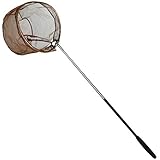
- Bait net is made of sturdy nanomix netting and a corrosion resistant stainless steel handle to ensure long term performance and reliable use. Great for use fishing in salt water and fresh water!
- 13" net ring for collection, 11" net depth for preventing escape. Perfect tool for both kids and adults to use for catch and release.
- The lightweight telescopic handle from 15" to 59". Ideal for landing the fishes in the fish tank, pond, lake or ocean.
- Soft and durable net won't harm the scales on fish. 1/14" mesh hole is fine enough for small bait fish and minnows. Also strong enough to handle a full-sized catch as well.
- Fold-A-Way design Telescopic Handle Net fishing netting for convenient storage and transport, easy fit into a storage or rod locker. Quick assembly and removal.Twist to left to release, twist to right to lock it. When full extended, please twist it to right tightly.
The important shift is from transport to habitat. A piece of plastic may carry an animal, but it may also offer a surface on which several organisms interact. That creates an ecological interface between coastal species and the animals already adapted to life at the ocean’s surface.
Which organisms are using the debris?
Coastal invertebrates
Barnacles, hydroids, bryozoans, anemone-like animals, and other coastal invertebrates are among the organisms documented on floating debris. The 2023 study’s 37 coastal taxa are the clearest evidence that animals normally associated with shorelines can survive and reproduce on plastic far from land. Their presence is not necessarily beneficial to the animals: a raft can provide a surface while also carrying them into unsuitable waters or beyond their native range.
Open-ocean surface life
The plastic-associated community exists alongside the natural neuston—organisms that live at or near the ocean surface. This includes floating jellyfish relatives, blue buttons, by-the-wind sailors, violet snails, copepods, barnacles, and algae. One study reported high densities of floating life in the plastic-rich region and argued that garbage patches may be overlooked surface habitats. It also emphasized that the ecological consequences remain poorly understood. [1][10]
That distinction matters: not every organism in the patch is living on plastic, and not every organism found near plastic depends on it. The region contains a mixture of natural surface communities, animals attached to debris, animals using the surrounding water, and species that may simply be passing through.
Recommended Free Tools
Plastic-associated microbes
Microorganisms add another layer to the story. A 2024 study cultured 67 bacterial isolates from material collected in the Great Pacific Garbage Patch. Most belonged to the Proteobacteria, with additional representatives of the Actinobacteriota and Firmicutes. These results demonstrate that plastic-associated microbial communities can be diverse. They do not demonstrate that bacteria are safely or effectively biodegrading the patch, nor that microbial activity is removing the larger debris that makes the habitat persistent. [12]
Fish that eat plastic
Fish are not automatically members of the plastic-attached community, but they can encounter and ingest debris in the same region. In a 2026 study, researchers examined 204 fish from 13 taxa and detected 154 plastic items in 56 fish. Ingestion was highest in several upper-trophic pelagic species, including blue sharks and amberjacks. Occurrence varied sharply among taxa, and some reef-associated species had no plastic detected in the sampled material. [8]
These findings show exposure and ingestion in the fish that were sampled. They do not prove that every species in the patch is equally contaminated, or that the detected plastic caused a measurable population-level decline. Sample size, location, diet, age, behavior, and the type of plastic encountered can all affect the result.
Rank #3

- Package contains: you will receive 2 pieces of cotton fishing nets in one package, which is a nice embellishment for your ocean themed parties, bringing a strong ocean flavor and impress your guests
- Quality material: this decorative fishing net is made of quality cotton material, which is reliable and safe, lightweight and sturdy, have no smell, will not easily tear off, and can be applied for a long time
- Proper dimension: each nautical fishing net measures around 100 cm x 200 cm/ 39.4 x 78.7 inches, such an ample size can well decorate your various nautical themed parties, they can also match well with other decorations to boost the atmosphere
- Suitable occasions: these decorative fishing nets are suitable decorations and photographic props for pirate parties, Hawaiian themed birthday parties, mermaid themed birthday parties, beach bashes, nautical themed parties and so on
- DIY your own decoration: you can fully play your imagination to combine this fishnet decor with other ocean themed crafts like shells, starfishes, sailboats,lighthouses, life rings, and various fish ornaments for better decorative effects
Whales and other cetaceans
The patch is also used by animals that do not live on its floating surfaces. Aerial surveys conducted in 2016 and reported in 2019 recorded four sperm whales, three beaked whales, two baleen whales, and at least five other cetaceans in the region. Nets, ropes, floats, and fragmented debris were observed nearby. That establishes that large animals are exposed to the debris field and its potential hazards, but it does not establish that the patch is a preferred breeding ground or that all of the animals were permanent residents. [9]
Free tools Windows power users keep installed
One-click scans. No signup required.
Is it really a home?
Yes, for some coastal species in a limited biological sense. They can survive and reproduce on certain plastic rafts far from shore. That is why “home” is not wholly wrong.
No, if “home” suggests a healthy replacement for a natural ecosystem. Plastic can simultaneously provide attachment space and expose animals to entanglement, ingestion, chemical contamination, altered predator-prey relationships, and transport beyond their native ranges. The fact that an organism can live on a pollutant does not make the pollutant harmless.
Researchers have not yet established the community’s complete food-web structure, long-term population stability, or evolutionary future. The evidence supports an emerging neopelagic community, not a finished or self-sustaining ecosystem. It is also too early to say that the coastal animals have evolved into permanent open-ocean species. Some may persist for generations on debris; others may remain dependent on repeated colonization from the coast.
The wildlife risk has not disappeared
Seeing animals living on plastic can create an understandable but dangerous visual reversal: the debris appears to be supporting life, so the patch may seem less like pollution. The underlying risks remain central.
Crashes, No Sound, or Screen Glitches?
Random freezes, missing sound and display glitches usually trace back to one bad driver. Find and replace yours safely.Free scan · under a minutePC Slower Than It Used to Be?
A free scan shows the junk files, broken settings and background clutter dragging Windows down - then fixes them in one click.Free scan · Windows 10 & 11- Entanglement: Nets, ropes, straps, and loops can trap whales, turtles, seabirds, sharks, and other animals.
- Ingestion: Marine animals can mistake plastic for prey or consume it indirectly through contaminated food. NOAA lists choking, starvation, and other impairments among the possible consequences of marine-debris ingestion. [2]
- Chemical exposure: Plastic can carry chemicals from its manufacture or acquire pollutants from seawater. The exact risk varies by polymer, additive, contaminant, species, and dose.
- Range expansion: A durable raft can transport coastal organisms across an ocean basin and into habitats where they did not historically occur.
- Changed interactions: A plastic surface can bring together predators, prey, competitors, and disease-associated organisms that would rarely meet on a natural, short-lived raft.
Those effects can occur alongside survival and reproduction. An organism may benefit from a place to attach while the wider community experiences more entanglement, more ingestion, or more disruption of native habitats. Calling the debris a habitat does not cancel its role as a pollution source.
Why cleanup is more complicated—but still necessary
The newly documented community creates a genuine cleanup dilemma. Removing a biologically occupied piece of plastic can remove the organisms attached to it. It may also disturb the surrounding surface community. That is an ecological cost worth measuring, not dismissing.
Rank #4

- Premium Material:Decorative fish net is made of high quality cotton, which is reliable and safe, fish netting for decoration is hand-woven, soft and comfortable to the touch, lightweight and sturdy, no smell, not easy to tear, can be applied for a long time
- 3-Pack Large Fish Nets: Comes with 3 pack Aqua-colored fish nets, each measuring 80x40 inches and 3mm thick. (Please note: As each net is hand-woven, size may vary slightly (±2 inches), giving every piece a unique handmade touch.)Perfect for decorating nautical, mermaid, pirate, Hawaiian, or beach-themed parties, birthdays, and baby showers
- Fishing decorations for party : This decorative fishnet is the perfect addition to any beach themed setting, whether indoors or outdoors, party decoration or home decoration, handmade fishnet decorations, durable and delicate, a perfect gift for family or friends on the beach lovers
- Versatile Decoration Use:Spread out this fish net decor as a runner on your table. Will fit all of your tables and you will even have enough for a backdrop on the wall. Fishnet decorations can be used as a wall decoration, fishnet for photos.It will add a realistic touch to beach party decoration
- DIY Nautical Style Decoration:Create your own Mediterranean coastal look by combining with shells, boats, starfish, mermaids, balloons, or photos (not included). Adds a refreshing seaside atmosphere to your party or room decor
But leaving the debris in the ocean also has costs. It preserves the material’s capacity to entangle and be ingested, allows more organisms to raft across long distances, and gives plastic more time to fragment. A 2025 modeling study found that cleanup could reduce harmful debris and the outward spillover of non-native rafting species, including potential transport toward the Hawaiian Archipelago and Papahānaumokuākea Marine National Monument. [4]
The scientifically defensible position is therefore neither “cleanup will destroy a new ecosystem” nor “cleanup has no ecological consequences.” Cleanup should be evaluated against both harms:
- The ongoing harm of leaving persistent plastic in the ocean.
- The immediate disturbance caused by removing debris that has become biologically occupied.
That framing favors careful, risk-based removal rather than treating every object as ecologically identical. Large fishing gear deserves particular attention because it contributes heavily to plastic mass, persists for long periods, can entangle large animals, and provides substantial rafting surfaces. It also reinforces the importance of preventing lost gear and other durable plastic from entering the sea in the first place.
What this discovery does—and does not—prove
It does prove:
- Coastal invertebrates are living and reproducing on plastic debris in the eastern North Pacific Subtropical Gyre.
- The sampled debris supported 37 coastal invertebrate taxa, and coastal taxa appeared on 70.5% of sampled debris.
- Plastic can function as persistent habitat, not merely as short-term transport.
- Fish and large marine animals are exposed to debris in the region.
- Plastic-associated microbial communities include diverse cultured bacteria.
It does not prove:
- That the Great Pacific Garbage Patch is a solid island, continent, or floating city of rubbish.
- That it is a healthy, beneficial, or fully self-sustaining ecosystem.
- That every organism in the area lives on plastic.
- That all 37 documented coastal taxa are newly evolved open-ocean species.
- That bacteria are eliminating the patch through biodegradation.
- That cleanup would be either entirely harmless or worse than leaving the debris in place.
The broader lesson for animal lovers
The striking part of this research is not that nature has somehow made plastic good. It is that persistent human waste is changing where animals can live, feed, reproduce, and travel.
Natural rafts have always connected coastal and open-ocean environments, but plastic changes the duration and scale of that connection. It can keep a coastal organism afloat longer than driftwood or seaweed would, carry it into unfamiliar waters, and create a surface for a mixed community. At the same time, the same material can injure fish, entangle whales, and alter the movement of organisms between ecosystems.
For readers who care about marine animals, the most accurate mental picture is not a dead ocean zone suddenly transformed into a thriving city of wildlife. It is a shifting pollution field that now contains a human-made habitat—one that supports some life while imposing serious and poorly measured risks on much more of it.
Do these 3 things before closing this tab:
1Scan for outdated or missing drivers - takes under a minute2Clear out junk files and repair common Windows errors3Fix the driver behind crashes, sound loss and screen glitchesFurther reading and viewing
Book: Plastic Ocean by Captain Charles Moore is a directly relevant account of ocean plastic and the Great Pacific Garbage Patch. It is best treated as further reading about the problem and its history, not as a solution to ocean pollution.
Best Value

- Hang up the fish netting as a water/sea/Caribbean themed or luau party decoration for your restaurant, seaside home or B&B/to add flavor to our tiki bar pool area.etc.
- 【High Quality】ZUEXT decorative fishing nets are made of high-quality cotton fabric, making them soft, safe non-toxic, lightweight, durable, and environmentally friendly. You can wash it for repeated use. Mermaid net can stretch up to: 80"* 40" (200 * 100 cm), the large size provides ample coverage for your decoration needs.
- 【Great for Various Themes】While perfect for a nautical, pirate, beach, or mermaid-themed party, this fishing net is versatile enough to be used for other themes as well. It adds a unique and fun element to any event that calls for a touch of maritime flair.
- 【Flexible and Versatile】The natural color beautiful line and classic style make your home special and elegant, giving you a lazy and romantic mood, and very unique home decoration style. You can also use ocean net decoration as a balloon net/ tablecloth, or decorative background to create an immersive party atmosphere.
- 【Stunning Visual Appeal】The blue and beige color combination is absolutely beautiful and perfectly captures the essence of a nautical or beach-themed event. The net adds a charming and authentic touch to the decor, creating a visually striking backdrop that complements other party elements beautifully.
Documentary: Plastic Paradise: The Great Pacific Garbage Patch focuses directly on the patch and its human and ecological context. Availability and distribution rights can vary.
For families and classrooms: Plastic, Ahoy!: Investigating the Great Pacific Garbage Patch is an education-focused book candidate. Check the current edition and availability before purchasing.
Research and background: NOAA’s marine-debris explanation is useful for correcting the island-of-trash misconception. The Ocean Cleanup’s Great Pacific Garbage Patch research and cleanup program provides additional information about debris concentrations and removal efforts. Neither resource should be interpreted as evidence that cleanup is ecologically simple.
The Tool Desk
Outbyte Driver Updater FREEScan for outdated or missing drivers - takes under a minuteDriver Scan →Outbyte PC Repair FREEClear out junk files and repair common Windows errorsFree Scan →Sources behind this article
- c001: 2023 study documenting coastal invertebrate taxa on plastic debris in the eastern North Pacific Subtropical Gyre, including the 37-taxa, 70.5%, and threefold-richness findings.
- c002: NOAA marine-debris background on the patch’s shifting boundaries, dispersed plastic, and wildlife risks.
- c003: Widely cited 2018 assessment of floating plastic in the patch, including the 79,000-tonne and 1.6-million-square-kilometer estimates.
- c004: 2025 modeling study examining cleanup, harmful debris, and the potential spread of rafting organisms.
- c005: Publisher information for Plastic Ocean by Captain Charles Moore.
- c006: Distributor information for Plastic Paradise: The Great Pacific Garbage Patch.
- c007: Educational-book information for Plastic, Ahoy!: Investigating the Great Pacific Garbage Patch.
- c008: 2026 study of plastic ingestion in 204 fish from 13 taxa.
- c009: Report of aerial cetacean surveys conducted in 2016 and published in 2019.
- c010: Study of floating life densities and the potential for garbage patches to function as overlooked surface habitats.
- c011: 2023 global model of marine-plastic size distribution and persistence.
- c012: 2024 culture-based study of 67 bacterial isolates from Great Pacific Garbage Patch material.
Frequently Asked Questions
Is the Great Pacific Garbage Patch a floating island of garbage?
No. It is a broad, shifting concentration of marine debris, much of it small plastic dispersed through the upper ocean. It has no sharply defined edge, and a ship can pass through the region without seeing a continuous layer of trash.
What species live in the Great Pacific Garbage Patch?
Some coastal invertebrates can survive and reproduce on plastic rafts. A 2023 study documented 37 coastal invertebrate taxa on sampled debris, with coastal taxa occurring on 70.5% of the debris examined. That is evidence of an emerging neopelagic community, not a complete census of every species in the patch.
Is the Great Pacific Garbage Patch now a healthy ecosystem?
No. Plastic can provide a durable surface for some organisms while also causing entanglement, ingestion, chemical exposure, altered predator-prey interactions, and long-distance transport beyond native ranges. Researchers have not established that the community is healthy or fully self-sustaining.
Would cleaning up the patch harm the animals living on it?
Cleanup can remove organisms attached to debris, so it may cause immediate ecological disturbance. However, leaving the plastic in the ocean prolongs risks to wildlife and allows more rafting and fragmentation. The responsible question is how to reduce both the ongoing pollution harm and the disturbance caused by removal.
What’s actually slowing this PC down?
Pick the symptom - the matching free tool is one click away.
Are bacteria eating or biodegrading the garbage patch?
Not based on the available evidence. A 2024 study cultured 67 bacterial isolates from patch material and showed that plastic-associated microbes are diverse. It did not show that bacteria are safely or effectively biodegrading enough plastic to eliminate the patch.
The Bottom Line
Bottom line: Plastic debris in the Great Pacific Garbage Patch has become habitat for a measurable community of coastal invertebrates, including organisms that can survive and reproduce far from shore. That makes the patch biologically unusual—not healthy. The same plastic that supports rafting life continues to threaten marine animals through ingestion, entanglement, contamination, and the spread of organisms beyond their native ranges.
Quick Recap
Product prices and availability are accurate as of the date/time indicated and are subject to change. Any price and availability information displayed on Amazon at the time of purchase will apply.




