Vasuki indicus, a snake identified from 47-million-year-old fossils in western India, may have reached about 11–15 meters (36–50 feet) in length. That puts its modeled upper estimate in the same league as—and potentially above—the famous Titanoboa. But the “50-foot snake” was not measured from a complete skeleton: scientists reconstructed its length from 27 fossil vertebrae, so it is more accurate to call Vasuki a contender for the longest known snake than to declare it the undisputed record-holder.
Vasuki indicus, a snake identified from 47-million-year-old fossils in western India, may have reached about 11–15 meters (36–50 feet) in length. That puts its modeled upper estimate in the same league as—and potentially above—the famous Titanoboa. But the “50-foot snake” was not measured from a complete skeleton: scientists reconstructed its length from 27 fossil vertebrae, so it is more accurate to call Vasuki a contender for the longest known snake than to declare it the undisputed record-holder.
As an Amazon Associate I earn from qualifying purchases.
What was Vasuki indicus?
Vasuki indicus was an extinct madtsoiid snake formally described in 2024 by researchers Debajit Datta and Sunil Bajpai of the Indian Institute of Technology Roorkee. The genus name refers to Vāsuki, the mythological serpent associated with Lord Shiva, while indicus refers to India.
The Tool Desk
Outbyte Driver Updater FREEFix the driver behind crashes, sound loss and screen glitchesFind Drivers →Outbyte PC Repair FREERepair Windows errors before they cause bigger problemsFix Now →The fossils came from gray shale associated with the Panandhro Lignite Mine in Gujarat, in western India. The rocks belong to the Lutetian stage of the Early-to-Middle Eocene transition and are approximately 47 million years old. In other words, Vasuki lived roughly 47 million years ago—not 27 million years ago, as some summaries have incorrectly stated.
#1 Best Overall

- Complete Prehistoric Experience: Seamlessly combine VEOJEIN's 3D Mosquito in Amber Resin with the uniquely detailed resin base to capture the essence and fascination of the dinosaur era.
- Important Note: The mosquito in amber product has a seam due to the manufacturing process. This seam may be visible from certain angles. While we strive to minimize its appearance, it is not entirely avoidable. We want to be transparent about this aspect of the product.
- Perfect Gift for Dino Enthusiasts: Enclosed in themed packaging, this bundle becomes an unforgettable present for enthusiasts and collectors alike, merging artistry, history, and vintage charm. Versatile Decor & Collectible: Elevate your space with this bundle that serves both as an exquisite decor element and a must-have for collectors passionate about dinosaurs, amber, and the prehistoric world.
- High-Quality Craftsmanship: Meticulously designed and crafted from durable resin, both pieces in the bundle exhibit unmatched attention to detail, ensuring you have not just collectibles but pieces of art.
- Engage & Educate: Beyond aesthetics, the bundle inspires curiosity and a deeper understanding of the prehistoric world, making it an engaging conversation starter and a tool to ignite passion for history and learning.
The reported fossil is catalogued as IITR/VPL/SB 3102-1-21. It is a partial vertebral column containing 27 mostly well-preserved precloacal vertebrae. Some of the bones remained articulated or close to their natural positions, which helped researchers recognize them as belonging to one very large snake.
How can scientists estimate a snake’s length from vertebrae?
Snake fossils are often represented by vertebrae because a snake’s skeleton contains hundreds of small, easily separated bones. In this case, the researchers measured parts of the fossil vertebrae and used regression equations—statistical relationships built from snakes whose proportions are known—to estimate the total body length.
The study used two approaches:
- One equation related total body length to the width of the postzygapophyses, paired projections at the rear of each vertebra.
- The other related total body length to the width of the prezygapophyses, projections at the front of the vertebrae, using a broader dataset of living snakes.
Those calculations produced an estimated length of approximately 11–15 meters. A model reported in accompanying coverage gives a more precise interval of about 10.9–15.2 meters—roughly 36–50 feet.
Do these 3 things before closing this tab:
1Scan for outdated or missing drivers - takes under a minute2Repair Windows errors before they cause bigger problems3Fix the driver behind crashes, sound loss and screen glitchesThat range should be understood as an inference, not a direct measurement. The equations were developed from comparative datasets, and extinct madtsoiid snakes may not have had exactly the same body proportions as the modern snakes used to construct those equations.
Was it longer than Titanoboa?
Titanoboa cerrejonensis, discovered in Paleocene deposits in northeastern Colombia, has long been regarded as the largest snake known to science. Its original estimate was approximately 13 meters (about 42 feet) long, with a mass of roughly 1,135 kilograms, or about 2,500 pounds. Smithsonian summaries commonly give a similar estimate of about 42 feet and 1,140 kilograms.
Rank #2

- 🔬 Glimpse into Dinosaur DNA: Experience the fascination of prehistoric life with our mosquito in amber replica, inspired by iconic dinosaur movies 🦖. Perfect for science enthusiasts, fossil collectors, paleontology lovers, history buffs, natural history fans, making it a unique piece for any collection, display, or educational setting
- 🌟 Authentic VEOJEIN Detailing: Crafted with meticulous detail, our mosquito embedded in high-quality resin showcases nature's ability to preserve prehistoric moments 🦟. Ideal for educational gifts, science displays, paleontology exhibits, museum collections, history enthusiasts, and science teachers
- ✨ Premium-Quality Resin: Made from premium-quality resin, our replica mimics the allure and beauty of genuine amber 🧬. Offers a captivating visual and tactile experience for home decor, office decor, science classrooms, museum displays, collector exhibits, science lovers, and kids' rooms
- 🎁 Unique and Educational Gift: Perfect for classrooms, fossil collectors, and anyone intrigued by ancient life. Makes a thoughtful gift for birthdays 🎉, Christmas 🎄, Father’s Day, Mother’s Day, graduations 🎓, retirements, colleague farewells, anniversaries, Valentine’s Day 💝, Thanksgiving, Halloween 🎃, housewarming parties, baby showers, weddings, Easter 🐣, and more. Enhances learning and curiosity for kids and adults
- 🖼️ Compact and Convenient: Sleek, unobtrusive design fits any desk, shelf, or workspace. Our mosquito in amber replica is an excellent addition to home decor, office spaces, science labs, study areas, children’s rooms, display cabinets, blending scientific curiosity with aesthetic appeal. Lightweight and portable for easy display anywhere
Vasuki has a higher published upper-end length estimate: about 15 meters. The authors therefore concluded that it may have exceeded Titanoboa in length. However, the comparison is not a perfectly matched contest. The two estimates were produced using different equations and different underlying datasets. In fact, the vertebrae of Vasuki were slightly smaller than those of Titanoboa, even though the equations yielded a potentially greater total length for Vasuki.
| Snake | Age and location | Published length estimate | What the comparison means |
|---|---|---|---|
| Vasuki indicus | About 47 million years ago; Gujarat, India | Approximately 10.9–15.2 m (36–50 ft) | Largest known madtsoiid; possible contender for longest snake |
| Titanoboa cerrejonensis | Paleocene; northeastern Colombia | Approximately 13 m (42 ft) | Still a major contender, especially because estimates are not directly interchangeable |
“Longest” and “largest” are also different claims. A snake can be longer without being heavier if it is more slender, while a shorter snake can weigh more if it has a thicker, more robust body. The available fossils do not establish that Vasuki was heavier than Titanoboa. The scientifically safest wording is that Vasuki may have reached roughly 15 meters and potentially rivaled or exceeded Titanoboa in length.
The largest known madtsoiid snake
The direct conclusion is stronger within its own extinct group: Vasuki indicus is the largest known madtsoiid.
Madtsoiidae was a diverse, now-extinct group of snakes with a fossil history extending from the Late Cretaceous into the Late Pleistocene. Fossils attributed to madtsoiids have been reported from India, Madagascar, South America, Africa, Europe, and Australia. Several were large terrestrial snakes, although many species are known mainly—or exclusively—from vertebrae.
That incomplete fossil record makes their family tree difficult to resolve. The analysis in the Vasuki study placed the new snake in a distinct group alongside Madtsoia pisdurensis, a Late Cretaceous snake from India, and Gigantophis garstini, a Late Eocene snake from North Africa.
Rank #3
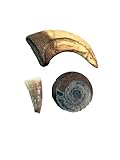
- Three-Item Fossil Set – Includes one Velociraptor claw replica, one Mosasaur tooth (B-grade), and one genuine small ammonite fossil
- Educational and Collectible – A great hands-on way to explore prehistoric life and paleontology
- Genuine Fossils Included – Both the Mosasaur tooth and ammonite are real fossil specimens
- Realistic Replica Claw – Velociraptor claw cast features high quality texture and curvature
- Ready for Display or Teaching – Great for collectors, educators, or science-themed gifts
The pattern is consistent with a lineage that originated in India and later dispersed toward North Africa through southern Eurasia after the collision of India with Asia. This is a biogeographic interpretation based on fossil relationships and the changing geography of the region. It is not direct evidence that individual Vasuki snakes followed a documented migration route.
Free tools Windows power users keep installed
One-click scans. No signup required.
What was the environment like?
Vasuki lived during the Eocene, a much warmer period in Earth’s history. Paleotemperature modeling for the fossil-bearing region produced a mean annual temperature estimate of approximately 27.2–28.6 °C (81–83 °F), suggesting that the area was warmer than western India today.
The warm climate may have helped support the evolution of very large body size. Snakes are ectothermic, meaning they rely on external heat to warm their bodies and fuel activity. A warm environment can make it easier for a large snake to maintain the temperatures needed for movement and digestion. Still, the connection between climate and Vasuki’s size is an interpretation, not something the fossil directly proves.
The shale and surrounding deposits indicate a tropical setting associated with the former landscape of Gujarat. Researchers considered Vasuki likely to have been terrestrial or semiaquatic. They compared its possible ecology with the modern reticulated python, Malayopython reticulatus, one of today’s longest snakes.
What did Vasuki eat?
No stomach contents, prey remains, or complete skull are known from the reported fossils, so its diet cannot be identified with certainty. Its size and anatomy are consistent with a powerful constrictor-like predator, but that description is an inference from comparisons with living snakes and related fossil forms.
Rank #4

- Exceptional Craftsmanship: Meticulously crafted from high-quality resin, each element of our display base tells a vivid story from the dinosaur era. Add this enduring piece to your collection today for a fascinating journey back in time!
- Experience Prehistoric Wonders: Step into the mesmerizing dinosaur era with our detailed resin base. Designed for fans of dinosaur lore, fossils, and thrilling prehistoric adventures, it's the perfect addition to any collection.
- Uniquely Detailed Design: This one-of-a-kind display base captures the essence of the prehistoric world like no other. It features everything from dinosaur skeletons to DNA motif, offering an unmatched showcase for your collectibles.
- Perfect for Amber Mosquito: With a specially designed groove, our resin base accommodates your amber-encased mosquito, transforming it into a stunning centerpiece amidst a captivating prehistoric landscape.
- Exciting Gift for Dinosaur Fans: This detailed resin base is the perfect surprise for dinosaur movie fans, fossil collectors, and prehistoric enthusiasts. Make their special day truly memorable with a gift that perfectly captures their passion.
A snake of this size may have been capable of taking substantial prey, particularly in or near water, but scientists cannot responsibly name a specific prey animal or reconstruct a particular hunting strategy from the 27 vertebrae alone. The reticulated python is useful as an ecological analogy—not proof that Vasuki behaved exactly like a modern python.
Independent reader supportYour contribution helps us test, update, and keep practical guides available for everyone.Why this discovery matters
The find expands the known record of giant snakes in the Indian subcontinent and strengthens the case that madtsoiids were an important Gondwanan snake lineage. It also shows how much information can be recovered from a partial fossil. Vertebrae preserve clues about body size, anatomy, and relationships even when a skull and limbs are absent.
At the same time, Vasuki illustrates why prehistoric size records can change. Fossil animals are often reconstructed from incomplete remains, and different studies may use different modern species, measurements, and statistical models. A new skeleton, a better family tree, or a revised equation could alter the ranking.
So, was Vasuki the largest snake ever?
Possibly—but the evidence does not justify saying so as an absolute fact. The fossil snake was unquestionably the largest madtsoiid currently known, and its modeled upper estimate of around 15 meters may exceed the approximately 13-meter estimate for Titanoboa. Yet the estimates are based on different methods, and the fossil material is incomplete.
What’s actually slowing this PC down?
Pick the symptom - the matching free tool is one click away.
The most accurate summary is: Vasuki indicus may have been a roughly 15-meter-long giant snake that rivaled or exceeded Titanoboa in length, but its exact size—and its status as the largest snake ever—remains uncertain.
Best Value
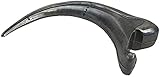
- Jurassic Park Fossil Raptor Claw Bottle Opener is sure to inspire awe and amazement
- Based on and scaled to the size of the original prop from the film series
- 5.5 inch heavy duty bottle opener is cast in tough zinc-alloy
- It's sure to last and open your favorite beverages for the next 65 million years, or until an extinction level event happens.
- Authentic and authorized Jurassic Park item from Factory Entertainment
Frequently Asked Questions
What was Vasuki indicus?
Vasuki indicus was an extinct madtsoiid snake from what is now Gujarat, India. It lived approximately 47 million years ago during the Eocene.
How long was Vasuki indicus?
Scientists estimated its length at approximately 11–15 meters (36–50 feet), with one modeled range extending from about 10.9 to 15.2 meters. The estimate was calculated from fossil vertebrae rather than a complete skeleton.
Was Vasuki bigger than Titanoboa?
It may have been longer than Titanoboa, whose widely cited estimate is about 13 meters. Because the two estimates used different equations and datasets, however, Vasuki is not conclusively proven to have been longer or heavier.
Windows Errors? Fix Them Before They Spread
Repair common Windows errors and clear accumulated junk for a smoother, more stable PC - no reinstall needed.Free scan · no reinstallCrashes, No Sound, or Screen Glitches?
Random freezes, missing sound and display glitches usually trace back to one bad driver. Find and replace yours safely.Free scan · under a minuteWhat did Vasuki indicus eat?
The fossils do not preserve a stomach, prey, or complete skull. Researchers consider a large constrictor-like predatory lifestyle plausible, but its exact diet and hunting behavior remain uncertain.
The Bottom Line
Bottom line: Vasuki indicus was a 47-million-year-old Indian madtsoiid known from 27 vertebrae. Statistical models estimate that it may have reached 11–15 meters (36–50 feet), making it the largest known madtsoiid and a possible rival to Titanoboa—but not a definitively proven largest snake ever.
Quick Recap
Product prices and availability are accurate as of the date/time indicated and are subject to change. Any price and availability information displayed on Amazon at the time of purchase will apply.




