
What’s actually slowing this PC down?
Pick the symptom - the matching free tool is one click away.
There is no single technical category called an “Egyptian dog breed.” The phrase brings together three different things: dogs documented in ancient Egyptian art and archaeology, modern breeds traditionally associated with Egyptian hounds, and living dog types that developed in Egypt itself.
The six names most often included are the Saluki, Pharaoh Hound, Basenji, Ibizan Hound, Armant, and Baladi. But they do not all have the same claim to Egypt. The Armant is the clearest modern Egyptian working dog, while the Baladi is a variable local population rather than a standardized pedigree breed. The Pharaoh Hound, Basenji, and Ibizan Hound are formally associated with Malta, Central Africa, and Spain respectively, despite their enduring Egyptian connections.
As an Amazon Associate I earn from qualifying purchases.
Egyptian dog breeds at a glance
The most accurate way to understand this group is to separate cultural association from formal breed origin. Ancient Egyptian imagery can show that particular dog types existed in Egypt, but it cannot automatically prove that a modern breed is genetically identical to them or descended through an unbroken pedigree.
Recommended Free Tools
| Dog | Why it is linked to Egypt | Modern classification or origin | Traditional work |
|---|---|---|---|
| Saluki | Slender hounds resembling Salukis appear in ancient Middle Eastern and Egyptian contexts; valued dogs were associated with Egyptian nobility. | FCI: Middle East, not exclusively Egypt | Coursing and hunting fast desert prey |
| Pharaoh Hound | Its traditional history connects it to ancient Egyptian hounds transported through Mediterranean trade. | FCI: Malta | Rabbit hunting on Malta |
| Basenji | Basenji-like dogs appear in discussions of ancient Egyptian artifacts and were reportedly brought as gifts to pharaohs. | FCI: Central Africa | Hunting, flushing game, and vermin control |
| Ibizan Hound | Its long head and large ears resemble dog motifs in ancient Egyptian art; an ancient migration through Phoenician trade is often proposed. | FCI: Spain | Rabbit coursing on the Balearic Islands |
| Armant | Developed in and named after Armant in Upper Egypt. | Egyptian working type; not listed as a definitively recognized FCI breed | Herding, farm protection, and guarding |
| Baladi | The Arabic term refers broadly to local or native Egyptian dogs found in villages, towns, and streets. | Variable Egyptian dog population, not a standardized pedigree breed | General-purpose community and farm-dog roles |
Dogs in ancient Egypt: what the evidence actually shows
Dogs were part of Egyptian life in several ways. The Metropolitan Museum of Art documents their use in hunting, watchdog duties, companionship, and displays of status. Egyptian art also shows dogs accompanying royal hunts and depicts leaping dogs in symbolic scenes connected with the pharaoh’s struggle against chaos.
#1 Best Overall

- UPGRADED HEAVY DUTY ALLOY: Features a solid black metal D-ring, not plastic! This durable nylon dog collar handles pulls, providing a secure leash attachment for energetic small, medium, or large dogs
- SPOT YOUR PUP INSTANTLY: Highly reflective threads keep your furry friend visible during night walking. Easily locate them in a dark backyard with a flashlight, ensuring safety and your peace of mind
- NO MORE NECK CHAFING: Lined with soft, breathable neoprene padded material. It acts as a cushion to protect sensitive skin and prevent hair loss, making it a highly comfortable collar for all-day daily wear
- SECURE QUICK RELEASE CLASP: The sturdy snap buckle ensures a safe, locked fit that won't easily come undone during outdoor play. It allows for effortless taking on and off, saving you time and hassle
- VIBRANT COLORS ADJUSTABLE: Available in cute, pretty shades to match your pet's vibe. Fully adjustable for growing puppies. Please measure your dog's neck carefully before ordering to choose the perfect fit
That record establishes that dogs were socially and culturally important in ancient Egypt. It does not establish that every modern breed with a narrow muzzle, upright ears, or a sighthound’s body is a surviving “pharaoh’s dog.” Breed standards, closed registries, and modern breed names are much more recent than the ancient images.
Archaeology provides additional evidence of dogs in Egypt. A British Museum record describes a dog figure made in Egypt during the Ptolemaic period, and another record documents a dog mummy found at Thebes from the Roman period. These objects show that dogs had a physical and ritual presence in Egypt, but a mummified animal cannot automatically be assigned to a modern breed such as a Saluki, Pharaoh Hound, or Basenji.
What about Anubis?
Anubis is frequently brought into modern discussions of Egyptian dog breeds, especially the Basenji and Ibizan Hound. The comparison is understandable: several ancient Egyptian dog types have pointed muzzles and upright ears, and some modern breeds appear visually similar to Egyptian artwork.
However, the British Museum identifies Anubis as a jackal-headed or full-jackal deity associated with mummification, the afterlife, and the dead. It is not established that Anubis was modeled on a Basenji, an Ibizan Hound, or any other modern breed. The visual resemblance is an interesting clue about ancient animal imagery, not proof of breed identity.
1. Saluki: the ancient Middle Eastern hound associated with Egypt
The Saluki is the strongest candidate when discussing ancient hounds connected with Egypt, but calling it an exclusively Egyptian breed is too narrow. The Fédération Cynologique Internationale lists the Saluki’s country of origin as the Middle East. Its standard describes a hunting and coursing hound used across the region for thousands of years.
Salukis varied according to the tribe that kept them and the terrain in which they worked. A desert hound and a hound from a mountainous region might have differed in coat, size, and build while still belonging to the same broad tradition. The FCI standard also notes that Salukis were traditionally presented as marks of honor rather than routinely bought and sold like ordinary commodities.
The American Kennel Club describes archaeological evidence for slender, feathered dogs dating back at least 5,000 years and discusses the Saluki’s association with Egyptian nobility. Valued dogs were sometimes mummified, which helps explain the breed’s powerful place in popular accounts of ancient Egypt.
Outdated Drivers Are Slowing You Down
One free scan finds every outdated or missing driver and matches the right update for your exact hardware.Free scan · exact hardware matchWindows Errors? Fix Them Before They Spread
Repair common Windows errors and clear accumulated junk for a smoother, more stable PC - no reinstall needed.Free scan · no reinstallThe important qualification is that an ancient image of a slender hunting dog is evidence of an ancient dog form and relationship—not proof of an uninterrupted modern Saluki pedigree. The formal breed standard came much later. A careful description is that Salukis were honored throughout the ancient Middle East and were prominently represented in Egyptian culture.
Historical role and modern character
Salukis were built for coursing fast desert prey. Their modern profile reflects that history: they are elegant, athletic, independent, and capable of a strong prey drive. They generally make the most sense for owners prepared to provide appropriate exercise and to manage a sighthound’s instinct to chase.
Rank #2
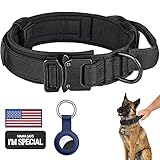
- 【Premium Material】Tactical dog collars is made of 1000D high-quality nylon fabric,very durable,wear-resisting. Soft and comfortable padded inner won’t hurt dog’s fur and can protect dog’s neck well.
- 【Double Security】Buckle training dog collar adopt integrated collar,magic sticker and quick release metal clasp dual design.Adjustable dog collar easy to put on and take off,the metal clasp can be released quickly in case of emergency.
- 【Control Handle】Military Training Nylon Dog Collar has special control handle,can efficiently control your dog when training, patrol,hiking, jogging, hunting, camping, working, running, jumping, traveling, camping.fits lots of medium and large dogs like German Shepherd, Border Collie, Rottweiler, Great Dane, Doberman, Golden Retriever, Husky, Labrador, Alaskan Malamute,etc.
- 【Airtags case and Patches】DAGANXI tactical dog collar comes with 1*Airtag protective case and 2*patches. Airtags Case Cover can protects your Airtags from scratches and damage, when Airtags used to track your dog, this enables your dog to find its way home. tactical dog collar comes with two patches, On the back of collar, you can also put a name tag, ID badge, or any Velcro accessory to make your dog unique.
- 【Warm prompt】Please follow the size chart to measure your dog's neck carefully before you place the order to ensure the collar is fit well to your dog.There should be left 2 fingers gap between the collar and the dogs neck.
Best historical label: an ancient Middle Eastern coursing hound strongly associated with Egypt, rather than a breed proven to have originated only in Egypt.
2. Pharaoh Hound: a Maltese breed with an Egyptian ancestral tradition
The Pharaoh Hound is probably the dog most immediately associated with the phrase “Egyptian dog.” Its tall, sculptural outline and large ears look like familiar motifs from Egyptian art. Yet its formal modern origin is Malta, not Egypt: the FCI classifies it as a Maltese primitive-type dog.
The Tool Desk
Outbyte Driver Updater FREEFix the driver behind crashes, sound loss and screen glitchesFind Drivers →Outbyte PC Repair FREERepair Windows errors before they cause bigger problemsFix Now →The breed’s traditional history proposes that Phoenician traders transported Egyptian-looking hounds across the Mediterranean. On Malta, the dogs became rabbit hunters known locally as Kelb tal-Fenek, or “rabbit dog.” The practical history is therefore firmly connected with Malta, where Pharaoh Hounds hunted rabbits and were reportedly used alongside ferrets.
The most defensible wording is: the Pharaoh Hound is a Maltese breed whose traditional history links it to ancient Egyptian hounds, possibly through Mediterranean trade. That acknowledges the ancestral theory without presenting it as a documented modern pedigree.
The name and the famous “blush”
The name “Pharaoh Hound” was adopted after the dogs reached England. The name itself is not evidence that the modern breed was established by Egyptian pharaohs. Likewise, the breed’s ability to “blush” is a visible flushing of the nose and ears when the dog is excited. It is a physiological color change, not evidence of an ancient Egyptian ritual or special pharaonic trait.
Best historical label: a Maltese rabbit hound whose appearance and traditional ancestry connect it to ancient Egyptian and eastern Mediterranean dog traditions.
Free tools Windows power users keep installed
One-click scans. No signup required.
3. Basenji: a Central African dog with an Egyptian connection
The Basenji is another dog whose Egyptian association is strong but whose modern country of origin is elsewhere. The FCI lists Central Africa as the breed’s country of origin, and American Kennel Club historical material places the breed’s living source population in the Congo and nearby Central African regions.
According to the AKC’s historical account, Basenjis were brought from the source of the Nile as gifts for pharaohs, and Basenji-like dogs appear on ancient Egyptian artifacts. These claims help explain why the breed is so often included in articles about Egyptian dogs. They do not mean that the modern Basenji was developed as an Egyptian breed.
The Basenji is particularly useful for understanding how dogs moved through the ancient world. A dog could travel northward through trade, diplomacy, or changing human settlements and become part of Egyptian visual culture without originating as a modern Egyptian breed. Ancient Egyptian artists may also have depicted more than one local or imported dog type.
Rank #3
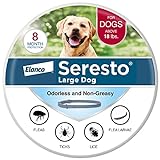
- Vet-recommended, premium flea and tick protection for dogs and puppies without the price tag
- Long-lasting flea and tick collar kills and repels fleas for 8 continuous months
- Seresto is the #1 veterinarian recommended flea and tick collar* *Elanco Animal Health, data on file
- Starts working after 24 hours to kill and repel fleas through contact so pests don't have to bite your dog to die
- Hassle-free, non-greasy, easy-to-use flea and tick protection
Basenji traits that reflect its working past
Basenjis were used for hunting, flushing game, and controlling vermin. Modern owners often recognize the breed for its distinctive yodel-like vocalization rather than a conventional bark, as well as its famously catlike cleanliness. Those traits are part of the modern breed’s appeal, but the historical point is more important: the Basenji’s living roots are Central African, even though its story intersects with the Nile and ancient Egypt.
It is tempting to say that Anubis was a Basenji because of the breed’s pointed ears and compact, elegant outline. That claim is not established. Anubis’s jackal symbolism belongs to ancient Egyptian religion and should not be converted into a modern breed identification.
Best historical label: a Central African hunting dog associated with ancient Egypt through movement, artifacts, and visual comparison.
4. Ibizan Hound: the island rabbit hunter linked to ancient hounds
The Ibizan Hound, or Podenco Ibicenco, is formally associated with Spain. The FCI lists Spain as its country of origin, and the breed’s practical development is tied to Ibiza and the other Balearic Islands.
Its Egyptian connection comes from both appearance and traditional migration theory. The Ibizan Hound has an elongated head, large erect ears, and a lean, athletic body that resemble familiar dog motifs in ancient Egyptian art. One commonly repeated explanation is that Phoenician sailors carried ancient hound types from Egypt or the eastern Mediterranean to the Balearics.
Quick wins for a faster PC:
Repair Windows errors before they cause bigger problemsFix Now →Scan for outdated or missing drivers - takes under a minuteDriver Scan →Clear out junk files and repair common Windows errorsFree Scan →That migration story is plausible within the history of Mediterranean trade, but it is not a conclusively demonstrated direct pedigree. It is more accurate to say that the Ibizan Hound is often believed to descend from ancient Egyptian or eastern Mediterranean hounds than to call it a proven descendant of the pharaohs.
A clear island history
What is less uncertain is the breed’s working role in the Balearics. Ibizan Hounds were developed as fast, agile rabbit hunters capable of covering rocky, difficult island terrain. Their history is therefore not only an origin story: it reflects the food economy and landscape of the islands where the dogs were shaped by human selection.
Best historical label: a Spanish island rabbit hound with a traditional, but unproven, connection to ancient Egyptian or eastern Mediterranean dogs.
5. Armant: Egypt’s modern herding and guarding dog
Armant, also called the Egyptian Sheepdog or Ermenti, is the clearest example in this group of a dog developed in modern Egypt. It is associated with the town of Armant in Upper Egypt and was used by rural communities for herding livestock, protecting farms, and guarding.
Rank #4
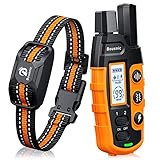
- Humane and Safe, Eliminate Bad Behavior Effectively: Bousnic Dog shock collar features 3 humane training modes with adjustable beep(1-8 levels), vibration(1-16 levels), safe shock(1-99 levels). It helps your unruly and hard-headed dogs learn to be a better part of your household.
- Extended 3300FT Range: Bousnic Dog Training Collar covers up to 3300Ft allowing your pet to roam farther. With dual-channel, It is perfect to train 2 dogs simultaneously outdoor at distances up to 3/4 mile.
- Fits for All Sizes of Dogs 5-120lbs: Bousnic training collar for dogs is ideal to control dogs as small as 5 pounds and as big as 120 pounds. Instant response security on/off switch button allows you to carry it without any fear of accidental touch.
- IP67 Waterproof Receiver: Bousnic electric dog collar can be used in any weather and any condition thanks to the IP67 waterproof design of the receiver (You’ll have to keep the remote control away from water).
- Incredible Battery Life: Bousnic e collar for dogs training has a decent battery life. The receiver’s battery can last for up to 15 days in working modes while the remote for over 1 month. the long battery runtime is a true lifesaver on those camping or tailgating weekends.
The Armant is a useful contrast to the sighthounds usually featured in Egyptian-dog lists. Its historical function was not primarily to chase fast desert prey. It was a practical farm and village dog, and its rough or shaggy coat distinguishes it from the short-coated Mediterranean and desert hounds commonly shown in ancient-Egypt comparisons.
Uncertain ancestry
Breed references sometimes propose that European herding dogs crossed with local Egyptian dogs during the nineteenth or early twentieth century. Some accounts specifically mention Briards or dogs associated with Napoleon’s expedition. These explanations should remain labeled as theories. The available material supports the Armant’s Egyptian working role, but it does not establish one definitive founding event or a securely documented ancient lineage.
The Armant is also not listed as a definitively recognized breed in the FCI’s standard breed nomenclature. That does not make it unimportant or unreal. It means that its status differs from that of internationally standardized breeds, and claims about its history should be made with the same care as claims about its appearance or ancestry.
Best historical label: an Egyptian working dog type associated with Upper Egypt, with a useful but uncertain modern ancestry.
6. Baladi: Egypt’s living local dog population
Baladi is not a standardized breed name equivalent to Saluki or Pharaoh Hound. In Egyptian Arabic, the word broadly means “local,” “native,” or “of the country.” In canine use, it commonly describes Egypt’s village and street dogs—a variable population rather than a uniform pedigree.
Many Baladi dogs are described as lean, erect-eared, and short-coated, but the population is heterogeneous. Dogs can differ substantially in body size, coat, color, behavior, and ancestry. Calling every Egyptian street dog a single breed erases that variation.
The deeper historical question remains disputed. Some observers view Baladi dogs as mixed-breed descendants of relatively recent regional dogs. Others regard them as a distinct local population that may retain ancestry from older dogs associated with Egypt. At present, it is not responsible to claim either that all Baladi dogs are unchanged descendants of pharaonic dogs or that they have no connection to older Egyptian dog populations.
Why Baladi matters
Baladi dogs represent the living, contemporary canine population of Egypt rather than a formal show-ring breed. Their story is about how dogs adapt and reproduce within human communities over time, not about a single carefully recorded breeding program. That makes Baladi a valuable part of Egypt’s canine history even though the label does not describe one consistent pedigree or appearance.
Do these 3 things before closing this tab:
1Scan for outdated or missing drivers - takes under a minute2Clear out junk files and repair common Windows errors3Fix the driver behind crashes, sound loss and screen glitchesBest historical label: a broad name for Egypt’s variable local dog population, with debated ancestry and no uniform breed standard.
Best Value
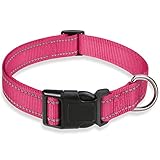
- 【SOFT MATERIALS】Nylon fabric with high density webbing to add durability; Our collar is as smooth and soft as grosgrain,no irritation to pet skin.
- 【SAFETY REFLECTIVE】Highly reflective threads keep high visibility at night for safety. It will ensurethat your dog will be seen at night and in low light situations.
- 【CONVENIENT & DURABLE】Quick release premium ABS made buckles, easy to put it on/off. The plastic buckle is curved for your dog’s comfort. The metal D ring is chrome coated to add durability.
- 【CLASSIC COLLAR】This nylon dog collar is a classic yet stylish collar that comes in 12 colors and 6 sizes so you can find just the right one for your dog. A separate loop on the collar makes it easy to add dog tags and leashs onto the collar.
- 【ADJUSTABLE LENGTH】Non-slip adjustable loop can easily adjust the size, Please take measurement of your dog's neck circumference before order placed. XXS - 3/8"x(8-12"); XS - 5/8"x(8-12"); S - 5/8"x(10-14"); M - 3/4"x(12-18") ; L - 1.0"x(14-22"); XL - 1.0"x(16-26"). Ideal personalized dog collars for small medium large boys & girls.
Ancient images versus modern pedigrees
Three common assumptions create most of the confusion around Egyptian dogs.
| Popular assumption | What the evidence supports |
|---|---|
| “An ancient Egyptian dog in a painting must be a modern Saluki, Pharaoh Hound, or Basenji.” | Ancient art documents real dogs and their roles, but visual resemblance does not identify a modern standardized breed. |
| “A breed with an Egyptian-sounding name must have originated in Egypt.” | The Pharaoh Hound’s formal origin is Malta, and its name was adopted after the dogs reached England. |
| “A 5,000-year-old dog type proves an uninterrupted modern breed.” | Archaeological continuity and modern pedigree continuity are different claims. The former does not prove the latter. |
| “Anubis was a Basenji.” | Anubis is identified in museum material as a jackal-associated deity; no modern breed identification is definitive. |
| “Baladi is one Egyptian breed.” | Baladi is a broad term for a variable local dog population. |
| “Armant’s proposed European ancestry is settled history.” | European-crossing explanations are theories, not a proven founding account. |
Which of these dogs is actually Egyptian?
The answer depends on what “Egyptian” means:
- For a dog developed in modern Egypt: look first to the Armant. The Baladi also belongs to Egypt as a living local population, although it is not a standardized breed.
- For an ancient cultural connection: the Saluki has the strongest broad Middle Eastern and Egyptian association, while the Basenji is linked through Central Africa, the Nile, and ancient imagery.
- For a Mediterranean breed with an Egyptian ancestral theory: consider the Pharaoh Hound and Ibizan Hound. Their modern histories are Maltese and Spanish, respectively.
- For a formal kennel-club country of origin: use the FCI classifications rather than popular names: Middle East for the Saluki, Malta for the Pharaoh Hound, Central Africa for the Basenji, and Spain for the Ibizan Hound.
Evidence behind this guide
The historical distinction in this article is based on museum records and breed-history material rather than on appearance alone. The Metropolitan Museum of Art documents the practical and symbolic roles of dogs in ancient Egypt. British Museum records document a Ptolemaic-period dog figure, a Roman-period dog mummy from Thebes, and Anubis’s jackal-associated religious identity. FCI standards provide formal country-of-origin classifications for the Saluki, Pharaoh Hound, Basenji, and Ibizan Hound, while AKC breed histories and profiles describe their archaeological associations and working traditions. References on the Armant and National Geographic’s coverage of Baladi dogs provide context for Egypt’s modern working and local dog populations.
Frequently Asked Questions
Are Pharaoh Hounds actually from Egypt?
The modern Pharaoh Hound is formally classified as a Maltese breed. Its traditional history links it to ancient Egyptian-looking hounds that may have reached Malta through Phoenician trade, but that ancestral theory is not the same as proof that the modern breed originated in Egypt.
Is the Basenji an Egyptian dog breed?
No, not in modern kennel-club classification. The FCI lists Central Africa as the Basenji’s country of origin. The breed is associated with Egypt because Basenji-like dogs appear in discussions of ancient Egyptian artifacts and historical accounts report that similar dogs were brought as gifts to pharaohs.
Is the Baladi a standardized Egyptian breed?
No. Baladi is a broad Egyptian Arabic term meaning local or native. It generally refers to a variable population of village and street dogs with no single pedigree, appearance, or temperament.
Crashes, No Sound, or Screen Glitches?
Random freezes, missing sound and display glitches usually trace back to one bad driver. Find and replace yours safely.Free scan · under a minutePC Slower Than It Used to Be?
A free scan shows the junk files, broken settings and background clutter dragging Windows down - then fixes them in one click.Free scan · Windows 10 & 11Which dog in this list is most clearly Egyptian?
The Armant is the clearest modern Egyptian working dog because it is associated with Armant in Upper Egypt and was used for herding and guarding. The Baladi is also distinctly Egyptian as a living local dog population, but it is not a standardized breed.
The Bottom Line
The six dogs can all be part of an Egyptian-dog story, but they do not share one origin. Ancient Egyptian art and archaeology prove that dogs were important in Egypt; they do not prove uninterrupted modern breed pedigrees. The Saluki is a Middle Eastern hound strongly represented in Egyptian culture, the Pharaoh Hound is Maltese, the Basenji is Central African, the Ibizan Hound is Spanish, the Armant is a modern Egyptian working type, and the Baladi is a diverse local Egyptian dog population.
Quick Recap
Product prices and availability are accurate as of the date/time indicated and are subject to change. Any price and availability information displayed on Amazon at the time of purchase will apply.





Leave a Reply