
Some links on this page are affiliate links: if you buy through them we may earn a commission, at no extra cost to you.
The most reliable way to keep skunks out of a yard is not a strong smell or ultrasonic gadget. It is to remove food, block access to hiding places, and protect gardens and other vulnerable areas with properly installed barriers. Skunk “repellents” may have limited or temporary value, while exclusion and attractant control address the reason the animal is visiting in the first place.
The seven methods below are written for homeowners, primarily in the United States. Local rules for trapping, relocation, wildlife handling, and pesticide use vary, so check your state and local requirements before taking action.
As an Amazon Associate I earn from qualifying purchases.
Recommended Free Tools
1. Remove the food that is attracting skunks
Skunks are opportunistic feeders. A yard can become attractive because of pet food, unsecured garbage, fallen fruit, compost, bird-food spills, rodents, or insects. Begin by removing these predictable food sources rather than trying to overpower them with a scent.
- Feed pets indoors whenever possible. If pets must eat outside, bring bowls in promptly and clean up crumbs.
- Pick up fallen fruit, vegetables, and spoiled produce from beneath plants.
- Keep birdseed off the ground and clean spilled seed regularly.
- Remove brush, scrap lumber, dense debris, and other material that provides cover near sheds, decks, and foundations.
- Check barns, garages, crawl spaces, and sheds for rodents or spilled feed.
- Keep compost enclosed and avoid leaving meat, dairy, or other strongly scented scraps in an open pile.
This will not necessarily make a skunk leave immediately, but it removes the reason to keep returning. It is especially important to do before sealing a space under a structure: otherwise, a skunk may simply look for another way into the property.
Popular on Amazon

- Stop skunk damage under your home and around other areas of your backyard by using this granular formula.
- The smell and taste of the granules provides dual action protection to convince skunks that your yard is dangerous and quickly trains them to avoid the treated areas.
- Convenient 6-pound resealable bag contains enough product to cover up to 3,500 square feet for all season use. Can be applied as a protective border or evenly spread over the specific areas you'd like to protect.
- Shields your landscaping, gardens, patios and porches by discouraging skunks from your property.
- Easy to apply, no spraying or mixing needed. Each application is long lasting and should last around 30 days during normal rainfall and irrigation.
2. Make garbage, compost, and outdoor food inaccessible
General yard cleanup and securing food storage overlap, but garbage and compost deserve their own treatment because they provide a reliable nighttime food source. Use containers with tight-fitting or locking lids, and keep them in a garage, shed, or enclosed area when practical.
A locking garbage-can lid or secure outdoor trash container can help, but do not assume that any one design is automatically skunk-proof. Check whether the lid can be pried or tipped open, and keep bags from protruding over the rim. Rinse food residue from containers and clean spills around the storage area.
Quick wins for a faster PC:
Fix the driver behind crashes, sound loss and screen glitchesFind Drivers →Repair Windows errors before they cause bigger problemsFix Now →For compost, use an enclosed system with a secure top and avoid adding meat, bones, grease, or other materials that are likely to attract wildlife unless the system is designed to process them. Secure chicken feed, livestock feed, and pet treats indoors overnight.
3. Protect gardens and poultry areas with buried mesh
Skunks can dig under ordinary fencing, especially when they are seeking food or trying to reach poultry, eggs, grubs, or sheltered soil. A sturdy wire barrier works better when it is secured to the ground and extended below or outward from the fence line.
For exclusion beneath structures, wildlife-damage guidance commonly recommends 1/2-inch mesh buried about 2 inches and extending outward at least 12 inches as an underground apron. Sandy soil or persistent digging may require a deeper installation and a wider outward extension. For a garden or poultry run, adapt the barrier to the animal’s likely route and make sure there are no gaps at gates, corners, or uneven ground.
1/2-inch galvanized hardware cloth is a practical material for this type of work. Use sturdy mesh rather than thin chicken wire, fasten it securely to posts or the structure, and bend the buried portion outward in an L-shaped apron when possible. Cover sharp cut ends and inspect the barrier after heavy rain or digging.
Also popular on Amazon

- STRONG REPELLER - This unique blend of ingredients causes mild irritation to animal's nasal passages. When an animal touches, tastes, or smells Repels-All Animal Repellent, it triggers the natural instinct to escape/avoid and the pest leaves.
- ANIMALS AFFECTED - Our granules repel species of squirrel, deer, rabbit, chipmunk, mouse, skunk, rat, beaver, raccoon, porcupine, bird, groundhog and more rodent species.
- DEFEND YOUR GARDEN AND HOME - Apply around homes, gardens, garbage cans, barns, swimming pools, sheds, woodpiles, decks, patios, and campsites to prevent grazing, chewing, gnawing, nibbling and browsing damage to plants and property.
- BIODEGRADABLE - Repels-All granules are biodegradable and will not harm animals, lawns, gardens, flowerbeds, or other desirable plants when used as directed.
Mesh also needs to extend high enough to protect the vulnerable area. A low buried apron may stop digging under a fence but will not prevent a skunk from walking through an open gate or reaching food left beside the barrier.
4. Block access beneath decks, porches, sheds, and foundations
Skunks often use quiet, ground-level spaces as daytime shelter or denning sites. Inspect beneath decks, porches, sheds, steps, additions, and crawl-space entrances for openings. Seal gaps with wire mesh, sheet metal, masonry, or concrete once you are certain the space is empty.
Do not permanently close an opening while a skunk may still be inside. Blocking the entrance can trap the animal, separate a mother from young, or force the skunk to damage another part of the structure while trying to escape.
If a skunk is using the space, a one-way wildlife exclusion door may allow it to leave without allowing it back in. The technique requires careful installation: identify all alternative openings, fit the door so the animal cannot push around it, and monitor the site. After several days of suitable weather, look for evidence that the animal has gone before removing the device and permanently securing the opening.
PC Slower Than It Used to Be?
A free scan shows the junk files, broken settings and background clutter dragging Windows down - then fixes them in one click.Free scan · Windows 10 & 11Outdated Drivers Are Slowing You Down
One free scan finds every outdated or missing driver and matches the right update for your exact hardware.Free scan · exact hardware matchUseful signs include the absence of fresh tracks, digging, or other activity. If young animals may be present, if the opening is difficult to monitor, or if you cannot install an exclusion device without approaching the skunk, use a licensed wildlife-control professional instead.
5. Reduce lawn digging by addressing grubs and other prey
Small, cone-shaped holes or patches of disturbed turf may indicate that skunks are searching for insects, especially grubs. The long-term solution is to identify what is attracting them rather than treating every hole as a sign that the animal must be frightened away.
Also popular on Amazon
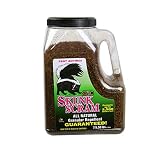
- Stop skunk damage under your home and around other areas of your backyard by using this granular formula.
- The smell and taste of the granules provides dual action protection to convince skunks that your yard is dangerous and quickly trains them to avoid the treated areas.
- Convenient 5.5 lb shaker jug contains enough product to for all season use. Can be applied as a protective border or evenly spread over the specific areas you'd like to protect.
- Shields your landscaping, gardens, patios and porches by discouraging skunks from your property.
- Easy to apply, no spraying or mixing needed. Each application is long lasting and should last around 30 days during normal rainfall and irrigation.
Inspect the lawn and, if appropriate, obtain advice about whether a grub problem is actually present. Use only an insect-control product that is legally registered for the intended site and pest, and follow its label exactly. Insecticides can affect pollinators, birds, pets, aquatic life, and other species, so treating without confirming the cause can create unnecessary risk.
Also consider whether the lawn is being watered heavily at night or whether another food source is nearby. Removing food waste and securing structures may reduce visits even when some natural insects remain.
6. Consider a labeled animal-repellent product carefully
Some animal-repellent products have included skunks among their listed target animals on particular labels. These products may rely on odor or taste irritation in the treated area. That does not mean every skunk-repellent product works everywhere, that an old label applies to a newer formulation, or that a product registered in one state is available for the same use in another.
Before buying or applying one:
- Read the current product label and confirm that skunks are listed as a target animal.
- Confirm that the label allows use on your intended site, such as a lawn, garden, ornamental plant, structure, or fence line.
- Check state and local pesticide requirements where you live.
- Follow application rates, reapplication instructions, storage directions, and restrictions around children, pets, edible crops, waterways, and wildlife.
- Do not infer effectiveness from a product’s marketing name or from a historical label.
Use a labeled repellent, if appropriate, as a limited supplement to exclusion and food control—not as a guarantee that a skunk will leave or never return.
7. Use temporary, non-contact disturbance only as a backup
A skunk that is temporarily exposed in a yard may sometimes move away when people are present, an area is brightly illuminated, or it receives a brief spray of water from a safe distance. A motion-activated sprinkler can provide this kind of non-contact disturbance in a limited situation, such as a garden edge or a frequently used path.
Keep expectations modest. Wildlife-damage guidance does not consider frightening devices an effective general method for skunk control. Skunks can become accustomed to repeated disturbances, and a device will not stop an animal from entering a sheltered den or pursuing an attractive food source.
The Tool Desk
Outbyte Driver Updater FREEScan for outdated or missing drivers - takes under a minuteDriver Scan →Outbyte PC Repair FREERepair Windows errors before they cause bigger problemsFix Now →Also popular on Amazon
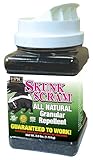
- REPELS BY NATURAL TASTE AND SMELL - This repellent contains a proprietary blend of natural biodegradable ingredients designed to repel skunks in 2 ways. It makes food in the area taste bad disrupting the digestive system. The granual also makes surrounding nests and environments become repellent by smell.
- DURABLE LONG LASTING APPLICATION - Our granule repellent is long lasting and won’t wash out in the rain. Effective during all seasons.
- EASY TO APPLY - Starting from the center portion of the damage, sprinkle by lightly shaking the repellent in a circular pattern away from the damage. You will notice in 3‐4 days no additional damage and may notice more activity outside the perimeter of the applied repellent. Repeat application towards the direction in which you want the skunks to exit the property.
- CHILD, PET AND ANIMAL SAFE - EPIC Repellents use all natural ingredients that do not harm animals or humans when used as instructed. The product is safe to use around pets and children. The products’ granules also completely disintegrate in the environment and are environmentally safe, making the product an eco-friendly option compared to other repellents or device that use plastics or non-natural ingredients.
- THE EPIC GRANUAL DIFFERENCE - There are alot of repellent products and devices out there. EPIC granual repellents offer unmatched application area precision compared to devices, pouches and liquids. Our founders role as a zoo keeper taught us that no two animals are the same. We have engineered our formulas to be laser targeted toward a specific pest by study of specific animal habit and preference.
Never approach, corner, chase, spray at close range, or otherwise provoke a skunk. Keep children and pets indoors while the animal is present. If the skunk is trapped, acting abnormally, or unable to leave, stop trying to scare it away and call animal control or a qualified wildlife professional.
Skunk safety: rabies, pets, and children
Skunks are among the wildlife species associated with rabies in the United States. Keep your distance from any wild animal, particularly one that appears sick, unusually aggressive, disoriented, injured, or active in an unusual way. Do not touch a dead or injured skunk.
Keep dogs and cats indoors or under close supervision when skunks are visiting. Make sure pets’ rabies vaccinations are current. If a pet has been bitten, scratched, or may have had saliva contact with an open wound, call a veterinarian and local animal-control or public-health authorities promptly.
After a person is bitten or scratched, wash the wound immediately with soap and running water for 15 minutes, then contact a healthcare or public-health professional promptly for an exposure assessment. Do not wait for symptoms to appear. If spray gets in the eyes, flush them with clean water and seek medical advice if irritation persists or vision is affected.
What’s actually slowing this PC down?
Pick the symptom - the matching free tool is one click away.
When to call a wildlife professional
Contact animal control, a public-health agency, or a licensed nuisance-wildlife professional when:
- a skunk is under an occupied deck, porch, shed, or foundation;
- you suspect babies are in the den;
- the animal is trapped, injured, dead, or behaving abnormally;
- a person or pet has been bitten, scratched, or exposed to saliva;
- the skunk cannot leave without direct handling;
- you need trapping, exclusion, or removal and are unsure what your local law permits.
Ask what license is required in your area, whether relocation is allowed, and how the professional will prevent re-entry. No responsible method can promise completely odor-free removal in every situation.
Also popular on Amazon

- REPELS COMMON YARD PESTS: Safer Brand Critter Ridder repels raccoons, skunks, dogs, cats, squirrels, groundhogs, and chipmunks
- NATURAL PEST CONTROL: Uses oil of black pepper, piperine, and capsaicin to keep critters away
- REPELS BY TASTE & SCENT: Dual-action formula repels animals by scent and taste
- 30 DAY PROTECTION: Long-lasting granules provide up to 30 days of protection from yard pests
- EASY TO USE: Apply Critter Ridder granules with lawn spreader or by hand
A simple seasonal skunk-prevention checklist
Every night
- Bring pet food and water bowls indoors when practical.
- Secure garbage, compost, livestock feed, and birdseed.
- Check that gates and poultry enclosures are closed.
Each week
- Pick up fallen fruit and spilled food.
- Inspect for fresh digging, tracks, disturbed mulch, or new openings.
- Look beneath decks, sheds, porches, and foundations without approaching an animal.
After repairs or severe weather
- Check mesh aprons, fence bases, gates, and crawl-space covers.
- Repair gaps promptly, but verify that no skunk is inside first.
- Reassess whether new food, water, or shelter has appeared around the property.
Frequently Asked Questions
What smell keeps skunks away?
There is no universally reliable scent that permanently repels skunks. Scent-based products may have limited or temporary effects, but removing food and blocking access to dens are more dependable. Do not use mothballs, gasoline, bleach, ammonia, or other improvised chemicals.
Will coffee grounds, citrus, or predator urine repel skunks?
These household or scent remedies are not reliable, guaranteed skunk controls. If a product is used, verify that it is currently labeled for skunks and for the exact place where you intend to apply it.
How do I know whether a skunk has left a den?
Monitor the opening for fresh tracks, digging, and other activity, ideally through several days of suitable weather. Do not permanently seal the opening until you have strong evidence that the animal is gone. A professional should assess the situation when young may be present.
Can I trap and relocate a skunk myself?
Do not assume that DIY trapping or relocation is legal or safe. Rules vary by state and locality, and trapping can cause spraying, bites, scratches, and disease exposure. Contact animal control or a licensed wildlife-control professional for local guidance.
The Bottom Line
To keep skunks away, remove nighttime food, secure trash and compost, protect gardens with buried mesh, and exclude animals from sheltered spaces only after confirming they are gone. Repellents and motion-triggered disturbances can be supplementary tools, but no scent, ultrasonic device, or improvised chemical is a dependable substitute for prevention and exclusion.





Leave a Reply