
Some links on this page are affiliate links: if you buy through them we may earn a commission, at no extra cost to you.
A small spider in a ceiling corner is often the common house spider, Parasteatoda tepidariorum. It is usually more useful—and less dangerous—than its reputation suggests: this cobweb builder catches small insects in quiet corners and is not regarded as medically important.
A small spider in a ceiling corner is often the common house spider, Parasteatoda tepidariorum. It is usually more useful—and less dangerous—than its reputation suggests. This cobweb-building species catches small insects in quiet corners and is not regarded as medically important. It can bite in unusual circumstances, but verified bites are uncommon and are generally limited to short-lived local symptoms.
As an Amazon Associate I earn from qualifying purchases.
Quick wins for a faster PC:
Fix the driver behind crashes, sound loss and screen glitchesFind Drivers →Clear out junk files and repair common Windows errorsFree Scan →Scan for outdated or missing drivers - takes under a minuteDriver Scan →There is one important qualification: people use “house spider” loosely. Several spider species may turn up indoors, and a spider cannot be identified reliably from a single color or marking. Geography, body shape, web structure, behavior, and—when possible—an examination of its anatomy all matter.
Eight facts about the misunderstood house spider
1. “House spider” usually means Parasteatoda tepidariorum—but not always
The common house spider is a real, widely distributed species especially associated with houses, barns, and other human structures. It is also found outdoors in sheltered places. However, “house spider” is a common name rather than a precise guarantee of identity. A cellar spider, funnel weaver, jumping spider, cobweb spider, or another species may be described that way by a homeowner.
Popular on Amazon
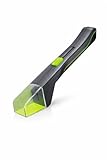
- 🐛 Safe & Humane Insect Catcher – Easily capture and release bugs without harming them. Perfect for humane insect control in your home, classroom, or garden.
- 🐝 Fun & Educational for Kids – Great for young explorers! Children can safely catch and closely observe insects before releasing them back into nature.
- 🐛 Simple One-Hand Operation – Just place the clear hood over the insect, gently slide the handle until the bug crawls onto the green pad, then close it completely – no crushed legs, no mess!
- 🐝 Perfect for Spiders, Beetles, and More – Ideal for catching all kinds of small bugs like spiders, crickets, and beetles – without getting too close!
- 📏 Compact Size for Easy Use – Dimensions: 11 inches (28 cm) long, 1.85 inches (4.7 cm) wide, 2 inches (5 cm) high. Lightweight and easy to store or carry on outdoor adventures.
That distinction matters because indoor location alone does not identify a spider—and it certainly does not establish that the spider is dangerous. Treat a photograph or a quick glance as a preliminary clue, not a conclusive identification.
2. It is small and adapted to sheltered corners
Adult female common house spiders are approximately 5–6 millimeters long, while males are approximately 3.8–4.7 millimeters long. Females typically have a yellowish-brown carapace, a dirty-white to brown abdomen with gray chevrons, and yellow legs with darker rings. Some individuals have a dark triangular abdominal marking.
Those features can help with a general comparison, but color varies and can be distorted by poor lighting, age, dust, or a camera flash. Body proportions and web type are more useful when considered alongside markings.
Likely locations include:
- wall and ceiling corners;
- around windows and door frames;
- basements, crawl spaces, and floor joists;
- barns, sheds, and garages; and
- quiet, damp, undisturbed areas.
Outside, the species may build webs beneath rocks, boards, bridges, and similar sheltered structures. Finding one indoors does not necessarily mean the home is dirty; a small opening, a sheltered corner, and a supply of flying insects may be enough.
3. Its cobweb is a hunting system—not a sign of aggression
The common house spider builds an irregular, three-dimensional web, usually in a protected corner. Unlike a large, symmetrical orb web, a cobweb can look untidy or loosely organized. That appearance reflects its function: the web intercepts small insects and other arthropods rather than decorating the room or signaling that the spider is targeting people.
The spider waits in or near the web and detects prey through contact and vibrations transmitted through the silk. When an insect becomes entangled, the spider can respond to the disturbance.
More broadly, spiders are predators. University of California Integrated Pest Management guidance describes most spiders as beneficial because they consume insects and other arthropods. A house spider is not patrolling the room looking for a person to bite; it is generally waiting for prey to come to its web.
4. One spider can make a home look much more infested than it is
Several webs in nearby corners do not automatically represent several spiders. A female may abandon one web and construct another close by. Over a relatively short period, one individual can therefore leave behind a succession of webs.
Dust provides another useful clue. An occupied web is maintained for catching prey, while a web covered in dust is often old and no longer being used. That does not prove that no spider is present elsewhere, but it can prevent a homeowner from interpreting every dusty strand as evidence of an active infestation.
Also popular on Amazon
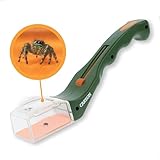
- One-Handed Operation: Thumb operated trapping slider for humanely catching the fastest specimens.
- Educational STEM Toy: Kids can catch a bug, view it, then release it back into nature.
- Powerful Magnification: Clear 5x power acrylic lens brings the finest details into focus for inquisitive minds.
- Backed by Carson: Enjoy peace of mind with a Limited Lifetime Warranty with your purchase.
Regularly removing old webs is therefore both a housekeeping measure and a way to see whether new web-building is continuing.
Do these 3 things before closing this tab:
1Repair Windows errors before they cause bigger problems2Fix the driver behind crashes, sound loss and screen glitches3Clear out junk files and repair common Windows errors5. It is generally not a medically important spider
The common house spider is not regarded as medically important and rarely bites people. Its frequent presence in homes, combined with the small number of reported bites attributed to it, supports a calm response to an ordinary sighting.
The verified bites summarized by Penn State Extension involved local pain, a red mark or redness, and pain lasting roughly four to 24 hours. That is evidence about the species—not a promise that no individual spider could ever bite. Like other spiders, it may defend itself if trapped against skin or handled.
Do not diagnose an unexplained skin lesion as a spider bite simply because a spider was seen in the home. Many skin conditions and insect bites look similar, and the spider is often not observed at all. Seek appropriate medical advice for severe or spreading symptoms, significant swelling, breathing difficulty, fever, muscle cramps, or other systemic symptoms. An ordinary common-house-spider sighting by itself is not a medical emergency.
6. It can be a quiet insect-control ally
A common house spider consumes some of the small insects and other arthropods that enter or live around a building. In that limited sense, it performs a useful predator role. The benefit should not be exaggerated: one small spider will not control a serious fly, ant, or pantry-pest problem.
What’s actually slowing this PC down?
Pick the symptom - the matching free tool is one click away.
Still, the choice is not simply “dangerous pest versus spotless home.” Some people reasonably prefer to remove all webs, while others are comfortable leaving a spider in an out-of-the-way corner. Both choices are compatible with sensible pest management. The important point is that routine pesticide use is usually unnecessary for a single common house spider.
7. Its life cycle can produce many egg sacs
Males and females may be found at any time of year, and some individuals have been reported to live for a year or more after reaching maturity. Males and females can coexist in a web and may mate repeatedly.
Females produce brown, oval, tough-covered egg sacs. A female may deposit 12 or more sacs during her lifetime, with approximately 140–380 eggs in each sac according to the life-history information summarized by Penn State Extension.
These figures describe reported biology, not a guaranteed outcome for every spider or household. They do explain why a sheltered, undisturbed area can support more than one generation if webs and egg sacs are left untouched.
PC Slower Than It Used to Be?
A free scan shows the junk files, broken settings and background clutter dragging Windows down - then fixes them in one click.Free scan · Windows 10 & 11Crashes, No Sound, or Screen Glitches?
Random freezes, missing sound and display glitches usually trace back to one bad driver. Find and replace yours safely.Free scan · under a minuteAlso popular on Amazon

- [Long Capture Range]: with an upgraded handle and a range of up to 21.65 inch, the extended spider catcher can be applied to capture flies from hard to reach places; This makes capturing flies hidden in cracks and crevices much easier; In addition, the sealed catch box allows the user to reach flies from a greater distance, eliminating the risk of accidentally crushing them and reducing the chance of being bitten or stung
- [Humane Flies Catcher]: humanely treats flying flies that stray into your home, moving flies from your home to gardens and patios away from your home; The flies vacuum minimizes harm to the flies, which won't know it was caught and then released; After catching the spider, place the flies trap outside the window, turn the handle to open the flapper door, and let the flies fly away
- Extended Reach & Rotating Head - Long, extendable stainless steel stick to reach high ceilings and tight corners without getting too close to the pests, allows you to catch spiders and various flies easily and accurately; 180° rotating head improves control in tight spots
- [Foolproof Operation]: when finding spiders in your home, hold this handheld flies catcher and carefully approach the spider, then place the tail cone over the spider, manually slide the panel door over or rotate the whole thing to get the panel door to close, then walk outside and turn the stick upwards again and shake it to release the spider; Note: nothing to lock the flap door into place so you have to rely on gravity
- [Thoughtful Gift]: the spider flies catcher is the thoughtful gift for your neighboring friends and family who are afraid of flying spiders; Our bug critter catcher kit is designed to be compact and portable, making it perfect for use as a bug catcher and release tool, ensuring you can explore the wonders of nature wherever you roam
8. Identification matters: not every indoor spider is the same
“House spider” should not be used as a blanket label for every spider found indoors. A careful comparison considers:
- Body form: overall proportions, abdomen shape, and leg length;
- web structure: an irregular cobweb, a sheet or funnel, an orb, or no web at all;
- hunting behavior: whether the spider waits in a web, runs actively, or stalks prey; and
- geography and habitat: species found in one region may be absent from another.
Eye arrangement and other anatomical details can also help specialists distinguish species. UC Integrated Pest Management guidance notes that spiders seen openly during the day are generally unlikely to bite people, while species capable of causing serious injury tend to spend more time hidden. That is useful context, not an absolute safety rule: avoid handling an unidentified spider.
If you want to learn the differences among common North American species, a field guide can be more useful than relying on color-based internet comparisons. Common Spiders of North America, published by the University of California Press, covers all 68 North American spider families and 469 commonly encountered species.
What to do when you find one
Option 1: Leave it alone
If the spider is in an unused corner and the web does not bother you, leaving it in place is reasonable. It will generally remain focused on small prey rather than people. Avoid touching it, especially if you have not confirmed its identity.
Recommended Free Tools
Option 2: Move it without killing it
- Place a jar, glass, or other rigid container over the spider.
- Slide a stiff piece of paper or thin card underneath the opening.
- Keep the paper pressed against the container while carrying it outdoors or to another suitable location.
- Release the spider away from doors, windows, and areas where people or pets frequently pass.
If you would rather not get close, a humane spider catcher can provide a hands-off way to capture and release the spider. Product designs and availability vary, so check that the tool is intended for catch-and-release use and follow its instructions. A jar and paper work just as well for many single-spider situations.
Option 3: Remove the web
Sweeping or vacuuming can remove a spider and its web. UC Integrated Pest Management notes that spiders’ soft bodies generally do not survive the tumbling process through a vacuum hose. If you use a vacuum, empty the canister or dispose of the bag according to the appliance instructions afterward.
For ceiling corners and hard-to-reach areas, an extendable cobweb duster may make cleanup easier. It is optional; an ordinary broom, brush, or vacuum is sufficient.
Independent reader supportYour contribution helps us test, update, and keep practical guides available for everyone.How to discourage repeated indoor activity
Removing a visible spider treats the immediate sighting. Reducing entry points and the insects that attract spiders is more durable.
The Tool Desk
Outbyte PC Repair FREEClear out junk files and repair common Windows errorsFree Scan →Outbyte Driver Updater FREEFix the driver behind crashes, sound loss and screen glitchesFind Drivers →- Seal openings: Close cracks and gaps around foundations, walls, windows, doors, pipes, and utility penetrations.
- Repair screens: Make sure window and door screens fit tightly and have no tears.
- Reduce outdoor prey near the building: Use exterior lighting thoughtfully because lights can attract flying insects that become spider food. Where practical, reduce unnecessary lighting or choose placements that do not shine directly toward doors and windows.
- Manage vegetation: Trim plants and branches away from the structure so they do not create easy routes or sheltered contact points.
- Clean quiet areas: Remove old webs, cardboard, clutter, and accumulated debris in basements, garages, crawl spaces, and storage areas.
- Limit moisture where possible: Repair leaks and improve ventilation in persistently damp areas.
Spraying every visible spider is not the default solution. Pesticides may kill non-target organisms without addressing the gap, screen, lighting, moisture, or insect source that allowed spiders to enter. For recurring or unusually extensive spider activity, professional inspection and structural exclusion may be more useful than repeated spot spraying.
Also popular on Amazon

- Using a 83cm long-handled catcher allows you to maintain a certain distance and isolation, making you safer when catch spider.Long-handled catcher can effectively reduce the problems.
- The Spider catcher features a compact head design that allows you to catch spiders with ease and precision. The soft, high-strength head of the trap provides a gentle, steady grip on the critters, ensuring that they remain unharmed while making it easy for you to quickly capture your target.
- Available for all ages.Spider catcher generally have the right size and ergonomic design to make them feel comfortable and stable when held in the hand. The handle part is designed with a grip to increase the stability of operation.
- Spider catcher are usually suitable for both indoor and outdoor environments. Whether you're at home,office,garden ,the beach or on a wilderness adventure, the Long Handle Catcher can be your reliable companion.
- The spider catcher can be folded, making it more suitable for storage and saving space.
When should you call for help?
A single small spider or a few old webs usually do not justify professional treatment. Consider advice from a qualified pest-management professional when webs and spiders continue appearing throughout the building despite cleaning and sealing, when a crawl space or attic has extensive activity, or when you cannot safely access the area to inspect entry points.
If you are concerned that a spider may be a medically important species, do not handle it. If safe to do so, take clear photographs from several angles and record where and when it was found. Geography, web type, and behavior can help an expert assess it, but a photograph still may not provide a definitive identification.
The practical takeaway
The common house spider is a small cobweb builder that often lives quietly in sheltered parts of buildings. It is generally not medically important, rarely reported to bite, and may consume some indoor insects. Its abandoned webs and egg sacs can make one spider seem like an infestation, but the most effective response is usually simple: leave it alone, relocate it with a container, remove old webs, and seal the openings and conditions that invite more insects indoors.
Free tools Windows power users keep installed
One-click scans. No signup required.
Frequently Asked Questions
Are common house spiders dangerous?
Usually not. The common house spider, Parasteatoda tepidariorum, is generally not regarded as medically important and rarely bites people. Verified bites attributed to it typically caused local pain and redness lasting about four to 24 hours. However, “house spider” can refer to several species, so do not handle an unidentified spider.
Do several house-spider webs mean an infestation?
Not necessarily. One female may abandon a web and build another nearby, leaving several webs in a short time. Dusty webs are often old and no longer maintained, so multiple webs do not automatically mean multiple dangerous spiders.
How can I remove a house spider without killing it?
Use a jar or glass and slide stiff paper underneath it, then carry the spider outside or to another suitable location. A catch-and-release spider tool is another option for people who do not want to get close. Avoid handling an unidentified spider directly.
How do I keep house spiders from coming back?
Seal cracks and gaps, repair window and door screens, trim vegetation away from the structure, reduce unnecessary outdoor lighting near entrances, remove old webs and clutter, and address moisture or insect problems. These measures are generally more durable than repeatedly spraying visible spiders.
The Bottom Line
Bottom line: A typical common house spider is usually a low-risk indoor predator, not a medical threat. Identify before assuming, avoid handling unknown spiders, and use live removal, cleaning, exclusion, and prey reduction before considering pesticides.





Leave a Reply