Tiny bugs in houseplant soil are not always plant pests. Fungus-gnat larvae are legless and worm-like, springtails usually feed on decaying material, and shore flies are described as harmless to plants in container guidance. Other common suspects—including aphids, mealybugs, scale, thrips, and spider mites—are usually found on leaves or stems, not in the soil. Check where the organism lives and what damage it leaves before choosing a response.
How to identify what is in your potted plant
Inspect the entire plant, not just the potting mix: look under leaves, along stems, across the soil surface, around the pot rim, and in the saucer. A hand lens can help with very small pests. Flying adults, jumping specks, cottony patches, sticky leaves, webbing, and leaf scars point to different causes.
The word “worm” is often used for fungus-gnat larvae, but they are insect larvae, not earthworms. And although spider mites are often grouped with tiny plant insects, they are arachnids.
Eight insects and similar organisms associated with houseplants
| What you see | Likely organism | Where to look and what it means |
|---|---|---|
| Small, dark flies near the pot; legless larvae with dark heads in damp mix | Fungus gnats | Adults are often mainly a nuisance. Larvae live in moist growing media, feed on fungi and decaying material, and may feed on roots. |
| Tiny pale or gray specks that jump when disturbed | Springtails | Usually found in damp soil, where they feed on fungi or decaying matter; generally harmless or cause little plant damage. |
| White, cottony wax on a plant | Mealybugs | Check leaves and stems; some forms infest roots, so identify the location before choosing a control. |
| Clusters of small insects on soft growth; sticky residue | Aphids | These sap-feeders favor young growth and may leave honeydew on stems or leaves. |
| Small bumps attached to stems or leaves | Scale insects | Inspect plant surfaces. Honeydew can indicate soft scales. |
| Tiny, slender insects; scarred leaves or distorted growth | Thrips | Look on leaves and flowers as well as for the feeding injury. |
| Hard-to-see mites; possible webbing or feeding injury | Spider mites | Mites, not insects. Examine foliage closely for signs of feeding. |
| Small flies around wet pots, sometimes mistaken for fungus gnats | Shore flies | Associated with wet media. In NC State container-plant guidance, adults and larvae do not harm plants, though adults can leave dark droppings on foliage. |
Fungus gnats: distinguish the flying adults from the larvae
Little black flies around potted plants may be adult fungus gnats. Their larvae develop in damp, organic growing media and are worm-like, legless, and dark-headed. Adults are often chiefly a nuisance, while larvae may feed on root tissue and affect plant vigor. A yellow sticky card can catch or monitor flying adults, but it does not by itself manage larvae in the soil. Letting the surface dry between waterings may help if the plant can tolerate that schedule.
Springtails: jumping bugs in potting soil
Springtails are very small and often pale or gray. Their jumping movement when disturbed is a useful clue. They favor damp conditions and feed on fungi or decaying organic matter, so their presence does not automatically mean the plant is being eaten. Correct excess moisture rather than reaching first for pesticide.
Mealybugs, aphids, and scale: inspect stems and leaves
White cottony material suggests mealybugs; clusters on soft growth and sticky honeydew suggest aphids; attached bumps may be scale. These sap-feeders are not diagnosed by looking at soil alone. Check both sides of leaves, young shoots, and stems. Mealybugs can also occur on roots, which makes confirming the infestation’s location important before selecting a response.
Thrips and spider mites: look for feeding signs
Thrips are slender insects that feed on leaves or flowers; scarring and distorted growth may be easier to spot than the insects. Spider mites are arachnids and can be difficult to see, so webbing or feeding injury can provide clues. Neither should be treated as a soil organism simply because it is found on a potted plant.
#1 Best Overall
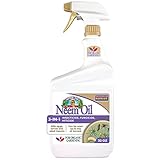
- Protect your oasis with 3 garden products in 1 from Captain Jack’s; Bonide Captain Jack’s Ready-to-Use Neem Oil spray for plants is a multi-purpose fungicide, insecticide and miticide for your lawn & garden
- Clarified Hydrophobic Extract of Neem Oil protects your garden from common fungal diseases including rust, powdery mildew and more; apply to house plants, roses, trees, shrubs, fruits, nuts & vegetables for effective protection against garden diseases
- Captain Jack’s Neem Oil kills eggs, larvae and adult stages of insects to provide full range protection against pests and insects; this is effective against spider mites, aphids, whiteflies & more
- Approved for organic gardening, Neem Oil spray is suitable for the production of organic produce and can be used up until the day of harvest
- This product arrives conveniently ready-to-use in a trigger spray bottle; to use, shake well and completely cover affected plants. Reapply as needed every 7-14 days. Please see product label for full instructions
Shore flies: a look-alike that may not be harming the plant
Shore flies can appear around overwatered pots and be confused with fungus gnats. The NC State container-plant guidance cited here describes neither their adults nor larvae as plant-harming; adults may leave dark droppings on foliage. Seeing flies is therefore a reason to identify them, not proof that roots are being eaten.
Crashes, No Sound, or Screen Glitches?
Random freezes, missing sound and display glitches usually trace back to one bad driver. Find and replace yours safely.Free scan · under a minutePC Slower Than It Used to Be?
A free scan shows the junk files, broken settings and background clutter dragging Windows down - then fixes them in one click.Free scan · Windows 10 & 11What to do after you identify the problem
- Inspect before treating. Examine foliage undersides, stems, soil, pot rim, and saucer. Note whether the organisms fly, jump, cling to plant surfaces, or leave webbing, honeydew, scars, or cottony wax.
- For suspected fungus gnats, monitor adults and check the soil. Place a yellow sticky card near the plant to detect or catch flying adults, then inspect moist growing media for larvae. The card does not control all life stages.
- For jumping specks in wet soil, consider springtails. Reduce excess moisture while keeping the plant’s own watering needs in mind; do not let it wilt just to dry the pot.
- For cottony patches, sticky leaves, bumps, webbing, or scars, inspect the plant itself. Look closely at leaves and stems rather than applying a soil treatment blindly. Washing and sanitation are among the cited approaches for aphids.
- Limit spread and remove favorable conditions. Isolate an affected new plant, remove dead plant debris, and avoid excess watering. When repotting is appropriate, use a clean container and fresh sterile potting medium.
- Use pesticides only with a suitable label. Confirm the product is labeled for both the plant and the target pest, and follow its directions. Plant tolerance and product registrations vary by location.
Why identifying the organism and life stage matters
A flying adult and a larva in the pot may call for different monitoring or management targets. Sticky cards help reveal flying adults, but they cannot establish that soil-dwelling or plant-feeding immature stages have been controlled. Conversely, finding harmless scavengers or shore flies does not justify treating the plant as though it has a root-feeding pest. Match the response to the organism, its location, and evidence of plant injury.
This guidance reflects U.S. university extension and integrated pest management sources. Species, pesticide registrations, and product labels can differ elsewhere; UC IPM’s houseplant page was updated in August 2020, so check current local labels for any pesticide decision.
Quick Recap
Best Value
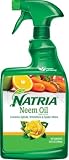
- PLANT DISEASE CONTROL: Natria Neem Oil acts as an insecticide and fungicide in one convenient spray; Ready-to-use trigger sprayer requires no mixing
- KILLS INSECTS & MITES: Insect killer spray controls Aphids, Whiteflies, Spider Mites, Japanese Beetles, Fruit Flies, Scales, and other listed insects
- CONTROLS POWDERY MILDEW: Fungicide disease control formula prevents listed diseases such as Black Spot, Botrytis, Downy Mildew, Powdery Mildew, Scab, and more
- FOR INDOOR AND OUTDOOR USE: For use on indoor and outdoor plants, including roses, flowers, houseplants, ornamental trees and shrubs, fruits, nuts, vegetables, and gardens
- USE THROUGHOUT THE GROWING SEASON: Suitable for use up to the day of harvest; Simply point and spray; Thorough coverage is essential
Rank #4
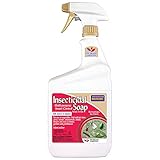
- Captain Jack's Insecticidal Super Soap controls species of adelgid, ant, aphid, borer, caterpillar, spider mite, cricket, chinch bug, weevil, fly, thrip, and more
- Designed for outdoor residential use in home gardens, lawns, ornamentals, and greenhouses; use on artichoke, cabbage, onions, berries, basil, lavender, mint, sage, pistachios, almonds, apples, plums, cilantro, lawns, turf and more
- Product kills through direct contact and ingestion; spray insects, such as aphids, directly or allow leaf feeding insects, such as worms and caterpillars, to eat the leaf surface to die
- Approved for organic gardening, Captain Jack's Insecticidal Super Soap is suitable for all of your organic gardening needs
- Product is conveniently ready-to-use when it arrives at your home, the spray nozzle makes this product easy to deploy; for full use instructions, please see product label
Rank #3

- 3-IN-1 PLANT CARE: 3-In-1 Insect, Disease & Plant Mite Control provides insect control, disease control, and plant mite control all in one; Rainproof protection starts in 4 hours and lasts up to 14 days
- INSECT KILLER: Pest control formula kills and prevents Aphids, adult Japanese Beetles, Whiteflies, and other listed pests; Use outdoors on rose bushes*, flower plants*, ornamentals, shrubs, and trees
- DISEASE CONTROL: Fungicide controls Black Spot, Powdery Mildew, Rust, Scab, and other listed diseases; Convenient and ready-to-use spray *Apply when pollinators are not present
- PLANT MITE CONTROL: Miticide kills and prevents spider mites and plant mites
- GET MORE FROM THE BLUE BOTTLE: Explore BioAdvanced's science-based solutions for roses and flowers; We make it easier than ever to prevent diseases, kill and protect against insects, and feed plants for up to weeks at a time
Rank #2
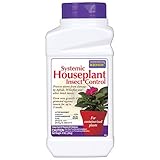
- Protect plants from insect damage with Systemic Houseplant Insect Control Granules from Bonide; this product is a low odor ready-to-use solution for containerized plants
- Protection lasts for up to 8 weeks after application; the granular treatment is absorbed into the roots and continues to move through the plant to provide protection against listed insects; this protection will not be washed away with water
- Product kills insects such as mealybug, aphids, scale, and more through ingestion; this product will not harm insects that do not feed on plants
- Systemic Houseplant Insect Control Granules are not intended for use on edible plants like herbs, vegetables or fruit bearing plants
- This product arrives conveniently ready-to-use; to use apply granules evenly to the top of the soil and mix thoroughly into the soil, water in granules and reapply every 8 weeks as needed; for full use instructions please see product label
Product prices and availability are accurate as of the date/time indicated and are subject to change. Any price and availability information displayed on Amazon at the time of purchase will apply.




