
Eight plants are commonly promoted for discouraging rats and mice: peppermint, spearmint, lavender, rosemary, sage, garlic, catnip, and marigolds. They may add scent or support a tidier landscape, but they will not reliably repel an established infestation outdoors. The effective strategy is to combine any plantings you choose with exclusion, sanitation, shelter reduction, and appropriate trapping or professional help.
Short answer: peppermint, spearmint, lavender, rosemary, sage, garlic, catnip, and marigolds are commonly suggested as plants that may discourage rats or mice because of their odors or their role in a less rodent-friendly landscape. But planting them around your home will not reliably stop an established infestation. Outdoor scents disperse quickly, and hungry rodents can ignore them.
As an Amazon Associate I earn from qualifying purchases.
Use these plants as a supplemental landscaping choice—not as a rodent barrier. The measures that consistently matter more are sealing openings, removing food and water, eliminating nesting cover, and trapping or obtaining professional help when activity persists.
Do these 3 things before closing this tab:
1Fix the driver behind crashes, sound loss and screen glitches2Clear out junk files and repair common Windows errors3Scan for outdated or missing drivers - takes under a minuteThe 8 plants commonly associated with rodent deterrence
The confidence descriptions below are important: laboratory or enclosed-area scent effects do not automatically translate into reliable protection in an open yard. None of these plants should replace exclusion and sanitation.
#1 Best Overall
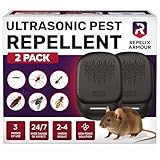
- ✅ AFFORDABLE SOLUTION: Fighting against mice, rats or insects? This ultrasonic pest repeller is a safe, chemical-free mouse repellent to plug in. Protect your home without toxins or expensive deratization services - harmless to humans and pets.
- ✅ SOUND SENSITIVITY NOTE: In modes 2 and 3, some people or animals can hear ultrasonic sound, others may not. This is normal and does not affect effectiveness. If you mind, switch to Mode 1, the quietest option.
- ✅ INTERIOR PROTECTION: Each device covers up to 1,500 sq ft, offering rodent repellent indoor protection for bedrooms, kitchens, living rooms or basements. Works against ants, flies, cockroaches, spiders and mosquitoes. Use one device per room.
- ✅ OPERATION: With three modes of use, this mice repellent indoor adapts to your needs. In the first week, pests may seem more active as they are disturbed, but within 2 to 4 weeks you will see a marked decrease in rodents and insects.
- ✅ 100% SATISFACTION GUARANTEE: If you are not happy with this rodent repellent, or if there is ever an issue, our team is here to help.
| Plant | What it may contribute | Practical confidence |
|---|---|---|
| Peppermint | Strong aromatic foliage; commonly suggested as a scent deterrent | Traditional or plausible supplement, not a proven outdoor barrier |
| Spearmint | Aromatic foliage and a useful culinary herb | Traditional claim with limited field support |
| Lavender | Fragrance and open, pollinator-friendly landscaping | Aromatic landscape option, not established rat control |
| Rosemary | Resinous, strongly scented foliage | Reasonable supplemental planting, unproven as exclusion |
| Sage | Aromatic culinary foliage and less dense planting | Low-confidence supplement |
| Garlic | Strong sulfur-containing odor | Low-confidence rodent option; evidence is stronger for some insect uses |
| Catnip | Aromatic mint-family foliage | Speculative or traditional option |
| Marigold | Diverse garden planting and broader pest-conscious landscaping | Not reliably demonstrated to repel rats or mice |
1. Peppermint (Mentha × piperita)
Peppermint is the most familiar “natural mouse repellent” suggestion because its leaves contain strong volatile oils. That makes it a reasonable plant to try around a garden seating area, path, or other location where you want an aromatic planting.
It does not, however, create an invisible wall around a house. Peppermint scent disperses outdoors, and established or food-motivated rodents may simply pass through the planting. Grow it in a container: like other mints, peppermint can spread aggressively and become a management problem of its own.
Do not treat peppermint plants, peppermint oil on cotton balls, and homemade peppermint sprays as equivalent to a tested, labeled pesticide product. Their concentration, persistence, and safety are different.
Free tools Windows power users keep installed
One-click scans. No signup required.
2. Spearmint (Mentha spicata)
Spearmint is botanically different from peppermint but belongs to the same broadly spreading mint group. Extension material records the traditional claim that spearmint may repel some rodents and other pests.
The useful, defensible recommendation is to grow spearmint as an aromatic herb while keeping expectations modest. Use a container or a contained planter, and do not rely on a row of spearmint to protect a shed, garage, attic, or foundation.
3. Lavender (Lavandula spp.)
Lavender is strongly scented and can improve a landscape without creating the dense, concealed vegetation that rodents often use for cover. It may also suit a pollinator-friendly garden, depending on the variety and local growing conditions.
Its strongest role here is landscape design, not proven rodent exclusion. Research and extension guidance do not establish that outdoor lavender plantings reliably keep rats or mice away from structures. Plant it for fragrance and garden value first; consider any rodent-deterrent effect a bonus that may not occur.
What’s actually slowing this PC down?
Pick the symptom - the matching free tool is one click away.
4. Rosemary (Salvia rosmarinus)
Rosemary has resinous, aromatic foliage and can fit well in a rodent-conscious herb garden. A relatively open rosemary planting may be preferable to a wall of dense ground cover next to a foundation.
There is not enough field evidence to say that rosemary keeps rats or mice away. It may contribute to an aromatic border, but it will not compensate for an opening around a pipe, an accessible garbage bin, or food left outside overnight.
5. Sage (Salvia officinalis)
Sage is another strongly scented culinary herb that can replace some dense sheltering vegetation near a structure. Its leaves and compact growth make it a practical garden plant where the soil and climate are suitable.
Rank #2

- Dual Ultrasonic & LED Rodent Deterrent: Combines variable-frequency ultrasonic waves with flashing dual LED strobe lights to help deter rats, mice, squirrels and other rodents. Designed for under-hood protection to help discourage nesting and chewing of vehicle wiring and components.
- Cordless Battery-Powered Protection: Powered by 3 AA alkaline batteries (not included), this cordless rodent repellent requires no wiring or vehicle battery connection. Provides long-lasting protection for parked vehicles, seasonal-use equipment and long-term storage.
- Smart Energy-Saving Design: Equipped with intelligent auto standby mode that detects engine vibrations—automatically powers down while the vehicle is in motion. Conserves battery life while ensuring protection is active whenever the vehicle is parked.
- Heat-Resistant Housing for Under Hood Use: Constructed with durable, high-temperature-resistant materials suitable for vehicle engine compartments and under hood environments when installed away from direct heat sources. Designed for reliable performance as an under hood rodent repellent for cars, trucks, SUVs and other vehicles in demanding conditions.
- Quick Installation & Versatile Use: Installs in minutes using the included reusable zip ties. Suitable for automobiles, pickup trucks, campers and, trailers. Also helps protect stored equipment and property in workshops, warehouses, attics, garages, barns and sheds where rodent activity may occur.
Keep the claim narrow: sage may be part of a less rodent-friendly landscape, but the available evidence does not support calling it a standalone mouse or rat repellent.
6. Garlic (Allium sativum)
Garlic is often included in natural pest-control lists because of its noticeable sulfur-containing odor. It can be a useful crop in a kitchen garden, but the extension evidence reviewed is focused mainly on insects and broader organic pest management—not dependable rodent exclusion.
That makes garlic a low-confidence supplemental choice. It does not kill rodents, seal entry points, or remove the food and shelter that sustain an infestation.
7. Catnip (Nepeta cataria)
Catnip is an aromatic member of the mint family, so it is sometimes included in scent-based pest-deterrence discussions. Its practical drawbacks deserve equal attention: it can spread, and it may attract cats to the garden.
There is no demonstrated basis for using catnip instead of exclusion or sanitation. If you plant it, do so because you want the herb or because it fits your garden—not because it is a dependable rat-control treatment.
Recommended Free Tools
8. Marigold (Tagetes spp.)
Marigolds are popular companion plants and are associated in extension material with some insect and nematode management. They can contribute to a diverse, attractive garden.
That reputation should not be expanded into a rodent claim. Research does not establish that marigolds reliably repel rats or mice. They belong in a broader pest-conscious planting plan, not in the role of a protective perimeter.
Plants and landscaping that can make rodent problems worse
A “natural” solution can backfire if it creates shelter. Dense vegetation gives rodents concealed travel routes, nesting material, and places to hide while they approach a building.
Ventura County guidance specifically identifies Algerian ivy and bamboo as examples of plantings that can harbor roof rats. If these or other dense plants are contributing to activity, replacing or substantially thinning them may help more than adding aromatic herbs.
- Keep dense vines and shrubs away from roofs, vents, fences, and foundations.
- Trim vegetation so you can see the foundation, vents, pipe penetrations, and other possible entry points.
- Remove leaf piles, brush, unused lumber, discarded materials, and deep mulch near buildings.
- Pick up fallen fruit and clean up spilled birdseed or animal feed.
- Do not allow branches or continuous vegetation to form a concealed route from the ground to the roof or attic.
For pet households, keep pet food and water indoors overnight where possible, and store dry food in tightly closed, rodent-resistant containers. Secure garbage, compost, bird food, and livestock feed as well.
Rank #3

- 【Advanced Ultrasonic Technology】This ultrasonic pest repeller uses multi-frequency ultrasonic waves within a frequency range of 10kHz-65kHz to help create an uncomfortable environment for common indoor pests. As a pest repellent ultrasonic plug in, it supports daily pest control needs for mice, roaches, ants, spiders, mosquitoes, and more. It is a practical choice for customers looking for a mouse repellent, rodent repellent, or ultrasonic rodent repeller for indoor spaces.
- 【Safe Indoor Use & No Mess】Compared with traditional mouse traps indoor for home or chemical sprays for mice, spiders, ants, mosquitoes, and other indoor pests, this mouse repellent ultrasonic plug in helps support a cleaner home without bait, sticky boards, harsh odors, or messy cleanup. Designed for bedrooms, kitchens, living rooms, hallways, and other enclosed areas, it offers a more reassuring choice for everyday indoor use around people and pets.
- 【3 Ultrasonic Modes – Frequency & Target Pest Coverage】Easy plug-in and one-button operation. 3 professional frequency modes for precise pest repelling: Blue Mode (25-45 kHz) for mosquitoes, gnats, fruit flies; Yellow Mode (18-35 kHz) for ants, cockroaches, spiders; Red Mode (10-25 kHz) for rats, mice, large bugs. Red mode may make slight noise, use when no people/pets are indoors. No mess, full room pest protection.
- 【Wide Indoor Coverage】This mice repellent indoor device is suitable for indoor areas up to 1600 sq ft in open space. For better performance, place one unit in each room because ultrasonic waves may be blocked by walls and large furniture. It can be widely used in most indoor environments, whether at home, in the workplace, garages, basements, attics, warehouses, or other enclosed areas, helping provide effective support for a cleaner and more comfortable space.
- 【Energy-saving & 24/7 Automatic Protection】This plug-in ultrasonic device only consumes 3-5W power, saving more electricity than a desk lamp. No batteries required. Simply plug it in, and it works 24/7 all year round with no extra attention needed. It acts as an effective mice repellent and roach repellent indoor, providing steady low-power operation and reliable whole-house pest control for long-term home defense.
What works better than plants: a practical rodent-control plan
1. Find and seal entry points
Mice can enter through openings approximately 1/4 inch wide. Inspect the entire building rather than only the room where you saw a mouse. Check:
- Gaps around plumbing, electrical lines, cables, and utility pipes
- Foundation cracks and gaps at wall-floor transitions
- Garage-door edges and thresholds
- Door and window gaps
- Crawl-space openings and vents
- Roofline gaps, soffits, fascia, and attic vents
- Places where additions, decks, fences, or garages meet the house
For small openings, use a durable material that rodents cannot chew through. For larger gaps, CDC guidance recommends materials such as metal, hardware cloth, cement, or metal sheeting. A useful general-purpose option is 1/4-inch galvanized hardware cloth. Cut it to overlap the opening, fasten it tightly, and close the edges so rodents cannot squeeze around the patch. Choose stronger specifications where rats are involved or where aggressive gnawing is likely.
Sealing works best when you inspect from both sides of the building. A patch that looks complete indoors may still leave a gap around the exterior edge.
2. Remove food and water
Rodents stay where food is easy to obtain. Sanitation is often more important than the choice of plant.
- Store human and pet food in tightly sealed containers.
- Clean crumbs, spills, and food residue promptly.
- Remove pet food and water bowls overnight when practical.
- Use secure lids on garbage and compost containers.
- Keep birdseed and animal feed in rodent-resistant storage, and clean spilled seed beneath feeders.
- Repair leaks and eliminate standing water when possible.
- Harvest ripe produce and remove fallen fruit from the ground.
3. Reduce shelter and monitor for activity
Look for droppings, gnaw marks, nesting material, greasy rub marks, damaged food packaging, and sounds in walls or ceilings. A flashlight inspection around the foundation, garage, attic, crawl space, and outbuildings can reveal routes that are easy to miss.
Do not seal an opening blindly if you suspect an animal is currently inside. You may trap it in a wall, attic, chimney, or other inaccessible space. If signs continue after sanitation and repairs, or if you cannot determine whether the opening is active, obtain advice from a qualified pest professional.
4. Trap when appropriate
Trapping can be part of an integrated approach, especially after or alongside exclusion and sanitation. Use traps appropriate to the animal’s size, place them where pets and children cannot reach them, and follow the manufacturer’s safety directions and local rules.
PC Slower Than It Used to Be?
A free scan shows the junk files, broken settings and background clutter dragging Windows down - then fixes them in one click.Free scan · Windows 10 & 11Outdated Drivers Are Slowing You Down
One free scan finds every outdated or missing driver and matches the right update for your exact hardware.Free scan · exact hardware matchPoison products require particular caution around children, dogs, cats, wildlife, and other non-target animals. They should never be used casually or outside their label directions. A substantial infestation, activity in inaccessible spaces, or uncertainty about safe placement is a good reason to contact a licensed rodent-control professional.
Independent reader supportYour contribution helps us test, update, and keep practical guides available for everyone.Are plant-based rodent-repellent pouches worth trying?
A narrow category of plant-based product has more specific evidence than simply planting herbs: balsam fir oil mouse-repellent pouches. The EPA label for Fresh Cab identifies balsam fir oil as the active botanical ingredient and labels the product for repelling mice in enclosed storage areas such as attics, garages, sheds, barns, vehicles, and storage units.
This distinction matters. A labeled pouch is not proof that planting balsam fir outdoors repels rats and mice. It is a supplemental product for labeled enclosed areas, and its effect is limited by scent loss and the replacement schedule on the label. It cannot seal a hole, remove an established nest, or solve a food-and-shelter problem.
Rank #4
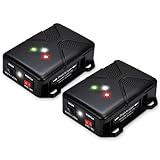
- Dual Ultrasonic & LED Rodent Deterrent: Combines variable-frequency ultrasonic waves with flashing dual LED strobe lights to help deter rats, mice, squirrels and other rodents. Designed for under-hood protection to help discourage nesting and chewing of vehicle wiring and components.
- Cordless Battery-Powered Protection: Powered by 3 AA alkaline batteries (not included), this cordless rodent repellent requires no wiring or vehicle battery connection. Provides long-lasting protection for parked vehicles, seasonal-use equipment and long-term storage.
- Smart Energy-Saving Design: Equipped with intelligent auto standby mode that detects engine vibrations—automatically powers down while the vehicle is in motion. Conserves battery life while ensuring protection is active whenever the vehicle is parked.
- Heat-Resistant Housing for Under Hood Use: Constructed with durable, high-temperature-resistant materials suitable for vehicle engine compartments and under hood environments when installed away from direct heat sources. Designed for reliable performance as an under hood rodent repellent for cars, trucks, SUVs and other vehicles in demanding conditions.
- Quick Installation & Versatile Use: Installs in minutes using the included reusable zip ties. Suitable for automobiles, pickup trucks, campers and, trailers. Also helps protect stored equipment and property in workshops, warehouses, attics, garages, barns and sheds where rodent activity may occur.
If you use a botanical repellent, read the current label before placing it, follow its directions, and keep it away from pets and children as directed. Verify the current product identity and availability before purchasing.
What about ultrasonic rodent devices?
Ultrasonic devices should not be treated as a proven alternative to exclusion. Washington State University Extension reports little supporting research and poor performance in tested devices. They may seem attractive because they require little work, but they do not address the openings, food, water, and shelter that allow rodents to remain on a property.
When to call a professional
Contact a licensed pest-management or rodent-exclusion professional when:
- Rodents are entering walls, ceilings, attics, crawl spaces, or other inaccessible areas.
- You continue finding fresh signs after sealing and sanitation.
- There are multiple rodents, repeated sightings, or extensive droppings and damage.
- You cannot safely place traps because pets or children have access.
- You suspect roof rats or another species that is traveling through trees, dense vines, or roof spaces.
- You need help identifying and repairing hidden entry points.
A professional integrated pest-management approach should focus on inspection, exclusion, sanitation, monitoring, and appropriately chosen control measures—not simply applying a repellent.
How to use these plants responsibly
- Choose plants for genuine garden value first. Fragrance, culinary use, pollinator support, and appearance are reliable benefits; rodent deterrence is uncertain.
- Keep aggressive spreaders contained. Grow peppermint, spearmint, and catnip in containers or controlled beds.
- Keep plantings open around buildings. Do not let herbs, vines, shrubs, mulch, or debris conceal the foundation and vents.
- Pair landscaping with exclusion. Inspect for 1/4-inch openings and patch them with rodent-resistant materials.
- Remove attractants. Secure pet food, birdseed, garbage, compost, and fallen fruit.
- Escalate if signs continue. Plants are not a substitute for trapping or professional treatment when an infestation is established.
Bottom line
Peppermint, spearmint, lavender, rosemary, sage, garlic, catnip, and marigolds can be included in an aromatic, tidy, rodent-conscious garden, but none is proven to keep rats and mice out of a home by itself. The dependable foundation is physical exclusion, food and water control, shelter reduction, monitoring, and appropriate trapping or professional integrated pest management. Treat plantings and labeled botanical pouches as optional supplements—not cures.
The Tool Desk
Outbyte Driver Updater FREEFix the driver behind crashes, sound loss and screen glitchesFind Drivers →Outbyte PC Repair FREEClear out junk files and repair common Windows errorsFree Scan →Frequently Asked Questions
Do peppermint plants really keep mice away?
No. Peppermint plants may provide a strong scent, but outdoor odors dissipate quickly and established or hungry rodents may ignore them. Seal openings, remove food and shelter, and monitor activity instead of relying on peppermint alone.
What plant keeps rats away permanently?
No plant in this list has been established as a reliable standalone rat barrier outdoors. Dense landscaping can even create shelter and concealed travel routes, particularly near roofs, fences, foundations, and vents.
Are balsam fir mouse-repellent pouches better than planting repellent herbs?
Yes, but only as a supplemental, labeled product for appropriate enclosed areas. EPA-labeled balsam-fir-oil pouches are not equivalent to planting balsam fir outdoors and do not replace exclusion, sanitation, trapping, or professional treatment.
How small of a hole can a mouse enter?
Mice can enter openings approximately 1/4 inch wide. Seal small holes with durable rodent-resistant materials and use tightly fitted metal, hardware cloth, cement, or metal sheeting for larger openings.
Quick wins for a faster PC:
Repair Windows errors before they cause bigger problemsFix Now →Fix the driver behind crashes, sound loss and screen glitchesFind Drivers →Clear out junk files and repair common Windows errorsFree Scan →The Bottom Line
Plants may complement rodent control, but they do not replace it. Use aromatic plants for garden value and possible supplemental deterrence, while prioritizing 1/4-inch entry-point repairs, secure food and garbage, reduced shelter, monitoring, and professional help for persistent or inaccessible infestations.
Quick Recap
Product prices and availability are accurate as of the date/time indicated and are subject to change. Any price and availability information displayed on Amazon at the time of purchase will apply.





Leave a Reply