
There is no scientific category called a “unique butterfly.” The word is useful shorthand for a trait that stands out in a particular comparison: extraordinary size, transparent wing panels, a multigenerational migration, life at extreme altitude, unusual flight, or a close relationship with a food plant. The eight examples below include seven named species and one butterfly group (skippers), because the available evidence supports that group-level speed record rather than an eighth fully documented species.
The biggest butterfly, the migration that spans about 9,000 miles, and the species that survives above 4,200 metres are all “unique” for different reasons. Local records also need careful wording: Hong Kong’s largest or smallest butterfly is not automatically the world’s largest or smallest.



As an Amazon Associate I earn from qualifying purchases.
What makes a butterfly unique?
Butterfly identification is often reduced to color, but color is only one clue. Wing area and shape, transparent scales, tails, flight style, altitude, migration strategy, larval food plants and chemical defenses can be more informative. A useful comparison asks four questions:
PC Slower Than It Used to Be?
A free scan shows the junk files, broken settings and background clutter dragging Windows down - then fixes them in one click.Free scan · Windows 10 & 11Outdated Drivers Are Slowing You Down
One free scan finds every outdated or missing driver and matches the right update for your exact hardware.Free scan · exact hardware match- What is distinctive? Is the claim about a measured record, a behavior, a habitat or an ecological relationship?
- Where does it apply? A Hong Kong record is a local comparison; a species-wide trait has a broader range.
- Who documented it? Museum and government descriptions are named so that a dated claim is not mistaken for a timeless global ranking.
- What happens to the habitat? A striking adaptation does not mean a species is secure.
The table gives the quick comparison, followed by the details and limitations behind each entry.
#1 Best Overall

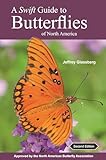
- Kaufman Field Guide to Butterflies of North America By Brock Jim P Kaufman Kenn
| Butterfly or group | Distinctive feature | Place or scale of the claim | Ecological connection or conservation note |
|---|---|---|---|
| Queen Alexandra’s birdwing (Ornithoptera alexandrae) | Extreme size; females around 27 cm | Northern Papua New Guinea rainforests; largest specimen recorded by the Natural History Museum is 27.3 cm | Endangered wording and palm-oil-related habitat loss reported by the museum |
| Painted lady (Vanessa cardui) | About 9,000-mile migration completed by successive generations | Tropical Africa to the Arctic Circle | Uses a wide range of habitats |
| White Dragontail (Lamproptera curius) | Transparent wing sections, tails and dragonfly-like flight | Smallest swallowtail in Hong Kong, a local distinction | Larvae feed on Illigera celebica in Hong Kong |
| Common birdwing (Troides helena) | Large swallowtail | Up to 16 cm in Hong Kong | Larvae use Indian Birthwort (Aristolochia tagala) |
| Golden birdwing (Troides aeacus) | Large swallowtail | Up to 16 cm in Hong Kong | Shares the Indian Birthwort relationship in the AFCD account |
| Monarch or Wanderer (Danaus plexippus) | Migration plus milkweed-derived chemical defense | North American migration and distinct seasonal movements in Australia | Caterpillars acquire deterrent toxins from milkweed-family plants |
| Piercolias forsteri | High-altitude specialization | About 4,200 m in Bolivia’s Andes | Rocky, icy, sparsely vegetated peaks |
| Skippers (a group) | Reported speed up to 37 mph (59 km/h) | Nearly 4,000 species worldwide except Antarctica | Speed is a group-level example, not a single-species record |
1. Queen Alexandra’s birdwing: the biggest butterfly by wingspan
If a reader asks, “What is the biggest butterfly in the world?”, the usual answer is the female Queen Alexandra’s birdwing. The Natural History Museum describes females with wingspans around 27 centimetres and records the largest specimen in its Lepidoptera collection at 27.3 cm. “The largest recorded specimen, which has a wingspan of 27.3 centimetres, is in the Lepidoptera collections we care for,” says Dr Blanca Huertas, the museum’s butterfly curator.
This birdwing lives in rainforests of northern Papua New Guinea. The size claim refers to female wingspan, so it should not be presented as an identical measurement for every individual or for males. The museum calls the species endangered and reports habitat being cut for palm-oil plantations. Those statements describe the museum’s account; a current population assessment would require a current conservation source.
How to recognize the distinction
- Measure or compare wingspan with the wings fully spread; folded-wing sightings are not directly comparable.
- Record sex, location and date, because female size is the relevant record.
- Treat 27.3 cm as the museum-held largest recorded specimen, not a promise that every wild population reaches that size.
2. Painted lady: a migration passed between generations
The painted lady is unusual because its long-distance movement is a relay rather than a single insect completing the entire route. The Natural History Museum describes a journey of about 9,000 miles (14,480 km) from tropical Africa to the Arctic Circle, completed in stages by as many as six successive generations. Adults reproduce along the route; their descendants continue the movement.
That distinction answers the question “How far do butterflies migrate?” without implying that one painted lady flies from Africa to the Arctic and back. The species is widely distributed and can occupy varied habitats, which helps explain how successive generations find suitable plants and weather conditions over a continental-scale route.
What to note in the field
Log the date, direction of travel and habitat rather than assuming every individual is part of the same movement. A garden, grassland or open disturbed site can all be relevant because the species is not restricted to one narrow habitat type. The 9,000-mile figure is the museum’s described route and should be kept with its geographic endpoints.
Rank #2
3. White Dragontail: transparent panels and a dragonfly-like flight
The White Dragontail (Lamproptera curius) answers “Which butterflies have transparent wings?” with a particularly clear example. Hong Kong’s Agriculture, Fisheries and Conservation Department (AFCD) describes transparent portions of the wings, tailed hindwings and a flying pattern that resembles a dragonfly. In Hong Kong, the AFCD calls it the smallest swallowtail, a local comparison rather than a worldwide ranking.
Its larvae in Hong Kong feed on Illigera celebica. That plant relationship is part of the species’ identity: protecting an adult butterfly without protecting the plants used by its larvae leaves the life cycle incomplete. The AFCD’s official page states, “Successful conservation begins with educating our younger generation.”
Do these 3 things before closing this tab:
1Scan for outdated or missing drivers - takes under a minute2Clear out junk files and repair common Windows errors3Fix the driver behind crashes, sound loss and screen glitchesWhy transparency matters for identification
- Look for clear wing areas rather than interpreting the wings as simply pale or white.
- Check for the hindwing tails and the rapid, hovering flight described by AFCD.
- Use the location carefully: “smallest swallowtail in Hong Kong” does not establish a global size record.
4. Common birdwing: a Hong Kong size record tied to birthwort
The Common Birdwing (Troides helena) is one of the large swallowtails highlighted by AFCD. Along with the Golden Birdwing, it is described as among Hong Kong’s largest butterflies, with wingspans up to 16 cm. This is a Hong Kong figure and should not be rewritten as the largest wingspan in the world.
The species’ larvae are associated with Indian Birthwort (Aristolochia tagala). A host plant is more than a botanical footnote: caterpillars need it to feed and develop, while adults may use a broader selection of nectar sources. Conservation planning therefore has to consider the plant community, not only sightings of the adult butterfly.
Interpreting the 16 cm measurement
“Up to 16 cm” is an upper value in the AFCD description, not an average. When comparing photographs or specimens, keep the same measurement method and remember that a closed-wing view hides much of the span.
5. Golden birdwing: a second large swallowtail with the same host-plant link
The Golden Birdwing (Troides aeacus) shares the AFCD’s Hong Kong size distinction with the Common Birdwing: wingspans can reach 16 cm. Its inclusion shows why a list of unique butterflies should not collapse every record into one global superlative. Two species can be locally large while differing in appearance, distribution and population pressures.
The Tool Desk
Outbyte PC Repair FREERepair Windows errors before they cause bigger problemsFix Now →Outbyte Driver Updater FREEScan for outdated or missing drivers - takes under a minuteDriver Scan →AFCD links the birdwings’ larval biology to Indian Birthwort (Aristolochia tagala). Removing or fragmenting that plant can affect recruitment even when adult butterflies are still occasionally seen. Hong Kong protections and conservation concerns described by AFCD apply to that jurisdiction; they should not be generalized as identical laws in every country where a birdwing occurs.
Common and Golden Birdwing comparison
| Measure | Common Birdwing | Golden Birdwing |
|---|---|---|
| Scientific name | Troides helena | Troides aeacus |
| AFCD Hong Kong upper wingspan | Up to 16 cm | Up to 16 cm |
| Larval plant named by AFCD | Indian Birthwort (Aristolochia tagala) | Indian Birthwort (Aristolochia tagala) |
| Scope of the record | Hong Kong comparison; not a global ranking | |
6. Monarch or Wanderer: migration reinforced by chemical defense
The Monarch, called the Wanderer in the Australian Museum account, is distinctive for combining a conspicuous orange-brown adult pattern with a chemical defense acquired during the caterpillar stage. The Australian Museum, updated 10 September 2024, explains that caterpillars obtain deterrent toxins from milkweed-family plants. Those chemicals can make adult butterflies toxic or unpalatable to many predators.
Migration must be described by region. The Australian Museum discusses the famous migration in North America and seasonal movements in Australia; these are not one interchangeable global route. A North American monarch account should not be used to claim that every Wanderer in Australia follows the same overwintering pattern.
Why the orange pattern is useful
Bright coloration can function as a warning signal when predators learn that a butterfly tastes bad. The defense depends on access to suitable milkweed-family food plants during the larval stage, so habitat management must include those plants as well as nectar sources for adults.
Quick wins for a faster PC:
Clear out junk files and repair common Windows errorsFree Scan →Fix the driver behind crashes, sound loss and screen glitchesFind Drivers →7. Piercolias forsteri: a butterfly above 4,200 metres
Some butterflies are remarkable not for size or distance but for where they live. The Natural History Museum places Piercolias forsteri at about 4,200 metres above sea level in Bolivia’s Andes, among rocky, icy and sparsely vegetated peaks. That elevation makes it an example of high-Andes specialization, where cold, intense sunlight, short growing seasons and limited plant cover constrain activity.
Altitude is not interchangeable with latitude. A high mountain site can have very different daily temperature swings and plant communities from an Arctic lowland. For a reliable identification record, note elevation, slope, weather and the plants present rather than relying on a photograph alone.
What an altitude record does—and does not—mean
The approximately 4,200-metre figure identifies the elevation reported for this species by the museum. It does not establish that every individual lives at exactly that height, nor that it is the world’s highest-flying butterfly under every measurement system.
Independent reader supportYour contribution helps us test, update, and keep practical guides available for everyone.8. Skippers: the speed specialists
Skippers are a family-level group rather than one species, but they are included because their reported speed is one of the clearest group distinctions in the available records. The Natural History Museum says skippers can reach 37 mph (59 km/h) and notes nearly 4,000 species worldwide, absent from Antarctica. The speed figure therefore belongs to skippers as a group; it should not be quoted as the measured top speed of every skipper species.
Recommended Free Tools
Skippers often have a stout body, broad head and rapid, darting flight. Those visual impressions are useful clues, but speed is difficult to estimate in the field without standardized measurement. Treat 37 mph as the museum’s stated maximum and avoid turning a brief chase observation into a verified record.
How to document a fast-flying sighting
- Identify the insect as a skipper using wing shape, antenna tips and body form before making a speed claim.
- Record a fixed distance, timing method and wind conditions if you are conducting a formal observation.
- Report the result as an observation unless the method matches a published measurement.
How to identify a “unique” butterfly without overclaiming
- Start with geography. Compare the sighting with a regional field guide or government checklist. A local superlative may be valid only within that boundary.
- Photograph both wing surfaces. Transparent panels, tails and warning colors can disappear when the wings are closed.
- Record behavior. Note hovering, gliding, rapid darting, hilltopping or directional movement; flight style can separate look-alikes.
- Look for the larval plant. Host-plant associations such as Illigera celebica or Indian Birthwort can support an identification, but do not handle caterpillars or protected plants.
- Write the claim with its qualifier. Say “up to 16 cm in Hong Kong,” “about 9,000 miles from tropical Africa to the Arctic Circle,” or “about 4,200 metres in Bolivia’s Andes,” rather than deleting the place and conditions.
- Check a current authority. A museum page can document a record, while a conservation agency or current assessment is needed for present-day population status.
A general butterfly field guide can help with identification after these observations are recorded. Choose one covering the region you visit; no single guide can reliably identify every species worldwide.
What the conservation evidence actually says
Conservation numbers have dates and scopes. An IUCN swallowtail action plan from 1991 said that 170 of 573 swallowtail species were considered to need conservation action. That historical figure is not a current global assessment. The IUCN SSC Butterfly and Moth Specialist Group describes reassessing swallowtail status and advancing butterfly conservation as priorities.
For Queen Alexandra’s birdwing, the Natural History Museum uses the word endangered and reports habitat loss associated with palm-oil expansion. For Hong Kong birdwings and other butterflies, AFCD describes local conservation concerns and legal protections. Local rules cannot be assumed to apply internationally, and a dated museum description should not substitute for a current IUCN assessment.
The practical lesson is to protect the whole life cycle: adult nectar plants, larval host plants, breeding habitat and movement corridors. Avoid collecting specimens, disturbing high-altitude sites or removing host plants, and submit well-documented sightings to a reputable regional recording scheme.
Quick Recap
Sources and further reading
- Natural History Museum: “Nature’s Olympians: Record-breaking butterflies and moths”
- Hong Kong Agriculture, Fisheries and Conservation Department: “Hong Kong Biodiversity Online: Butterflies”
- Australian Museum: “Wanderer Butterfly” (updated 10 September 2024)
- IUCN: “Swallowtail butterflies: an action plan for their conservation” (1991)
- IUCN SSC Butterfly and Moth Specialist Group
Product prices and availability are accurate as of the date/time indicated and are subject to change. Any price and availability information displayed on Amazon at the time of purchase will apply.





Leave a Reply