
“Lazy” is a human joke, not a zoological diagnosis. Animals that seem unwilling to move are usually managing a tight energy budget, digesting difficult food, or following a sleep schedule that does not match ours. The source behind the title, A-Z Animals’ July 28, 2025 video, names sloths and pythons in its introduction but does not publish the complete nine-animal roster or explain the python example. Naming the other seven without the video or a transcript would be guesswork.
Two species can be documented from authoritative zoo and conservation sources: two-toed sloths and koalas. Their long resting periods are real, but neither animal is “lazy” in the human sense. Their behavior is an energy-saving solution shaped by metabolism, diet and daily rhythm.
As an Amazon Associate I earn from qualifying purchases.
What “lazy” means in animal behavior
When people call an animal lazy, they usually mean it spends many hours resting, moves slowly, or appears reluctant to start an activity. Biology asks a different set of questions: How much energy does the animal obtain from food? How expensive is movement? How long does digestion take? Is the species active during the day, at night or in short bursts? A low-activity lifestyle can be highly adaptive even when it looks comical to a human observer.
Do these 3 things before closing this tab:
1Scan for outdated or missing drivers - takes under a minute2Clear out junk files and repair common Windows errors3Fix the driver behind crashes, sound loss and screen glitchesSleep and movement are also different measurements. An animal can sleep for many hours yet move efficiently when awake, while another can remain still for long periods without being asleep. A fair comparison therefore needs a consistent metric rather than a single impression from a photograph or a short video.
#1 Best Overall
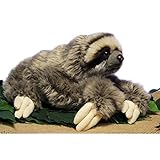
- Three Toed Sloth
- SIZE:12.5 inch
- very soft and cute
- like really sloth
What is actually established about the “nine animals” claim
The A-Z Animals page titled “9 Animals So Lazy They Make Breathing Seem Like a Chore” was published on July 28, 2025. Its accessible introduction mentions sloths and pythons, but it does not expose the promised list of nine animals. The introduction also provides no supporting details for the python reference. Because the complete roster and a common ranking method are unavailable, there is no defensible way to label nine species as the video’s confirmed examples.
That limitation matters. A list that mixes hours asleep, slow travel, ambush hunting and simple inactivity can create a ranking without measuring the same thing. The table below separates the documented facts from the unresolved parts of the claim.
| Animal or claim | Documented observation | What it does not prove |
|---|---|---|
| Two-toed sloth | Smithsonian’s National Zoo and Conservation Biology Institute describes a metabolic rate of 40–45% of what would be expected for its body weight. The Smithsonian also estimates about 15 hours of sleep during the day; San Diego Zoo gives a broader estimate of 15–18 hours of sleep per day. | Those figures do not establish that every sloth sleeps the same amount or that sloths are biologically “lazy.” |
| Koala | San Diego Zoo reports that koalas can sleep as much as 20 hours per day while conserving energy because eucalyptus leaves provide few calories. | The figure is an upper estimate, not a universal daily total, and it does not show that koalas appear in the A-Z Animals video. |
| Python reference | Pythons are named in the video’s accessible introduction. | The available material supplies no behavior, sleep figure or comparison method for the python claim. |
| Seven additional entries | Not stated in the accessible source. | Any specific names would be unverified for this title. |
Two-toed sloths: an extremely economical energy budget
A metabolic rate far below the expected level
The most concrete explanation for a sloth’s slow reputation comes from metabolism. The Smithsonian reports that a two-toed sloth operates at only 40–45% of the metabolic rate expected for an animal of its body weight. In practical terms, its body is adapted to run on a comparatively small energy budget.
The Tool Desk
Outbyte Driver Updater FREEFix the driver behind crashes, sound loss and screen glitchesFind Drivers →Outbyte PC Repair FREEClear out junk files and repair common Windows errorsFree Scan →This is why describing a sloth as unwilling to work misses the point. The animal’s physiology makes energy conservation valuable. The Smithsonian summarizes the consequence in institutional terms: “Because of this specialized metabolism, sloths need to be frugal with their energy use.” Resting, limiting unnecessary travel and avoiding repeated bursts of activity fit that strategy.
Rank #2

- CUTE SLOTH DESIGN: This fluffy stuffed sloth is well-designed. It is made of soft plush that feels great to the touch and is a delight to hold. The belly and limbs of the stuffed sloth are filled with some weighted beans, allowing this cute sloth to change positions, sit, lie down, or stand.
- GOOD GIFT CHOICE: This small plush toy sloth with vivid expression and realistic design is a sweet gift for your friends, kids, parents and lover on Christmas, Thanksgiving and birthday to show your love and care for them!
- PROPER SIZE TO CARRY: This adorable stuffed sloth is the right size to sit in the palm of your hand. The cosy touch makes all the stress disappear when you knead it. It also has a light aroma to soothe your body and mind, great to keep on your desk, in your car or in your bag to accompany you through your work and leisure time.
- GREAT QUALITY: We choose soft fabrics and use exquisite sewing to make this cute plush sloth, so that it can stay with you for a longer time. We designed a variety of images to choose from, you can bring them all home.
- CONSIDERATIONS: In order to keep this cute plush toy with you longer, we recommend gentle hand washing to clean it.Put it under the hot sun for a long time to dry naturally, this plush will recover better!
Sleep estimates are ranges, not a stopwatch reading
The Smithsonian’s two-toed sloth account says these animals sleep about 15 hours during the day and wake at night to eat. San Diego Zoo gives a range of 15–18 hours per day. The difference illustrates why wildlife sleep statistics should be presented as estimates. Conditions, observation methods and individual animals can change the result; neither source supports treating one number as an exact requirement for every sloth.
The daily rhythm is as important as the total. A person watching during daylight may see a sloth motionless for hours, but that observation samples the animal’s resting period. Activity after dark can be easy to miss, especially in a forest canopy. “Barely moves” may therefore describe what an observer sees at one time of day rather than the animal’s entire schedule.
Slow movement can be the efficient choice
Movement has a cost. For an animal with a low metabolic rate, unnecessary travel can spend energy that is difficult to replace. A slow pace can reduce the size of each movement and make a limited energy supply last longer. The same behavior that looks like lethargy from the outside can be a precise adaptation to the animal’s available food and physiology.
Quick wins for a faster PC:
Fix the driver behind crashes, sound loss and screen glitchesFind Drivers →Repair Windows errors before they cause bigger problemsFix Now →That does not mean a sloth is inactive every minute it is awake. It means activity is selective. Feeding, changing position and other necessary actions take priority over movement with no immediate benefit. A useful description is “energy-frugal,” not “lazy.”
Rank #3

- This sloth Stuffed Animal toys so cute is a great gift for collection
- SIZE:12.5 inch
- like really sloth
- There's a piece of cloth on it(just protect Velcro strips). You can tear it off so that Velcro strips can work well.
Koalas: long sleep linked to a low-calorie diet
Why eucalyptus changes the energy equation
Koalas provide a different route to the same appearance. San Diego Zoo explains that eucalyptus leaves provide few calories, and that koalas can sleep as much as 20 hours a day while conserving energy. Extended rest is therefore connected to what the animal eats: when food supplies relatively little usable energy, reducing expenditure becomes important.
The word “bear” in the common nickname can also mislead. Koalas are marsupials, not bears. Their classification has no bearing on the joke about laziness, but it is an important correction whenever the animal is introduced.
“Up to 20 hours” is an upper estimate
“As much as 20 hours” describes a maximum reported by the zoo source, not a promise that every koala sleeps for exactly that duration every day. A responsible article keeps the qualifier attached to the number. It also avoids turning a long sleep estimate into a contest with other species, because the measurements may not have been collected under identical conditions.
Rest is part of survival, not a character flaw
Koala rest should be read alongside diet and energy use. If the available food is low in calories, spending less energy on movement can help balance the budget. The behavior is purposeful even when the animal is not visibly doing anything. Calling a koala lazy can be a harmless caption, but it is a poor explanation of why the animal rests.
Rank #4

- CUTE SLOTH DESIGN: This fluffy stuffed sloth is well-designed, made of soft plush that feels great to the touch. Its belly and limbs are filled with some weighted beans, adding extra comfort and stress-relieving benefits to this cute sloth.
- PROPER SIZE TO CARRY: This adorable stuffed sloth is the right size to sit in the palm of your hand. Its cozy touch melts stress away as you knead it. It’s great to keep on your desk, in your car, or in your bag, accompanying you through work and leisure time.
- GOOD GIFT CHOICE: This plush sloth toy with vivid expression and realistic design is a nice gift for your friends, kids, parents and lover on Christmas, Thanksgiving and birthday to show your love and care for them!
- GREAT QUALITY: We choose soft fabrics and use exquisite sewing to make this cute plush sloth, so that it can stay with you for a longer time. We designed a variety of images to choose from, you can bring them all home.
- CONSIDERATIONS: In order to keep this cute plush toy with you longer, we recommend gentle hand washing to clean it.Put it under the hot sun for a long time to dry naturally, this plush will recover better!
Why these examples cannot produce a verified ranking
A headline promising nine “lazy” animals implies that all nine were selected and ordered using the same test. The available source does not establish that. It gives no common sleep dataset, no movement-distance measurements, no energy-cost calculation and no ranking rule. The sloth and koala figures come from separate institutional animal pages, not from a comparative experiment.
Sleep duration alone would also produce a distorted list. A nocturnal animal may seem inactive during the day while being busy at night. A predator may remain motionless while waiting for prey, then move quickly for a short period. An animal with a low-calorie diet may rest extensively without being less capable or less responsive. These are different biological situations.
A better way to evaluate any “lazy animal” list
If the full video roster becomes available, each entry should be described using the same questions rather than a vague impression.
- Measure resting or sleeping time. State whether the figure is a daily estimate, a range or an upper bound, and identify who reported it.
- Separate sleep from stillness. Note whether the animal is asleep, feeding, waiting, digesting or simply conserving energy.
- Describe movement in context. Explain how often the animal moves and whether its daily activity occurs mostly at night or in another restricted period.
- Connect behavior to diet. Identify whether food is low in calories, difficult to digest or available only in particular places or seasons, but do not infer a cause that the source does not establish.
- Keep species and individuals distinct. A reported average or maximum is not a rule for every member of the species.
- Avoid a false overall winner. Without a shared measurement, “laziest” is entertainment language, not a scientific ranking.
What readers can safely conclude
Two-toed sloths are unusually energy-efficient, with the Smithsonian placing their metabolic rate at 40–45% of the expectation for their body weight. Their daytime sleep estimate is about 15 hours from the Smithsonian, while San Diego Zoo reports 15–18 hours per day. Koalas can sleep as much as 20 hours daily, according to San Diego Zoo, in connection with the low calorie content of eucalyptus leaves. Those facts explain why both animals look slow or sleepy without assigning them a human personality trait.
The remaining entries in the “nine animals” headline should remain unlisted until the original video or a reliable transcript identifies them and supplies enough information to evaluate the comparisons. Leaving a name out is more accurate than attaching an unsupported behavior claim to it.
Quick Recap
Product prices and availability are accurate as of the date/time indicated and are subject to change. Any price and availability information displayed on Amazon at the time of purchase will apply.





Leave a Reply