The Doberman Pinscher is an athletic, highly intelligent working dog that tends to form a close bond with its family. It can be affectionate at home and watchful around strangers, but it is not an easygoing, low-maintenance breed. A Doberman needs daily exercise, purposeful training, early socialization, and regular veterinary care.
Well-bred Dobermans are typically alert, loyal, responsive, and confident rather than indiscriminately aggressive. Their size, strength, guarding instincts, and susceptibility to serious health problems make careful ownership and breeder selection especially important.


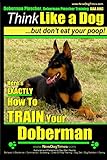


Doberman Pinscher at a glance
| Characteristic | Details |
|---|---|
| Other name | Dobermann in many countries outside North America; Dobie as an informal nickname |
| Origin | Germany, developed in the late 19th century by Karl Friedrich Louis Dobermann |
| AKC group | Working Group |
| Height | Males: 26–28 inches; females: 24–26 inches at the shoulder |
| Typical weight | Males: 75–100 pounds; females: 60–90 pounds |
| Life expectancy | About 10–12 years |
| Coat | Short, smooth, hard, thick, and close-lying |
| Recognized colors | Black, red, blue, and fawn (Isabella), with rust markings |
The breed was recognized by the American Kennel Club in 1908. Its exact foundation breeds are not documented with certainty, although the original developer likely combined several working and guarding breeds to produce a capable personal protection dog.
Doberman temperament and personality
A typical Doberman is attentive to its surroundings and highly tuned in to its owner. Many want to remain close to their people rather than spend the day alone in a yard. They can be playful, affectionate, and surprisingly sensitive with family members, while remaining reserved or cautious with unfamiliar people.
The Tool Desk
Outbyte PC Repair FREEClear out junk files and repair common Windows errorsFree Scan →Outbyte Driver Updater FREEFix the driver behind crashes, sound loss and screen glitchesFind Drivers →#1 Best Overall
The desired temperament is stable and discerning. A Doberman should not be routinely fearful, nervy, or aggressive toward everyone it meets. However, this is still a powerful dog with protective instincts. Owners must teach the dog how to respond to visitors, approaching strangers, household noises, and unfamiliar dogs instead of allowing it to make those decisions without guidance.
Dobermans are quick learners, which is useful during training but can expose inconsistency. If jumping, barking, door rushing, or pulling is sometimes rewarded and sometimes corrected, the dog may continue testing which version of the household rules applies. Clear routines and reinforcement produce better results than intimidation or harsh handling.
Is a Doberman a good family dog?
A well-bred, well-socialized Doberman can be an excellent family companion, but it is best suited to a household prepared to include the dog in everyday life. This is not usually a good choice for someone looking for a dog that can be exercised only on weekends or left alone for long periods.
Dobermans can live successfully with children. Their interactions should be supervised, particularly with toddlers and young children, because an energetic 80-pound dog can knock a child over without intending harm. Children should also be taught not to climb on the dog, disturb it while eating or sleeping, or use its crate as a play area.
Compatibility with other animals varies. Some Dobermans live peacefully with other dogs or cats, while others are territorial or have a strong prey drive toward small animals. Early, controlled introductions and ongoing supervision are more reliable than assuming that a breed label guarantees compatibility. A Doberman should not be left unsupervised with small pets unless its behavior has been demonstrated to be safe.
A secure yard is useful, but it is not a substitute for walks, training, interactive play, or companionship. A dog left to patrol a yard alone may become bored, frustrated, or overly reactive at the fence.
Exercise needs and mental stimulation
Adult Dobermans generally need substantial daily activity. The right amount depends on age, health, conditioning, and individual temperament, but a useful routine combines several forms of work rather than relying on one long, repetitive run.
- Brisk walks or hikes suited to the dog’s conditioning
- Short obedience and impulse-control sessions
- Fetch, tug with rules, or structured play
- Scent games, tracking, and food puzzles
- Agility, rally, flyball, dock diving, or other supervised dog sports
Mental work is particularly important. Ten minutes spent practicing a down-stay, loose-leash walking, place training, or a scent-search game can be more useful than simply opening the back door. Teach the dog to settle as deliberately as you teach it to exercise.
Outdated Drivers Are Slowing You Down
One free scan finds every outdated or missing driver and matches the right update for your exact hardware.Free scan · exact hardware matchWindows Errors? Fix Them Before They Spread
Repair common Windows errors and clear accumulated junk for a smoother, more stable PC - no reinstall needed.Free scan · no reinstallExercise for Doberman puppies
Growing puppies should not be pushed into forced endurance work or repetitive, high-impact exercise. Their bones and joints are still developing. Free movement on suitable grass or dirt, gentle play, swimming where safe, and brief age-appropriate walks are preferable to long road runs.
The Doberman Pinscher Club of America advises that road work should generally wait until at least 18 months. Ask your veterinarian when a particular dog is ready for longer-distance running, jumping, or other demanding activity, especially if there are concerns about hips, elbows, gait, or growth.
Training and socialization
Begin training as soon as the puppy arrives. Focus first on practical behaviors: responding to its name, coming when called, walking on a leash, settling on a mat, accepting handling, waiting at doors, and keeping four paws on the floor when greeting people.
Reward-based training works well for this intelligent, people-oriented breed. Use food, toys, praise, and access to desired activities to reinforce correct choices. Short sessions repeated consistently are usually more productive than occasional demanding lessons. Prevention matters too: use gates, a crate, a leash, and a secure separation plan so the dog cannot repeatedly practice chasing, counter-surfing, door rushing, or fence running.
Quick wins for a faster PC:
Fix the driver behind crashes, sound loss and screen glitchesFind Drivers →Repair Windows errors before they cause bigger problemsFix Now →Socialization means gradual, positive exposure—not forcing the puppy to greet every person or dog. During the important early period, introduce new experiences at a level the puppy can handle:
- Invite calm, appropriate people to interact without overwhelming the puppy.
- Practice gentle handling of paws, ears, mouth, tail, and body.
- Expose the puppy to household sounds, different surfaces, car travel, grooming tools, and veterinary-style handling.
- Arrange controlled contact with healthy, stable dogs when vaccination and veterinary advice allow.
- Pair unfamiliar places and sounds with treats, play, and the option to move away.
The 7–12-week period is especially important for building positive relationships and learning how to process new experiences, but socialization continues throughout adolescence. A well-run puppy class can help; an uncontrolled dog park is not an equivalent substitute. Continue training after puppy class, because adolescent Dobermans become stronger and more independent just as their owners may be relaxing the rules.
Grooming and everyday care
The Doberman’s short coat is relatively simple to maintain. Brush with a grooming mitt or short-bristled brush regularly to remove loose hair. The breed still sheds, and short hairs can be noticeable on clothing and furniture despite the coat’s low-maintenance appearance.
Routine care should include:
- Brushing the teeth frequently with dog-safe toothpaste
- Trimming nails before they become long and uncomfortable
- Bathing when dirty or as advised for a skin condition
- Checking ears, eyes, paws, and skin during normal handling
- Maintaining a lean body condition rather than encouraging excess size
There is no need to shave a Doberman. The natural coat provides some protection from weather, although the breed has little insulation against cold and may need a coat or shorter outdoor sessions in cold conditions.
Do Dobermans need cropped ears or docked tails?
No. Uncropped ears are naturally folded and do not prevent a Doberman from hearing, functioning, or being a Doberman. Ear cropping is elective, controversial, and opposed by the American Veterinary Medical Association when performed solely for cosmetic reasons. Cropped ears require prolonged aftercare and posting, and the final result is not guaranteed.
Tail docking is also elective in many pet situations and may be restricted by local law or veterinary policy. Discuss any proposed procedure with a licensed veterinarian before acquiring a puppy; do not treat cropped ears or a docked tail as a requirement for ordinary ownership.
Doberman health problems
The breed’s biggest ownership challenge is health risk. Good screening can improve breeding decisions, but it cannot guarantee that a puppy will remain healthy. Ask for actual records and examine health histories across parents, siblings, and older relatives.
Dilated cardiomyopathy
Dilated cardiomyopathy, or DCM, is one of the most serious Doberman concerns. The heart muscle becomes weakened and enlarged, and abnormal rhythms may develop. Disease can remain hidden before progressing to heart failure, collapse, or sudden death.
Recommended Free Tools
Possible warning signs include reduced stamina, weakness, coughing, rapid or labored breathing, fainting, and collapse. A routine physical examination cannot reliably rule out early DCM. Breed-focused screening commonly combines an echocardiogram, which assesses heart structure and function, with an ECG or ambulatory Holter monitor to look for rhythm abnormalities.
Rank #4
Do not accept claims that a DNA result “clears” a Doberman of DCM. Available genetic tests identify some risk variants, but they cannot predict with certainty whether an individual dog will or will not develop the disease. Discuss an appropriate screening schedule with your veterinarian or a veterinary cardiologist.
Von Willebrand disease
Von Willebrand disease, or vWD, is an inherited clotting disorder. An affected dog may appear normal but bleed excessively after an injury or surgery. The vWD type I DNA test is among the breed-club health tests commonly expected for Doberman breeding stock. Ask whether each parent is clear, a carrier, or affected, and request the actual result.
Other reported concerns
Dobermans may also be affected by hypothyroidism, hip dysplasia, cervical spondylomyelopathy (Wobbler syndrome), and certain eye, liver, kidney, orthopedic, and cancer-related problems. Seizures and premature death should also be part of a breeder’s family-history discussion. Screening reduces risk but does not remove it.
What’s actually slowing this PC down?
Pick the symptom - the matching free tool is one click away.
Bloat and other emergencies
Because Dobermans are large, deep-chested dogs, they are at increased risk for gastric dilatation-volvulus, commonly called bloat. GDV can rapidly become fatal and requires immediate veterinary treatment.
Go to an emergency clinic immediately if your dog has sudden restlessness, repeated unproductive retching, a swollen or painful abdomen, excessive drooling, rapid breathing, pale gums, weakness, or collapse. Do not wait to see whether the signs improve and do not try to treat suspected bloat at home.
Ask your veterinarian about individualized risk reduction. Common recommendations may include feeding smaller meals, slowing a dog that gulps food, and avoiding intense activity immediately after eating. Preventive gastropexy may be worth discussing for some dogs, often at the time of another planned surgery. No feeding schedule completely prevents GDV, and raised bowls should not be assumed to protect against bloat; use one only when your veterinarian recommends it.
Independent reader supportYour contribution helps us test, update, and keep practical guides available for everyone.Feeding a Doberman
Choose a complete and balanced food appropriate for the dog’s life stage, activity level, and medical needs. Measure portions and adjust them according to body condition, not simply the feeding chart or the goal of producing an oversized-looking dog. A lean, muscular Doberman is generally healthier than an overweight one.
Do these 3 things before closing this tab:
1Repair Windows errors before they cause bigger problems2Fix the driver behind crashes, sound loss and screen glitches3Clear out junk files and repair common Windows errorsBest Value
Puppies commonly do better with at least three meals a day, while many adults are fed two meals. The correct plan depends on age, growth rate, appetite, activity, and health. Avoid making a grain-free diet or a supplement routine seem automatically healthier. Diet and canine DCM are complicated subjects; discuss a major food change with your veterinarian, particularly for a breed already predisposed to heart disease.
How to choose a responsible Doberman breeder
Do not select a breeder based only on color, head shape, ear cropping, or a single impressive DNA panel. Ask for publicly verifiable health information on both parents and learn how the breeder handles affected relatives and premature deaths.
Important screening areas include:
- Cardiac evaluation with echocardiography and rhythm monitoring
- vWD type I DNA testing
- Hip evaluation through OFA or PennHIP
- Thyroid evaluation
- Eye examination when recommended
- Family history involving DCM, sudden death, seizures, cancer, Wobbler syndrome, and bleeding disorders
OFA’s public records can help you review parents and relatives. A CHIC number means that the breed-specific required tests were completed and entered; it is not a guarantee that every result was normal or that the dog is free of all disease.
A responsible breeder should also ask you detailed questions, show you where the puppies are raised, explain socialization, provide a contract, and remain available after the sale. Be cautious if the seller will not provide records, always has puppies available, promises perfect health, or dismisses questions about cardiac disease.
Common Doberman misconceptions
| Claim | What is more accurate |
|---|---|
| “Dobermans are naturally aggressive.” | The desired temperament is confident, loyal, discerning, and protective. Fear, instability, and indiscriminate aggression are not desirable. |
| “A yard is enough exercise.” | Dobermans also need walks, interaction, training, mental work, and structured activity. |
| “A DNA test rules out DCM.” | Genetic tests cannot guarantee that a dog will never develop DCM. |
| “Ear cropping is required.” | Natural ears are functional. Cropping is elective and may be restricted or opposed by veterinary organizations. |
| “The Miniature Pinscher is a small Doberman.” | The Miniature Pinscher is a separate breed, not a miniature Doberman. |
| “All Dobermans are black and tan.” | Black, red, blue, and fawn/Isabella are recognized colors, all with rust markings under the AKC standard. |
FAQ
Are Dobermans good for first-time dog owners?
They can be, but they are a demanding first dog. A first-time owner should be prepared for daily training, substantial exercise, careful socialization, and professional guidance when needed. The breed’s size, strength, guarding instincts, and health risks leave little room for inconsistent management.
How much exercise does a Doberman need each day?
Most healthy adults need substantial daily physical and mental activity, often including a brisk walk or other structured exercise plus training, play, or scent work. The exact amount depends on age, health, conditioning, and temperament. Puppies should not be pushed into forced endurance or repetitive high-impact exercise.
Are Dobermans aggressive toward strangers?
A well-socialized Doberman may be reserved or cautious with unfamiliar people, but indiscriminate aggression is not the desired temperament. Owners should teach calm behavior around visitors and strangers rather than encouraging guarding or allowing the dog to make uncontrolled protective decisions.
What is the most serious health concern in Dobermans?
Dilated cardiomyopathy is one of the breed’s most important concerns because it may remain silent before causing heart failure, dangerous arrhythmias, or sudden death. Echocardiography and rhythm monitoring can help detect disease, but normal tests and DNA results are not a lifetime guarantee.
Free tools Windows power users keep installed
One-click scans. No signup required.
The Bottom Line
The Doberman Pinscher can be a devoted, trainable, athletic companion for an involved household. It is a poor match for owners who want a dog that can be ignored, confined to a yard, or exercised only occasionally. Before bringing one home, plan for structured daily activity, lifelong training, supervised family interactions, and a veterinary strategy that addresses cardiac disease, clotting problems, bloat, and other breed risks.
Quick Recap
Product prices and availability are accurate as of the date/time indicated and are subject to change. Any price and availability information displayed on Amazon at the time of purchase will apply.




